

 Aperçu en situation
 Envoyer
 Partager
 Détails de l'œuvre
 Guide
Guide

 Télécharger l'image
 Articles similaires
 Radiographie
 Diaporama
 Questions et réponses
 Statistiques
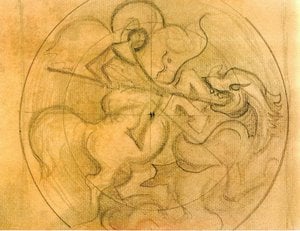
Untitled

- 98.0 x 130.0 cm
 Lire la suite
Obtenez un fichier prêt pour l'impression qui dépasse de loin la qualité de l'aperçu web. Chaque image numérique que nous proposons est issue d'un fichier maître haute résolution de notre base de données — mesurant généralement entre 5 000 et 15 000 pixels de large — vous permettant ainsi d'imprimer en grand format, de recadrer avec précision ou de reproduire les détails les plus fins en toute confiance.
Aucun fichier ne quitte notre studio sans être retouché. Un expert numérique vérifie la colorimétrie par rapport à l'œuvre originale et la corrige si nécessaire, puis améliore la clarté et les détails à l'aide d'outils de retouche professionnels — tout en restant toujours fidèle au coup de pinceau et au style de l'artiste. Le résultat est une image qui ressemble au tableau, et non à un simple scan filtré.
Validez avant de finaliser : notre expert vous envoie l'image par e-mail sous 72 heures pour examen. Non satisfait ? Demandez des améliorations ou des corrections, ou demandez un remboursement si la qualité ne répond pas à vos attentes.
C'est une qualité sur laquelle s'appuient éditeurs, studios de création, galeries et ateliers d'impression.
Image numérique
Téléchargez un fichier haute résolution pour votre usage personnel, l'impression et vos projets créatifs. ( Passer au format impression Commander la reproduction peinte à la main)
Inclus avec chaque commande d'image numérique
Livraison numérique experte, garantie.
En choisissant ArtsDot.com, vous n'obtenez pas seulement une simple image : vous recevez une œuvre numérique sublimée avec professionnalisme, conçue avec précision et accompagnée d'une garantie de satisfaction. Voici tout ce qui accompagne automatiquement votre commande :

Envoi rapide par e-mail
Votre fichier d'image numérique haute résolution vous sera envoyé par e-mail sous 72 heures après votre commande — prêt à un usage immédiat.

Fichier numérique optimisé par l'IA
Votre œuvre d'art bénéficie d'une optimisation professionnelle grâce à des outils d'IA avancés et une retouche manuelle, garantissant un niveau maximal de détail, de clarté et de fidélité chromatique.

Réexpédition gratuite à vie
Vous avez accidentellement supprimé ou perdu votre fichier ? Pas d'inquiétude — nous vous le renverrons gratuitement, quand vous le souhaitez.

Aucuns frais de douane — À jamais
Profitez de votre œuvre d'art instantanément sans frais de douane ni de livraison — les téléchargements numériques sont toujours exonérés de taxes.

Garantie de fidélité des couleurs
Nous garantissons que votre image numérique reproduit les couleurs de l'original aussi fidèlement que possible grâce à des outils professionnels et une gestion rigoureuse des couleurs.

Garantie de satisfaction 100 jours
Si vous n'êtes pas satisfait de votre image numérique, nous la retoucherons ou vous rembourserons 100% sous 100 jours — sans poser de questions.

Garantie de remboursement à 100%
Pas satisfait ? Obtenez un remboursement intégral dans les 100 jours suivant la réception de votre fichier numérique — sans aucune question posée.

Réductions sur les commandes groupées
Achetez 3 images, économisez 10% - Achetez 5, économisez 15% - Achetez 10+, économisez 20%. Idéal pour les projets créatifs, les galeries et les agences.
Œuvres similaires


Biographie de l'artiste
La Danse Viscérale de la Matière : La Vie et l'Héritage de Kazuo Shiraga
Dans le paysage turbulent du Japon de l'après-guerre, un nouveau langage d'expression a émergé des décombres de la tradition, porté par un besoin brut et déchaîné de confronter la réalité. Au cœur de cette révolution se trouvait Kaziente Shiraga, un artiste dont la méthode même de création devint une performance de lutte physique et de libération spirituelle. Né à Amagasaki en 1924, les premières années de Shiraga furent imprégnées d'une dualité d'influences qui allaient plus tard définir son esthétique radicale. Il fut formé dans le monde méticuleux et discipliné du Nihonga—le style de peinture traditionnel japonais caractérisé par un travail au pinceau délicat et des dégradés tonaux subtils—pourtant, il était simultanément hanté et inspiré par les mouvements primordiaux et chorégraphiés du théâtre Nô. Cette immersion précoce dans les gestes rituels de la performance finirait par s'immiscer dans ses toiles, non pas par des touches subtiles, mais à travers les mouvements violents et amples de son corps tout entier.
La véritable métamorphose de la carrière de Shiraga survint avec son implication dans l'Association d'Art Gutai, un collectif qu'il aida à fonder en 195che. Aux côtés de visionnaires tels que Jirō Yoshihara, Shiraga chercha à dépasser la simple représentation des objets, visant plutôt à « embrasser la matière » et à lui permettre de s'exprimer par elle-même. Cette période marqua la naissance de sa technique la plus emblématique et viscérale : la peinture au pied. Délaissant le pinceau traditionnel, Shiraga se suspendait à une corde au-dessus d'une toile étalée sur le sol, utilisant ses pieds pour manipuler d'épaisses et lourdes couches de peinture à l'huile. Il ne s'agissait pas seulement d'un choix stylistique mais d'un acte existentiel ; en utilisant son corps entier, il comblait le fossé entre la présence physique de l'artiste et le médium lui-même, transformant l'acte de peindre en une danse d'énergie pure et d'instinct.
Une Symphonie de Chaos et d'Esprit
Contempler une peinture de Shiraga, c'est faire face à un champ de bataille de couleurs et de textures. Ses œuvres issues de l'apogée des années Gutai se caractérisent par un impasto gestuel intense qui capture l'élan de ses mouvements. Les bleus tourbillonnants, les rouges ardents et les noirs profonds ne reposent pas passivement sur la toile ; ils entrent en collision, dégoulinent et se superposent d'une manière qui évoque un sentiment de lutte cosmique. Cette technique était profondément liée à son évolution personnelle, notamment sa conversion ultérieure au bouddhisme. À mesure qu'il mûrissait, l'énergie chaotique de ses premières pièces de performance commença à refléter un voyage spirituel plus profond—une quête de transformation et de renouveau au milieu du flux de l'existence. Des œuvres telles que Fire of Dattan servent de témoignages profonds à cela, où des compositions vibrantes évoquent l'idée d'une âme subissant une métamorphose par le feu et la lumière.
Au-delà de la pure physicalité de son travail, la signification de Shiraga réside dans sa manière de redéfinir les limites de ce que l'art peut être. Il fut un pionnier qui refusa d'être confiné par le cadre, explorant :
- L'Art de la Performance : Utiliser le corps comme un outil pour laisser des marques indélébiles sur le monde.
- La Tridimensionnalité : Dépasser la surface plane pour s'engager dans l'installation et la création d'objets.
- La Matérialité : Traiter la peinture non pas seulement comme une couleur, mais comme une substance sculpturale lourde possédant son propre poids et sa propre agentivité.
À travers son expérimentation radicale, Kazuo Shiraga fit bien plus que d'inventer une nouvelle façon de peindre ; il défia la définition même du rôle de l'artiste dans la société. Il déplaça le focus du produit fini vers le processus de création, s'assurant que les traces de la lutte et du mouvement humains restent à jamais gravées dans le pigment. Son héritage demeure une pierre angulaire de l'histoire de l'art moderne, nous rappelant que la véritable créativité exige souvent que nous brisions nos outils, abandonnions nos confort et nous engagions avec le monde de notre être entier et sans inhibition.

Kazuo Shiraga
1924 - 2008 , Japon
En bref
- Artistic Movement Or Style: Association Gutai
- Artists Or Movements Influenced By This Artist: ['Yves Klein']
- Artists Who Influenced This Artist: ['Kazuo Shiraga']
- Date Of Birth: 1924
- Date Of Death: 2008
- Full Name: Fujiko Shiraga
- Nationality: Japonaise
- Notable Artworks: ['White Plank']
- Place Of Birth: Osaka, Japon