

 Aperçu en situation
 Envoyer
 Partager
 Détails de l'œuvre
 Guide
Guide

 Télécharger l'image
 Articles similaires
 Radiographie
 Diaporama
 Questions et réponses
 Statistiques
Linn (City)

- 125.0 x 175.0 cm


 Lire la suite
L’œuvre d'art présentée sur cette page est protégée par le droit d'auteur, ce qui signifie que nous ne pouvons légalement créer ou vendre de reproduction identique. Cette protection est appliquée en vertu d'accords internationaux tels que la Convention de Berne et par les lois nationales, notamment celles énoncées par le Loi américaine sur le droit d'auteur - Titre 17.
Cette méthode est pleinement conforme aux réglementations sur le droit d'auteur car elle ne repose pas sur la copie ou la duplication de l'œuvre protégée. Il s'agit plutôt d'une réinterprétation créative — une nouvelle peinture qui s'inspire de l'original sans pour autant lui être identique.
Giclées et impressions d'art
Impressions giclées ou sur toile de qualité musée, avec une production rapide et des finitions au choix. ( Commander la reproduction peinte à la main Passer au format numérique)




P118B €10

P118H €10

P118W €10

P438Z €10

P508JH €12

P508YH €12

P805H €10

P805Z €10

P919BZ €10

P919G €10

P919XJ €10

P959ZH €10

P968JZ €12

W106C €8

W218G €10

W218JH €8

W218Y €10

W307PJ €10

W316G €10

W316PJ €8

W316Y €10

W398PJ €8

W4111J €10

W500HY €15

W500JH €15

W692G €12

W849H €8

W940BG €15

W953PJ €8




Choisissez parmi nos formats prédéfinis qui respectent les proportions originales de l’œuvre.

Saisissez la largeur et la hauteur souhaitées pour qu'elles s'adaptent à votre cadre ou à votre mur. Une impression peut être recadrée, mais jamais agrandie au-delà de l'image originale ; ainsi, un format de forme différente entraînera la perte d'une partie de l'image. Nous vous envoyons une maquette numérique pour approbation avant toute impression. L'image présentée sur cette page ne montre pas le recadrage réel — seule la maquette le permet.
Livraison dans le monde entier () en 2 semaines au lieu des 4/5 semaines habituelles. (8 novembre)

Livraison express gratuite dans le monde entier

Toile de lin de qualité supérieure

Assurance transport complète

Garantie de remboursement des droits de douane

Garantie de fidélité des couleurs

Politique de retour de 100 jours (uniquement en cas de défaut)

Garantie de remboursement à 100%

Offre de tarifs dégressifs
 L'option verre n'est disponible que pour les dimensions inférieures à 110 cm.

Linn (City)
Giclées et impressions d'art
Format de la reproduction
-


Prix total
€ 56
The Nocturnal Tapestry of Jüri Palm
In the quiet, shadowed corridors of Estonian modernism, few artists captured the pulse of the urban night as intimately as Jüri Palm. His 1977 masterpiece, Linn (City), serves as a profound window into the soul of Tallinn, acting not merely as a depiction of architecture, but as a psychological map of urban existence. Measuring an imposing 125 x 175 cm, this large-scale work invites the viewer to lose themselves in a labyrinth of light and shadow. The painting functions through a mesmerizing series of at least thirteen distinct window panes, each acting as a miniature stage where life unfolds in silent, nocturnal vignettes. Through these apertures, we glimpse fragments of humanity—people, animals, and enigmatic objects—all suspended in the amber glow of an urban twilight.
The technique employed by Palm is nothing short of cinematic. He utilizes a complex, multi-layered approach that blends elements of realism with a deeply symbolic, almost surrealist sensibility. Each window is meticulously rendered, creating a mosaic effect that demands slow, contemplative observation. As the eye wanders across the canvas, the boundaries between the interior and exterior worlds begin to blur. The artist masterfully manipende the interplay of light, using it to draw focus to specific, poignant details while allowing others to recede into the velvety darkness of the Estonian night. This rhythmic movement of light and shadow creates a sense of depth that makes the canvas feel less like a flat surface and more like a living, breathing entity.
To understand Linn (City), one must look toward the cultural landscape of the 1970s Estonian SSR. This era was defined by an explosion of urban literature and a fascination with the "nocturnal city" as a site of both alienation and profound connection. Palm’s work exists in a beautiful, symbiotic relationship with the literary movements of his time, particularly the urban novels that explored the complexities of modern life. His frequent collaborations with the writer Mati Unt further enriched this thematic depth, infusing his canvases with a narrative weight that mirrors the introspective prose of the era. The painting is a visual companion to the literature of its time, capturing the same sense of mystery and existential inquiry found in the works of the great Estonian intellectuals.
For the discerning collector or interior designer, this reproduction offers more than just aesthetic beauty; it provides a focal point of immense intellectual and emotional gravity. The artwork’s intricate composition makes it an ideal centerpiece for spaces that value storytelling and depth. Whether placed in a contemporary gallery setting or a sophisticated residential study, Linn (City) brings with it an atmosphere of quiet contemplation and historical resonance. It is a piece that rewards the viewer with every glance, offering new secrets within its many windows, and serves as a timeless tribute to the enduring magic of the city after dark.
Questions et réponses
Les droits d'auteur de «Linn (City)» de Jüri Palm permettent-ils des reproductions ?
«Linn (City)» de Jüri Palm, conservée au Art Museum of Estonia, est dans le toujours protégé par le droit d'auteur. Ce statut détermine si des reproductions de l'image peuvent être réalisées.
De quelle époque date « Linn (City) » ?
«Linn (City)» appartient à l'époque Modern.
De quel type d'œuvre s'agit-il pour «Linn (City)» de Jüri Palm ?
«Linn (City)» de Jüri Palm est classé comme WallArt. Cette catégorie définit la nature de l'œuvre originale.
Œuvres similaires


Biographie de l'artiste
Jüri Palm: Capturing the Soul of Tallinn’s Night
Jüri Palm (1937-2002) stands as a pivotal figure in Estonian art history, particularly renowned for his masterful depictions of Tallinn's nocturnal cityscape. Born in Estonia during a period of significant artistic transformation—influenced by burgeoning urban literature and notably shaped by collaborations with writer Mati Unt—Palm’s oeuvre embodies a distinctive blend of realism and symbolic representation, cementing his place as one of Estonia’s most celebrated modern artists.Early Life and Artistic Beginnings
Palm's formative years were marked by an engagement with the intellectual currents circulating in Estonia during the 1960s. The urban narratives emerging at this time profoundly impacted his artistic vision, fostering a fascination with capturing the essence of city life—specifically its nocturnal atmosphere. This preoccupation would become a recurring motif throughout his career, mirroring the stylistic explorations undertaken by Estonian writers like Mati Unt who similarly interrogated themes of identity and societal change. Palm’s early artistic endeavors were deeply intertwined with the literary landscape of Estonia, where Mati Unt's works powerfully conveyed the anxieties and aspirations of a generation grappling with rapid societal shifts—a connection that undeniably shaped Palm’s own creative trajectory.Notable Works: Urban Visions Illuminated
Palm’s artistic output is characterized by an unwavering dedication to portraying Tallinn's urban landscape with exceptional detail and sensitivity. Pieces such as “Lõunatund” (Lunchtime) exemplify his meticulous technique and stylistic prowess, showcasing a remarkable ability to convey mood and atmosphere through subtle color palettes and compositional arrangements. Critics have lauded Palm’s masterful use of light and shadow—elements he skillfully manipulated to evoke the melancholic beauty of Tallinn's twilight hours. Equally compelling is "Meie elufragment" (Our Life Fragment), which utilizes vibrant hues and complex layering to distill the multifaceted experience of urban existence into a single evocative image—a painting that has found its home on ArtsDot.com. Furthermore, “Nekroloog kodanik N. surma puhul” delves into themes of mortality and remembrance within the confines of the city, demonstrating Palm’s willingness to confront profound existential questions through artistic expression. His exploration of Tallinn's urban spaces wasn't merely aesthetic; it served as a conduit for examining broader societal concerns—a characteristic that distinguishes his work from many contemporaries.Museum Recognition and Legacy
Palm's contribution to Estonian art is formally acknowledged by Estonia’s Art Museum in Tallinn, where numerous works reside—a testament to his enduring influence on the nation’s cultural heritage. These paintings serve as windows into a specific moment in Estonian history, reflecting the anxieties and aspirations of a generation grappling with rapid societal shifts. His artistic legacy continues to inspire contemporary artists and enthusiasts alike, ensuring that Jüri Palm's vision of Tallinn – its beauty, its melancholy, its pulse – remains vividly present within Estonia’s artistic memory. The Art Museum of Estonia actively promotes Palm’s oeuvre through exhibitions and educational programs—a gesture recognizing his pivotal role in shaping Estonian visual culture.- Visit the Art Museum of Estonia: Explore Tallinn's Artistic Heritage
- Discover captivating exhibits showcasing the city’s past, present & future.
Further Exploration
Beyond Tallinn’s nocturnal cityscape, Palm’s artistic explorations encompassed a broader range of subjects—often imbued with symbolic resonance—reflecting his intellectual curiosity and engagement with philosophical ideas. His meticulous attention to detail—evident in every brushstroke—underscores the profound seriousness with which he approached his craft, establishing him as one of Estonia's most respected artists. Important Note: Jüri Palm’s work is housed in Estonia’s Art Museum and continues to inspire artistic dialogue today.
Jüri Palm
1937 - 2002 , Estonia
L'essentiel de l'artiste
- Artistic Movement Or Style: Peinture urbaine
- Artists Or Movements Influenced By This Artist: ['Urban Literature']
- Artists Who Influenced This Artist: ['Mati Unt']
- Date Of Birth: 1937
- Date Of Death: 2002
- Full Name: jüri palm
- Nationality: Estonien
- Notable Artworks:
- Lõunatund
- Meie elufragment
- Nekroloog kodanik N. surma puhul
- Place Of Birth: Estonia
Articles connexes

Concrete Visions: Exploring the Urban Landscape in Painting – From Realism to Contemporary Art
Explore the evolution of cityscape painting from Realism to contemporary art with ArtsDot. Discover key artists & invest in timeless urban visions. Expert guidance, museum-quality reproductions.

Urban Visions: A Historical & Artistic Exploration of the Cityscape in Painting
Explore the evolution of cityscape painting from historical maps to Impressionist masterpieces. Discover artists like Caillebotte & Utrillo. Find museum-quality reproductions at ArtsDot.
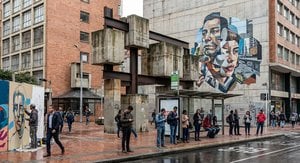
Concrete Narratives: Exploring Urban Life in Modern & Contemporary Art
Explore the evolution of cityscape painting with ArtsDot. Discover key artists from Realism to contemporary movements & invest in timeless urban visions. Expert guidance, museum-quality reproductions.

Urban Visions: A Historical & Artistic Exploration of the Cityscape in Painting
Explore the evolution of cityscape painting from historical maps to Impressionist masterpieces. Discover artists like Caillebotte, Utrillo & Matsumoto Shunsuke. Find museum-quality reproductions at ArtsDot.

Concrete Visions: Exploring Representations of Urban Life in Modern & Contemporary Art
Explore the evolution of cityscape painting from Realism to contemporary art. Discover key artists & invest in timeless urban visions with ArtsDot's expert guidance and museum-quality reproductions.
