


 Aperçu en situation
 Envoyer
 Partager
 Détails de l'œuvre

 Télécharger
 Articles similaires
 Radiographie
 Diaporama
 Statistiques
The Dawn


 Lire la suite
Giclées et impressions d'art
Impressions giclées ou sur toile de qualité musée, avec une production rapide et des finitions au choix. ( Commander la reproduction peinte à la main Passer à l'image numérique)




P118B $10

P118H $10

P118W $10

P438Z $10

P508JH $12

P508YH $12

P805H $10

P805Z $10

P919BZ $10

P919G $10

P919XJ $10

P959ZH $10

P968JZ $12

W106C $8

W218G $10

W218JH $8

W218Y $10

W307PJ $10

W316G $10

W316PJ $8

W316Y $10

W398PJ $8

W4111J $10

W500HY $15

W500JH $15

W692G $12

W849H $8

W940BG $15

W953PJ $8




Choisissez parmi nos formats prédéfinis qui respectent les proportions originales de l’œuvre.

Vous pouvez saisir vos propres dimensions pour vous adapter à un cadre ou à un espace spécifique. Si la taille sélectionnée ne correspond pas aux proportions de l'image originale, nous recadrerons l'œuvre ou étendrons l'image avec une bordure en miroir ou une couleur unie. Une maquette numérique vous sera envoyée pour approbation avant le début de la production.
Veuillez noter que l'aperçu à l'écran ne reflète pas le recadrage ou l'extension réelle. Seule la maquette montrera avec précision la composition finale.
Bien que des tailles personnalisées soient disponibles, nous vous recommandons de choisir une dimension dans la liste prédéfinie afin de préserver les proportions originales.
Livraison dans le monde entier () en 2 semaines au lieu des 4/5 semaines habituelles. (9 septembre)

Livraison express gratuite dans le monde entier

Toile de lin de qualité supérieure

Assurance transport complète

Garantie de remboursement des droits de douane

Garantie de fidélité des couleurs

Politique de retour de 100 jours (uniquement en cas de défaut)

Garantie de remboursement à 100%

Offre de tarifs dégressifs
 L'option verre n'est disponible que pour les dimensions inférieures à 110 cm.

The Dawn
Giclées et impressions d'art
Format de la reproduction
-


Prix total
$ 62
A Symphony of Light and Grace: Exploring John La Farge’s “The Dawn”
John La Farge's "The Dawn," painted in 1899, stands as a testament to the burgeoning Symbolist movement within American art—a captivating blend of Impressionistic observation and deeply rooted spiritual contemplation. More than just a depiction of a seaside scene, it embodies an ambitious exploration of themes relating to rebirth, femininity, and the sublime beauty of nature.Subject Matter and Composition
The painting portrays a woman in flowing white dress gracefully poised on a sandy beach at sunrise. Her arms outstretched upward, she appears to defy gravity, suggesting a soaring movement reminiscent of flight—a deliberate allusion to biblical imagery of ascension and divine grace. Two figures stand silently beside her, anchoring the composition while simultaneously emphasizing the woman’s solitary communion with the radiant dawn. The artist skillfully utilizes perspective to draw the viewer's eye upwards towards the luminous sky, creating an immersive experience that captures the ethereal quality of the moment.Style and Technique: Impressionistic Reverie
La Farge expertly employs Impressionistic techniques—primarily loose brushstrokes and vibrant color palettes—to convey the sensory richness of the beach environment. However, unlike pure Impressionism focused solely on capturing fleeting visual impressions, “The Dawn” transcends mere observation. Instead, it seeks to evoke an emotional response through nuanced tonal gradations and subtle shifts in hue. The artist’s masterful handling of light is particularly noteworthy; he captures the diffused glow of sunrise with remarkable accuracy, transforming the beach into a realm of shimmering color and atmospheric haze. Thick impasto—a technique where paint is applied thickly onto the canvas—adds textural depth to the scene, reinforcing the feeling of movement and dynamism.Historical Context: Symbolism's Embrace of Spirituality
Painted during a period marked by intellectual ferment and artistic experimentation, “The Dawn” aligns perfectly with the tenets of Symbolist art. Rejecting realism’s preoccupation with objective representation, Symbolists aimed to express inner emotions and spiritual truths through evocative imagery—often laden with mythological or biblical references. La Farge's work reflects this broader trend toward exploring psychological landscapes and conveying profound ideas about human experience. The Symbolist movement sought inspiration from sources beyond the visible world, drawing upon mysticism and folklore to enrich their artistic vision.Symbolism: Flight, Light, and Feminine Divinity
The woman’s outstretched arms symbolize aspiration—a yearning for transcendence and connection with something greater than oneself. The radiant dawn represents renewal and spiritual awakening, mirroring themes prevalent in Christian iconography concerning divine illumination and resurrection. White embodies purity and innocence, further reinforcing the painting's symbolic resonance. La Farge subtly incorporates these motifs to elevate “The Dawn” beyond a simple landscape depiction into a meditation on faith and beauty—a timeless masterpiece that continues to inspire viewers with its serene grandeur.Emotional Impact: Tranquility and Wonder
“The Dawn” succeeds in transporting the viewer to a place of profound tranquility and contemplative wonder. The painting’s harmonious color scheme, combined with its graceful composition and evocative brushwork, fosters a sense of serenity—inviting contemplation on themes of hope and spiritual illumination. It's a piece that speaks to the human desire for connection with nature and with something transcendent, capturing the sublime beauty of sunrise in a way that lingers long after viewing.Œuvres similaires


Biographie de l'artiste
Premières années et formation
John La Farge, peintre américain renommé, créateur de vitraux, décorateur et écrivain, est né le 31 mars 1835 à New York City, issu d'une famille française aisée. Élevé dans un environnement bilingue, son intérêt pour l’art s’est manifesté durant ses études au Mount St. Mary’s University dans le Maryland et au St. John’s College (aujourd’hui Fordham University) à New York.Carrière artistique
Les premiers dessins et paysages de La Farge, réalisés lors de ses études à Newport, témoignent d'une originalité marquée, notamment dans la gestion des valeurs chromatiques. De nombreuses peintures mythologiques et religieuses, dont *Virgil*, ont été réalisées dans une zone du Rhode Island appelée « le Paradis », une forêt que La Farge nommait « le bosquet sacré » en référence à Virgile.- Œuvres notables :
- Le bosquet sacré (Rhode Island)
- Trinity Church, Boston (1873) – premier mural de La Farge
- Église de l'Ascension (New York) – présentant un grand retable
Innovations et héritage
La Farge fut un pionnier dans l’étude de l’art japonais, ce qui se reflète dans son œuvre. Il a maintenu un atelier au 51 West 10th Street à Greenwich Village, aujourd'hui faisant partie du site de l'Eugene Lang College de la New School University.- Contributions clés :
- Introduction du verre opalescent dans les vitraux
- Travaux pionniers en peinture murale pour les bâtiments publics et les églises
- Voyages extensifs en Asie et dans le Pacifique Sud, inspirant sa peinture
Vie ultérieure et décès
La Farge est décédé le 14 novembre 1910 à l'hôpital Butler à Providence, Rhode Island. Il a été inhumé au cimetière de Green-Wood à Brooklyn, New York.- Ressources pertinentes :
Conclusion
Les approches innovantes de La Farge en matière d’art, notamment dans les vitraux et la peinture murale, ont eu un impact durable sur l'art américain. Son travail continue d'inspirer les artistes et les amateurs d'art, faisant de lui une figure essentielle de l'histoire de l'art américain. *Le bosquet sacré*, *Trinity Church* à Boston et *l’Église de l'Ascension* ne sont que quelques exemples des œuvres notables de La Farge, témoignant de sa maîtrise de la couleur et de la composition. En tant qu'artiste, écrivain et décorateur, l'héritage de John La Farge perdure comme un témoignage de sa créativité sans limites.
John La Farge
1835 - 1910 , États-Unis d'Amérique
L'essentiel de l'artiste
- Artistes Influents:
- William Morris Hunt
- Thomas Couture
- Date De Décès: 14 novembre 1910
- Date De Naissance: 31 mars 1835
- Lieu De Naissance: New York, États-Unis
- Mouvement Artistique: Symbolisme, Impressionnisme
- Nationalité: Américaine
- Nom Complet: John La Farge
- Notable Artworks:
- The Sacred Grove
- Trinity Church, Boston
- Church of the Ascension
Articles connexes
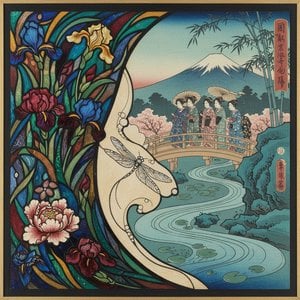
John La Farge: Pioneering American Colorism & Japonisme's Influence
Explore the groundbreaking work of John La Farge, a pioneer of American colorism and stained glass. Discover his captivating Japonisme-inspired murals & lasting legacy in 19th-century art. Expert insights for collectors.

Constable : Les 25 Chefs-d'Œuvre du Maître Anglais | ArtsDot
Plongez dans l'univers de John Constable avec les 25 œuvres incontournables du maître anglais. Découvrez l'histoire, la technique et l'émotion derrière ses paysages romantiques. Reproductions de qualité muséale sur ArtsDot.com.

Réalisme Américain : 10 Chefs-d'œuvre Incontournables pour une Déco Inspirée
Plongez au cœur du Réalisme Américain avec 10 chefs-d'œuvre d'Edward Hopper, Andrew Wyeth et plus. Découvrez l'histoire et les techniques de ces artistes emblématiques. Reproductions de tableaux de qualité musée sur ArtsDot.com !

John George Brown: Capturing American Life & Sentiment in 19th-Century Genre Painting
Explore the captivating genre paintings of John George Brown, celebrated for his realistic depictions of 19th-century American life. Discover his legacy & find museum-quality reproductions at ArtsDot.

John Singer Sargent : Les 25 Œuvres Maîtresses d'un Portraitiste Éminent | ArtsDot
Plongez dans l'univers de John Singer Sargent : découvrez les 25 œuvres qui ont marqué l'histoire de l'art. Portraits impressionnants, réalisme exquis et couleurs vibrantes. Retrouvez ces chefs-d'œuvre en reproduction haute définition sur ArtsDot.com.


