


 Aperçu en situation
 Partager
 Partager
 Détails
 Guide
Guide

 Télécharger
 Articles similaires
 Radiographie
 Voir le diaporama
 Statistiques
Rocks in a River
 Impressionism
 1830
1830 4.0 x 37.0 cm
 Staatliche Kunsthalle Karlsruhe
 Afficher la suite
Giclées et impressions d'art
Impressions giclées ou sur toile de qualité musée, avec une production rapide et des finitions au choix. ( Acheter la peinture faite à la main Passer au format image numérique)




































Choisissez parmi nos formats prédéfinis qui respectent les proportions originales de l’œuvre.

Vous pouvez saisir vos propres dimensions pour vous adapter à un cadre ou à un espace spécifique. Si la taille sélectionnée ne correspond pas aux proportions de l'image originale, nous recadrerons l'œuvre ou étendrons l'image avec une bordure en miroir ou une couleur unie. Une maquette numérique vous sera envoyée pour approbation avant le début de la production.
Veuillez noter que l'aperçu à l'écran ne reflète pas le recadrage ou l'extension réelle. Seule la maquette montrera avec précision la composition finale.
Bien que des tailles personnalisées soient disponibles, nous vous recommandons de choisir une dimension dans la liste prédéfinie afin de préserver les proportions originales.
Livraison dans le monde entier () en 2 semaines au lieu des 4/5 semaines habituelles. (25 septembre)

Livraison express gratuite dans le monde entier

Toile de lin de haute qualité

Assurance transport complète

Garantie de remboursement des droits de douane

Garantie de fidélité des couleurs

Garantie de retour de 100 jours (uniquement en cas de défaut)

Garantie de remboursement à 100%

Tarifs dégressifs sur quantité
 L'option verre n'est disponible que pour les dimensions inférieures à 110 cm.

Rocks in a River
Giclées et impressions d'art
Format de la reproduction
-


Prix total final
$ 62
Œuvres similaires


Biographie de l'artiste
The Architect of Atmosphere: The Life and Legacy of Johann Wilhelm Schirmer
In the grand tapestry of nineteenth-century European art, few threads are as vital to the development of landscape painting as those woven by Johann Wilhelm Schirmer. A true pioneer of the Düsseldorf School, Schirmer did not merely paint scenery; he captured the very soul of the natural world, infusing it with a profound psychological depth and an unparalleled atmospheric realism. Born in 1807 in Jülich, within the Prussian Duchy of Jülich, his journey from a student of historical painting to a master of the landscape reflects a transformative era in German art—a period where the rigid structures of classicism began to yield to the emotive power of Romanticism.
Schirmer’s artistic foundation was laid under the rigorous tutelage of Wilhelm von Schadow at the prestigious Düsseldorf Academy. Initially, his path seemed destined for the grand narratives of historical painting, a discipline that demanded meticulous precision and a deep understanding of classical composition. However, the seeds of a different vision were already germinating within him. Influenced by the timeless landscapes of Nicolas Poussin, Schirmer began to seek a way to marry classical order with the burgeoning spirit of his age. This evolution was further catalyzed by his encounter with Carl Friedrich Lessing, whose passion for Romantic philosophy ignited Schirmer’s interest in exploring themes of sublime beauty and the introspective power of nature.
A Journey Through Light and Terrain
The true breadth of Schirmer's genius is perhaps best understood through his extensive travels across the European continent. These were not merely excursions for leisure, but essential pilgrimages that served as the lifeblood of his creative output. As he traversed the rugged terrains of the Black Forest, the majestic peaks of Switzerland, and the sun-drenched vistas of Italy, Schirmer acted as a visual chronicler of the sublime. His time in Normandy and along the Netherlands coast allowed him to master the depiction of water and light, seen most vibrantly in works such as Sea Surf on the Normandy Coast, where the kinetic energy of crashing waves is rendered with breathtaking vitality.
Each landscape he encountered became a laboratory for technical refinement. He possessed a rare ability to distill the essence of a location onto canvas, using a sophisticated palette and nuanced brushwork to evoke specific moods. Whether it was the tranquil, cool tones found in Rocks in a River or the dramatic tension of an Approaching Thunderstorm in the Roman Campagna, Schirmer’s work moved between the serene and the tempestuous. His ability to balance the structural integrity learned from his classical training with the spontaneous, emotional textures of Romanticism allowed him to create landscapes that felt both eternal and immediate.
The Professorship and Lasting Influence
Schirmer's ascent within the art world was marked by significant professional milestones that solidified his role as a leader of his generation. In 1830, he secured an assistant professorship at the Düsseldorf Academy, and by 1839, he had attained a full professorship. This position granted him the autonomy to shape the next wave of German artists, instilling in them a disciplined approach to observation that would define the Düsseldorf School's international reputation. His influence extended far beyond his own canvases, as he mentored students who would go on to carry his legacy of atmospheric realism into the late nineteenth century.
The historical significance of Johann Wilhelm Schirmer lies in his role as a bridge between eras. He took the disciplined, compositional rigor of the classical tradition and breathed into it the breath of Romantic emotion. Through his eyes, the landscape became more than just a subject; it became a vessel for human feeling, a mirror for the sublime, and a testament to the enduring majesty of the natural world. Even today, his works remain vital touchstones for anyone seeking to understand the profound evolution of German landscape art.

johann wilhelm schirmer
1807 - 1863
En bref
- Artistic Movement Or Style: Düsseldorf School
- Artists Or Movements Influenced By This Artist: ['Poussin']
- Artists Who Influenced This Artist: ['Schadow']
- Date Of Birth: September 5, 1807
- Full Name: Johann Wilhelm Schirmer
- Nationality: German
- Notable Artworks:
- The Grotto of Egeria
- Twelve Scenes from the History of Abraham
- Place Of Birth: Jülich, Prussia
Articles similaires

Évocations de lieux : Un voyage historique à travers l'art du paysage
Explorez l'histoire fascinante de la peinture de paysage à travers les chefs-d'œuvre du Romantisme. Découvrez Friedrich, Turner et Aivazovski et laissez-vous inspirer par la beauté sauvage et le sublime. Reproduction d'art de qualité chez ArtsDot.

Évocations de Lieux : Un Voyage Historique à Travers l'Art du Paysage
Explorez l'histoire fascinante de la peinture de paysage romantique ! Découvrez les maîtres (Friedrich, Turner) et le concept du sublime. Conseils d'experts pour collectionner et apprécier cet art intemporel.

Les 10 Chefs-d'œuvre du Paysage Romantique : Artistes et Décor d'Intérieur
Plongez dans l'émotion du Romantisme avec les 10 plus beaux paysages de Friedrich, Turner & Delacroix. Découvrez leur histoire et trouvez l'inspiration déco idéale sur ArtsDot.com !
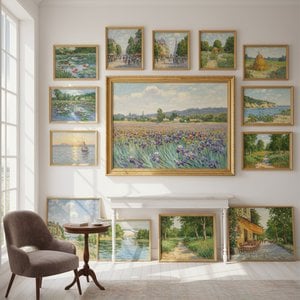
Les 10 Chefs-d'œuvre Impressionnistes qui ont Révolutionné le Paysage
Plongez au cœur de l'Impressionnisme avec les 10 chefs-d'œuvre qui ont révolutionné le paysage. Découvrez Monet, Renoir et plus encore sur ArtsDot.com – reproductions d'art de qualité muséale pour sublimer votre intérieur.

Les 10 Chefs-d'œuvre Impressionnistes qui ont Révolutionné le Paysage
Plongez dans l'univers vibrant de l'impressionnisme ! Découvrez les 10 chefs-d'œuvre de Monet, Renoir et autres maîtres qui ont révolutionné le paysage. Inspirez votre décoration intérieure avec ArtsDot.com : reproductions tableaux de qualité muséale.