


 Aperçu en situation
 Envoyer
 Partager
 Détails de l'œuvre

 Télécharger
 Articles similaires
 Radiographie
 Diaporama
 Statistiques
The altar boy


 Lire la suite
Giclées et impressions d'art
Impressions giclées ou sur toile de qualité musée, avec une production rapide et des finitions au choix. ( Commander la reproduction peinte à la main Passer à l'image numérique)




P118B $10

P118H $10

P118W $10

P438Z $10

P508JH $12

P508YH $12

P805H $10

P805Z $10

P919BZ $10

P919G $10

P919XJ $10

P959ZH $10

P968JZ $12

W106C $8

W218G $10

W218JH $8

W218Y $10

W307PJ $10

W316G $10

W316PJ $8

W316Y $10

W398PJ $8

W4111J $10

W500HY $15

W500JH $15

W692G $12

W849H $8

W940BG $15

W953PJ $8




Choisissez parmi nos formats prédéfinis qui respectent les proportions originales de l’œuvre.

Vous pouvez saisir vos propres dimensions pour vous adapter à un cadre ou à un espace spécifique. Si la taille sélectionnée ne correspond pas aux proportions de l'image originale, nous recadrerons l'œuvre ou étendrons l'image avec une bordure en miroir ou une couleur unie. Une maquette numérique vous sera envoyée pour approbation avant le début de la production.
Veuillez noter que l'aperçu à l'écran ne reflète pas le recadrage ou l'extension réelle. Seule la maquette montrera avec précision la composition finale.
Bien que des tailles personnalisées soient disponibles, nous vous recommandons de choisir une dimension dans la liste prédéfinie afin de préserver les proportions originales.
Livraison dans le monde entier () en 2 semaines au lieu des 4/5 semaines habituelles. (9 septembre)

Livraison express gratuite dans le monde entier

Toile de lin de qualité supérieure

Assurance transport complète

Garantie de remboursement des droits de douane

Garantie de fidélité des couleurs

Politique de retour de 100 jours (uniquement en cas de défaut)

Garantie de remboursement à 100%

Offre de tarifs dégressifs
 L'option verre n'est disponible que pour les dimensions inférieures à 110 cm.

The altar boy
Giclées et impressions d'art
Format de la reproduction
-


Prix total
$ 62
A Window Into Valencia’s Soul
To encounter Joaquín Sorolla y Bastida’s “The Altar Boy” is to step directly into the radiant, sun-drenched atmosphere of the Mediterranean. Painted in 1885 during the artist's formative years in Rome, this monumental canvas serves as a profound testament to the burgeoning influence of Impressionism on European art. While Sorolla would later become world-renowned for his ability to capture the shimmering light of the Valencian coast, this early masterpiece reveals a painter deeply rooted in the traditions of the Barbizon school and Realism. The scene is not merely a depiction of a moment; it is an evocative exploration of human emotion intertwined with the quiet beauty of everyday life, capturing a sense of rural tranquility that feels both timeless and intimately connected to the Spanish landscape.
The composition is masterfully orchestrated to guide the viewer through a sprawling, horizontal narrative. In the foreground, a crumbling wall adorned with creeping ivy provides a textured, organic entry point into the scene, grounding the viewer in a sense of tangible reality. Beyond this threshold, the eye is drawn toward a lively courtyard where the rhythms of social interaction unfold. Men are seen engaged in the quiet concentration of a domino game, while women converse animatedly in the background, creating a dynamic interplay between stillness and movement. This careful arrangement establishes a vastness and openness, inviting those who view the work to linger within its sun-soaked boundaries.
The Mastery of Light and Texture
Sorolla’s technical prowess is most evident in his signature use of impasto—the thick, deliberate application of paint that lends a sculptural quality to the canvas. This technique is particularly striking in the depiction of lush foliage and weathered architectural elements, where visible brushstrokes catch the light and create a sense of spontaneous energy. The palette is dominated by warm yellows, oranges, and earthy tones, all bathed in an ethereal glow that suggests the soft, diffused light of a late afternoon. Unlike the sharp, clinical lines of academic painting, Sorolla employs loose, expressive strokes that allow the atmosphere to breathe, making the very air within the painting feel heavy with warmth and moisture.
The sky above the scene adds a layer of dramatic tension; filled with swirling, heavy clouds, it hints at an impending storm or perhaps a seasonal transition, contrasting beautifully with the sunlit leisure occurring below. This interplay between the bright, optimistic light on the figures and the brooding sky creates a sophisticated visual rhythm. For the collector or interior designer, this duality offers immense versatility; the painting possesses enough warmth to brighten a room while maintaining a profound, contemplative depth that commands attention in any curated space.
A Legacy of Connection and Tranquility
Beyond its technical brilliance, “The Altar Boy” resonates on a deeply emotional level. It serves as a symbolic celebration of human connection and the simple joys of communal life. There is a palpable sense of nostalgia within the work—a longing for a pastoral era where time moved at the pace of a conversation or a game of dominoes. The painting captures the essence of plein air philosophy, prioritizing the atmospheric truth of a location over idealized beauty. It invites the observer to find peace in the mundane and to recognize the sacredness found in everyday social rituals.
For those seeking to incorporate a piece of art history into their personal environments, this reproduction offers more than just decoration; it offers an experience. Whether placed in a grand salon or a quiet study, the work brings with it the spirit of Valencia and the enduring legacy of a master who learned to paint not just what he saw, but how the light felt against the skin. It remains a breathtaking window into a world of light, color, and soul.
Œuvres similaires


Biographie de l'artiste
Jeunesse et Formation
Joaquín Sorolla y Bastida, peintre espagnol renommé, est né le 27 février 1863 à Valence, en Espagne. Fils de Joaquín Sorolla, commerçant, et Concepción Bastida, il fut orphelin dès l'âge de deux ans et élevé par sa tante maternelle et son oncle. Son parcours artistique a débuté dans sa ville natale où il reçut une première formation artistique à l’âge de neuf ans. Il étudia ensuite sous la direction de Cayetano Capuz, Salustiano Asenjo et José Benlliure à Rome. Une bourse d'études de quatre ans lui permit de se perfectionner en peinture à Rome, en Italie, où il fut influencé par Francisco Pradilla.Développement Artistique et Style
Sorolla est surtout connu pour son impressionnisme espagnol, caractérisé par une luminosité exceptionnelle et un sens aigu du mouvement. Son style évolua au fil des ans, passant d'une phase plus académique à une approche plus libre et spontanée, capturant la lumière méditerranéenne avec une maestria inégalée. Il s’est distingué par sa capacité à saisir les effets de la lumière sur l'eau, le sable et la peau, créant des scènes vibrantes et pleines de vie. Son œuvre est marquée par un réalisme poétique, combinant observation attentive et interprétation personnelle.Œuvres Majeures et Réalisations
Sorolla a produit une œuvre prolifique couvrant divers sujets, mais il est particulièrement célèbre pour ses scènes de plage, ses portraits et ses représentations de la vie quotidienne en Espagne. Parmi ses œuvres les plus notables figurent :- Italian Girl with Flowers (fille italienne aux fleurs), témoignant de sa capacité à capturer l'essence de ses sujets.
- Bathing Time (temps de baignage), illustrant son équilibre entre lumière et couleur.
- White Slave Trade (trafic des blanches), une œuvre rare dans son répertoire, abordant un thème social important.
Influences et Héritage
Sorolla fut influencé par l'impressionnisme français, mais il développa un style distinctement espagnol, imprégné de la lumière et des couleurs du sud. Son œuvre a contribué à définir le paysage artistique espagnol de son époque et a inspiré de nombreux artistes ultérieurs. Il est considéré comme l’un des plus grands peintres réalistes et impressionnistes espagnols. Son héritage se perpétue à travers les collections de musées prestigieux du monde entier, notamment au musée Sorolla à Madrid, qui lui est entièrement dédié.Signification Historique
Joaquín Sorolla y Bastida a laissé une empreinte indélébile sur l'histoire de l'art espagnol et international. Son œuvre témoigne d’une époque de transformation sociale et culturelle en Espagne, tout en célébrant la beauté du paysage méditerranéen et la vitalité de son peuple. Il est reconnu pour sa contribution significative au réalisme et à l'impressionnisme, et ses peintures continuent d'inspirer et de captiver les spectateurs du monde entier.
Joaquín Sorolla
1863 - 1923 , Espagne
L'essentiel de l'artiste
- Artistes Influents:
- Francisco Pradilla
- Claude Monet
- John Singer Sargent
- Date De Décès: 10 août 1923
- Date De Naissance: 27 février 1863
- Influences Artistiques:
- Réalisme espagnol
- Luminisme
- Lieu De Naissance: Valence, Espagne
- Mouvement Artistique: Impressionnisme espagnol
- Nationalité: Espagnole
- Nom Complet: Joaquín Sorolla y Bastida
- Œuvres Notables:
- Fille italienne aux fleurs
- Temps de baignade
- Commerce des blanches
- Vision d'Espagne
Articles connexes

Constable : Les 25 Chefs-d'Œuvre du Maître Anglais | ArtsDot
Plongez dans l'univers de John Constable avec les 25 œuvres incontournables du maître anglais. Découvrez l'histoire, la technique et l'émotion derrière ses paysages romantiques. Reproductions de qualité muséale sur ArtsDot.com.

Cultivating Visions: A Historical Journey Through Rural Landscapes in Art
Explore the rich history of rural landscape painting with ArtsDot. Discover Impressionist masterpieces, key artists & movements. Find your perfect serene artwork and bring nature's beauty home.
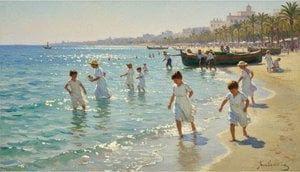
Joaquín Sorolla: Capturing Spanish Light & Life – A Legacy of Impressionism
Explore the luminous world of Joaquín Sorolla, Spanish master of Impressionism. Discover his life, techniques & legacy – a guide for art collectors and enthusiasts. Invest in timeless beauty.
Les 10 Chefs-d'œuvre Impressionnistes qui ont Révolutionné le Paysage
Plongez au cœur de l'Impressionnisme avec les 10 chefs-d'œuvre qui ont révolutionné le paysage. Découvrez Monet, Renoir et plus encore sur ArtsDot.com – reproductions d'art de qualité muséale pour sublimer votre intérieur.

Les 10 Chefs-d'œuvre Impressionnistes qui ont Révolutionné le Paysage
Plongez dans l'univers vibrant de l'impressionnisme ! Découvrez les 10 chefs-d'œuvre de Monet, Renoir et autres maîtres qui ont révolutionné le paysage. Inspirez votre décoration intérieure avec ArtsDot.com : reproductions tableaux de qualité muséale.


