
- Accueil

- Impression sur toile
- Joan Miró
- Untitled

 Commander la reproduction Acheter l'image haute résolution
 Partager
 Partager
 Détails de l'œuvre
 Ajouter aux favoris

 Télécharger
 Articles similaires
 Radiographie
 Diaporama
Untitled

 Afficher la suite
Giclée / Impression d'art
Impression giclée ou sur toile de qualité musée, avec une production rapide et des finitions au choix.




P118B $10

P118H $10

P118W $10

P438Z $10

P508JH $12

P508YH $12

P805H $10

P805Z $10

P919BZ $10

P919G $10

P919XJ $10

P959ZH $10

P968JZ $12

W106C $8

W218G $10

W218JH $8

W218Y $10

W307PJ $10

W316G $10

W316PJ $8

W316Y $10

W398PJ $8

W4111J $10

W500HY $15

W500JH $15

W692G $12

W849H $8

W940BG $15

W953PJ $8




Choisissez parmi nos formats prédéfinis qui respectent les proportions originales de l’œuvre.

Vous pouvez saisir vos propres dimensions pour vous adapter à un cadre ou à un espace spécifique. Si la taille sélectionnée ne correspond pas aux proportions de l'image originale, nous recadrerons l'œuvre ou étendrons l'image avec une bordure en miroir ou une couleur unie. Une maquette numérique vous sera envoyée pour approbation avant le début de la production.
Veuillez noter que l'aperçu à l'écran ne reflète pas le recadrage ou l'extension réelle. Seule la maquette montrera avec précision la composition finale.
Bien que des tailles personnalisées soient disponibles, nous vous recommandons de choisir une dimension dans la liste prédéfinie afin de préserver les proportions originales.
Livraison dans le monde entier () en 2 semaines au lieu des 4/5 semaines habituelles. (22 juillet)

Livraison express gratuite dans le monde entier

Toile de lin de haute qualité

Assurance transport complète

Garantie de remboursement des frais de douane

Garantie de fidélité des couleurs

Politique de retour de 60 jours (uniquement en cas de défaut)

Garantie de remboursement à 100%

Réduction sur les achats groupés
 L'option verre n'est disponible que pour les dimensions inférieures à 110 cm.

Untitled
Giclée / Impression d'art
Format de reproduction
-


Prix total final
-
Description de l'œuvre
A Catalan Visionary: The Life and Art of Joan Miró
Joan Miró i Ferrà, born in Barcelona in 1893, stands as one of the most significant figures in 20th-century art. His journey was not merely a progression through styles but an exploration of inner worlds, translating dreams, memories, and Catalan identity onto canvas with a uniquely poetic visual language. From humble beginnings marked by illness and initial parental reservations about his artistic pursuits, Miró persevered, driven by an innate need to express the intangible—the emotions, sensations, and subconscious currents that lie beneath the surface of reality. His early life was steeped in the traditions of Barcelona, a city brimming with architectural marvels thanks to Antoni Gaudí, whose organic forms would subtly influence Miró’s later abstractions. The goldsmithing profession of his father instilled an appreciation for meticulous craftsmanship, while the rugged Catalan landscape became a recurring motif and source of inspiraEarly Influences and Artistic Development
Miró's formative years were profoundly shaped by Barcelona itself—a city pulsating with artistic fervor thanks to Gaudí’s groundbreaking designs. This fascination with organic forms would permeate his oeuvre, manifesting in swirling lines and fantastical creatures that defy conventional representation. Despite initial familial concerns regarding his artistic inclinations, Miró possessed an unwavering determination to pursue his passion, fueled by a deep connection to Catalan folklore and mythology. His early experiments encompassed drawing and etching, honing skills that would prove invaluable as he transitioned towards painting—a medium he embraced with fervor and innovation.The Surrealist Period and Beyond
Miró’s artistic breakthrough arrived during the Surrealist movement of the 1920s, though he resisted categorization within established stylistic frameworks. Embracing automatism—the spontaneous creation of images without conscious control—he tapped into the realm of subconscious thought, producing canvases brimming with dreamlike imagery and symbolic references. Recurring motifs included birds, animals, and geometric shapes, each imbued with layers of meaning rooted in Catalan culture and personal experience. While Surrealist critics often debated his adherence to the movement’s principles, Miró maintained a distinctive artistic voice—one characterized by lyrical abstraction and an unwavering commitment to conveying emotional depth.Technique and Style: A Celebration of Color and Line
Miró's technique was remarkably consistent throughout his prolific career, prioritizing color and line as primary expressive tools. He favored tempera paint on canvas—a medium known for its luminosity and durability—allowing him to achieve vibrant hues and bold textural contrasts. His brushstrokes were loose and gestural, conveying movement and spontaneity while simultaneously capturing the essence of his inner vision. The artist’s meticulous attention to detail was balanced by a willingness to embrace randomness—introducing accidental marks and textures that enriched the overall composition. This approach resulted in canvases that possess an arresting immediacy—drawing viewers into a captivating dance between observation and imagination.Symbolism and Emotional Resonance
Throughout his artwork, Miró employed symbolism extensively—drawing upon Catalan folklore, mythology, and personal memories to convey profound emotional resonance. Recurring figures like birds represented freedom and aspiration, while animals embodied instinctual behavior and primal forces. Geometric shapes—circles, squares, triangles—served as anchors of stability amidst the swirling chaos of abstraction, symbolizing universal truths and underlying harmonies. The artist’s canvases are not merely visual representations but conduits for conveying feelings of wonder, melancholy, and joy—inviting contemplation and fostering a connection between the viewer and the artist's innermost self.Legacy and Influence
Joan Miró’s enduring legacy extends far beyond his own lifetime, influencing generations of artists across diverse disciplines. His pioneering approach to abstraction paved the way for subsequent movements—such as Pop Art and Minimalism—demonstrating the transformative potential of liberating oneself from conventional artistic constraints. More importantly, Miró instilled a profound appreciation for imagination and intuition—encouraging viewers to embrace ambiguity and explore the hidden dimensions of consciousness. Today, his artwork continues to inspire creativity and provoke dialogue—serving as a testament to the power of art to transcend boundaries and illuminate the human condition.


Biographie de l'artiste
**jeune vie et carrière**
joan miró, un peintre, sculpteur et céramiste espagnol renommé, est né le 20 avril 1893 à Barcelone, en Espagne. Sa famille, aux origines juives (marrano ou converti), a eu une influence significative sur sa jeunesse. Le père de Miró, Miquel Miró Adzerias, était orfèvre et horloger, ce qui peut avoir inspiré l'intérêt de l'artiste pour les détails complexes.**développement artistique**
Miró a commencé des cours de dessin à l'âge de sept ans dans une école privée à Barcelone. Il s'est ensuite inscrit à l'Académie des Beaux-Arts La Llotja, malgré le désaccord de son père. Cela marque le début du parcours artistique de Miró, qui mènera finalement à devenir un pionnier du surréalisme et de l'art abstrait.**œuvres notables et collaborations**
* la ferme (1922), une peinture qui présente la transition de Miró vers un style plus individualiste, avec des qualités nationalistes. * Collaboration avec Max Ernst sur les conceptions pour le ballet de Sergueï Diaghilev en 1926, pionnière de la technique du grattage. * les intérieurs néerlandais (1928), une série de peintures inspirée par Hendrick Martenszoon Sørgh et Jan Steen, mettant en valeur le style unique de Miró.**musées et héritage**
* La Fundació Joan Miró à Barcelone, établie en 1975, dédiée à la présentation des œuvres de Miró. * La Fundació Pilar i Joan Miró à Palma de Majorque, établie en 1981, consolidant davantage l'héritage de Miró.**œuvres clés et leur signification**
- peinture (1933), une peinture à l'huile abstraite, exemplifiant la vision surréaliste de Miró.
- pintura 11, une autre œuvre abstraite notable, mettant en valeur le style unique de Miró.
- l'oreille de blé (37 x 46 cm), une œuvre surréaliste, présentant des détails complexes.
- la naissance du jour, une œuvre d'art abstraite, consolidant davantage les contributions de Miró à l'art abstrait.
**conclusion**
L'héritage de Joan Miró en tant que pionnier du surréalisme et de l'art abstrait est indéniable. Ses œuvres, présentées dans divers musées, dont la Fundació Joan Miró, continuent d'inspirer les artistes et les amateurs d'art du monde entier. Pour plus d'informations sur les œuvres de Miró, visitez [https://ArtsDot.com/@/joan-miro](https://ArtsDot.com/@/joan-miro) ou explorez ses œuvres notables à [https://ArtsDot.com/@@/8ewky5-joan-miro-painting](https://ArtsDot.com/@@/8ewky5-joan-miro-painting).- Consultez d'autres œuvres par Joan Miró sur ArtsDot.com
- Découvrez le musée Fundació Joan Miró à Barcelone, en Espagne
- Explorez la biographie de l'artiste et ses œuvres notables sur [https://en.wikipedia.org/wiki/joan_mir%c3%b3](https://en.wikipedia.org/wiki/joan_mir%c3%b3)

Joan Miró
1893 - 1983 , Espagne
En bref
- Artistes Influents:
- Vincent van Gogh
- Paul Cézanne
- Date De Décès: 1983
- Date De Naissance: 20 avril 1893
- Lieu De Naissance: Barcelone, Espagne
- Mouvement Artistique: Surréalisme, Art abstrait
- Nationalité: Espagnole
- Nom Complet: Joan Miró i Ferrà
- Oeuvres Notables:
- La Ferme
- Intérieurs néerlandais
- Peinture (1933)
- L'Oreille de blé
Articles connexes
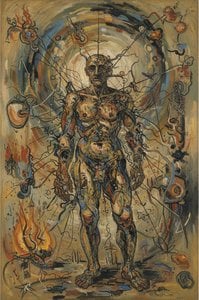
André Masson: Automatism, Surrealism & Primal Expression in 20th-Century Art
Explore the revolutionary art of André Masson – pioneer of automatism & Surrealist expression. Discover his powerful imagery, innovative techniques, and lasting influence on modern art. Learn more at ArtsDot.
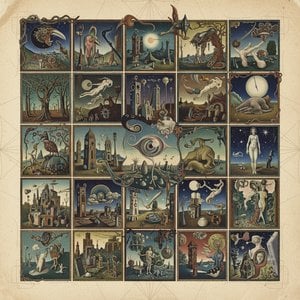
Max Ernst : Les 25 Œuvres Maîtresses d'un Surréalisme Révolutionnaire | ArtsDot
Plongez dans l'univers surréaliste de Max Ernst ! Découvrez les 25 œuvres les plus emblématiques du maître allemand, entre frottage, collage et rêves éveillés. Inspirez votre décoration intérieure avec ArtsDot : reproductions de tableaux de qualité muséale et collection d'art unique. Explorez la co

Joan Miró : Les 25 Œuvres Maîtresses d'un Artiste Catalan Visionnaire | ArtsDot
Plongez dans l'univers vibrant de Joan Miró ! Découvrez les 25 œuvres majeures du maître catalan, explorant le surréalisme et ses formes abstraites. Reproductions de qualité muséale & inspiration déco sur ArtsDot.com.

Surréalisme : Les 10 Chefs-d'Œuvre Indéfinissables pour une Déco d'Exception |
Plongez dans l'univers fascinant du Surréalisme avec . Découvrez les 10 chefs-d'œuvre de Dalí, Magritte & Miró qui ont marqué l'histoire de l'art. Reproductions haute définition et inspiration déco sur .

Surréalisme : 10 Chefs-d'œuvre Révolutionnaires pour une Déco Inspirée
Plongez dans l'univers fascinant du surréalisme avec ArtsDot.com ! Découvrez 10 chefs-d’œuvre de Dalí, Magritte et autres artistes emblématiques. Inspirez votre déco avec des reproductions de tableaux exceptionnelles. Explorez la collection en ligne !



