


 Aperçu en situation
 Partager
 Partager
 Détails
 Guide
Guide

 Télécharger
 Articles similaires
 Radiographie
 Voir le diaporama
 Statistiques
Cabeza de campesino catalán 1


 Afficher la suite
Giclées et impressions d'art
Impressions giclées ou sur toile de qualité musée, avec une production rapide et des finitions au choix. ( Acheter la peinture faite à la main Passer au format image numérique)




P118B $10

P118H $10

P118W $10

P438Z $10

P508JH $12

P508YH $12

P805H $10

P805Z $10

P919BZ $10

P919G $10

P919XJ $10

P959ZH $10

P968JZ $12

W106C $8

W218G $10

W218JH $8

W218Y $10

W307PJ $10

W316G $10

W316PJ $8

W316Y $10

W398PJ $8

W4111J $10

W500HY $15

W500JH $15

W692G $12

W849H $8

W940BG $15

W953PJ $8




Choisissez parmi nos formats prédéfinis qui respectent les proportions originales de l’œuvre.

Vous pouvez saisir vos propres dimensions pour vous adapter à un cadre ou à un espace spécifique. Si la taille sélectionnée ne correspond pas aux proportions de l'image originale, nous recadrerons l'œuvre ou étendrons l'image avec une bordure en miroir ou une couleur unie. Une maquette numérique vous sera envoyée pour approbation avant le début de la production.
Veuillez noter que l'aperçu à l'écran ne reflète pas le recadrage ou l'extension réelle. Seule la maquette montrera avec précision la composition finale.
Bien que des tailles personnalisées soient disponibles, nous vous recommandons de choisir une dimension dans la liste prédéfinie afin de préserver les proportions originales.
Livraison dans le monde entier () en 2 semaines au lieu des 4/5 semaines habituelles. (24 septembre)

Livraison express gratuite dans le monde entier

Toile de lin de haute qualité

Assurance transport complète

Garantie de remboursement des droits de douane

Garantie de fidélité des couleurs

Garantie de retour de 100 jours (uniquement en cas de défaut)

Garantie de remboursement à 100%

Tarifs dégressifs sur quantité
 L'option verre n'est disponible que pour les dimensions inférieures à 110 cm.

Cabeza de campesino catalán 1
Giclées et impressions d'art
Format de la reproduction
-


Prix total final
$ 62
A Visionary Fragment of Catalan Identity
In the profound depths of Joan Miró’s 1948 masterpiece, Cabeza de campesino catalán, we encounter more than just a painting; we enter a dreamscape where the boundaries between the earthly and the celestial dissolve. This striking work serves as a distilled essence of Catalan identity, captured through the lens of a man deeply connected to his roots yet spiritually untethered. The canvas is dominated by an expansive, contemplative blue that immediately envelops the viewer in a sense of serene introspection. Yet, this stillness is punctuated by sudden, vibrant bursts of yellow and red, drawing the eye upward toward three luminous stars nestled in the upper left corner. These celestial bodies act as beacons of hope and aspiration, embodying Miró’s lifelong belief in the transformative power of the imagination and the ability of dreams to transcend the weight of reality.
The composition presents a surrealist ballet of symbols that dance across the blue void. Amidst the cosmic arrangement, an airplane glides through the ether, trailed by a rocket ship that seems to surge toward it with purposeful momentum. These elements, alongside the presence of stylized figures and a solitary red dot in the upper right, create a visual paradox that challenges our conventional understanding of space and gravity. For the collector or interior designer, this piece offers a captivating focal point—a window into a universe where the mundane is elevated to the mythic, making it an ideal centerpiece for spaces that demand both intellectual depth and aesthetic wonder.
The Alchemy of Surrealist Abstraction
Miró’s technique in this work is a masterclass in Surrealist Abstraction, utilizing what he famously termed “automatism” to bypass the rational mind. Rather than adhering to the rigid constraints of realistic representation, Miró allowed his brushstrokes to flow with a spontaneous, almost rhythmic energy. By applying paint with loose, gestural movements and incorporating dripping methods, he invited chance to participate in the creative act. This approach results in an arresting blend of abstraction and figuration; while we can recognize the simplified, iconic forms of a peasant farmer’s head, they are stripped of all anatomical detail to better tap into deeper emotional currents.
The artist’s use of geometric shapes—circles and squares—serves to anchor the more fluid, organic elements of the composition. This deliberate tension between structure and spontaneity creates a visual rhythm that keeps the eye moving, discovering new layers of meaning with every glance. The technique does not merely depict a subject; it constructs an atmosphere. For those seeking a high-quality reproduction, the magic lies in capturing this delicate balance of texture and color, ensuring that the energetic spirit of Miró’s hand is felt within the home.
Resilience Amidst Shadows
To truly appreciate Cabeza de campesino catalán, one must understand the turbulent historical landscape from which it emerged. Painted during the repressive era of Francisco Franco’s dictatorship in Spain, the work carries an undercurrent of quiet resistance. Miró, a son of Barcelona, used his art to preserve the soul of Catalonia when its culture was under threat of censorship and erasure. The depiction of the peasant farmer is not merely a pastoral nod; it is a profound tribute to the rural heart of Catalan tradition—a symbol of endurance and unyielding spirit in the face of political oppression.
This historical weight adds a layer of gravity to the painting’s whimsical elements, transforming a seemingly playful arrangement of stars and rockets into a poignant statement on human resilience. The artwork invites viewers to contemplate the struggle between the darkness of political reality and the light of creative freedom. Owning a reproduction of such a piece means bringing into one's environment a legacy of courage and a testament to the enduring power of the human spirit, making it an invaluable acquisition for any serious lover of art history.
Œuvres similaires
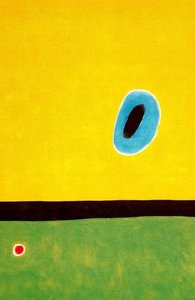


Biographie de l'artiste
**jeune vie et carrière**
joan miró, un peintre, sculpteur et céramiste espagnol renommé, est né le 20 avril 1893 à Barcelone, en Espagne. Sa famille, aux origines juives (marrano ou converti), a eu une influence significative sur sa jeunesse. Le père de Miró, Miquel Miró Adzerias, était orfèvre et horloger, ce qui peut avoir inspiré l'intérêt de l'artiste pour les détails complexes.**développement artistique**
Miró a commencé des cours de dessin à l'âge de sept ans dans une école privée à Barcelone. Il s'est ensuite inscrit à l'Académie des Beaux-Arts La Llotja, malgré le désaccord de son père. Cela marque le début du parcours artistique de Miró, qui mènera finalement à devenir un pionnier du surréalisme et de l'art abstrait.**œuvres notables et collaborations**
* la ferme (1922), une peinture qui présente la transition de Miró vers un style plus individualiste, avec des qualités nationalistes. * Collaboration avec Max Ernst sur les conceptions pour le ballet de Sergueï Diaghilev en 1926, pionnière de la technique du grattage. * les intérieurs néerlandais (1928), une série de peintures inspirée par Hendrick Martenszoon Sørgh et Jan Steen, mettant en valeur le style unique de Miró.**musées et héritage**
* La Fundació Joan Miró à Barcelone, établie en 1975, dédiée à la présentation des œuvres de Miró. * La Fundació Pilar i Joan Miró à Palma de Majorque, établie en 1981, consolidant davantage l'héritage de Miró.**œuvres clés et leur signification**
- peinture (1933), une peinture à l'huile abstraite, exemplifiant la vision surréaliste de Miró.
- pintura 11, une autre œuvre abstraite notable, mettant en valeur le style unique de Miró.
- l'oreille de blé (37 x 46 cm), une œuvre surréaliste, présentant des détails complexes.
- la naissance du jour, une œuvre d'art abstraite, consolidant davantage les contributions de Miró à l'art abstrait.
**conclusion**
L'héritage de Joan Miró en tant que pionnier du surréalisme et de l'art abstrait est indéniable. Ses œuvres, présentées dans divers musées, dont la Fundació Joan Miró, continuent d'inspirer les artistes et les amateurs d'art du monde entier. Pour plus d'informations sur les œuvres de Miró, visitez [https://ArtsDot.com/@/joan-miro](https://ArtsDot.com/@/joan-miro) ou explorez ses œuvres notables à [https://ArtsDot.com/@@/8ewky5-joan-miro-painting](https://ArtsDot.com/@@/8ewky5-joan-miro-painting).- Consultez d'autres œuvres par Joan Miró sur ArtsDot.com
- Découvrez le musée Fundació Joan Miró à Barcelone, en Espagne
- Explorez la biographie de l'artiste et ses œuvres notables sur [https://en.wikipedia.org/wiki/joan_mir%c3%b3](https://en.wikipedia.org/wiki/joan_mir%c3%b3)

Joan Miró
1893 - 1983 , Espagne
En bref
- Artistes Influents:
- Vincent van Gogh
- Paul Cézanne
- Date De Décès: 1983
- Date De Naissance: 20 avril 1893
- Lieu De Naissance: Barcelone, Espagne
- Mouvement Artistique: Surréalisme, Art abstrait
- Nationalité: Espagnole
- Nom Complet: Joan Miró i Ferrà
- Oeuvres Notables:
- La Ferme
- Intérieurs néerlandais
- Peinture (1933)
- L'Oreille de blé
Articles similaires

Serene Blue Backgrounds: Discover Soulful Art to Transform Your Space with Timeless Elegance
Transform your home with soulful blue art. From serene Monet impressions to modern textured sculptures, discover curated masterpieces designed to inspire calm. Explore expert art consultations and bespoke hand-painted reproductions to create your personal sanctuary.
Max Ernst : Les 25 Œuvres Maîtresses d'un Surréalisme Révolutionnaire | ArtsDot
Plongez dans l'univers surréaliste de Max Ernst ! Découvrez les 25 œuvres les plus emblématiques du maître allemand, entre frottage, collage et rêves éveillés. Inspirez votre décoration intérieure avec ArtsDot : reproductions de tableaux de qualité muséale et collection d'art unique. Explorez la co
The Allure of Azure: Exploring the Symbolic & Aesthetic Depths of Blue in Art History
Explore the rich history of blue in art! Discover its symbolism, from ancient pigments to modern masterpieces by Kandinsky & Seurat. Uncover the psychological impact and cultural meanings behind this captivating hue.

Les 10 Chefs-d'œuvre Dominés par le Bleu Ardoise : Art, Histoire & Décor
Plongez dans l'univers fascinant des 10 plus beaux tableaux dominés par le bleu ardoise. Découvrez l'histoire, les artistes et les techniques de ces chefs-d'œuvre impressionnistes et contemporains. Inspirez votre décoration intérieure avec !

Joan Miró : Les 25 Œuvres Maîtresses d'un Artiste Catalan Visionnaire | ArtsDot
Plongez dans l'univers vibrant de Joan Miró ! Découvrez les 25 œuvres majeures du maître catalan, explorant le surréalisme et ses formes abstraites. Reproductions de qualité muséale & inspiration déco sur ArtsDot.com.


