

- 160.0 x 110.0 cm


L'image s'adapte à vos choix : , .
Description de la pièce
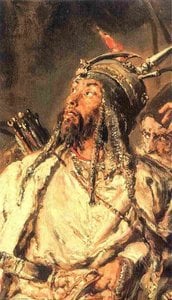
A profound sense of introspection defines this 1892 Romanticism self-portrait by Jan Matejko, capturing the Polish master in a moment of quiet contemplation that you can bring to your collection via ArtsDot.
 Lire la suite
Biographie de l'artiste
Découvrez Jan Matejko (1838-1893), peintre polonais et figure emblématique ! Ses toiles historiques, comme 'Bataille de Grunwald', captivent par leur romantisme et grandeur.
Reproduction à l'huile faite à la main
Huile sur toile peinte à la main, avec cadre et dimensions personnalisés, réalisée sur commande par nos artistes. ( Passer au format impression Passer au format numérique)
En savoir plus sur cette peinture
 Aperçu en situation
 Envoyer
 Partager
 Détails de l'œuvre
 Guide
Guide

 Télécharger l'image
 Articles similaires
 Radiographie
 Diaporama
 Questions et réponses
 Statistiques
Commandez votre tableau en quatre étapes simples
Prenez votre temps. Vous pouvez modifier chaque réponse ; le prix dans votre panier s'ajustera selon vos choix.
1 Première étape sur quatre
Quel format souhaitez-vous ?
Ces formats respectent les proportions de l'œuvre originale. Le dessin illustre votre choix sur un mur, au-dessus d'un canapé de deux mètres.
Ou indiquez vos propres dimensions
Choisissez parmi nos formats prédéfinis qui respectent les proportions originales de l’œuvre.

Saisissez la largeur et la hauteur souhaitées, pour s'adapter à votre cadre ou à votre mur. Cette œuvre est peinte à la main ; ainsi, pour un format de forme différente, l'artiste peut peindre un peu plus autour du tableau ou réduire légèrement les bords — c'est vous qui choisissez. Nous vous envoyons une maquette numérique pour approbation avant que la peinture ne commence. L'image présentée sur cette page ne reflète pas le résultat réel — seule la maquette le fait.
2 Deuxième étape sur quatre
Comment doit-il être préparé : roulé, tendu ou encadré ?
Les prix ci-dessous correspondent au format choisi à l'étape précédente.
Choisissez le type de bordure pour votre toile tendue
Choisissez votre cadre

Bords blancs €1

Bords estompés €1

Bords imprimés €1

P118B €10

P118H €10

P118W €10

P438Z €10

P508JH €12

P508YH €12

P805H €10

P805Z €10

P919BZ €10

P919G €10

P919XJ €10

P959ZH €10

P968JZ €12

W106C €8

W218G €10

W218JH €8

W218Y €10

W307PJ €10

W316G €10

W316PJ €8

W316Y €10

W398PJ €8

W4111J €10

W500HY €15

W500JH €15

W692G €12

W849H €8

W940BG €15

W953PJ €8

H24-GOLD €30

H24-SILVER €30

H36-GOLD €45

H36-SILVER €45
Sous cadre
Baguette : . Dimensions hors tout avec le cadre : .
3 Troisième étape sur quatre
Souhaitez-vous apporter des modifications à la peinture ?
La plupart des gens répondent non. Comme chaque peinture est réalisée à la main, notre artiste peut également l'adapter pour vous.
Après la commande, l'équipe de ArtsDot.com contactera le client par e-mail pour obtenir ses instructions et lui fournir un aperçu de la maquette
4 Quatrième étape sur quatre
Quelques options de finition
Tous sont facultatifs. Les réponses déjà sélectionnées ne comportent aucun coût supplémentaire.
Qui l'a peint ?
Livraison dans le monde entier () en 3 à 4 semaines au lieu des 5 semaines habituelles. (4 novembre). Aucun compromis sur la qualité.
Une plaque nominative, comme au musée ?
Détails de la plaque en bronze gravée
This elegant plaque features the artist's name and the title of the artwork, finely engraved for a timeless presentation.
It is made from bronze with a refined, elegant finish. The text is precisely laser-engraved for a sharp and permanent result. Measuring 9x2 cm, the plaque is compact yet easy to read. It's built to be durable and scratch-resistant, offering a professional, museum-quality look. Mounting is simple thanks to the included adhesive backing.
Détails de la plaque en acrylique transparent
The plaque includes essential engraved details such as the artist's name, the title of the artwork, the date it was created, the type of media used-like oil on canvas or watercolor-a brief description of the piece, and a QR code that links to the complete artwork information.
It is crafted from clear acrylic, offering a sleek, modern appearance. The text is UV-engraved in black to ensure strong visual contrast. With a size of 10x15 cm, it ensures optimal readability. It comes equipped with two metal hooks for secure wall mounting. The plaque is designed to be weather-resistant, making it suitable for various environments, and it includes interactive features that work seamlessly with smartphone scanning.
Détails de la plaque en acrylique noir
This elegant plaque includes engraved information such as the artist's name, the title of the artwork, the date it was created, the type of media used (like oil on canvas or watercolor), a short description of the artwork, and a QR code for quick access to more information.
The plaque itself is made from refined black acrylic with a premium finish. The text is laser-engraved in white for high contrast and readability. Its size is 10x15 cm, designed to be easy to read. It comes with two metal hooks for professional mounting. The design is sleek and fits any interior style. It is also weather-resistant and durable, with built-in digital integration for mobile compatibility.
Un vernis protecteur ?
Pour quand en avez-vous besoin ?
✓ Vérifier et commander
Votre tableau, tel que vous l'avez commandé

Self-portrait
Technique de reproduction
Format de la reproduction
-

Artiste de prestige
Plus de détails, de finesse et un temps de production accru
-

Cadre de reproduction
-
-
Pour les œuvres ou reproductions dont un côté mesure plus de 105 cm (environ 41 pouces), le cadre sera expédié sous forme de kit démonté. Cette méthode garantit une livraison sécurisée et prévient tout dommage pendant le transport.
Assemblage professionnel requis - ce produit n'est pas destiné au bricolage (DIY).
Le kit doit être assemblé et la toile tendue par un encadreur professionnel expérimenté, en utilisant de la colle à bois (non fournie), une pince à tendre la toile et des serre-joints pour maintenir les traverses d'équerre pendant le séchage de la colle. Un assemblage incorrect ou une tension inégale de la toile peut endommager l'œuvre de manière irréversible et n'est pas couvert par notre garantie.
 Pour les œuvres ou reproductions dont un côté mesure plus de 105 cm (environ 41 pouces), le cadre sera expédié sous forme de kit démonté. Cette méthode garantit une livraison sécurisée et prévient tout dommage pendant le transport.
Toutes les baguettes en bois massif sont incluses, découpées avec précision à la taille requise.
À assembler avec les vis fournies, ainsi qu'avec de la colle à bois pour les assemblages d'angles (non fournie), à prévoir par votre encadreur.
L'utilisation d'outils professionnels est requise et non incluse : une pince à tendre la toile (tendeur) et des serre-joints pour maintenir les baguettes bien d'équerre pendant le séchage de la colle.
Important :
L'assemblage des angles nécessite de la colle à bois, les barres doivent être maintenues avec des serre-joints jusqu'au séchage complet de la colle, et le tendage de la toile sur le châssis assemblé nécessite une pince à tendre la toile. Aucun de ces éléments n'est inclus dans le kit. Veuillez consulter un encadreur professionnel expérimenté avant de commander ce format.

Cartel
-
-

Vernis de protection
Vernis brillant (intensifie les couleurs, protège de la lumière et de l'humidité)
-

Personnaliser mon œuvre
Exemples de personnalisation : remplacer le visage par une photo du client ; ajouter un animal de compagnie (par exemple, remplacer un chat par un chien) ; inclure un message caché en arrière-plan ; modifier le paysage ou les éléments d'arrière-plan.
-

Livraison urgente
Livraison dans le monde entier () en 3 à 4 semaines au lieu des 5 semaines habituelles. (4 novembre). Aucune concession sur la qualité.
-
Livraison express
Livraison dans le monde entier () sous 5 semaines. (11 novembre).
Inclus
Prix total
€ 234
L'option verre n'est disponible que pour les dimensions inférieures à 110 cm.
Inclus avec chaque commande
- Livraison express gratuite dans le monde entier
- Toile de lin de qualité supérieure
- Assurance transport complète
- Garantie de remboursement des droits de douane
- Garantie de fidélité des couleurs
- Politique de retour de 100 jours (uniquement en cas de défaut)
- Garantie de remboursement à 100%
- Offre de tarifs dégressifs


An Intimate Encounter with a Master
In the vast canon of nineteenth-century European art, few figures loom as large in the national consciousness of Poland as Jan Matejko. While he is most celebrated for his monumental, sweeping historical canvases that capture the epic triumphs and tragedies of the Polish spirit, his Self-portrait of 1892 offers a profound departure from the grandiosity of the battlefield. This intimate oil on canvas invites us into the private sanctuary of the artist’s mind, presenting a moment of quietude that stands in stark contrast to the turbulent political histories he so famously documented. Here, the brushwork does not strive for the chaotic energy of war, but rather settles into a contemplative stillness, capturing an older, wiser gentleman lost in the depths of his own thoughts.
The composition is masterfully structured to evoke a sense of psychological depth. Seated in a rich, red chair that anchors the lower portion of the frame, Matejko presents himself with arms crossed—a posture that suggests both a defensive enclosure and a profound state of introspection. The artist’s face, framed by a dignified beard, becomes the emotional epicenter of the work. Through a sophisticated interplay of light and shadow, the painter utilizes the hallmarks of Romanticism to breathe life into the scene; the warm, enveloping tones of his attire and the velvet textures of the chair are set against a more muted, cooler background, creating a chiaroscical effect that pulls the viewer toward his gaze. This technique does more than just define form; it creates an atmosphere of heavy, thoughtful silence.
Symbolism and the Weight of Legacy
Beyond the mere depiction of a man in a room, every element within this self-portrait serves as a subtle nod to the intellectual life of the creator. The presence of books, strategically placed within the composition, speaks to the scholarly rigor and the historical weight that Matejko carried throughout his career. These objects are not merely props but symbols of the knowledge and the heavy burden of history that informed his every stroke. For the collector or the interior designer, this painting offers a sophisticated narrative of wisdom and permanence. It is a piece that does not demand attention through loud colors, but commands respect through its quiet authority and the palpable sense of dignity it radiates.
For those looking to integrate such a masterpiece into a curated space, the Self-portrait acts as a soulful anchor. Whether placed in a private library, a formal study, or an elegant living area, the painting brings with it a legacy of European Romanticism. The deep reds and earthy tones provide a luxurious warmth that complements classical decor, while the subject matter provides a conversation piece regarding the nature of identity and the artist's role in society. Owning a high-quality reproduction of this work is an opportunity to possess a fragment of history—a window into the soul of a man who spent his life painting the destiny of a nation.
Questions et réponses
Quelle tonalité émotionnelle accompagne le style Romanticism de « Self-portrait » ?
«Self-portrait» dégage une tonalité émotionnelle Reflective au sein du mouvement Romanticism.
À quelle période de la carrière de Jan Matejko se situe « Self-portrait » ?
« Self-portrait » est représentatif de la période Late Period de Jan Matejko.
Comment puis-je obtenir une version numérique de «Self-portrait» de Jan Matejko ?
Pour obtenir une version numérique de «Self-portrait» de Jan Matejko, commandez téléchargement d'une image numérique haute résolution sur sa page Image numérique haute résolution.
Œuvres similaires


![La Bataille De Grunwald [tannenberg] — Jan Matejko, Peinture Historique Romantique](/media/artworks/images-thumb/76/63/7663bffc0e03f3032abe818c6c091ed6.jpg)


Jan Matejko
1838 - 1893, Pologne
Biographie de l'artiste
Premières années et formation
Jan Alojzy Matejko, peintre polonais renommé, est né le 24 juin 1838 à Cracovie, en Pologne. Son père, Franciszek Ksawery Matejko, était un tuteur et professeur de musique d'origine tchèque. La vie précoce de Jan a été marquée par la révolution de Cracovie de 1846 et le siège de 1848 de Cracovie par les Autrichiens, des événements qui influenceraient plus tard ses thèmes artistiques. Matejko a fréquenté le lycée Saint-Anne mais l'a quitté en 1851 en raison de mauvaises notes. Cependant, il a montré un talent exceptionnel pour l'art dès son plus jeune âge. Il a étudié à l'École des beaux-arts de Cracovie de 1852 à 1858, se spécialisant dans la peinture historique sous la tutelle de Wojciech Korneli Stattler et Władysław Łuszczkiewicz.Carrière artistique
La première œuvre majeure de Matejko, Les Tsars Chouyski devant Zygmunt III, a été achevée en 1853. Il a commencé à exposer ses peintures historiques au cercle des amis des beaux-arts de Cracovie en 1855. Parmi ses œuvres notables figurent :- Rejtan (1866): une grande peinture à l'huile sur toile représentant un moment clé de l'histoire polonaise.
- L’Union de Lublin (1869): une œuvre importante qui met en valeur la capacité de Matejko à capturer des événements historiques.
- La Bataille de Grunwald (1878): un chef-d'œuvre qui souligne sa capacité à transmettre l'intensité des scènes de bataille.
Influences et développement artistique
L’art de Matejko a été influencé par le romantisme européen, en particulier les œuvres d'Eugène Delacroix et Théodore Géricault. Il s'est également inspiré de la peinture historique polonaise, cherchant à représenter des événements importants de l'histoire nationale avec un sens du drame et du patriotisme. Son style est caractérisé par une attention particulière aux détails historiques, une composition dynamique et une utilisation expressive de la couleur. Au fil de sa carrière, Matejko a développé une maîtrise de la narration visuelle, capable de raconter des histoires complexes à travers ses peintures. Il était également un maître du portrait, capturant les personnalités et l'esprit de ses sujets avec précision et profondeur psychologique.Contributions muséologiques et héritage
Matejko a passé la majeure partie de sa vie à Cracovie, devenant finalement directeur à l’Académie des beaux-arts Jan Matejko, anciennement connue sous le nom d’Académie des beaux-arts de Cracovie. Parmi ses élèves figuraient des peintres éminents tels que Maurycy Gottlieb, Jacek Malczewski, Józef Mehoffer et Stanisław Wyspiański. Œuvres notables disponibles sur ArtsDot :- Jan Matejko : Varna (romantisme)
- Jan Matejko : Nature morte (romantisme)
- Jan Matejko : L’Union de Lublin (298 x 512 cm, romantisme, huile sur toile)
Références
Découverte des chefs-d'œuvre du Musée national de Cracovie, en Pologne (wikipedia.org)
Articles connexes

Échos de l'Introspection : Hums Contemplatifs à Travers les Mouvements Artistiques
Explorez l'art introspectif à travers les mouvements clés et les artistes emblématiques. Découvrez comment la contemplation façonne l'expression artistique, de Rothko à Seurat. Reproductions de qualité musée sur ArtsDot.

The Evocative Brushstroke: Exploring Emotion, Individuality & the Sublime in Romanticism's Artistic Landscape
Explore the passionate world of Romanticism! Discover masterpieces by Friedrich & Goya, delve into the sublime, and understand the movement's lasting impact on art history. Expert analysis & insights at ArtsDot.

Jan Gossaert (Mabuse): Pioneering Renaissance Style & the Birth of Netherlandish Antiquity
Explore the groundbreaking art of Jan Gossaert (Mabuse), a pioneer of Renaissance painting in the Low Countries. Discover his Romanist style, stunning portraits, and influence on Northern European art history.