


 Aperçu en situation
 Partager
 Partager
 Détails
 Guide imprimable

 Télécharger
 Articles similaires
 Radiographie
 Voir le diaporama
 Statistiques
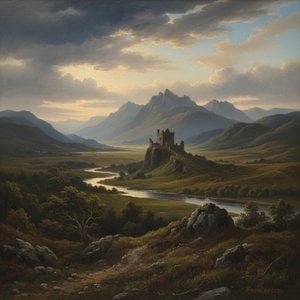
Landscape
 Acrylic On Canvas
- WallArt
- Romanticism
 1885
1885 14.0 x 19.0 cm
 Académie Royale Écossaise des Beaux-Arts - Architecture
 Afficher la suite
Giclées et impressions d'art
Impressions giclées ou sur toile de qualité musée, avec une production rapide et des finitions au choix. ( Acheter la peinture faite à la main Passer au format image numérique)




P118B €10

P118H €10

P118W €10

P438Z €10

P508JH €12

P508YH €12

P805H €10

P805Z €10

P919BZ €10

P919G €10

P919XJ €10

P959ZH €10

P968JZ €12

W106C €8

W218G €10

W218JH €8

W218Y €10

W307PJ €10

W316G €10

W316PJ €8

W316Y €10

W398PJ €8

W4111J €10

W500HY €15

W500JH €15

W692G €12

W849H €8

W940BG €15

W953PJ €8




Choisissez parmi nos formats prédéfinis qui respectent les proportions originales de l’œuvre.

Vous pouvez saisir vos propres dimensions pour vous adapter à un cadre ou à un espace spécifique. Si la taille sélectionnée ne correspond pas aux proportions de l'image originale, nous recadrerons l'œuvre ou étendrons l'image avec une bordure en miroir ou une couleur unie. Une maquette numérique vous sera envoyée pour approbation avant le début de la production.
Veuillez noter que l'aperçu à l'écran ne reflète pas le recadrage ou l'extension réelle. Seule la maquette montrera avec précision la composition finale.
Bien que des tailles personnalisées soient disponibles, nous vous recommandons de choisir une dimension dans la liste prédéfinie afin de préserver les proportions originales.
Livraison dans le monde entier () en 2 semaines au lieu des 4/5 semaines habituelles. (27 septembre)

Livraison express gratuite dans le monde entier

Toile de lin de haute qualité

Assurance transport complète

Garantie de remboursement des droits de douane

Garantie de fidélité des couleurs

Garantie de retour de 100 jours (uniquement en cas de défaut)

Garantie de remboursement à 100%

Tarifs dégressifs sur quantité
 L'option verre n'est disponible que pour les dimensions inférieures à 110 cm.

Landscape
Giclées et impressions d'art
Format de la reproduction
-


Prix total final
€ 53
James Nasmyth: Pioneer of Steam Power and Landscape Painting
James Nasmyth (1808–1890) stands as an extraordinary figure—a Scottish engineer, philosopher, artist, and inventor whose legacy extends far beyond the realm of mechanics. While celebrated for his groundbreaking contribution to industrial innovation, particularly the steam hammer, Nasmyth’s artistic pursuits reveal a profound appreciation for the beauty of nature and a masterful ability to translate that observation onto canvas. This dual vocation—scientific ingenuity coupled with artistic sensibility—defines him as one of Scotland's most remarkable cultural innovators.- Early Life & Education: Born in Edinburgh, Nasmyth’s formative years were shaped by his father’s passion for landscape painting and his own burgeoning fascination with mechanics. His apprenticeship at Henry Maudslay’s workshop instilled a disciplined approach to craftsmanship and fostered an understanding of precision engineering—skills that would prove invaluable throughout his life.
- Engineering Achievements: Nasmyth revolutionized iron forging with the invention of the steam hammer, dramatically reducing processing time and elevating quality standards. He spearheaded the construction of numerous locomotives for prominent railways like the Great Western Railway, demonstrating a commitment to technological advancement that benefited both Scotland and Britain.
- Landscape Painting Style & Influences: Nasmyth’s artistic style was deeply rooted in Romanticism, mirroring the movement's emphasis on emotion and the sublime experience of confronting nature’s grandeur. He drew inspiration from artists like Peder Mork Monsted and Paul Gauguin, whose explorations of color and technique resonated with his own aesthetic sensibilities.
- Notable Works: Among Nasmyth’s most enduring achievements are Rosneath House and Dunglass Castle—architectural projects that showcased his artistic vision alongside his engineering prowess. His landscapes capture the essence of Scotland's dramatic scenery, conveying a sense of tranquility and awe through meticulous detail and harmonious color palettes.
- Symbolism & Emotional Impact: Nasmyth’s paintings aren’t merely representations of places; they are meditations on the relationship between humanity and the natural world. The use of muted earthy tones evokes feelings of warmth and contemplation, inviting viewers to immerse themselves in the serene beauty of his compositions—a testament to his belief that art could elevate the human spirit.
The Landscape Painting Technique: Romanticism Revisited
Nasmyth’s approach to landscape painting reflected the core tenets of Romanticism, prioritizing emotional response over purely descriptive accuracy. He meticulously studied geological formations and atmospheric conditions—a practice informed by his scientific background—to capture the essence of a scene's mood and grandeur. Like Monsted and Gauguin, Nasmyth skillfully employed color palettes that prioritized tonal harmony and subtle gradations to convey depth and atmosphere. The inclusion of distant mountains and hazy skies created an illusion of vastness, mirroring the Romantic fascination with sublime landscapes capable of inspiring awe and wonder.Connections to Other Artists: Monsted & Gauguin
Peder Mork Monsted’s paintings exemplify a similar stylistic trajectory—a dedication to portraying natural beauty with unwavering realism while maintaining an artistic sensibility. His works share Nasmyth's commitment to capturing the textures and colors of the Scottish Highlands, reflecting a shared appreciation for observation and meticulous detail. Paul Gauguin, on the other hand, pushed beyond mere representation, experimenting with bold color combinations and simplified forms—a stylistic divergence from Nasmyth’s more restrained palette but nonetheless united by a desire to express profound emotion through visual imagery.James Nasmyth's Legacy: Beyond Steam Power
James Nasmyth’s contribution to engineering history is undeniable, transforming iron forging and propelling the railway age forward. However, his artistic legacy—particularly his landscape paintings—offers a glimpse into a more contemplative side of this brilliant innovator. These works stand as enduring symbols of Scotland's natural heritage and demonstrate Nasmyth’s conviction that art could enrich human experience by fostering appreciation for beauty and tranquility—a timeless message conveyed through masterful technique and evocative imagery.Œuvres similaires


Biographie de l'artiste
Première Vie et Éducation
- Né: 19 août 1808, Édimbourg, Royaume-Uni
- Décédé: 7 mai 1890
- Parents: Alexander Nasmyth (peintre) et Barbara Foulis
- Exposition précoce à la mécanique grâce à l'atelier de son père.
- A fréquenté le Royal High School d'Édimbourg.
- A étudié à l'Edinburgh School of Arts (plus tard Heriot-Watt University), démontrant une aptitude mécanique précoce.
- A construit un modèle fonctionnel d'une machine à vapeur haute pression à l'âge de 17 ans, ce qui a démontré ses compétences.
Carrière et Inventions
- Apprenti chez Henry Maudslay à Londres, acquérant une expérience dans la fabrication de machines.
- A fondé sa propre machine à Manchester en 1834.
- Fondée Nasmyth, Gaskell and Company (Bridgewater Foundry) en 1836, spécialisée dans les outils-machines et les moteurs à vapeur.
- Invention majeure : Le marteau-pilon – a révolutionné la forge du fer par une réduction significative du temps de traitement et une amélioration de la qualité. Breveté en 1842.
- A fabriqué plus de 100 locomotives à vapeur et diverses autres machines telles que des pompes et des presses hydrauliques.
- A développé des pilotes de pieux pour les projets de construction marine.
Poursuites Artistiques et Vie Ultérieure
- S'est retiré à l'âge de 48 ans à Penshurst, Kent en 1856.
- S'est consacré à des passe-temps comprenant l'astronomie, la photographie et la peinture.
- A rédigé "The Moon: Considered as a Planet, a World, and a Satellite" (1874), démontrant son intérêt pour l'observation astronomique.
- A créé des dessins et illustrations détaillés de machines tout au long de sa carrière, mettant en valeur le talent artistique aux côtés des compétences d'ingénierie.
Influences et Importance Historique
- Influence : Henry Maudslay – L’apprentissage de Nasmyth sous Maudslay a fourni une expérience cruciale dans l’usinage de précision.
- Impact : Le marteau-pilon a considérablement fait progresser la révolution industrielle, permettant des opérations de travail des métaux à plus grande échelle.
- Contribution à l'ingénierie : A mis l'accent sur l'efficacité et le contrôle dans la conception des machines.
- Héritage : Reconnu comme une figure clé de l'ingénierie et de l'innovation britanniques au cours de l'ère victorienne.
Opinions Philosophiques et Opposition aux Mouvements Ouvriers Organisés
- Nasmyth avait des opinions fortes sur le travail, s’opposant aux mouvements ouvriers organisés.
- Il croyait à l'effort individuel et à la responsabilité plutôt qu'à la négociation collective.
- Sa position philosophique reflétait une perspective plus large répandue parmi les industriels de son époque.
- Ces convictions ont façonné son approche de la gestion de sa main-d’œuvre et ont contribué à son héritage global.

James Nasmyth
1808 - 1890 , Royaume-Uni
En bref
- Artistes Qui Ont Influencé Cet Artiste: ['Henry Maudslay']
- Date De Décès: 7 mai 1890
- Date De Naissance: 19 août 1808
- Lieu De Naissance: Édimbourg, Royaume-Uni
- Mouvement Artistique Ou Style: Ingénieur et inventeur
- Nationalité: Écossais
- Nom Complet: James Hall Nasmyth
Articles similaires

Patrick Nasmyth: A Scottish Romantic's Vision of History & the Grand Manner
Explore the captivating landscapes of Patrick Nasmyth, a key figure in Scottish Romanticism. Discover his Dutch influences, embrace of the Grand Manner, and lasting artistic legacy. Learn more at ArtsDot.

James Giles: Capturing Scottish Life Through the Lens of British Realism
Explore the life & work of James Giles (1801-1870), a master of Scottish landscape painting and favored artist of Queen Victoria. Discover his atmospheric realism & royal commissions.

Munnings : Les 25 Œuvres Maîtresses du Cavalier Anglais | ArtsDot
Plongez dans l'univers vibrant d'Alfred Munnings ! Découvrez les 25 œuvres maîtresses du peintre anglais, icônes de l'art équestre et de l'impressionnisme britannique. Tableaux de chevaux, paysages idylliques… Trouvez votre inspiration déco sur ArtsDot.com.

James Abbott McNeill Whistler : Les 25 Œuvres Maîtresses d'un Précurseur de l'Art Moderne
Plongez dans l'univers de James Abbott McNeill Whistler : découvrez ses 25 œuvres les plus emblématiques, des nocturnes aux portraits saisissants. Explorez son esthétisme unique et trouvez l'inspiration déco avec ArtsDot.com.
Alexander Nasmyth: Picturing Scotland's Romantic Landscape – Innovation & Identity
Explore the life & art of Alexander Nasmyth, a pivotal figure in Scottish Romantic landscape painting. Discover his iconic works, including portraits of Robert Burns, and learn about his lasting influence on national identity. Fine art reproductions available.
