


 Aperçu en situation
 Partager
 Partager
 Détails

 Télécharger l'image
 Articles similaires
 Radiographie
 Voir le diaporama
Skeletons Trying to Warm Themselves


 Afficher la suite
Giclées et impressions d'art
Impressions giclées ou sur toile de qualité musée, avec une production rapide et des finitions au choix. ( Acheter la peinture faite à la main Acheter l'image)




P118B $10

P118H $10

P118W $10

P438Z $10

P508JH $12

P508YH $12

P805H $10

P805Z $10

P919BZ $10

P919G $10

P919XJ $10

P959ZH $10

P968JZ $12

W106C $8

W218G $10

W218JH $8

W218Y $10

W307PJ $10

W316G $10

W316PJ $8

W316Y $10

W398PJ $8

W4111J $10

W500HY $15

W500JH $15

W692G $12

W849H $8

W940BG $15

W953PJ $8




Choisissez parmi nos formats prédéfinis qui respectent les proportions originales de l’œuvre.

Vous pouvez saisir vos propres dimensions pour vous adapter à un cadre ou à un espace spécifique. Si la taille sélectionnée ne correspond pas aux proportions de l'image originale, nous recadrerons l'œuvre ou étendrons l'image avec une bordure en miroir ou une couleur unie. Une maquette numérique vous sera envoyée pour approbation avant le début de la production.
Veuillez noter que l'aperçu à l'écran ne reflète pas le recadrage ou l'extension réelle. Seule la maquette montrera avec précision la composition finale.
Bien que des tailles personnalisées soient disponibles, nous vous recommandons de choisir une dimension dans la liste prédéfinie afin de préserver les proportions originales.
Livraison dans le monde entier () en 2 semaines au lieu des 4/5 semaines habituelles. (25 août)

Livraison express gratuite dans le monde entier

Toile de lin de haute qualité

Assurance transport complète

Garantie de remboursement des droits de douane

Garantie de fidélité des couleurs

Politique de retour de 60 jours (uniquement en cas de défaut)

Garantie de remboursement à 100%

Tarifs dégressifs sur quantité
 L'option verre n'est disponible que pour les dimensions inférieures à 110 cm.

Skeletons Trying to Warm Themselves
Giclées et impressions d'art
Format de la reproduction
-


Prix total final
$ 62
Description de la pièce
A Descent Into Shadow: James Ensor’s “Skeletons Trying to Warm Themselves”
James Ensor's "Skeletons Trying to Warm Themselves," painted in 1889, isn’t merely a depiction of morbid curiosity; it’s a profoundly unsettling exploration of mortality, social anxiety, and the desperate yearning for connection. This black-and-white image, born from the artist’s unique upbringing amidst the vibrant chaos of Ostend's seaside resort, immediately plunges the viewer into an atmosphere thick with unease. The scene unfolds within a sparsely furnished room dominated by a cold fireplace – a stark symbol of both warmth and oblivion. Skeletons, rendered in meticulous detail yet imbued with a palpable sense of vulnerability, are clustered around this meager source of heat, their bony fingers outstretched as if grasping for solace. Scattered skulls litter the floor and surfaces, further emphasizing the painting’s preoccupation with death and decay. Yet, amidst this grim tableau, a solitary figure stands observing – perhaps even participating in – this macabre ritual, adding an element of unsettling human presence to the scene. The overall effect is less a straightforward horror story and more a carefully constructed meditation on the fragility of existence and the universal desire for warmth, both physical and emotional, in the face of inevitable decline.The Artist’s Crucible: Ensor's Unique Vision
James Ensor’s artistic journey was anything but conventional. Born in Ostend, Belgium, to an English father and a Belgian mother—a lineage that instilled within him a unique perspective on cultural duality—Ensor rejected the rigid constraints of academic art training early on. He found himself drawn instead to the vibrant, often unsettling world of carnivals and curiosities, experiences profoundly shaped by his parents’ souvenir shop brimming with masks, shells, and other peculiar objects. This childhood immersion in the theatrical and the bizarre would become a cornerstone of his artistic language. He initially enrolled at the Académie Royale des Beaux-Arts in Brussels, but quickly recognized that its prescribed methods stifled his burgeoning vision. Instead, he forged his own path, developing a highly personal style characterized by bold colors, distorted forms, and a deliberate rejection of traditional realism. This independent spirit is powerfully evident in “Skeletons Trying to Warm Themselves,” where Ensor abandons conventional representation in favor of a deeply symbolic and emotionally charged image.Symbolism and the Language of Decay
The painting’s power lies not just in its unsettling subject matter, but also in the rich symbolism woven throughout the composition. The skeletons themselves represent mortality, of course, but their attempt to warm themselves speaks volumes about the human condition. They are desperately seeking comfort, connection, and a reprieve from the cold reality of death – desires that resonate deeply with viewers regardless of their beliefs. The scattered skulls serve as constant reminders of this inevitable fate, while the solitary observer introduces an element of judgment or perhaps even complicity in this ritualistic scene. The stark black-and-white palette further amplifies the painting’s emotional impact, stripping away any potential distractions and focusing attention on the raw, unsettling details. The use of light and shadow is particularly effective, highlighting the skeletal figures and creating a sense of claustrophobia within the confined space. Ensor masterfully employs these elements to evoke a profound feeling of melancholy and existential dread.A Legacy of Innovation: Ensor’s Influence
“Skeletons Trying to Warm Themselves” stands as a pivotal work in James Ensor's oeuvre, and a significant precursor to both Expressionism and Surrealism. His willingness to challenge artistic conventions, his embrace of the grotesque, and his exploration of psychological themes paved the way for future generations of artists. Ensor’s influence can be seen in the works of artists like Edvard Munch and Max Ernst, who similarly sought to express inner turmoil through distorted imagery and symbolic representation. The painting's unsettling atmosphere and its focus on mortality continue to resonate with viewers today, cementing Ensor’s place as a visionary artist whose work remains both profoundly disturbing and undeniably captivating. ArtsDot offers exceptional hand-painted reproductions of this iconic piece, allowing you to experience the full power and emotional depth of Ensor’s masterpiece in stunning detail.Œuvres similaires


Biographie de l'artiste
jeunesse et parcours artistique
James Sidney Edouard, Baron Ensor, peintre et graveur belge de premier plan, est né le 13 avril 1860 à Ostende, en Belgique. Sa jeunesse fut marquée par un milieu culturel diversifié, avec un père anglais, James Frederic Ensor, et une mère belge, Maria Cathérine Haegheman. Manquant d'intérêt pour les études académiques traditionnelles, Ensor quitta l'école à quinze ans pour poursuivre sa passion pour l'art, se formant auprès de peintres locaux et étudiant ensuite à l’Académie Royale des Beaux-Arts de Bruxelles.style et thèmes artistiques
Le style artistique d'Ensor se caractérisait par son exploration de l'inconscient et d'images oniriques, ce qui a influencé considérablement l'expressionnisme et le surréalisme. Ses peintures mettaient souvent en scène des sujets bizarres, notamment des carnavals, des masques, la marionnetterie, des squelettes et des allégories fantastiques. Parmi ses œuvres notables figurent Les Masques Scandalisés (1883) et Les Squelettes se Battant au Sur un Pendu (1891), qui témoignent de son mélange unique de grotesque et de fantastique.reconnaissance et héritage
Malgré un rejet initial, l'œuvre d'Ensor a progressivement gagné acceptation et reconnaissance. En 1920, il était le sujet de grandes expositions ; en 1929, il fut nommé baron par le roi Albert, et en 1933, il reçut la Légion d’honneur. Son héritage en tant que figure pionnière de l'art moderne est évident dans son influence sur les mouvements artistiques ultérieurs, notamment l'expressionnisme et le surréalisme.Œuvres clés et expositions
* L’Intrigue (90 x 150 cm, Koninklijk Museum voor Schone Kunsten, Anvers, Belgique) * Les Tribulations de Saint Antoine (1887, conservé au Museum of Modern Art, New York)- Découvrez-vous la vie et l'œuvre de James Ensor sur ArtsDot: James Ensor
- Explorez le Musée Mu.Zee à Ostende, Belgique, qui présente une collection d'art belge de 1830 à aujourd’hui sur ArtsDot: Découvrez le Musée Mu.Zee à Ostende, Belgique
- Apprenez-en davantage sur la peinture symboliste et son influence sur l'expressionnisme et le surréalisme sur Wikipédia: Peinture Symboliste

James Ensor
1860 - 1949 , Belgique
En bref
- Artistes Influencés:
- Expressionnisme
- Surréalisme
- Artistes Influents:
- Pieter Bruegel l'Ancien
- Francisco Goya
- James Abbott McNeill Whistler
- Date De Naissance: 13 avril 1860
- Lieu De Naissance: Ostende, Belgique
- Mouvement Artistique: Expressionnisme, Surréalisme
- Nationalité: Belge
- Nom Complet: James Sidney Edouard Ensor
- Oeuvres Notables:
- Les Masques Scandalisés
- Les Tribulations de Saint Antoine
- Squelettes se battant sur un pendu
- Christ entrant à Bruxelles
Articles similaires

Blancs Sublimes : Les 10 Chefs-d'œuvre de la Peinture Révélés par
Plongez dans l'univers fascinant des 10 plus beaux tableaux blancs de l'histoire de l'art ! Découvrez Monet, Whistler, Kandinsky et d'autres maîtres. Inspirez votre décoration intérieure avec : reproductions de qualité muséale en ligne.

James Abbott McNeill Whistler : Les 25 Œuvres Maîtresses d'un Précurseur de l'Art Moderne
Plongez dans l'univers de James Abbott McNeill Whistler : découvrez ses 25 œuvres les plus emblématiques, des nocturnes aux portraits saisissants. Explorez son esthétisme unique et trouvez l'inspiration déco avec ArtsDot.com.

James Ensor's Grotesque Visions: Social Commentary & Artistic Innovation
Explore the unsettling yet captivating world of James Ensor, a pioneer of Expressionism. Discover his satirical masterpieces, symbolic imagery & lasting influence on modern art. High-quality reproductions available at ArtsDot.

Les 10 Chefs-d'œuvre Noirs : Peintures Célèbres et Décoration d'Intérieur
Plongez dans l'univers fascinant des 10 plus beaux tableaux noirs de l'histoire de l'art. Découvrez les secrets de Goya, Manet, Rothko et autres maîtres. Inspirez votre décoration intérieure avec !
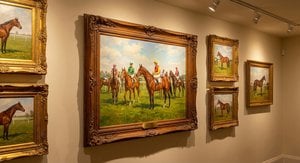
Munnings : Les 25 Œuvres Maîtresses du Cavalier Anglais | ArtsDot
Plongez dans l'univers vibrant d'Alfred Munnings ! Découvrez les 25 œuvres maîtresses du peintre anglais, icônes de l'art équestre et de l'impressionnisme britannique. Tableaux de chevaux, paysages idylliques… Trouvez votre inspiration déco sur ArtsDot.com.



