


 Aperçu en situation
 Envoyer
 Partager
 Détails de l'œuvre

 Télécharger
 Articles similaires
 Radiographie
 Diaporama
Fishermen, Ostende

 Lire la suite
Reproduction à l'huile faite à la main
Huile sur toile peinte à la main, avec cadre et dimensions personnalisés, réalisée sur commande par nos artistes. ( Acheter l'impression Acheter l'image)




P118B $10

P118H $10

P118W $10

P438Z $10

P508JH $12

P508YH $12

P805H $10

P805Z $10

P919BZ $10

P919G $10

P919XJ $10

P959ZH $10

P968JZ $12

W106C $8

W218G $10

W218JH $8

W218Y $10

W307PJ $10

W316G $10

W316PJ $8

W316Y $10

W398PJ $8

W4111J $10

W500HY $15

W500JH $15

W692G $12

W849H $8

W940BG $15

W953PJ $8




Choisissez parmi nos formats prédéfinis qui respectent les proportions originales de l’œuvre.

Vous pouvez saisir vos propres dimensions pour l'adapter à un cadre ou à un espace spécifique. Si la taille sélectionnée ne correspond pas aux proportions de l'image d'origine, nous recadrerons l'œuvre ou prolongerons la peinture avec des éléments peints à la main supplémentaires. Une maquette numérique vous sera envoyée pour approbation avant le début de la production.
Veuillez noter que l'aperçu à l'écran ne reflète pas le recadrage ou l'extension réels. Seule la maquette montrera fidèlement la composition finale.
Bien que des tailles personnalisées soient disponibles, nous vous recommandons de sélectionner une dimension dans la liste prédéfinie afin de préserver les proportions d'origine.
Après la commande, l’équipe ArtsDot.com contactera le client par e-mail pour recueillir ses instructions et lui fournira une maquette d’aperçu
Livraison dans le monde entier () en 3 à 4 semaines au lieu des 5 semaines habituelles. (12 août). Aucun compromis sur la qualité.

Livraison express gratuite dans le monde entier

Toile de lin de qualité supérieure

Assurance transport complète

Garantie de remboursement des droits de douane

Garantie de fidélité des couleurs

Politique de retour de 60 jours (uniquement en cas de défaut)

Garantie de remboursement à 100%

Offre de tarifs dégressifs
 L'option verre n'est disponible que pour les dimensions inférieures à 110 cm.

Fishermen, Ostende
Technique de reproduction
Format de la reproduction
-


Prix total
$ 263
Description de l'œuvre
James Ensor’s *Fishermen, Ostende*: A Glimpse into the Soul of Belgium
James Ensor's *Fishermen, Ostende*, painted around 1893, is not merely a depiction of a seaside scene; it’s a profound exploration of human psychology, social commentary, and the unsettling beauty of the Belgian coast. This evocative work, rendered in stark black and white, immediately draws the viewer into a world steeped in mystery and shadowed emotion – a characteristic hallmark of Ensor's unique artistic vision. The painting captures a solitary figure standing on the beach, his posture suggesting both contemplation and a subtle unease. He’s not actively engaged with the sea or the fishermen themselves, but rather seems to be observing something just beyond the frame, lost in thought, perhaps even burdened by an unspoken sorrow.
Ensor's artistic journey was deeply intertwined with his upbringing in Ostend, a bustling resort town that provided him with a constant stream of visual stimuli. His parents’ souvenir shop, overflowing with exotic masks and carnival paraphernalia, served as a rich source of inspiration – a veritable treasure trove of oddities and theatrical elements that would later permeate his art. This fascination with disguise and the hidden aspects of human nature is powerfully evident in *Fishermen, Ostende*. The figure's long coat, a detail that immediately commands attention, can be interpreted as a shield, concealing vulnerability or perhaps representing the weight of societal expectations.
A Masterclass in Expressionist Technique
Ensor’s technique in *Fishermen, Ostende* is deliberately unsettling and powerfully expressive. He eschewed the polished realism favored by many of his contemporaries, opting instead for a bold, almost brutal approach to line and form. The stark contrast between black and white amplifies the drama of the scene, creating an atmosphere of heightened intensity. Notice how he uses jagged lines to define the coastline and the figure’s coat, conveying a sense of unease and instability. The brushstrokes are loose and energetic, reflecting the artist's emotional state and injecting a raw, visceral quality into the work. This deliberate departure from academic conventions firmly establishes Ensor as a pioneer of Expressionism – an artistic movement that sought to convey subjective emotions rather than objective reality.
Furthermore, Ensor’s use of negative space is particularly striking. The vast expanse of sand and sea surrounding the figure emphasizes his isolation and vulnerability. The lack of detail in the background forces the viewer to focus entirely on the central subject, intensifying the painting's psychological impact. It’s a masterful demonstration of how careful compositional choices can be used to create a powerful narrative.
Symbolism and Social Commentary
Beyond its immediate visual appeal, *Fishermen, Ostende* is laden with symbolism. The solitary figure could represent the alienation and disillusionment experienced by individuals in a rapidly changing society. The fishermen themselves, though present in the background, are rendered as indistinct shapes, suggesting their marginalization within the broader social landscape. Some art historians interpret the painting as a critique of the commercialization of Ostend’s seaside resort culture – a commentary on the superficiality and fleeting pleasures that often mask deeper anxieties.
The masks, so central to Ensor's artistic vocabulary, are subtly alluded to in the figure’s coat. They represent the facades we present to the world, concealing our true selves and creating a barrier between individuals. The painting, therefore, becomes an exploration of identity, perception, and the complexities of human relationships. It invites us to question what lies beneath the surface and to consider the hidden emotions that shape our lives.
Bringing *Fishermen, Ostende* Home: A ArtsDot Reproduction
ArtsDot is proud to offer meticulously crafted hand-painted reproductions of James Ensor’s *Fishermen, Ostende*. Our artists replicate Ensor's distinctive style and emotional intensity with the utmost care, ensuring that each reproduction captures the essence of this iconic work. Whether you are an art collector, a design enthusiast, or simply someone seeking to add a touch of artistic intrigue to your home, our high-quality reproductions provide a beautiful and authentic way to experience Ensor’s genius. Explore the full range of sizes and canvas options available on our website – and bring this hauntingly beautiful painting into your world.
Œuvres similaires


Biographie de l'artiste
jeunesse et parcours artistique
James Sidney Edouard, Baron Ensor, peintre et graveur belge de premier plan, est né le 13 avril 1860 à Ostende, en Belgique. Sa jeunesse fut marquée par un milieu culturel diversifié, avec un père anglais, James Frederic Ensor, et une mère belge, Maria Cathérine Haegheman. Manquant d'intérêt pour les études académiques traditionnelles, Ensor quitta l'école à quinze ans pour poursuivre sa passion pour l'art, se formant auprès de peintres locaux et étudiant ensuite à l’Académie Royale des Beaux-Arts de Bruxelles.style et thèmes artistiques
Le style artistique d'Ensor se caractérisait par son exploration de l'inconscient et d'images oniriques, ce qui a influencé considérablement l'expressionnisme et le surréalisme. Ses peintures mettaient souvent en scène des sujets bizarres, notamment des carnavals, des masques, la marionnetterie, des squelettes et des allégories fantastiques. Parmi ses œuvres notables figurent Les Masques Scandalisés (1883) et Les Squelettes se Battant au Sur un Pendu (1891), qui témoignent de son mélange unique de grotesque et de fantastique.reconnaissance et héritage
Malgré un rejet initial, l'œuvre d'Ensor a progressivement gagné acceptation et reconnaissance. En 1920, il était le sujet de grandes expositions ; en 1929, il fut nommé baron par le roi Albert, et en 1933, il reçut la Légion d’honneur. Son héritage en tant que figure pionnière de l'art moderne est évident dans son influence sur les mouvements artistiques ultérieurs, notamment l'expressionnisme et le surréalisme.Œuvres clés et expositions
* L’Intrigue (90 x 150 cm, Koninklijk Museum voor Schone Kunsten, Anvers, Belgique) * Les Tribulations de Saint Antoine (1887, conservé au Museum of Modern Art, New York)- Découvrez-vous la vie et l'œuvre de James Ensor sur ArtsDot: James Ensor
- Explorez le Musée Mu.Zee à Ostende, Belgique, qui présente une collection d'art belge de 1830 à aujourd’hui sur ArtsDot: Découvrez le Musée Mu.Zee à Ostende, Belgique
- Apprenez-en davantage sur la peinture symboliste et son influence sur l'expressionnisme et le surréalisme sur Wikipédia: Peinture Symboliste

James Ensor
1860 - 1949 , Belgique
L'essentiel de l'artiste
- Artistes Influencés:
- Expressionnisme
- Surréalisme
- Artistes Influents:
- Pieter Bruegel l'Ancien
- Francisco Goya
- James Abbott McNeill Whistler
- Date De Naissance: 13 avril 1860
- Lieu De Naissance: Ostende, Belgique
- Mouvement Artistique: Expressionnisme, Surréalisme
- Nationalité: Belge
- Nom Complet: James Sidney Edouard Ensor
- Oeuvres Notables:
- Les Masques Scandalisés
- Les Tribulations de Saint Antoine
- Squelettes se battant sur un pendu
- Christ entrant à Bruxelles
Articles connexes

James Ensor's Grotesque Visions: Social Commentary & Artistic Innovation
Explore the unsettling yet captivating world of James Ensor, a pioneer of Expressionism. Discover his satirical masterpieces, symbolic imagery & lasting influence on modern art. High-quality reproductions available at ArtsDot.

L'Émotion brute de l'expressionnisme : une révolution dans l'art du XXe siècle
Explorez l'expressionnisme : histoire, artistes clés et conseils pour collectionner cette révolution artistique du XXe siècle. Découvrez des reproductions d'exception sur .

Top 10 des Chefs-d'œuvre à l'Acrylique qui ont Révolutionné l'Art |
Plongez dans l'univers vibrant des 10 chefs-d'œuvre à l'acrylique qui ont marqué l'histoire de l'art. Découvrez Jackson Pollock, Rothko et autres artistes emblématiques. Reproductions de qualité muséale sur . Explorez la collection !
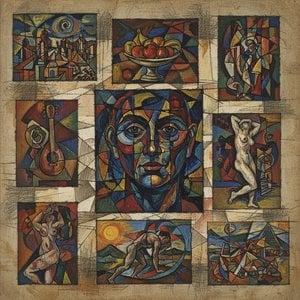
Cubisme Expressionniste : Les 10 Chefs-d'œuvre Révolutionnaires à Redécouvrir
Plongez au cœur du Cubisme Expressionniste ! Découvrez les 10 chefs-d'œuvre de Picasso, Braque et autres artistes majeurs. Histoire, techniques & émotions : trouvez l’inspiration déco sur ArtsDot.com

Top 10 des Chefs-d'œuvre à l'Acrylique qui ont Révolutionné l'Art | ArtsDot
Plongez dans l'univers vibrant des 10 chefs-d'œuvre à l'acrylique qui ont marqué l'histoire de l'art. Découvrez les secrets de Pollock, Rothko et Warhol. Reproductions de qualité muséale sur ArtsDot.com – Explorez la collection !



