


 Partager
 Partager
 Détails
 Guide imprimable

 Télécharger
 Articles similaires
 Voir le diaporama
 Statistiques
Figure


 Afficher la suite
Reproduction à l'huile faite à la main
Huile sur toile peinte à la main, avec cadre et dimensions personnalisés, réalisée sur commande par nos artistes. ( Passer au format impression Passer au format image numérique)




































Choisissez parmi nos formats prédéfinis qui respectent les proportions originales de l’œuvre.

Vous pouvez saisir vos propres dimensions pour l'adapter à un cadre ou à un espace spécifique. Si la taille sélectionnée ne correspond pas aux proportions de l'image d'origine, nous recadrerons l'œuvre ou prolongerons la peinture avec des éléments peints à la main supplémentaires. Une maquette numérique vous sera envoyée pour approbation avant le début de la production.
Veuillez noter que l'aperçu à l'écran ne reflète pas le recadrage ou l'extension réels. Seule la maquette montrera fidèlement la composition finale.
Bien que des tailles personnalisées soient disponibles, nous vous recommandons de sélectionner une dimension dans la liste prédéfinie afin de préserver les proportions d'origine.
Après la commande, l’équipe ArtsDot.com contactera le client par e-mail pour recueillir ses instructions et lui fournira une maquette d’aperçu
Livraison dans le monde entier () en 3 à 4 semaines au lieu des 5 semaines habituelles. (3 octobre). Aucun compromis sur la qualité.

Livraison express gratuite dans le monde entier

Toile de lin de haute qualité

Assurance transport complète

Garantie de remboursement des droits de douane

Garantie de fidélité des couleurs

Garantie de retour de 100 jours (uniquement en cas de défaut)

Garantie de remboursement à 100%

Tarifs dégressifs sur quantité
 L'option verre n'est disponible que pour les dimensions inférieures à 110 cm.

Figure
Technique de reproduction
Format de la reproduction
-


Prix total final
€ 226
A Fragmented Vision of Humanity
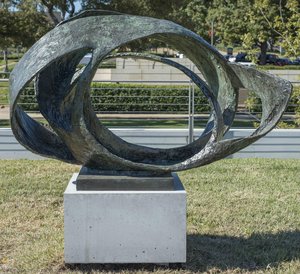
Jacques Lipchitz's "Figure," sculpted in 1930, stands as a profound testament to the transformative power of Cubism and its enduring fascination with exploring the fundamental concepts of form and perception. This bronze masterpiece transcends mere representation; it invites a deep, meditative contemplation on the very essence of human existence through a deliberately abstracted aesthetic. In an era defined by rapid societal shifts, Lipchitz utilized a fragmented language to capture the complexity of the modern soul. The sculpture presents a captivating interplay of geometric precision and organic fluidity, where the human form is not merely depicted but reconstructed through a lens of intellectual rigor and emotional depth.
The composition is a masterclass in the Cubist approach, pioneered by luminaries such as Picasso and Braque. Rather than striving for a realistic or anatomical depiction, Lipchitz dismantles the human figure into interlocking planes, presenting multiple viewpoints simultaneously. The head is rendered with striking simplicity—two oval eyes positioned above a small, triangular nose—which disrupts traditional notions of facial harmony to create a sense of enigmatic presence. Below this stylized visage, undulating vertical forms intersect with curved openings, creating a rhythmic tension between movement and stillness. This structural complexity ensures that the viewer's eye is constantly traveling across the surface, discovering new contours and depths within the bronze.
The Alchemy of Bronze and Form
The materiality of the piece is essential to its enduring impact. The choice of bronze allows for an exquisite level of detail and a rich, tactile quality that stone or wood could not achieve. Through the intricate process of bronze casting, Lipchitz was able to capture subtle variations in surface texture, from the sharp, clean edges of his geometric planes to the softer, more rounded contours of the figure's limbs. The rough, uneven patina resulting from natural oxidation lends the sculpture an ancient, weathered character, suggesting a sense of permanence and historical weight. This textured surface catches the light in a way that emphasizes the sculpture's three-dimensionality, making it a dynamic object that changes appearance depending on the surrounding illumination.
For the discerning collector or interior designer, "Figure" offers an unparalleled opportunity to introduce a piece of art history into a contemporary space. The sculpture’s neutral, earthy tones and sophisticated silhouette allow it to integrate seamlessly into various high-end environments, from minimalist modern galleries to richly textured classical studies. It serves as a powerful focal point, commanding attention through its structural integrity and the quiet strength of its presence. Owning a high-quality reproduction of this work is not merely about acquiring an object; it is about bringing a piece of the avant-garde revolution into one's personal sanctuary, fostering an atmosphere of intellectual curiosity and timeless elegance.
Questions et réponses
Où puis-je voir un aperçu de « Figure » ?
Un aperçu de «Figure» de Jacques Lipchitz est disponible sur la page Aperçu de l'œuvre.
L'œuvre « Figure » de Jacques Lipchitz est-elle dans le domaine public, et pourquoi ?
Le statut du droit d'auteur de « Figure » - toujours protégé par le droit d'auteur - découle du décès de l'artiste en 1973.
À quel artiste est attribuée l'œuvre "Figure" ?
« Figure » a été créé par Jacques Lipchitz. Les informations présentes sur cette page décrivent l'œuvre originale de Jacques Lipchitz.
En quelle année "Figure" a-t-il été réalisé ?
«Figure» de Jacques Lipchitz a été créé en 1930.
«Figure» de Jacques Lipchitz est-elle une œuvre lumineuse ou sombre ?
La luminosité perçue de «Figure» de Jacques Lipchitz est brilliant. Elle peut être harmonisée avec la lumière de l'espace prévu.
À quel âge Jacques Lipchitz a-t-il créé « Figure » ?
Jacques Lipchitz a réalisé « Figure » à l'âge de 39. L'artiste est né en 1891 et l'œuvre date de 1930.
Comment "Figure" équilibre-t-il l'ombre et la lumière ?
Les valeurs enregistrées pour «Figure» de Jacques Lipchitz sont : une luminosité de brilliant, une luminance de Luminous.
Œuvres similaires




Biographie de l'artiste
Une vie sculptée par le changement : Le voyage de Jacques Lipchitz
Né sous le nom de Chaim Jacob Lipschitz en 1891 dans la ville lituanienne de Druskininkai, le parcours artistique de Jacques Lipchitz fut dramatiquement façonné par l'exil et l'innovation. Ses premières années, ancrées dans une famille juive Litvak dont le père était entrepreneur en bâtiment, l'orientèrent initialement vers des études d'ingénierie. Cependant, un esprit créatif bourgeonnant, nourri par le soutien de sa mère, le propulsa vers Paris en 1909 – une ville alors palpitante de révolutions artistiques. Il s'inscrivit à l'École des Beaux-Arts et à l'Académie Julian, s'immergeant dans les communautés vibrantes de Montmartre et de Montparnasse. C'est au sein de ces cercles qu'il tissa des liens d'amitié avec des luminaires tels que Juan Gris, Pablo Picasso et Aube Modigliani – ce dernier ayant immortalisé Lipchitz et son épouse Berthe dans un poignant double portrait. Ces premières connexions furent cruciales, jetant les bases de l'adoption du Cubisme par Lipchitz, bien qu'un style distinctement tempéré par sa propre sensibilité.La cristallisation de la forme : Lipchitz et la sculpture cubiste
Lipchitz ne s'est pas contenté de traduire la peinture en trois dimensions ; il a sculpté le Cubisme. Bien que profondément influencé par les perspectives fracturées de Picasso et Braque, Lipchitz a conservé un degré remarquable de figuration dans son travail jusqu'aux environs de 1915-16. Ses sculptures n'étaient pas entièrement abstraites ; elles suggéraient des formes reconnaissables, imprégnées d'un poids émotionnel. Cela évolua vers ce qui devint connu sous le nom de « Cubisme cristallin », un style caractérisé par la facette et la transparence – une tentative de capturer simultanément plusieurs points de vue au sein d'une seule forme. Il expérimenta la fracture de l'espace, créant des compositions dynamiques qui semblaient miroiter d'une lumière intérieure. Son exposition personnelle de 1920 à la Galerie L'Effort Moderne de Léonce Rosenberg à Paris a consolidé sa position de figure de proue de l'École de Paris et a mis en lumière ce langage sculptural unique. Des œuvres comme « L'Arlequin au clairon » illustrent cette période, présentant des formes fragmentées qui parviennent encore à transmettre une énergie ludique et une présence humaine. Il ne se contentait pas de déconstruire la forme ; il la reconstruisait selon une nouvelle logique visuelle.Exil et réinvention : Un nouveau monde, une vision renouvelée
L'ombre menaçante de la Seconde Guerre mondiale imposa un bouleversement profond dans la vie de Lipchitz. Alors que le régime nazi resserrait son emprise sur la France et que la persécution des Juifs s'intensifiait, il fut contraint de fuir sa patrie d'adoption. Grâce à l'aide inestimable du journaliste américain Varian Fry à Marseille, il s'échappa vers les États-Unis, s'installant finalement à New York, puis plus tard à Hastings-on-Hudson. Ce déplacement ne fut pas qu'un simple changement géographique ; il marqua un tournant dans sa trajectoire artistique. Tout en continuant d'explorer les principes cubistes, l'œuvre de Lipchitz commença à prendre de nouvelles dimensions, reflétant le traumatisme de l'exil et un engagement croissant envers des thèmes existentiels. Il créa des sculptures monumentales telles que « La Naissance des Muses » (1944-1950), commandée en mémoire de Jerome Wiesner, qui démontra sa maîtrise du bronze et sa capacité à transmettre une émotion profonde à travers des formes abstraites.Réflexions tardives : Foi, héritage et retraite toscane
Dans ses dernières années, Lipchitz connut un approfondissement de son lien avec la foi juive, embrassant l'observance religieuse avec une ferveur renouvelée – étudiant même quotidiennement et portant les tefillin sous l'incitation du Rebbe de Loubavitch, le rabbin Menachem Schneerson. Cet éveil spirituel insuffla à son travail une nouvelle couche de signification. Il retourna fréquemment en Europe, trouvant réconfort et inspiration à Pietrasanta, en Italie, où il noua une amitié étroite avec le sculpteur Fiore de Henriquez. Son autobiographie, coécrite avec H. Harvard Arnason et publiée en 1972 parallèlement à une exposition au Metropolitan Museum of Art, offrit une réflexion poignante sur sa vie et son voyage artistique. Jacques Lipchitz s'éteignit à Capri, en Italie, en 1973, mais son corps fut ramené à Jérusalem pour l'inhumation – un témoignage de son lien profond avec son héritage. Sa villa toscane, Bozio, sert aujourd'hui de camp d'été juif, garantissant que son héritage continue d'inspirer les générations futures. Il a laissé derrière lui non seulement un corpus de sculptures remarquable, mais aussi un exemple puissant de résilience artistique et de la force indomptable de l'esprit humain.
Jacques Lipchitz
1891 - 1973 , Lituanie
En bref
- Artistic Movement Or Style: Cubisme
- Artists Who Influenced This Artist:
- Pablo Picasso
- Juan Gris
- Date Of Birth: 1891
- Full Name: Jacques Lipchitz
- Nationality: Lithuanien-Francais-Americain
- Notable Artworks:
- Harlequin avec clarinette
- L'ange et jacob
- Les instruments de musique
- Place Of Birth: Druskininkai, Lituanie
Articles similaires

The Enduring Legacy of Bronze: History, Technique & Artistic Expression for the Collector
Explore the rich history & enduring appeal of bronze sculpture with expert insights for collectors at ArtsDot. Learn about casting techniques, iconic artists, and collecting tips.

Les 10 Chefs-d'œuvre Bronzes Qui Ont Révolutionné la Sculpture | ArtsDot
Plongez dans l'univers fascinant des 10 sculptures en bronze les plus emblématiques de l'histoire de l'art. Rodin, Degas et autres maîtres révélés ! Découvrez leur histoire, leurs techniques et trouvez l'œuvre parfaite pour sublimer votre intérieur sur ArtsDot.com.

The Enduring Legacy of Bronze Sculpture: A Collector's Guide to Form & Cultural Significance
Explore the rich history & enduring appeal of bronze sculpture with expert insights for collectors at ArtsDot. Learn about casting techniques, iconic artists, and collecting tips to build a discerning art collection.

Les 10 Chefs-d'œuvre en Bronze qui ont Révolutionné l'Art : Collection ArtsDot
Plongez dans l'univers fascinant des 10 chefs-d'œuvre en bronze qui ont marqué l'histoire de l'art. Découvrez Rodin, Degas et les secrets de ces sculptures iconiques. Reproductions d'art exceptionnelles sur ArtsDot.com – Explorez la collection !

The Enduring Legacy of Bronze: A Historical & Artistic Exploration for the Collector
Explore the rich history & enduring appeal of bronze sculpture with expert insights for collectors at ArtsDot. Learn about casting techniques, iconic artists, collecting tips & contemporary interpretations.
