


 Aperçu en situation
 Envoyer
 Partager
 Détails de l'œuvre

 Télécharger
 Articles similaires
 Radiographie
 Diaporama
Self Portrait


 Lire la suite
Giclées et impressions d'art
Impressions giclées ou sur toile de qualité musée, avec une production rapide et des finitions au choix. ( Commander la reproduction peinte à la main Télécharger l'image haute résolution)




P118B $10

P118H $10

P118W $10

P438Z $10

P508JH $12

P508YH $12

P805H $10

P805Z $10

P919BZ $10

P919G $10

P919XJ $10

P959ZH $10

P968JZ $12

W106C $8

W218G $10

W218JH $8

W218Y $10

W307PJ $10

W316G $10

W316PJ $8

W316Y $10

W398PJ $8

W4111J $10

W500HY $15

W500JH $15

W692G $12

W849H $8

W940BG $15

W953PJ $8




Choisissez parmi nos formats prédéfinis qui respectent les proportions originales de l’œuvre.

Vous pouvez saisir vos propres dimensions pour vous adapter à un cadre ou à un espace spécifique. Si la taille sélectionnée ne correspond pas aux proportions de l'image originale, nous recadrerons l'œuvre ou étendrons l'image avec une bordure en miroir ou une couleur unie. Une maquette numérique vous sera envoyée pour approbation avant le début de la production.
Veuillez noter que l'aperçu à l'écran ne reflète pas le recadrage ou l'extension réelle. Seule la maquette montrera avec précision la composition finale.
Bien que des tailles personnalisées soient disponibles, nous vous recommandons de choisir une dimension dans la liste prédéfinie afin de préserver les proportions originales.
Livraison dans le monde entier () en 2 semaines au lieu des 4/5 semaines habituelles. (21 août)

Livraison express gratuite dans le monde entier

Toile de lin de qualité supérieure

Assurance transport complète

Garantie de remboursement des droits de douane

Garantie de fidélité des couleurs

Politique de retour de 60 jours (uniquement en cas de défaut)

Garantie de remboursement à 100%

Offre de tarifs dégressifs
 L'option verre n'est disponible que pour les dimensions inférieures à 110 cm.

Self Portrait
Giclées et impressions d'art
Format de la reproduction
-


Prix total
$ 62
Description de la pièce
A Window into the Soul: James Tissot’s “Self Portrait”
James Jacques Joseph Tissot's "Self Portrait," painted in 1865, isn’t merely a likeness; it’s a carefully constructed invitation into the artist’s world. Emerging from a period of intense artistic exploration and marked by influences ranging from Ingres to the burgeoning Impressionism of Paris, this work offers a poignant glimpse at Tissot's evolving style and his deep engagement with the social currents of his time. The painting immediately draws the eye with its intimate scale – a relatively small canvas that fosters an immediate sense of connection, as if the artist is sharing a private moment. He sits before an easel, bathed in soft light, a contemplative expression gracing his face. His gaze, direct and slightly melancholic, seems to hold both awareness of himself and a subtle invitation for the viewer to share in his thoughts. The muted palette – predominantly browns, greys, and ochres – contributes to the painting’s subdued elegance, reflecting Tissot's deliberate choice to move away from the bright, theatrical colors favored by earlier academic styles.Technique and Style: A Synthesis of Realism and Impressionistic Hints
Tissot’s technique is a fascinating blend of meticulous realism and subtle Impressionistic touches. He employs a highly detailed approach, rendering the textures of his clothing – the velvet jacket, the worn fabric of his trousers – with remarkable accuracy. Yet, he doesn't simply replicate reality; instead, he uses light and shadow to create an atmosphere, suggesting depth and volume. Notice how the folds of the fabric seem to ripple and shift, not through a rigid adherence to form, but through a skillful manipulation of color and value. This is particularly evident in the way the light catches on the velvet, creating a subtle shimmer that adds to the painting’s overall luminosity. Furthermore, Tissot's use of brushstrokes—often short and broken—hints at an Impressionistic sensibility, anticipating the later developments of Monet and Renoir. He captures fleeting moments of light and shadow, imbuing the scene with a sense of movement and immediacy. The composition itself is carefully balanced, drawing the eye to the artist’s face while simultaneously establishing a harmonious relationship between his figure and the surrounding space.Social Context and Symbolism: A Parisian Artist in His Prime
Painted during a pivotal period in Tissot's career, “Self Portrait” reflects his growing success as a genre painter of contemporary society. He had established himself as a keen observer of Parisian life, capturing the elegance and sophistication of the Belle Époque with remarkable skill. The painting speaks to this ambition – it’s not just a portrait of an artist; it's a statement about his position within the vibrant artistic milieu of Paris. The easel itself becomes a symbol of his profession, while the quiet studio setting suggests a dedication to his craft. The slightly worn appearance of the room and the artist’s attire hint at a life dedicated to art, perhaps tinged with a touch of melancholy – a common theme in Tissot's work. Interestingly, the inclusion of a partially visible mirror behind him subtly reinforces the idea of self-reflection and artistic identity, echoing the Renaissance tradition of artists portraying themselves within their works.Emotional Resonance: Intimacy and Quiet Contemplation
Beyond its technical merits and historical context, “Self Portrait” possesses a profound emotional resonance. The artist’s expression is not one of grand pronouncements or theatrical display; rather, it conveys a sense of quiet contemplation—a moment of introspection amidst the bustle of Parisian life. There's an underlying vulnerability in his gaze, inviting the viewer to share in his thoughts and feelings. It’s a remarkably intimate portrait, offering a rare glimpse into the inner world of a talented artist. The painting speaks to the universal human experience of self-awareness, reminding us that even amidst artistic ambition and social engagement, there is always room for quiet reflection and personal connection. Reproductions of this work offer a beautiful opportunity to bring this moment of serene contemplation into any space, serving as a reminder of the power of art to connect us with both ourselves and the world around us.Œuvres similaires


Biographie de l'artiste
Early Life and Artistic Beginnings
Jacques Joseph Tissot, born October 15, 1836, in Nantes, France, was destined for a life steeped in artistic passion from his earliest years. His father, Marcel Théodore Tissot, was a successful drapery merchant. His mother, Marie Durand, assisted her husband in the family business and designed hats. A devout Catholic, Tissot's formative years were marked by a deep appreciation for faith and tradition—influences that would permeate his artistic vision throughout his life. From a young age, he demonstrated an exceptional talent for drawing and painting, nurturing aspirations that defied societal expectations for men of his time. Encouraged by his parents’ unwavering support, Tissot embarked on formal artistic training at the École des Beaux-Arts in Paris—a pivotal step toward realizing his lifelong ambition to become a celebrated painter. Under the tutelage of luminaries like Ingres, Flandrin, and Lamothe, Tissot honed his skills in classical technique and composition—absorbing the stylistic precepts of the era’s most influential artists. This immersive environment fostered intellectual curiosity and propelled him toward exploring diverse artistic inspirations—ranging from medieval narratives to biblical scenes—demonstrating remarkable versatility. His early works showcased a masterful command of color and light, reflecting Impressionistic influences while maintaining a grounding in realism—a distinctive blend that would characterize his oeuvre for decades to come. The École des Beaux-Arts provided Tissot with invaluable connections within the Parisian art milieu—establishing him firmly as a rising talent poised for artistic success.The Salon Years and Recognition
Tissot’s debut at the Paris Salon in 1861 marked a transformative moment—the unveiling of “The Meeting of Faust and Marguerite,” a dramatic tableau that captivated audiences and garnered considerable acclaim from critics. This ambitious undertaking signaled Tissot's burgeoning reputation as a painter capable of capturing complex narratives and conveying profound emotion—a hallmark of his artistic style. Purchased by the state for inclusion in the Luxembourg Gallery, this monumental canvas cemented his position within the artistic establishment—establishing him as one of France’s most promising artists. Subsequent Salon exhibitions showcased his evolving technique and stylistic preferences—attracting commissions from prominent patrons and bolstering his growing fame. The critical praise he received underscored the significance of his work—demonstrating its ability to resonate with viewers on both intellectual and emotional levels. The Salon served as a crucible for artistic experimentation—allowing Tissot to refine his approach and explore new subjects—most notably the burgeoning world of Parisian high society during the Belle Époque. His meticulous attention to detail extended beyond mere visual representation; he sought to convey not only appearances but also psychological nuances—reflecting the anxieties and aspirations of his subjects with uncanny accuracy. This dedication to realism—combined with subtle Impressionistic influences—became a defining characteristic of his artistic style—establishing him as an icon of Victorian art. His paintings captured the glamour, elegance, and social rituals of the era—providing invaluable insights into the cultural landscape of late nineteenth-century France.Genre Painting and Parisian Society
Tissot’s magnum opus, “La Femme à Paris,” solidified his legacy as a painter of unparalleled observation—a series of canvases that immortalized the demi-mondaine world of Victorian London with breathtaking realism. These paintings—characterized by their luminous color palettes and masterful rendering of textures—became synonymous with capturing the allure and dynamism of Parisian high society—establishing Tissot as a pioneer in genre painting. He meticulously documented the fashions, customs, and social interactions of his subjects—creating portraits that transcended mere likeness—revealing profound psychological depth and conveying an evocative sense of atmosphere. His artistic vision was profoundly influenced by Japonisme—the fascination with Japanese art and aesthetics that swept across Europe during the Victorian era—evident in compositions infused with asymmetrical arrangements and subtle color harmonies reminiscent of Japanese prints. This stylistic fusion underscored Tissot’s intellectual curiosity and his willingness to embrace innovative artistic approaches—demonstrating a remarkable capacity for synthesizing disparate influences into a cohesive aesthetic vision. Through his canvases, Tissot captured not only the visual splendor of Victorian London but also its underlying social tensions—offering a nuanced portrayal of human experience that continues to captivate audiences today. ## Biblical Themes and Japonisme Throughout his prolific output, Tissot embraced diverse artistic inspirations—ranging from medieval narratives to biblical scenes—demonstrating remarkable versatility. His depictions of religious subjects—imbued with spiritual depth and emotional resonance—showcased his ability to elevate visual storytelling into profound contemplation—a testament to his artistic integrity and humanist convictions. He meticulously researched historical sources—incorporating accurate details into his compositions—reflecting a commitment to scholarly rigor alongside artistic creativity. His exploration of biblical themes—particularly the Passion of Christ—revealed an unwavering faith—expressed through evocative imagery and masterful technique—establishing him as one of France’s foremost religious artists. His canvases conveyed the drama, pathos, and spiritual significance of biblical narratives—inspiring viewers with their beauty and conveying a powerful message of compassion and redemption. He skillfully utilized chiaroscuro—the dramatic interplay of light and shadow—to heighten emotional impact—creating artworks that resonate with timeless artistic power. ## Later Years and Legacy Tissot served in the Franco-Prussian War—an experience that profoundly shaped his worldview—instilling him with a sense of duty and patriotism—influences that permeated his artistic output. Following the war’s conclusion, he relocated to London—where he pursued etching alongside Sir Seymour Haden—further honing his artistic skills through portrait commissions and caricatures for Vanity Fair—establishing himself as a celebrated artist recognized internationally. His relationship with Kathleen Newton blossomed into a passionate companionship—providing him with enduring inspiration for numerous paintings—a testament to the transformative power of human connection. Tragically, Newton succumbed to tuberculosis in 1882—leaving Tissot devastated—a profound loss that deeply affected his creative output—yet he persevered—producing exceptional artwork until his death in 1902—securing his place as one of France’s most distinguished artists of the nineteenth century. His enduring influence on genre painting and Impressionism continues to inspire admiration for its artistic brilliance and evocative portrayal of Victorian life and faith.
Jacques Joseph Tissot
1836 - 1902 , France
L'essentiel de l'artiste
- Artistic Movement Or Style: Genre Painting
- Artists Or Movements Influenced By This Artist: ['Impressionism']
- Artists Who Influenced This Artist:
- Ingres
- Lamothe
- Date Of Birth: October 15, 1836
- Date Of Death: August 8, 1902
- Full Name: Jacques Joseph Tissot
- Nationality: French
- Notable Artworks:
- The Meeting of Faust and Marguerite
- La Femme à Paris
- Place Of Birth: Nantes, France
Articles connexes

James Abbott McNeill Whistler : Les 25 Œuvres Maîtresses d'un Précurseur de l'Art Moderne
Plongez dans l'univers de James Abbott McNeill Whistler : découvrez ses 25 œuvres les plus emblématiques, des nocturnes aux portraits saisissants. Explorez son esthétisme unique et trouvez l'inspiration déco avec ArtsDot.com.

Munnings : Les 25 Œuvres Maîtresses du Cavalier Anglais | ArtsDot
Plongez dans l'univers vibrant d'Alfred Munnings ! Découvrez les 25 œuvres maîtresses du peintre anglais, icônes de l'art équestre et de l'impressionnisme britannique. Tableaux de chevaux, paysages idylliques… Trouvez votre inspiration déco sur ArtsDot.com.

James Sant: Capturing Victorian Childhood & the Evolving Landscape of British Genre Painting
Explore the life & art of James Sant (1820-1916), renowned Victorian portraitist to Queen Victoria. Discover his captivating depictions of childhood, landscapes, and aristocratic society. Learn about his legacy & find fine art reproductions.
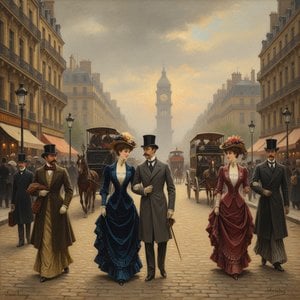
Jacques Joseph Tissot: A Chronicle of Parisian Life & Narrative Evolution
Explore the captivating world of Jacques Joseph Tissot, a master painter of Belle Époque society. Discover his realism, Impressionistic style, and lasting influence on art history. Learn more at ArtsDot.

Reflecting the Self: A History of Portraiture & Psychological Insight
Explore the fascinating history of self-portraiture from Renaissance masters like Dürer & Rembrandt to modern interpretations. Discover the psychological insights and artistic techniques behind these iconic works. Expert analysis for art enthusiasts.



