


 Aperçu en situation
 Envoyer
 Partager
 Détails de l'œuvre

 Télécharger
 Articles similaires
 Radiographie
 Diaporama
Winter Landscape
 Oil On Canvas
- WallArt
- Dutch Golden Age Painting
 1605
1605 25.0 x 34.0 cm
 Wallraf-Richartz-Museum
 Lire la suite
Giclées et impressions d'art
Impressions giclées ou sur toile de qualité musée, avec une production rapide et des finitions au choix. ( Commander la reproduction peinte à la main Télécharger l'image haute résolution)




P118B $10

P118H $10

P118W $10

P438Z $10

P508JH $12

P508YH $12

P805H $10

P805Z $10

P919BZ $10

P919G $10

P919XJ $10

P959ZH $10

P968JZ $12

W106C $8

W218G $10

W218JH $8

W218Y $10

W307PJ $10

W316G $10

W316PJ $8

W316Y $10

W398PJ $8

W4111J $10

W500HY $15

W500JH $15

W692G $12

W849H $8

W940BG $15

W953PJ $8




Choisissez parmi nos formats prédéfinis qui respectent les proportions originales de l’œuvre.

Vous pouvez saisir vos propres dimensions pour vous adapter à un cadre ou à un espace spécifique. Si la taille sélectionnée ne correspond pas aux proportions de l'image originale, nous recadrerons l'œuvre ou étendrons l'image avec une bordure en miroir ou une couleur unie. Une maquette numérique vous sera envoyée pour approbation avant le début de la production.
Veuillez noter que l'aperçu à l'écran ne reflète pas le recadrage ou l'extension réelle. Seule la maquette montrera avec précision la composition finale.
Bien que des tailles personnalisées soient disponibles, nous vous recommandons de choisir une dimension dans la liste prédéfinie afin de préserver les proportions originales.
Livraison dans le monde entier () en 2 semaines au lieu des 4/5 semaines habituelles. (16 août)

Livraison express gratuite dans le monde entier

Toile de lin de qualité supérieure

Assurance transport complète

Garantie de remboursement des droits de douane

Garantie de fidélité des couleurs

Politique de retour de 60 jours (uniquement en cas de défaut)

Garantie de remboursement à 100%

Offre de tarifs dégressifs
 L'option verre n'est disponible que pour les dimensions inférieures à 110 cm.

Winter Landscape
Giclées et impressions d'art
Format de la reproduction
-


Prix total
$ 62
Description de la pièce
Hendrick Avercamp’s Winter Landscape: A Frozen Echo of Northern Renaissance Brilliance
Winter Landscape with Skaters is more than just a depiction of a snowy day; it's a masterful encapsulation of the Dutch Golden Age spirit—a testament to observation, meticulous detail, and an artist’s ability to translate the palpable atmosphere of a particular season onto canvas. Painted around 1608, this oil on oak masterpiece by Hendrick Avercamp stands apart from its contemporaries not merely for its subject matter but for its innovative compositional approach and profound psychological insight.- Composition & Perspective: Avercamp’s genius lies in his pioneering use of aerial perspective—a technique borrowed directly from Pieter Bruegel the Elder's groundbreaking Winter Landscape with Ice Skaters—that creates a convincing illusion of depth. The distant mountains are rendered in paler hues, subtly diminishing in color and luminosity as they recede into the haze, while foreground elements retain richer tones and sharper contours. This masterful manipulation of light and color establishes a dynamic interplay between observation and artistic invention.
- Narrative Detail & Symbolism: The painting bursts with activity—a bustling scene populated by villagers engaged in various pursuits: skating on frozen ponds, hauling logs, tending livestock, and preparing meals around a hearth. Each figure is rendered with remarkable accuracy, conveying not only physical appearance but also emotional nuance. Beyond the immediate depiction of daily life, Avercamp imbues his work with symbolic resonance. The presence of a church symbolizes piety and faith—a cornerstone of Dutch society during the Reformation—while the frozen sailboat represents ambition thwarted by circumstance.
- Technique & Materials: Avercamp employed a technique characterized by thin layers of translucent watercolor over graphite, meticulously blended to achieve subtle tonal variations. This painstaking process allowed him to capture the ethereal quality of winter light and create textures that evoke the crispness of snow and the warmth of domestic interiors. The artist’s signature—a stylized monogram inscribed at the lower right—underscores his commitment to artistic integrity and distinguishes this work from mere copies.
- Historical Context: Created during the Little Ice Age, a period marked by unusually cold winters across Europe, Avercamp's Winter Landscape reflects the anxieties and aspirations of a society grappling with environmental challenges. The painting serves as a poignant reminder of humanity’s relationship with nature—a celebration of resilience amidst adversity—and embodies the humanist values that underpinned the Dutch Renaissance.
- Emotional Impact: Viewing this artwork evokes a sense of tranquility mingled with melancholy—a contemplation of beauty tempered by awareness of mortality. Avercamp's Winter Landscape invites viewers to immerse themselves in the sensory experience of a frozen winter day, capturing not only the visual splendor of the scene but also its psychological depth.
Œuvres similaires


Biographie de l'artiste
Hendrick Avercamp (1585-1634): The Silent Pioneer of Winter Landscapes
Hendrick Avercamp, born in Amsterdam in a house next to the Nieuwe Kerk on January 27, 1585, stands as one of the foremost figures in Dutch Golden Age painting—a period renowned for its artistic brilliance and cultural dynamism. His life story is interwoven with both remarkable creative achievement and personal circumstance, shaping him into an artist whose legacy continues to resonate today. From his early years marked by a profound silence—hence “de Stomme van Kampen”—to his prolific output of winter landscapes that captured the spirit of his era, Avercamp’s journey embodies the essence of Dutch artistic innovation.Early Life and Artistic Training: Influences from Brueghel
Avercamp's formative years were steeped in the artistic traditions of Amsterdam, where he received instruction primarily from Pieter Isaacsz, a celebrated portrait painter whose meticulous attention to detail established a benchmark for visual representation. While Isaacsz focused on capturing individual likenesses with precision, Avercamp’s artistic sensibilities leaned towards a broader scope—one informed by the pioneering work of Pieter Brueghel the Elder. Like Bruegel, Avercamp recognized the power of depicting everyday life against a dramatic backdrop, translating the Flemish master’s expressive style into his own distinctive visual language. Evidence suggests that Avercamp may have also studied under David Vinckboons, whose artistic explorations mirrored Brueghel's commitment to capturing atmospheric conditions and conveying emotion through color and composition. These influences profoundly shaped Avercamp’s artistic vision, propelling him toward a singular path of innovation.The Winter Landscape Genre: A Dutch Breakthrough
Avercamp distinguished himself as one of the earliest Dutch artists to champion the winter landscape as an independent genre—a bold departure from the prevailing focus on portraiture and history painting that characterized the period. Around 1608, coinciding with a bitterly cold winter in Holland—the culmination of the Little Ice Age—Avercamp embarked upon his most ambitious project: *Winter Landscape with Skaters*, now housed at the Rijksmuseum in Amsterdam. This monumental canvas exemplifies Avercamp’s mastery of capturing not merely the visual appearance of winter but also its palpable atmosphere—a feat achieved through masterful use of aerial perspective and a meticulous rendering of human activity amidst the frozen expanse. Unlike many contemporaries who idealized winter as a realm of sublime beauty, Avercamp presented a realistic portrayal of Dutch life unfolding on ice, populated by figures engaged in diverse pursuits ranging from sport to social interaction.Technique and Style: Detail and Atmospheric Depth
Avercamp’s artistic technique was characterized by painstaking precision—a hallmark of the Dutch Golden Age aesthetic. He employed a distinctive method involving applying watercolor washes over pen and ink drawings, resulting in luminous effects that imbued his paintings with an unparalleled sense of depth and realism. This approach allowed him to convey not only the visual contours of his subjects but also subtle nuances of light and color—elements crucial for capturing the mood and atmosphere of winter landscapes. Avercamp’s compositions were populated by numerous figures—often exceeding a hundred—each rendered with remarkable detail, reflecting his unwavering commitment to observational accuracy. Furthermore, he skillfully employed compositional devices reminiscent of Brueghel's style, creating dynamic scenes that pulsated with life and movement.Legacy and Historical Significance: A Reflection of Dutch Identity
Hendrick Avercamp’s contribution to Dutch art transcends mere stylistic innovation; it embodies a profound reflection of Dutch identity during the tumultuous years of the Eighty Years’ War—a conflict against Spanish Habsburg rule that shaped the nation's political landscape and cultural consciousness. His paintings served as visual records of daily life in Holland, capturing the spirit of resilience and adaptability amidst hardship. Avercamp’s enduring popularity testifies to his ability to connect with audiences across centuries, conveying not only aesthetic beauty but also a deep understanding of human experience—a testament to his artistic genius and his place among the luminaries of Dutch Golden Age painting. His work continues to inspire artists and scholars alike, ensuring that Avercamp's legacy as “the Silent Pioneer of Winter Landscapes” remains firmly enshrined in art history.
Hendrick Avercamp
1585 - 1634 , Pays-Bas
L'essentiel de l'artiste
- Artistic Movement Or Style: Dutch Golden Age painting
- Artists Who Influenced This Artist:
- Pieter Isaacsz
- David Vinckboons
- Date Of Birth: January 27, 1585
- Date Of Death: May 15, 1634
- Full Name: Hendrick Avercamp
- Nationality: Dutch
- Notable Artworks:
- Winter Landscape with Skaters
- Street in Delfi
- Place Of Birth: Amsterdam, Netherlands
Articles connexes

L'Âge d'Or Néerlandais : 10 Chefs-d'œuvre Incontournables pour Décorer avec Art et Histoire
Plongez au cœur de l'Âge d'Or néerlandais ! Découvrez 10 chefs-d'œuvre intemporels de Rembrandt, Vermeer et autres maîtres hollandais. Explorez leur histoire, technique & trouvez l'inspiration déco sur

Charles Leickert: Capturing the Dutch Golden Age Light – A Comprehensive Study of Technique, Context, and Legacy
Explore the captivating winter landscapes of Charles Leickert, a master of Dutch Golden Age light & atmosphere. Discover his techniques, symbolism, and lasting legacy – a comprehensive study for art enthusiasts and collectors.

Golden Light & Dutch Skies: Bringing the Magic of Dutch Golden Age Landscapes into Your Home
Transform your home with the breathtaking light of Dutch Golden Age landscapes. Discover how hand-painted oil reproductions of masterworks like Ruisdael and Vermeer bring timeless elegance, atmosphere, and soulful texture to modern interiors. Elevate your space with museum-quality art.
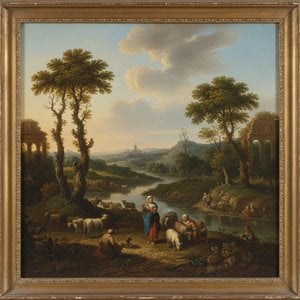
Nicolaes Berchem: Dutch Golden Age Pastoralism & the Evolution of Landscape Painting
Explore the captivating world of Nicolaes Berchem, a leading Dutch Golden Age painter. Discover his idyllic landscapes, masterful technique & lasting influence on art history. Learn more at ArtsDot.

L'Âge d'Or Néerlandais : Splendeur Baroque et Révolution Artistique
Explorez l'Âge d'Or néerlandais : découvrez les maîtres baroques (Rembrandt, Fabritius) et leur révolution artistique. Analyse approfondie, contexte historique et héritage durable. Un voyage au cœur de la peinture du XVIIe siècle.



