


 Aperçu en situation
 Partager
 Partager
 Détails

 Télécharger
 Articles similaires
 Radiographie
 Voir le diaporama
 Statistiques
untitled (3950)


 Afficher la suite
Reproduction à l'huile faite à la main
Huile sur toile peinte à la main, avec cadre et dimensions personnalisés, réalisée sur commande par nos artistes. ( Passer au format impression Passer au format image numérique)




P118B $10

P118H $10

P118W $10

P438Z $10

P508JH $12

P508YH $12

P805H $10

P805Z $10

P919BZ $10

P919G $10

P919XJ $10

P959ZH $10

P968JZ $12

W106C $8

W218G $10

W218JH $8

W218Y $10

W307PJ $10

W316G $10

W316PJ $8

W316Y $10

W398PJ $8

W4111J $10

W500HY $15

W500JH $15

W692G $12

W849H $8

W940BG $15

W953PJ $8




Choisissez parmi nos formats prédéfinis qui respectent les proportions originales de l’œuvre.

Vous pouvez saisir vos propres dimensions pour l'adapter à un cadre ou à un espace spécifique. Si la taille sélectionnée ne correspond pas aux proportions de l'image d'origine, nous recadrerons l'œuvre ou prolongerons la peinture avec des éléments peints à la main supplémentaires. Une maquette numérique vous sera envoyée pour approbation avant le début de la production.
Veuillez noter que l'aperçu à l'écran ne reflète pas le recadrage ou l'extension réels. Seule la maquette montrera fidèlement la composition finale.
Bien que des tailles personnalisées soient disponibles, nous vous recommandons de sélectionner une dimension dans la liste prédéfinie afin de préserver les proportions d'origine.
Après la commande, l’équipe ArtsDot.com contactera le client par e-mail pour recueillir ses instructions et lui fournira une maquette d’aperçu
Livraison dans le monde entier () en 3 à 4 semaines au lieu des 5 semaines habituelles. (17 septembre). Aucun compromis sur la qualité.

Livraison express gratuite dans le monde entier

Toile de lin de haute qualité

Assurance transport complète

Garantie de remboursement des droits de douane

Garantie de fidélité des couleurs

Garantie de retour de 100 jours (uniquement en cas de défaut)

Garantie de remboursement à 100%

Tarifs dégressifs sur quantité
 L'option verre n'est disponible que pour les dimensions inférieures à 110 cm.

untitled (3950)
Technique de reproduction
Format de la reproduction
-


Prix total final
$ 263
A Window into the Northern Renaissance
In the quiet, luminous depths of Hans Holbein the Younger’s untitled (3950), one finds more than just a portrait; one encounters a profound psychological encounter that has captivated viewers for centuries. Executed between 1526 and 1528, this masterpiece serves as a breathtaking window into the Northern Renaissance, an era defined by an almost spiritual devotion to meticulous detail and the exploration of human emotion. The subject, likely a noblewoman of high standing, gazes out from the panel with a serene yet piercing expression that seems to bridge the gap between the sixteenth century and our modern gaze. There is an undeniable intimacy in her presence, a quality that makes this work not merely a historical artifact, and but a living, breathing entity capable of transforming any space it inhabits.
Holbein’s technical mastery is nothing short of revolutionary. Through the painstaking application of thin, translucent oil glazes, he achieved a level of realism that feels almost tactile. To look upon this painting is to experience the subtle textures of skin, the delicate weight of a white cap, and the soft, velvet-like appearance of the small black bird held within the woman's grasp. This layering technique creates a luminous surface that captures light in a way that mimics the natural world, providing a depth and brilliance that remains striking even in reproduction. For the discerning collector or interior designer, this luminosity offers a sophisticated focal point, bringing a sense of classical elegance and enduring light to a curated room.
Symbolism and the Soul of the Subject
Beyond its outward beauty, the painting is a complex tapestry of humanist thought and Christian iconography. During the period of its creation, Europe was undergoing a massive intellectual shift, fueled by the rediscovery of classical texts and the rise of humanism. Holbein subtly weaves these themes into the very fabric of the portrait. The inclusion of birds—specifically the small black bird held delicately in the woman’s hand, alongside others perched in the background—is laden with symbolic weight. In the iconographic language of the time, birds often represented spirituality, hope, and the concept of resurrection. This suggests that the sitter possessed an inner peace and a contemplative nature, reflecting the virtues of piety and grace so highly valued by the Tudor court.
This interplay between the physical and the metaphysical creates an emotional impact that is both soothing and intellectually stimulating. The balanced composition, with its careful arrangement of figures and background elements, provides a sense of stability and harmony. For those seeking to decorate a space with art that inspires reflection, this piece offers a profound narrative. It is a work that invites the viewer to linger, to search for hidden meanings within the folds of drapery or the glint in an eye, making it an ideal acquisition for those who appreciate art as a medium for storytelling and deep emotional resonance.
Œuvres similaires


Biographie de l'artiste
jeune vie et formation
Hans Holbein le Jeune, figure marquante de la Renaissance du Nord, est né en 1497 à Augsbourg, en Allemagne. Bien qu'il soit souvent confondu avec son père, Hans Holbein le Vieux, artiste et graveur renommé, l'œuvre de Holbein le Jeune est distincte et remarquable à sa propre échelle.carrière artistique
La carrière artistique de Holbein le Jeune a commencé sous la tutelle de son père. Il a ensuite voyagé en Angleterre, où il est devenu peintre de cour pour le roi Henri VIII. Cette position lui a permis de capturer l'essence de la famille royale et de la noblesse anglaise émergente. Son œuvre se caractérise par :- réalisme exceptionnel : les portraits de Holbein sont célébrés pour leur qualité réaliste, comme en témoigne Portrait d'une dame inconnue (Renaissance du Nord).
- composition innovante : son utilisation de la composition est évidente dans Sir William Butts (37 x 46 cm, Renaissance du Nord, huile sur panneau).
- étude pour le portrait de famille de Thomas More (38 x 52 cm, Renaissance du Nord) illustre sa maîtrise de la capture de l'essence d'une famille.
œuvres notables et héritage
L'œuvre de Holbein le Jeune se trouve dans divers musées, notamment les Musées d'État de Berlin (Allemagne, en Allemagne), où son gentleman inconnu avec livres de musique et luth (huile sur panneau) est exposé. Son influence sur le mouvement de la Renaissance du Nord est indéniable, et son œuvre continue d'inspirer les artistes aujourd'hui. Holbein le Jeune est décédé en 1543, mais son héritage perdure grâce à ses portraits captivants et à ses études détaillées. Voir plus des œuvres de Hans Holbein le Jeune sur ArtsDot.
Hans Holbein le Jeune
1497 - 1543 , Italie
En bref
- Artistes Influents:
- Hans Holbein l'Ancien
- Albrecht Dürer
- Date De Décès: 1543
- Date De Naissance: 1497
- Lieu De Naissance: Augsbourg, Italie
- Mouvement Artistique: Renaissance du Nord
- Nationalité: Allemand
- Nom Complet: Hans Holbein le Jeune
- Oeuvres Notables:
- Portrait d'une dame inconnue
- Sir William Butts
- Les Ambassadeurs
- Portrait de Henri VIII
- Portrait d'Erasme
Articles similaires

Hans Holbein le Jeune : Maîtrise du Réalisme et Perspicacité Psychologique dans le Portrait Renaissance
Explorez la vie et l'œuvre de Hans Holbein le Jeune, maître du portrait Renaissance. Découvrez son réalisme saisissant, sa technique unique et les secrets psychologiques cachés dans ses célèbres tableaux. Un article expert pour les passionnés d'art.

Top 10 Œuvres d'Art pour une Atmosphère de Calme |
Découvrez 10 œuvres d'art emblématiques qui évoquent le calme et la sérénité : Monet, Van Gogh & plus. Explorez l'histoire de ces chefs-d'œuvre et trouvez l'inspiration déco idéale sur !

Feathered Visions: A Historical & Artistic Exploration of Birds in Painting
Explore the rich history of birds in painting! Discover symbolism, artistic movements & master artists like Audubon. High-quality reproductions available at ArtsDot.

Expressionnisme Allemand : 10 Chefs-d'œuvre Révolutionnaires à Découvrir | ArtsDot
Plongez au cœur de l'Expressionnisme Allemand avec ArtsDot. Découvrez 10 chefs-d'œuvre de Kandinsky, Munch et Kirchner. Explorez l'histoire, les couleurs et l'émotion derrière ces tableaux iconiques. Reproductions de qualité muséale disponibles sur ArtsDot.com
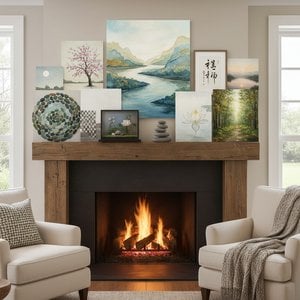
Top 10 des Œuvres d'Art Apaisantes : Calme et Sérénité pour Votre Intérieur
Découvrez les 10 œuvres d'art les plus apaisantes de l'histoire : Monet, Van Gogh et bien d'autres. Explorez leur histoire, leurs couleurs et trouvez l'inspiration pour une décoration intérieure sereine. Reproductions de qualité musée sur


![Portrait double de Jean de Dinteville et Georges de Selve (alias Les Ambassadeurs) [détail]](/media/artworks/images-thumb/bb/ab/bbab7ce77b7dd15d23d21114a63b51a4.jpg)


