


 Aperçu en situation
 Partager
 Partager
 Détails
 Guide
Guide

 Télécharger
 Articles similaires
 Radiographie
 Voir le diaporama
 Statistiques
Judith


 Afficher la suite
Giclées et impressions d'art
Impressions giclées ou sur toile de qualité musée, avec une production rapide et des finitions au choix. ( Acheter la peinture faite à la main Passer au format image numérique)




P118B $10

P118H $10

P118W $10

P438Z $10

P508JH $12

P508YH $12

P805H $10

P805Z $10

P919BZ $10

P919G $10

P919XJ $10

P959ZH $10

P968JZ $12

W106C $8

W218G $10

W218JH $8

W218Y $10

W307PJ $10

W316G $10

W316PJ $8

W316Y $10

W398PJ $8

W4111J $10

W500HY $15

W500JH $15

W692G $12

W849H $8

W940BG $15

W953PJ $8




Choisissez parmi nos formats prédéfinis qui respectent les proportions originales de l’œuvre.

Vous pouvez saisir vos propres dimensions pour vous adapter à un cadre ou à un espace spécifique. Si la taille sélectionnée ne correspond pas aux proportions de l'image originale, nous recadrerons l'œuvre ou étendrons l'image avec une bordure en miroir ou une couleur unie. Une maquette numérique vous sera envoyée pour approbation avant le début de la production.
Veuillez noter que l'aperçu à l'écran ne reflète pas le recadrage ou l'extension réelle. Seule la maquette montrera avec précision la composition finale.
Bien que des tailles personnalisées soient disponibles, nous vous recommandons de choisir une dimension dans la liste prédéfinie afin de préserver les proportions originales.
Livraison dans le monde entier () en 2 semaines au lieu des 4/5 semaines habituelles. (22 septembre)

Livraison express gratuite dans le monde entier

Toile de lin de haute qualité

Assurance transport complète

Garantie de remboursement des droits de douane

Garantie de fidélité des couleurs

Garantie de retour de 100 jours (uniquement en cas de défaut)

Garantie de remboursement à 100%

Tarifs dégressifs sur quantité
 L'option verre n'est disponible que pour les dimensions inférieures à 110 cm.

Judith
Giclées et impressions d'art
Format de la reproduction
-


Prix total final
$ 62
A Vision of Mythic Drama: The Ethereal World of Gustave Moreau
In the twilight of the nineteenth century, as the industrial world raced toward materialism and scientific certainty, Gustave Moreau offered a sanctuary of the soul. His masterpiece, Judith, completed in 1897, stands as a profound cornerstone of the Symbolist movement—a testament to an artist who refused to merely observe reality, choosing instead to weave the very fabric of dreams. Unlike the Impressionists, who sought to capture the fleeting dance of light upon a surface, Moreau turned his gaze inward. He aimed to distill complex psychological states and the whispers of the subconscious into visual form, drawing deep inspiration from biblical narratives and the esoteric mysteries of the human spirit.
The painting presents a scene that transcends simple historical illustration. While it draws from the harrowing tale of the biblical heroine Judith—the widow who famously decapitated the Assyrian commander Holofernes to save Jerusalem—Moreau eschews a straightforward, violent depiction. Instead, he invites us into an internalized psychological struggle. The subject is not merely a physical act of heroism, but a spiritual metamorphosis. Through his lens, the drama becomes a quiet, haunting meditation on courage, fate, and the heavy burden of destiny, making it an ideal centerpiece for those who appreciate art that provokes deep thought and emotional resonance.
Opulence and Ornamentation: The Technique of a Dream Weaver
To gaze upon Judith is to enter a realm of unparalleled sensory richness. Moreau’s style is defined by a meticulous, almost obsessive attention to detail, where every inch of the canvas feels imbued with meaning. Influenced by the shimmering textures of Byzantine mosaics and the delicate intricacy of medieval illuminated manuscripts, he transformed the canvas into a jewel-like object. He utilized tempera on canvas—a medium celebrated for its remarkable luminosity and durability—to achieve a textural depth that seems to glow from within.
The painting’s surface is an exquisite feast of patterns and gilded accents. Intricate textures and opulent ornamentation create a sense of heightened reality, where the boundaries between the physical world and a dreamscape dissolve. For the discerning collector or interior designer, this level of detail offers a magnificent tactile quality. The interplay of light and shadow, combined with the artist's signature use of jewel-toned pigments, ensures that the work commands attention in any setting, providing a sophisticated focal point that radiates both luxury and mystery.
Symbolism and the Subconscious: An Invitation to Contemplation
Moreau’s work arrived at a pivotal moment in art history, coinciding with the burgeoning interest in psychoanalysis and the theories of Sigmund Freud. As a "Dream Weaver," Moreau utilized myth and allegory to tap into universal human anxieties and desires. In Judith, the symbolism is layered; the figure herself becomes an icon of the struggle between the earthly and the divine, the mortal and the eternal. The painting does not just tell a story; it evokes a mood of profound spiritual longing.
This evocative imagery makes the piece much more than a mere decoration; it is an invitation to contemplation. Whether placed in a quiet study, a grand salon, or a contemporary living space, a high-quality reproduction of this work brings with it an aura of intellectual depth and historical significance. It serves as a bridge to the late 19th-century Symbolist movement, offering a window into a time when art sought to clothe the profound mysteries of existence in beauty and light. For those seeking to infuse their surroundings with a sense of wonder and timeless elegance, Moreau’s vision remains an unparalleled inspiration.
Œuvres similaires


Biographie de l'artiste
**Jeunesse et Éducation**
Gustave Moreau, artiste français, est né le 6 avril 1826 à Paris. Il a reçu une formation académique traditionnelle en peinture à l’École des Beaux-Arts, démontrant un talent pour le dessin dès son plus jeune âge.**Le Mouvement Symboliste**
L'œuvre de Moreau, caractérisée par des sujets allégoriques et mythologiques, l'a positionné comme un peintre symboliste de premier plan, en particulier dans les années 1890. Son art (et le symbolisme en général) a connu une période de déclin mais a été réévalué depuis les années 1960, Moreau étant désormais considéré comme l’un des peintres symbolistes les plus importants.**Œuvres Notables et Expositions**
* Salomé dans la prison (peinture de 'Gustave Moreau') est un exemple notable de son œuvre, mettant en valeur sa maîtrise du symbolisme. * Autoportrait (peinture de 'Gustave Moreau') est une autre représentation puissante de l’artiste lui-même.**Musée Gustave Moreau**
Le Musée National Gustave-Moreau (Musée Gustave Moreau Paris, France) à Paris est dédié à l’œuvre de Moreau, abritant plus de 1 200 peintures, aquarelles et dessins. Le musée témoigne de son héritage artistique.**Héritage et Influence**
L'influence de Moreau sur le mouvement symboliste est indéniable. Il a enseigné à l’École des Beaux-Arts, influençant des artistes notables tels que Henri Matisse et Georges Rouault. Sa nature recluse n'a pas diminué son impact sur le monde de l’art.- Découvrez plus d'informations sur la vie et l'œuvre de Gustave Moreau sur ArtsDot.com
- Explorez le Musée National Gustave-Moreau et sa collection impressionnante d'œuvres d’art sur Musée Gustave Moreau Paris, France
- Apprenez-en davantage sur le mouvement symboliste et son importance dans l'histoire de l'art sur le mouvement symboliste

Gustave Moreau
1826 - 1898 , France
En bref
- Artistes Influents:
- Eugène Delacroix
- Michelangelo
- Leonard de Vinci
- Date De Décès: 1898
- Date De Naissance: 6 avril 1826
- Influence Sur Les Artistes:
- Henri Matisse
- Georges Rouault
- Lieu De Naissance: Paris, France
- Mouvement Artistique: Symbolisme
- Nationalité: Française
- Nom Complet: Gustave Moreau
- Oeuvres Notables:
- Salomé dans la prison
- Autoportrait
- Jupiter et Sémélé
- Orphée
- L'Apparition
Articles similaires

The Enduring Legacy of Oil on Canvas: Technique, History & Aesthetic Impact
Explore the rich history & techniques of oil painting – from Renaissance masters to Impressionism. Discover pigments, layering methods, and why this timeless medium endures. Expert insights for artists & art enthusiasts.

The Enduring Power of Painting: A Historical & Contemporary Exploration of Form and Emotion
Explore the rich history & enduring techniques of oil painting with ArtsDot. Discover masterpieces, learn about art collecting, and find authentic handmade reproductions crafted by skilled artists.

L'Huile sur Toile : Exploration Historique et Technique d'un Médium Artistique Intemporel
Explorez l'histoire fascinante de la peinture à l'huile, des techniques ancestrales aux maîtres flamands comme Van Eyck. Découvrez les secrets des pigments, liants et glacis pour comprendre cet art intemporel.
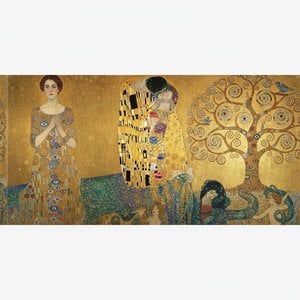
Gustave Klimt : Les 25 Œuvres Maîtresses d'un Artiste Symboliste Incontournable | ArtsDot
Plongez dans l'univers fascinant de Gustave Klimt ! Découvrez les 25 œuvres majeures du maître symboliste : Le Baiser, Judith et bien d'autres. Inspirez votre décoration intérieure avec ArtsDot.com et trouvez la reproduction parfaite.

Gustave Moreau: Symbolism's Enigmatic Visionary & Precursors of Modern Fantasy Art
Explore the captivating world of Gustave Moreau, the leading Symbolist painter. Discover his iconic masterpieces, influences, and lasting legacy. Expert analysis for collectors & art enthusiasts.


