


 Aperçu en situation
 Partager
 Partager
 Détails

 Télécharger l'image
 Articles similaires
 Radiographie
 Voir le diaporama
Fruit Displayed on a Stand
 Acrylique sur toile
- Art mural
- Impressionist Painting
 1882
1882 76.0 x 100.0 cm
 Musée des Beaux-Arts (Boston)
 Afficher la suite
Giclées et impressions d'art
Impressions giclées ou sur toile de qualité musée, avec une production rapide et des finitions au choix. ( Acheter la peinture faite à la main Acheter l'image)




P118B $10

P118H $10

P118W $10

P438Z $10

P508JH $12

P508YH $12

P805H $10

P805Z $10

P919BZ $10

P919G $10

P919XJ $10

P959ZH $10

P968JZ $12

W106C $8

W218G $10

W218JH $8

W218Y $10

W307PJ $10

W316G $10

W316PJ $8

W316Y $10

W398PJ $8

W4111J $10

W500HY $15

W500JH $15

W692G $12

W849H $8

W940BG $15

W953PJ $8




Choisissez parmi nos formats prédéfinis qui respectent les proportions originales de l’œuvre.

Vous pouvez saisir vos propres dimensions pour vous adapter à un cadre ou à un espace spécifique. Si la taille sélectionnée ne correspond pas aux proportions de l'image originale, nous recadrerons l'œuvre ou étendrons l'image avec une bordure en miroir ou une couleur unie. Une maquette numérique vous sera envoyée pour approbation avant le début de la production.
Veuillez noter que l'aperçu à l'écran ne reflète pas le recadrage ou l'extension réelle. Seule la maquette montrera avec précision la composition finale.
Bien que des tailles personnalisées soient disponibles, nous vous recommandons de choisir une dimension dans la liste prédéfinie afin de préserver les proportions originales.
Livraison dans le monde entier () en 2 semaines au lieu des 4/5 semaines habituelles. (23 août)

Livraison express gratuite dans le monde entier

Toile de lin de haute qualité

Assurance transport complète

Garantie de remboursement des droits de douane

Garantie de fidélité des couleurs

Politique de retour de 60 jours (uniquement en cas de défaut)

Garantie de remboursement à 100%

Tarifs dégressifs sur quantité
 L'option verre n'est disponible que pour les dimensions inférieures à 110 cm.

Fruit Displayed on a Stand
Giclées et impressions d'art
Format de la reproduction
-


Prix total final
$ 62
Description de la pièce
A Snapshot of Parisian Modernity
Gustave Caillebotte's "Fruit Displayed on a Stand," painted in 1882, isn’t merely a still life; it’s a meticulously observed fragment of late 19th-century Paris. Far removed from the grand historical narratives favored by many of his contemporaries, Caillebotte chose to capture an ordinary moment – the arrangement of fruit on market stalls – transforming it into a compelling study of light, form, and urban life. This seemingly simple composition reveals a keen awareness of the burgeoning modern world, reflecting the rapid transformations occurring within the city’s bustling streets and evolving social landscape.
The painting immediately draws the eye to Caillebotte's masterful manipulation of light. He employs a broken, almost fragmented approach, utilizing short, distinct brushstrokes to capture the interplay of sunlight on the various fruits. This technique, characteristic of Impressionism, avoids smooth blending and instead creates a vibrant mosaic of color and texture. The light isn’t uniform; it pools and dances across the surfaces of the apples, oranges, grapes, and bananas, lending each element an individual luminosity. Notice how he uses reflected light – the way the fruit subtly illuminates the surrounding space – to create a sense of depth and realism that belies the painting's relatively small scale.
The Influence of Photography
Caillebotte’s artistic vision was profoundly shaped by his early fascination with photography. He saw in the medium’s ability to capture fleeting moments and precise details a new approach to representation. This influence is evident in "Fruit Displayed on a Stand" through its careful composition, sharp focus, and realistic depiction of textures – from the smooth skin of an orange to the delicate fuzz of a grape. Unlike traditional still life painters who sought to idealize their subjects, Caillebotte embraced the imperfections and irregularities of the natural world, mirroring the photographic aesthetic he admired.
Furthermore, the painting’s arrangement echoes the compositional strategies found in photographs of the time. The fruits are presented with a sense of immediacy, as if captured mid-display. The slightly tilted stand adds to this feeling of spontaneity and realism, suggesting a candid observation rather than a staged presentation. This deliberate choice reflects Caillebotte's desire to move beyond the conventions of academic painting and embrace a more direct and truthful representation of reality.
Symbolism and Urban Life
While seemingly straightforward, "Fruit Displayed on a Stand" carries subtle symbolic weight. The abundance of fruit can be interpreted as a celebration of life and prosperity – a visual metaphor for the vitality of Paris during this period of rapid industrialization and economic growth. However, the fruits themselves are not presented in an idealized manner; they are slightly bruised, imperfect, and arranged on humble market stalls. This juxtaposition hints at the realities of urban life—the contrast between wealth and poverty, abundance and scarcity.
The painting also offers a glimpse into the everyday commerce of Parisian streets. The fruit stands were vital components of the city’s economy, providing sustenance to its diverse population. Caillebotte's depiction captures this essential aspect of urban life, transforming a commonplace scene into a work of art that invites contemplation and reflection. It is a testament to his ability to find beauty and significance in the ordinary.
A Timeless Masterpiece
“Fruit Displayed on a Stand” remains a captivating example of Impressionist painting, showcasing Caillebotte’s innovative approach to light, composition, and subject matter. Its enduring appeal lies not only in its technical brilliance but also in its ability to evoke a sense of place and time—a vivid snapshot of Parisian life at the cusp of modernity. Reproductions of this work offer a remarkable opportunity to experience the artist's unique vision and appreciate the beauty found within the seemingly mundane.
Œuvres similaires


Biographie de l'artiste
Premières années et éducation
Gustave Caillebotte, peintre français, est né le 19 août 1848 à Paris au sein d'une famille de la haute bourgeoisie. Son père, Martial Caillebotte, était l’héritier de l’entreprise familiale de textiles militaires et juge au tribunal de commerce du département de la Seine. L'intérêt précoce de Gustave pour la photographie en tant que forme d'art allait plus tard influencer son style pictural.Carrière artistique
Gustave obtint une licence en droit en 1868, puis un certificat pour exercer le droit en 1870, mais sa véritable passion résidait dans les arts. Il commença à fréquenter l'atelier du peintre Léon Bonnat, où il étudia la peinture sérieusement. Son style, caractérisé par son réalisme, fut influencé par ses collègues impressionnistes, dont Edgar Degas et Giuseppe de Nittis.Œuvres notables et style
* Les Raboteurs de parquet (1875) : Ce chef-d'œuvre précoce, aujourd’hui au musée d'Orsay, met en valeur le mélange unique de réalisme et d'influences impressionnistes de Caillebotte. * Vue des toits (effet de neige) (1878) : Démontre son utilisation de points de vue élevés, une technique peut-être influencée par les estampes japonaises et la photographie. * Boulevard vu d'en haut (1880): Cette œuvre illustre sa capacité à combiner réalisme et techniques impressionnistes pour capturer l’atmosphère urbaine parisienne.Influences et développement artistique
Caillebotte a été influencé par le mouvement réaliste, mais il s'est également inspiré des impressionnistes comme Monet, Renoir et Degas. Son approche unique consistait à combiner une observation précise du monde réel avec les techniques de composition et de couleur des impressionnistes. Il était particulièrement fasciné par la représentation de la vie moderne parisienne, notamment les scènes urbaines et les paysages industriels. Sa maîtrise de la perspective et son utilisation innovante de points de vue élevés témoignent de son intérêt pour la photographie et l'art japonais.Héritage et importance historique
Bien que faisant partie de l’école du réalisme, le style de Caillebotte était fortement influencé par ses pairs impressionnistes. Son œuvre a contribué à élargir les frontières de la peinture moderne en explorant des thèmes tels que la vie urbaine, la technologie et la transformation sociale. Après sa mort, sa collection d'œuvres impressionnistes fut léguée à l’État français, devenant le noyau central de la collection impressionniste du musée d'Orsay. Cette donation a joué un rôle crucial dans la reconnaissance et la popularisation de l'impressionnisme en France et dans le monde entier. Son travail est aujourd'hui considéré comme une contribution significative à l'histoire de l'art moderne, témoignant de son talent unique et de sa vision artistique novatrice.Exposition des œuvres de Caillebotte sur ArtsDot

Gustave Caillebotte
1848 - 1894 , France
En bref
- Artistic Movement Or Style: Réalisme et Impressionnisme
- Artists Who Influenced This Artist:
- Léon Bonnat
- Edgar Degas
- Giuseppe De Nittis
- Date Of Birth: 19 août 1848
- Date Of Death: 21 février 1894
- Full Name: Gustave Caillebotte
- Nationality: Français
- Notable Artworks:
- Les Raboteurs de parquet
- Vue de toits (effet de neige)
- Boulevard vu d'en haut
- Un balcon à Paris
- Homme au Fenêtre
- Place Of Birth (City And Country): Paris, France
Articles similaires

Paul Cézanne : Les 25 Œuvres Maîtresses d'un Génie Révolutionnaire | ArtsDot
Plongez dans l'univers de Paul Cézanne avec les 25 œuvres incontournables du maître post-impressionniste. Découvrez l'histoire, la technique et l'émotion derrière ses tableaux iconiques comme 'Les Baigneuses' ou 'Mont Sainte-Victoire'. Reproductions d'art haute qualité sur ArtsDot.com.

The Bountiful Still Life: Symbolism & Artistic Representation of Fruit Across Art History
Explore the rich history of still life painting & the symbolism of fruit across art movements. Discover masterpieces from Caravaggio to Cézanne with ArtsDot – expert guidance & museum-quality reproductions.
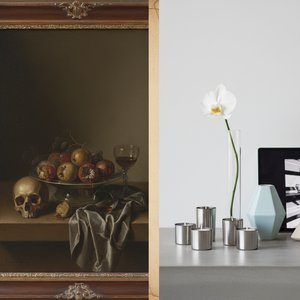
The Enduring Appeal of Still Life: A Historical & Contemporary Exploration
Explore the rich history & symbolism of still life painting with ArtsDot. Discover masterpieces from the Dutch Golden Age, learn about vanitas art, and find expert guidance for collecting timeless artworks.

Gustave Caillebotte : Entre Réalisme et Modernité dans la Vie Parisienne
Explorez l'œuvre fascinante de Gustave Caillebotte, entre réalisme et impressionnisme. Découvrez son regard unique sur la vie parisienne du XIXe siècle et son héritage artistique méconnu. Analyse approfondie et expertise.

Silent Narratives: Exploring the Enduring Appeal of Still Life Painting Across Centuries
Explore the rich history of still life painting with ArtsDot. Discover Dutch Masters, decode vanitas symbolism & learn about collecting timeless art. Expert insights and museum-quality reproductions.



