


 Aperçu en situation
 Envoyer
 Partager
 Détails de l'œuvre

 Télécharger
 Articles similaires
 Radiographie
 Diaporama
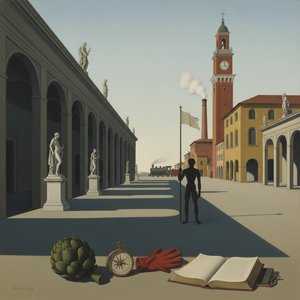
Metaphysical muse


 Lire la suite
Giclées et impressions d'art
Impressions giclées ou sur toile de qualité musée, avec une production rapide et des finitions au choix. ( Commander la reproduction peinte à la main Télécharger l'image haute résolution)




P118B $10

P118H $10

P118W $10

P438Z $10

P508JH $12

P508YH $12

P805H $10

P805Z $10

P919BZ $10

P919G $10

P919XJ $10

P959ZH $10

P968JZ $12

W106C $8

W218G $10

W218JH $8

W218Y $10

W307PJ $10

W316G $10

W316PJ $8

W316Y $10

W398PJ $8

W4111J $10

W500HY $15

W500JH $15

W692G $12

W849H $8

W940BG $15

W953PJ $8




Choisissez parmi nos formats prédéfinis qui respectent les proportions originales de l’œuvre.

Vous pouvez saisir vos propres dimensions pour vous adapter à un cadre ou à un espace spécifique. Si la taille sélectionnée ne correspond pas aux proportions de l'image originale, nous recadrerons l'œuvre ou étendrons l'image avec une bordure en miroir ou une couleur unie. Une maquette numérique vous sera envoyée pour approbation avant le début de la production.
Veuillez noter que l'aperçu à l'écran ne reflète pas le recadrage ou l'extension réelle. Seule la maquette montrera avec précision la composition finale.
Bien que des tailles personnalisées soient disponibles, nous vous recommandons de choisir une dimension dans la liste prédéfinie afin de préserver les proportions originales.
Livraison dans le monde entier () en 2 semaines au lieu des 4/5 semaines habituelles. (16 août)

Livraison express gratuite dans le monde entier

Toile de lin de qualité supérieure

Assurance transport complète

Garantie de remboursement des droits de douane

Garantie de fidélité des couleurs

Politique de retour de 60 jours (uniquement en cas de défaut)

Garantie de remboursement à 100%

Offre de tarifs dégressifs
 L'option verre n'est disponible que pour les dimensions inférieures à 110 cm.

Metaphysical muse
Giclées et impressions d'art
Format de la reproduction
-


Prix total
$ 62
Description de la pièce
A Portrait of Disquiet: De Chirico’s “Metaphysical Muse”
Giorgio de Chirico's "Metaphysical Muse" is not merely a depiction of a woman in a helmet; it’s an immersion into the unsettling logic of the subconscious. Painted around 1917, during his most intensely productive and influential period, this work exemplifies the core tenets of the Metaphysical School – a movement that sought to evoke a sense of dreamlike disorientation through meticulously constructed scenes imbued with symbolic weight. The painting immediately confronts the viewer with an arresting image: a woman’s head, partially obscured by a bizarre, almost alien helmet, dominates the composition. This isn't a portrait in the traditional sense; it’s a carefully orchestrated tableau designed to provoke contemplation and unease.
- The Helmet’s Significance: The helmet itself is arguably the most potent symbol within the piece. Its intricate design – reminiscent of ancient military armor yet undeniably strange – suggests protection, but also confinement and detachment. It could represent a shield against the harsh realities of modern life, or perhaps a barrier erected to guard a vulnerable psyche.
- Architectural Context: The backdrop, featuring a classical building, is crucial to understanding de Chirico’s intent. These architectural elements, often rendered with an unsettling stillness and a sense of isolation, are borrowed from the past – specifically Roman antiquity – but presented in a way that feels utterly detached from time. This juxtaposition creates a profound sense of displacement and timelessness.
- The Smaller Figures: The two smaller figures flanking the central subject further contribute to the painting’s unsettling atmosphere. Their diminished scale emphasizes the woman's dominance, while their presence hints at an audience, or perhaps witnesses to her private torment.
De Chirico and the Metaphysical School
To fully appreciate “Metaphysical Muse,” one must understand the context of de Chirico’s artistic development within the broader movement he spearheaded. Emerging in early 20th-century Italy, the Metaphysical School rejected the Impressionistic focus on fleeting moments and instead sought to capture a deeper, more fundamental reality – one that existed beyond the realm of sensory experience. Influenced by philosophers like Nietzsche and Schopenhauer, de Chirico explored themes of alienation, illusion, and the subjective nature of perception. His work deliberately manipulates perspective, scale, and composition to create an atmosphere of psychological tension and ambiguity. The use of sharp lines, stark contrasts, and unsettling juxtapositions are hallmarks of this style.
- Böcklin’s Influence: De Chirico's early work was profoundly affected by Arnold Böcklin’s symbolic landscapes, particularly “Isle of the Dead.” The mood of melancholy and mystery found in Böcklin’s paintings resonated deeply with de Chirico’s own artistic concerns.
- Munich’s Intellectual Climate: De Chirico's time studying in Munich exposed him to a vibrant intellectual scene, fostering his interest in philosophical ideas that would later inform his art.
Technique and Materiality
De Chirico employed a meticulous technique characterized by precise draftsmanship and a deliberate attention to detail. The painting is executed with oil paints on canvas, utilizing layering and glazing to achieve a remarkable sense of depth and luminosity. Note the careful rendering of the metallic surfaces of the helmet – reflecting light in a way that suggests both hardness and vulnerability. The muted color palette—dominated by browns, grays, and ochres—contributes significantly to the painting’s somber mood. This restrained use of color allows the viewer's eye to focus on the formal elements of composition and the unsettling symbolism within.
Emotional Impact and Legacy
"Metaphysical Muse" continues to captivate viewers with its haunting beauty and profound psychological depth. It is a work that invites introspection, prompting questions about identity, perception, and the nature of reality itself. De Chirico’s ability to evoke such powerful emotions through seemingly simple imagery is a testament to his artistic genius. This painting represents a pivotal moment in 20th-century art, influencing Surrealist artists like René Magritte and Salvador Dalí. A hand-painted reproduction offers an unparalleled opportunity to experience the full impact of this iconic work.
Œuvres similaires


Biographie de l'artiste
jeunesse et influences
Giorgio de Chirico, artiste italien renommé, est né le 10 juillet 1888 à Volos, en Grèce, d'une mère génoise et d'un père sicilien. Sa jeunesse a été marquée par l'étude de l'art au polytechnique d'Athènes sous la direction des peintres grecs influents Georgios Roilos et Georgios Jakobides. Cette formation allait façonner son style artistique unique.le mouvement de l'art métaphysique
En 1910, de Chirico a inauguré le mouvement de l'art métaphysique, qui a profondément influencé les surréalistes. Ses œuvres de cette période, caractérisées par des atmosphères étranges et des scénarios oniriques, sont exemplifiées dans des peintures telles que les vexations du penseur (disponible sur la plateforme ArtsDot) et l'énigme de l'heure (visible sur ArtsDot). Ces œuvres évoquent un sentiment de mystère, souvent avec des contrastes nets de lumière et d'ombre.période post-métaphysique
Après 1919, l'intérêt de de Chirico s'est tourné vers les techniques de la peinture traditionnelle, adoptant un style néoclassique ou néo-baroque. Ce changement est évident dans ses œuvres ultérieures, qui, bien qu'elles ne reçoivent pas le même élan critique que ses premières pièces, démontrent une évolution mature de son approche artistique.héritage et influence
L'impact de de Chirico sur le mouvement surréaliste est indéniable, des artistes comme André Breton étant influencés par ses peintures métaphysiques. Bien que son œuvre ultérieure n'ait pas été aussi largement saluée, de Chirico reste une figure centrale dans l'histoire de l'art moderne. Son héritage continue d'inspirer, avec ses œuvres faisant partie de collections du monde entier, notamment le musée Giorgio de Chirico, qui se dresse désormais près des escaliers du marchepied à Rome.- explorez davantage les œuvres de Giorgio de Chirico sur ArtsDot
- découvrez le mouvement de l'art métaphysique et son influence sur le surréalisme grâce à cet article perspicace sur ArtsDot
- apprenez-en davantage sur la vie et les œuvres de de Chirico sur Wikipedia

Giorgio de Chirico
1888 - 1978 , Grèce
L'essentiel de l'artiste
- Artistes Influencés:
- Surréalisme
- André Breton
- Date De Naissance: 10 juillet 1888
- Influenceurs Artistiques:
- Arnold Böcklin
- Max Klinger
- Lieu De Naissance: Volos, Grèce
- Mouvement Artistique: Art métaphysique
- Nationalité: Italienne
- Nom Complet: Giorgio de Chirico
- Oeuvres Notables:
- Les Vexations du penseur
- L'Énigme de l'heure
- La Chanson d'amour
Articles connexes

Demandes professionnelles
APS ofrece reproducciones de bellas artes y encargos personalizados desde 2004. Confían en nosotros corporaciones, hoteles y coleccionistas selectos para obras de arte de calidad museística, servicio discreto y soluciones artísticas completas. ¡Póngase en contacto con nosotros para obtener un presupuesto personalizado!

Goya : 25 Chefs-d'Œuvre Inoubliables d'un Maître de l'Âme
Plongez au cœur de l'œuvre inégalable de Goya ! Découvrez 25 chefs-d’œuvre emblématiques, des portraits saisissants aux scènes dramatiques. Explorez la vie et l'art du maître espagnol avec ArtsDot.com – reproductions d'art de qualité musée et inspirations déco.
Giorgio de Chirico: Metaphysical Realities & the Poetics of Absence
Explore the captivating world of Giorgio de Chirico and his groundbreaking Metaphysical painting movement. Discover the philosophical depths & surreal imagery that influenced generations of artists. Learn more at ArtsDot.

Au-delà du Voile : Exploration de l'Art Métaphysique et de ses Mystères Intemporels
Explorez l'univers fascinant de la peinture métaphysique avec ArtsDot. Découvrez Giorgio de Chirico et son influence sur le surréalisme. Guide d'achat, analyses d'œuvres et conseils pour collectionneurs passionnés.

Giclée Prints: Archival Quality & Aesthetic Nuances for the Discerning Collector
Explore the world of giclée prints with ArtsDot. Learn about archival quality, aesthetic nuances & investment potential. Expert guidance for discerning art collectors seeking museum-quality reproductions and lasting value.



