

 Aperçu en situation
 Envoyer
 Partager
 Détails de l'œuvre

 Télécharger
 Articles similaires
 Radiographie
 Diaporama
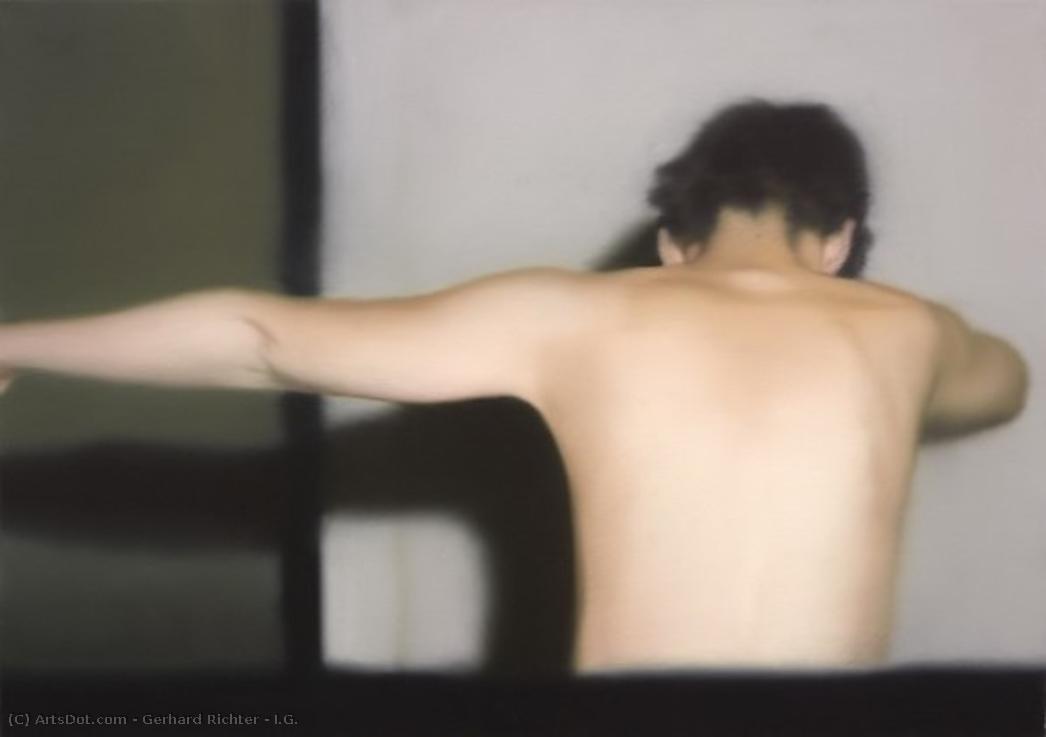
I.G.
 Acrylic On Canvas
- WallArt
- Contemporary Realism
 1993
1993 72.0 x 102.0 cm
 Lire la suite
Giclées et impressions d'art
Impressions giclées ou sur toile de qualité musée, avec une production rapide et des finitions au choix. ( Commander la reproduction peinte à la main Télécharger l'image haute résolution)




P118B $10

P118H $10

P118W $10

P438Z $10

P508JH $12

P508YH $12

P805H $10

P805Z $10

P919BZ $10

P919G $10

P919XJ $10

P959ZH $10

P968JZ $12

W106C $8

W218G $10

W218JH $8

W218Y $10

W307PJ $10

W316G $10

W316PJ $8

W316Y $10

W398PJ $8

W4111J $10

W500HY $15

W500JH $15

W692G $12

W849H $8

W940BG $15

W953PJ $8




Choisissez parmi nos formats prédéfinis qui respectent les proportions originales de l’œuvre.

Vous pouvez saisir vos propres dimensions pour vous adapter à un cadre ou à un espace spécifique. Si la taille sélectionnée ne correspond pas aux proportions de l'image originale, nous recadrerons l'œuvre ou étendrons l'image avec une bordure en miroir ou une couleur unie. Une maquette numérique vous sera envoyée pour approbation avant le début de la production.
Veuillez noter que l'aperçu à l'écran ne reflète pas le recadrage ou l'extension réelle. Seule la maquette montrera avec précision la composition finale.
Bien que des tailles personnalisées soient disponibles, nous vous recommandons de choisir une dimension dans la liste prédéfinie afin de préserver les proportions originales.
Livraison dans le monde entier () en 2 semaines au lieu des 4/5 semaines habituelles. (16 août)

Livraison express gratuite dans le monde entier

Toile de lin de qualité supérieure

Assurance transport complète

Garantie de remboursement des droits de douane

Garantie de fidélité des couleurs

Politique de retour de 60 jours (uniquement en cas de défaut)

Garantie de remboursement à 100%

Offre de tarifs dégressifs
 L'option verre n'est disponible que pour les dimensions inférieures à 110 cm.

I.G.
Giclées et impressions d'art
Format de la reproduction
-


Prix total
$ 62
Description de la pièce
The Enigmatic Figure: An Exploration of Gerhard Richter's 1993 Photograph
Gerhard Richter’s 1993 photograph, titled simply “I.G.”, is not a portrait in the traditional sense; it’s an invitation to contemplate absence and vulnerability. The image presents a figure – a man with short hair, turned away from the viewer – rendered in stark black and white. His arms are outstretched, a gesture simultaneously open and exposed, suggesting a profound openness or perhaps a quiet surrender. The photograph's power lies not in detailed representation but in its carefully constructed ambiguity. Richter masterfully utilizes light and shadow to create a sense of depth and mystery, drawing the eye towards the figure’s back and shoulders, areas that inherently hold more weight within the composition. The simplicity of the subject – just a man, alone – amplifies the emotional resonance, prompting viewers to project their own narratives onto the image.

A Fragment of History: Richter and the Shadow of IG Farben
To fully appreciate “I.G.”, it’s crucial to understand the context surrounding Gerhard Richter's work during this period. The photograph’s title itself is deeply significant; "I.G." refers to the infamous IG Farbenindustrie AG – a German chemical and pharmaceutical conglomerate with a dark and complex history. Founded in 1925 through a merger of six major companies, including BASF, Bayer, and Hoechst, IG Farben played a pivotal role in both Germany’s industrial development and its horrific involvement in World War II and the Holocaust. The company's legacy is inextricably linked to unethical practices, forced labor, and the mass production of Zyklon B – the very gas used in Nazi extermination camps. Richter, born in 1932, grew up during this period of immense social and political upheaval, witnessing firsthand the devastation of war and the rise of a totalitarian regime. His early life was marked by displacement and uncertainty, experiences that undoubtedly shaped his artistic sensibility.
Interestingly, research reveals Richter’s own family history intersected with IG Farben's operations. His father, a schoolteacher, navigated the complexities of life under Nazi rule, while his mother fostered a love for literature and music within the family. The photograph can be interpreted as a subtle meditation on this historical backdrop – a quiet acknowledgement of the shadows that linger beneath the surface of German history. The anonymity of the figure mirrors the collective memory surrounding IG Farben, suggesting a shared experience of trauma and loss.
Richter’s Style: Realism and Abstraction in Dialogue
Gerhard Richter is renowned for his distinctive artistic style, which seamlessly blends realism and abstraction. “I.G.” exemplifies this approach perfectly. While the photograph appears to be a straightforward depiction of a human form, Richter employs techniques characteristic of his oeuvre – subtle gradations of tone, a deliberate lack of sharp detail, and an almost photographic quality. This creates a sense of detachment, as if the image is not merely representing reality but rather capturing a fleeting impression or memory. His work often resists easy interpretation, inviting viewers to engage in a dialogue with the artwork itself. Richter’s use of black and white further enhances this effect, stripping away color and focusing attention on form and texture.
Considering his broader body of work, particularly pieces like ‘Gilbert’ and ‘S. with Child’, we see a consistent exploration of themes related to perception, memory, and the nature of representation. Richter's process often involves layering images – sometimes photographs, sometimes paintings – creating complex compositions that challenge our understanding of reality.
Emotional Resonance: A Portrait of Quiet Contemplation
Ultimately, “I.G.” is a profoundly moving work of art. It’s not a grand statement or a dramatic scene; rather, it's a quiet meditation on the human condition – on vulnerability, uncertainty, and the enduring power of memory. The figure’s averted gaze suggests a sense of introspection, inviting us to consider our own experiences of loss, displacement, and the weight of history. The photograph’s stark simplicity and evocative atmosphere create a powerful emotional impact, leaving viewers with a lingering sense of unease and contemplation. It serves as a poignant reminder that even in the absence of explicit narrative, art can communicate profound truths about ourselves and the world around us.
Œuvres similaires

![Fort Worth Art Museum Le Film Italien : Néoréalisme Et Au-delà Affiche Et Calendrier D'événements [vue De Face] — Massimo Vignelli, Vignelli Associates, Réalisme Contemporain](/media/artworks/images/thumbnails/e9/9d/e99d0f51e4d4411c9237ff8af0cb0b6b.jpg)


Biographie de l'artiste
**Jeunesse et Éducation**
Gerhard Richter, artiste visuel allemand renommé, est né le 9 février 1932 à l'hôpital de Dresde-Neustadt, à Dresde, en Saxe. Il a grandi à Reichenau, Basse Silésie (aujourd’hui Bogatynia, Pologne), et à Waltersdorf (Zittauer Gebirge), dans la campagne supérieure de Lusace. Le père de Richter, Horst Richter, était étudiant en mathématiques et en physique à l'Technische Hochschule de Dresde.**Carrière artistique**
Richter a commencé son parcours artistique comme apprenti peintre décorateur et a ensuite étudié à l’Académie des Beaux-Arts de Dresde. Ses premières œuvres ont été influencées par les styles de Picasso et Jean Arp, ce qui est évident dans ses peintures abstraites et photoréalistes. En 1957, Richter a travaillé comme stagiaire maître à l'académie, réalisant des commandes pour l'époque de la République Démocratique allemande de l’Est.**Œuvres notables et réalisations**
* Abstrait (2012) a établi un prix de vente aux enchères record pour une peinture d'un artiste vivant à 34 millions de dollars (£21 million). * Domplatz, Mailand (Place de la cathédrale, Milan) (1968) a été vendu pour 37,1 millions de dollars (£24,4 million) à New York. * Abstrait (2015) a été vendu pour 44,52 millions de dollars (£30,4 million) lors de la vente aux enchères contemporaine de Sotheby's.**Style et mouvement artistique**
Le travail de Richter est caractérisé par son éclectisme, combinant des styles abstraits et photoréalistes. Avec Sigmar Polke, il a introduit le terme Kapitalistischer Realismus (Réalisme capitaliste), un anti-style d'art qui s'approprie le langage pictural de la publicité.**Vie personnelle**
Richter a épousé Marianne Eufinger en 1957 et a eu une fille. Il a plus tard épousé Isa Genzken en 1982 et Sabine Moritz en 1995, avec qui il a eu deux fils et une fille. **Note :** Cet article est basé sur les informations fournies et peut ne pas être une biographie complète. Pour plus d’informations détaillées, veuillez consulter les sources liées.
Gerhard Richter
1932 - , Allemagne
L'essentiel de l'artiste
- Artistes Influents:
- Picasso
- Jean Arp
- Date De Naissance: 9 février 1932
- Lieu De Naissance: Dresde, Allemagne
- Mouvement Artistique:
- Abstraction
- Photoréalisme
- Nationalité: Allemand
- Nom Complet: Gerhard Richter
- Oeuvres Notables:
- Abstraktes Bild (2012)
- Domplatz, Milan (1968)
- Nuages
- S. avec enfant
- Style Artistique: Réalisme capitaliste
Articles connexes
L'Élégance du Monochrome : Explorer l'Abstraction Noir, Blanc et Gris dans la Décoration Intérieure Contemporaine
Explorez l'élégance du monochrome ! Découvrez comment créer un intérieur sophistiqué et apaisant avec nos conseils d'experts en décoration. Inspirez-vous des dernières tendances et transformez votre espace.

Beyond the Lens: Photography's Enduring Influence on Modern & Contemporary Art
Explore photography's pivotal role in shaping modern & contemporary art. Discover key movements, influential artists like Stieglitz, and expert collecting advice from ArtsDot.

Les 10 Chefs-d'œuvre de la Photographie Documentaire : Artistes & Décor Intérieur
Plongez au cœur de la photographie documentaire avec les 10 œuvres incontournables qui ont marqué l'histoire. Découvrez les artistes, leurs techniques et trouvez l'inspiration déco sur ! Explorez notre collection en ligne.
Les 10 Chefs-d'œuvre Dominés par le Noir : Art, Histoire & Décoration
Plongez dans l'univers fascinant des 10 plus beaux tableaux dominés par le noir. Découvrez les histoires, techniques et symbolisme de chefs-d'œuvre intemporels. Reproductions d'art de qualité musée sur !

Gerhard Richter: A Retrospective on Abstraction, Memory & the Photographic Source
Explore the profound world of Gerhard Richter's abstract paintings. Discover his techniques, influences, and lasting impact on contemporary art – a guide for discerning collectors.



