

 Aperçu en situation
 Envoyer
 Partager
 Détails de l'œuvre

 Télécharger
 Articles similaires
 Radiographie
 Diaporama
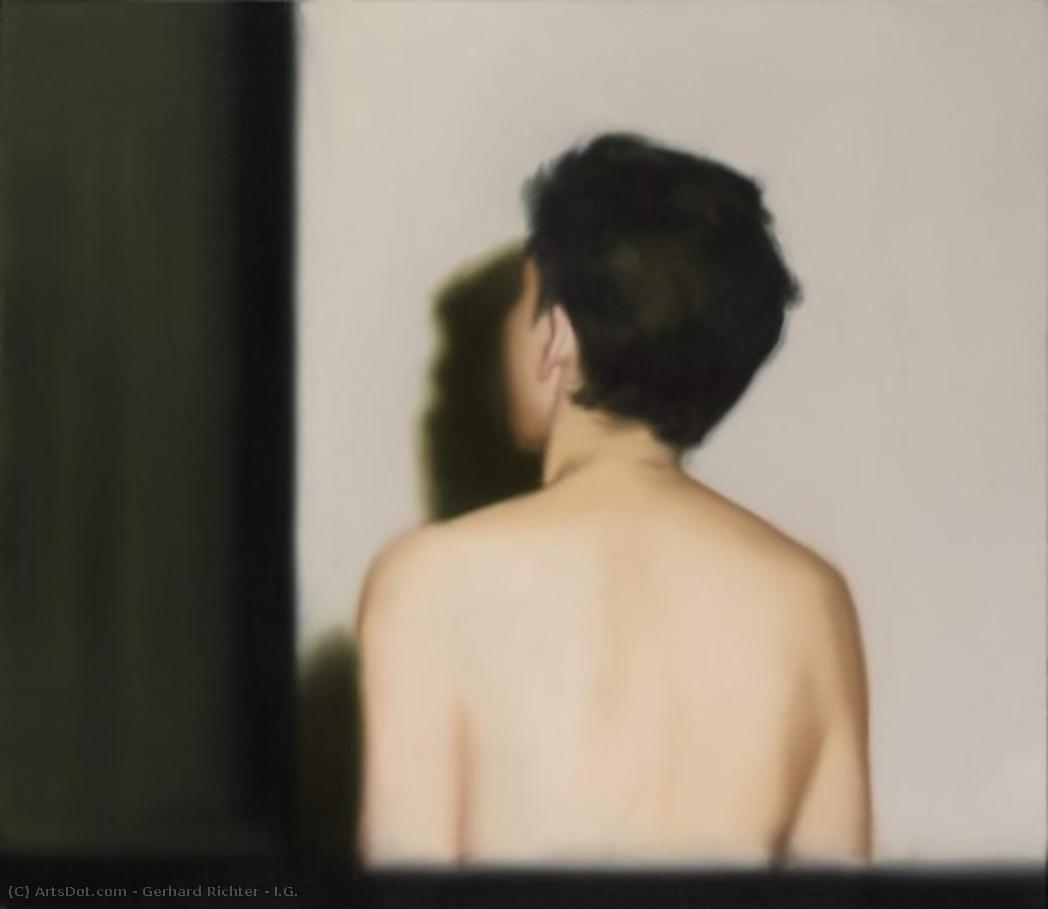
I.G.
 Acrylic On Canvas
- WallArt
- Contemporary Realism
 1993
1993 72.0 x 82.0 cm
 Lire la suite
Reproduction à l'huile faite à la main
Huile sur toile peinte à la main, avec cadre et dimensions personnalisés, réalisée sur commande par nos artistes. ( Commander l'impression Télécharger l'image haute résolution)




P118B $10

P118H $10

P118W $10

P438Z $10

P508JH $12

P508YH $12

P805H $10

P805Z $10

P919BZ $10

P919G $10

P919XJ $10

P959ZH $10

P968JZ $12

W106C $8

W218G $10

W218JH $8

W218Y $10

W307PJ $10

W316G $10

W316PJ $8

W316Y $10

W398PJ $8

W4111J $10

W500HY $15

W500JH $15

W692G $12

W849H $8

W940BG $15

W953PJ $8




Choisissez parmi nos formats prédéfinis qui respectent les proportions originales de l’œuvre.

Vous pouvez saisir vos propres dimensions pour l'adapter à un cadre ou à un espace spécifique. Si la taille sélectionnée ne correspond pas aux proportions de l'image d'origine, nous recadrerons l'œuvre ou prolongerons la peinture avec des éléments peints à la main supplémentaires. Une maquette numérique vous sera envoyée pour approbation avant le début de la production.
Veuillez noter que l'aperçu à l'écran ne reflète pas le recadrage ou l'extension réels. Seule la maquette montrera fidèlement la composition finale.
Bien que des tailles personnalisées soient disponibles, nous vous recommandons de sélectionner une dimension dans la liste prédéfinie afin de préserver les proportions d'origine.
Après la commande, l’équipe ArtsDot.com contactera le client par e-mail pour recueillir ses instructions et lui fournira une maquette d’aperçu
Livraison dans le monde entier () en 3 à 4 semaines au lieu des 5 semaines habituelles. (17 août). Aucun compromis sur la qualité.

Livraison express gratuite dans le monde entier

Toile de lin de qualité supérieure

Assurance transport complète

Garantie de remboursement des droits de douane

Garantie de fidélité des couleurs

Politique de retour de 60 jours (uniquement en cas de défaut)

Garantie de remboursement à 100%

Offre de tarifs dégressifs
 L'option verre n'est disponible que pour les dimensions inférieures à 110 cm.

I.G.
Technique de reproduction
Format de la reproduction
-


Prix total
$ 263
Description de l'œuvre
The Enigmatic Gaze: Unpacking Gerhard Richter's 1993 Photograph
Gerhard Richter’s 1993 photograph, titled simply “I.G.”, isn’t a grand statement of artistic ambition; it’s a quiet invitation to contemplate the complexities of self-perception and the subtle anxieties that permeate modern existence. The image presents a figure – short in stature, with cropped hair – standing before a mirror, their gaze fixed intently on their reflection. It's a deceptively simple composition, yet within its stark black and white palette lies a profound sense of unease and introspection. The photograph’s strength resides not in dramatic gesture or overt emotion, but in the palpable stillness, the almost hesitant quality of the subject’s attention. The background, featuring a muted picture hanging on the wall, adds another layer of detachment, suggesting an observer rather than a participant within this private moment.

Richter’s Signature Style: Realism and the Illusion of Truth
“I.G.” exemplifies a key aspect of Gerhard Richter's oeuvre – his masterful manipulation of photographic realism. He doesn’t simply reproduce a photograph; he transforms it, imbuing it with an emotional resonance that transcends mere representation. Richter frequently employs a technique known as ‘photographic painting,’ where he builds up layers of paint to mimic the texture and grain of a photograph, creating a disconcerting ambiguity between reality and illusion. In this particular piece, the subtle variations in tone and the slightly blurred edges contribute to a sense of temporal displacement – as if we’re glimpsing a fleeting moment caught outside of time. The deliberate lack of sharp detail forces the viewer to actively engage with the image, questioning what they are seeing and how it makes them feel.
A Historical Echo: IG Farben and the Shadow of the Past
The photograph’s title, “I.G.,” immediately evokes a significant historical context. It references IG Farben, the colossal German chemical conglomerate that played a deeply troubling role in World War II. Founded in 1925 through a merger of six major companies – BASF, Bayer, Hoechst, Agfa, Griesheim-Elektron and Weiler-ter-Meer – IG Farben was notorious for its involvement in the Holocaust, utilizing slave labor from concentration camps and producing Zyklon B, the gas used to exterminate millions. While Richter himself wasn’t directly involved in the company's activities, the deliberate use of “I.G.” as a title serves as a potent reminder of this dark chapter in German history – a subtle yet powerful acknowledgement of the lingering shadows that can shape our present. The photograph becomes then not just an exploration of self-reflection, but also a meditation on collective memory and the weight of the past.
Symbolism and Emotional Resonance: Uncertainty and the Self
The mirror itself is a potent symbol – a classic motif in art representing introspection, duality, and the illusion of self. Here, however, it doesn’t offer a clear reflection; instead, it seems to amplify the subject's uncertainty. The figure’s averted gaze suggests a reluctance to fully confront their own image, perhaps indicating a deeper struggle with identity or a sense of alienation. The muted background photograph adds another layer of complexity, hinting at a past that is both familiar and distant. “I.G.” ultimately captures a moment of quiet contemplation – a poignant portrayal of the human condition marked by vulnerability, introspection, and an awareness of our own precarious place within the larger narrative of history. It’s a work that invites repeated viewing, each time revealing new nuances and prompting fresh interpretations.
Œuvres similaires


Biographie de l'artiste
**Jeunesse et Éducation**
Gerhard Richter, artiste visuel allemand renommé, est né le 9 février 1932 à l'hôpital de Dresde-Neustadt, à Dresde, en Saxe. Il a grandi à Reichenau, Basse Silésie (aujourd’hui Bogatynia, Pologne), et à Waltersdorf (Zittauer Gebirge), dans la campagne supérieure de Lusace. Le père de Richter, Horst Richter, était étudiant en mathématiques et en physique à l'Technische Hochschule de Dresde.**Carrière artistique**
Richter a commencé son parcours artistique comme apprenti peintre décorateur et a ensuite étudié à l’Académie des Beaux-Arts de Dresde. Ses premières œuvres ont été influencées par les styles de Picasso et Jean Arp, ce qui est évident dans ses peintures abstraites et photoréalistes. En 1957, Richter a travaillé comme stagiaire maître à l'académie, réalisant des commandes pour l'époque de la République Démocratique allemande de l’Est.**Œuvres notables et réalisations**
* Abstrait (2012) a établi un prix de vente aux enchères record pour une peinture d'un artiste vivant à 34 millions de dollars (£21 million). * Domplatz, Mailand (Place de la cathédrale, Milan) (1968) a été vendu pour 37,1 millions de dollars (£24,4 million) à New York. * Abstrait (2015) a été vendu pour 44,52 millions de dollars (£30,4 million) lors de la vente aux enchères contemporaine de Sotheby's.**Style et mouvement artistique**
Le travail de Richter est caractérisé par son éclectisme, combinant des styles abstraits et photoréalistes. Avec Sigmar Polke, il a introduit le terme Kapitalistischer Realismus (Réalisme capitaliste), un anti-style d'art qui s'approprie le langage pictural de la publicité.**Vie personnelle**
Richter a épousé Marianne Eufinger en 1957 et a eu une fille. Il a plus tard épousé Isa Genzken en 1982 et Sabine Moritz en 1995, avec qui il a eu deux fils et une fille. **Note :** Cet article est basé sur les informations fournies et peut ne pas être une biographie complète. Pour plus d’informations détaillées, veuillez consulter les sources liées.
Gerhard Richter
1932 - , Allemagne
L'essentiel de l'artiste
- Artistes Influents:
- Picasso
- Jean Arp
- Date De Naissance: 9 février 1932
- Lieu De Naissance: Dresde, Allemagne
- Mouvement Artistique:
- Abstraction
- Photoréalisme
- Nationalité: Allemand
- Nom Complet: Gerhard Richter
- Oeuvres Notables:
- Abstraktes Bild (2012)
- Domplatz, Milan (1968)
- Nuages
- S. avec enfant
- Style Artistique: Réalisme capitaliste
Articles connexes

Monochrome Visions: Exploring the Aesthetic & Historical Significance of Black & White Photography
Explore the rich history & artistic power of black and white photography. From early techniques to iconic masters like Ansel Adams, discover why monochrome continues to captivate art lovers today. Expert insights for collectors.

Blancs Sublimes : Les 10 Chefs-d'œuvre de la Peinture Révélés par
Plongez dans l'univers fascinant des 10 plus beaux tableaux blancs de l'histoire de l'art ! Découvrez Monet, Whistler, Kandinsky et d'autres maîtres. Inspirez votre décoration intérieure avec : reproductions de qualité muséale en ligne.
Timeless & Chic: Elevating Your New Home with the Sophistication of Black and White Photography
Transform your new home with the timeless allure of black and white photography. ArtsDot.com specializes in elegant monochrome decor and custom hand-painted wedding portraits that turn cherished milestones into lasting, soulful masterpieces. Elevate your space with ease.

Beyond the Lens: Photography's Enduring Influence on Modern & Contemporary Art
Explore photography's pivotal role in shaping modern & contemporary art. Discover key movements, influential artists like Stieglitz, and expert collecting advice from ArtsDot.

Les 10 Chefs-d'œuvre Noirs : Peintures Célèbres et Décoration d'Intérieur
Plongez dans l'univers fascinant des 10 plus beaux tableaux noirs de l'histoire de l'art. Découvrez les secrets de Goya, Manet, Rothko et autres maîtres. Inspirez votre décoration intérieure avec !



