Aperçu en situation
 Partager
 Partager
 Détails
 Guide
Guide

 Télécharger
 Articles similaires
 Radiographie
 Voir le diaporama
 Statistiques
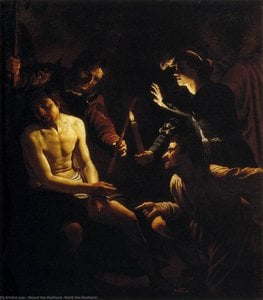
The Merry Fiddler
 Oil On Canvas
- WallArt
- Baroque Dramatic Portrait
 1623
1623- Early Modern
 108.0 x 89.0 cm
 Rijksmuseum
 Afficher la suite
Giclées et impressions d'art
Impressions giclées ou sur toile de qualité musée, avec une production rapide et des finitions au choix. ( Acheter la peinture faite à la main Passer au format image numérique)




P118B $10

P118H $10

P118W $10

P438Z $10

P508JH $12

P508YH $12

P805H $10

P805Z $10

P919BZ $10

P919G $10

P919XJ $10

P959ZH $10

P968JZ $12

W106C $8

W218G $10

W218JH $8

W218Y $10

W307PJ $10

W316G $10

W316PJ $8

W316Y $10

W398PJ $8

W4111J $10

W500HY $15

W500JH $15

W692G $12

W849H $8

W940BG $15

W953PJ $8




Choisissez parmi nos formats prédéfinis qui respectent les proportions originales de l’œuvre.

Vous pouvez saisir vos propres dimensions pour vous adapter à un cadre ou à un espace spécifique. Si la taille sélectionnée ne correspond pas aux proportions de l'image originale, nous recadrerons l'œuvre ou étendrons l'image avec une bordure en miroir ou une couleur unie. Une maquette numérique vous sera envoyée pour approbation avant le début de la production.
Veuillez noter que l'aperçu à l'écran ne reflète pas le recadrage ou l'extension réelle. Seule la maquette montrera avec précision la composition finale.
Bien que des tailles personnalisées soient disponibles, nous vous recommandons de choisir une dimension dans la liste prédéfinie afin de préserver les proportions originales.
Livraison dans le monde entier () en 2 semaines au lieu des 4/5 semaines habituelles. (22 septembre)

Livraison express gratuite dans le monde entier

Toile de lin de haute qualité

Assurance transport complète

Garantie de remboursement des droits de douane

Garantie de fidélité des couleurs

Garantie de retour de 100 jours (uniquement en cas de défaut)

Garantie de remboursement à 100%

Tarifs dégressifs sur quantité
 L'option verre n'est disponible que pour les dimensions inférieures à 110 cm.

The Merry Fiddler
Giclées et impressions d'art
Format de la reproduction
-


Prix total final
$ 62
A Symphony of Light and Shadow
In the heart of the Dutch Golden Age, few artists captured the ephemeral magic of a single moment as profoundly as Gerard van Honthorst. His masterpiece, The Merry Fiddler, serves as a breathtaking window into a world of nocturnal joy and theatrical intensity. Created in 1623, this work is far more than a mere portrait of a musician; it is a masterclass in the dramatic interplay of light and darkness. As the viewer approaches the canvas, they are immediately enveloped by the artist's signature use of tenebrism—a technique heavily influenced by Caravaggio that allows deep, velvety shadows to emerge from the periphery, only to be pierced by sudden, radiant pools of illumination. This deliberate manipulation of light does not simply reveal the subject; it sculptively defines him, pulling the violinist from the gloom and thrusting his exuberant energy into the viewer's space.
The composition centers on a man lost in the passion of his craft, his face alight with a genuine, infectious smile that suggests the music is as much a spiritual release as it is entertainment. Dressed in opulent attire that whispers of Italian sophistication, the musician wears a blue garment accented by shimmering gold trim, a detail that catches the light and adds a layer of tactile luxury to the scene. Flanking him are two observers, their attentive expressions acting as emotional anchors that guide our own gaze toward the center of the musical performance. This arrangement creates a sense of intimacy, making the spectator feel less like an outsider looking in and more like a silent guest seated at the very table where the melody unfolds.
The Legacy of the Utrecht Caravaggisti
To understand the depth of The Merry Fiddler, one must look to the transformative journey Honthorst undertook during his time in Rome. As a prominent member of the Utrecht Caravaggisti, Honthorst absorbed the raw, visceral energy of the Italian Baroque and brought it back to the Netherlands, where he earned the evocative nickname Gherardo delle Notti—Gerard of the Nights. This title reflects his unparalleled ability to depict scenes lit by candlelight or hidden flames, creating an atmosphere that feels both secretive and profoundly human. In this painting, the light source is unseen yet palpable, casting a warm, flickering glow that breathes life into the textures of fabric, skin, and wood.
For the discerning collector or interior designer, this artwork offers much more than historical significance; it provides a powerful emotional anchor for any curated space. The painting’s ability to command attention through contrast makes it an ideal centerpiece for rooms designed for contemplation or sophisticated entertaining. Whether placed in a library filled with classical literature or a modern lounge seeking a touch of Old World grandeur, the piece brings with it a sense of narrative tension and timeless elegance. It is a celebration of life's fleeting, joyful moments, captured forever through the masterful brushstrokes of a man who knew exactly how to make the darkness sing.
Œuvres similaires


Biographie de l'artiste
Première jeunesse et formation
Gérard van Honthorst, peintre néerlandais important de l'âge d'or néerlandais, est né le 4 novembre 1590 à Utrecht. Il était le fils d’un peintre décorateur et a initialement été formé sous la direction de son père. Plus tard, il a poursuivi sa formation artistique sous Abraham Bloemaert.Carrière et influences
La carrière précoce de van Honthorst a impliqué une visite à Rome, où il a été fortement influencé par le style de Caravage. Cette influence se manifeste dans ses œuvres ultérieures, en particulier dans son utilisation de scènes éclairées artificiellement, ce qui lui a valu le surnom de « Gherardo delle Notti » ou « Gérard des nuits ». À son retour aux Pays-Bas, van Honthorst est devenu un peintre portraitiste de premier plan.Commandes notables et mécénat
Le travail de van Honthorst était très demandé, avec des mécènes notables tels que Vincenzo Giustiniani, qui l’a chargé de peindre « Christ devant le grand prêtre », exposé à la National Gallery de Londres. Il a également travaillé pour Cosme II de Médicis, grand-duc de Toscane, et était un favori auprès de la République néerlandaise et à l’étranger.Héritage et vie ultérieure
En 1620, van Honthorst est retourné à Utrecht, où il a bâti une réputation considérable. En 1623, année de son mariage, il était devenu président de la guilde Saint-Luc d’Utrecht. Son succès a conduit à des recommandations par Sir Dudley Carleton pour l'Earl of Arundel et Lord Dorchester.Œuvres clés et collaborations
- La prise du Christ, une œuvre collaborative initialement attribuée à van Honthorst, aujourd'hui reconnue comme l’œuvre d’un autre artiste.
- Christ devant le grand prêtre, commandée par Vincenzo Giustiniani, met en valeur la capacité de van Honthorst à capturer des scènes éclairées artificiellement.
- Des collaborations avec d’autres artistes, tels que Peter Paul Rubens, démontrent son influence sur le style baroque flamand.
Mouvement artistique et style
Van Honthorst faisait partie du mouvement des Utrecht Caravaggistes, caractérisé par l’utilisation d’un éclairage dramatique et d’une profondeur émotionnelle intense. Son travail reflète l’influence de la baroque italienne, tout en contribuant au développement de l'âge d'or néerlandais. Principaux liens :
Gérard van Honthorst
1590 - 1656 , Pays-Bas
En bref
- Artistic Movement Or Style: Caravagisme d'Utrecht, Baroque
- Artists Or Movements Influenced By This Artist:
- Rembrandt van Rijn
- Georges de la Tour
- Artists Who Influenced This Artist:
- Caravage
- Abraham Bloemaert
- Date Of Birth: 4 novembre 1590
- Date Of Death: 27 avril 1656
- Full Name: Gérard van Honthorst
- Nationality: Néerlandais
- Notable Artworks:
- Christ avant le grand prêtre
- La Prise du Christ
- Place Of Birth (City And Country): Utrecht, Pays-Bas
Articles similaires

L'Âge d'Or Néerlandais : Splendeur Baroque et Révolution Artistique
Explorez l'Âge d'Or néerlandais : découvrez les maîtres baroques (Rembrandt, Fabritius) et leur révolution artistique. Analyse approfondie, contexte historique et héritage durable. Un voyage au cœur de la peinture du XVIIe siècle.

L'Âge d'Or Néerlandais : 10 Chefs-d'œuvre Incontournables pour Décorer avec Art et Histoire
Plongez au cœur de l'Âge d'Or néerlandais ! Découvrez 10 chefs-d'œuvre intemporels de Rembrandt, Vermeer et autres maîtres hollandais. Explorez leur histoire, technique & trouvez l'inspiration déco sur

Les 10 Chefs-d'œuvre du Baroque Néerlandais : Artistes et Décor Intemporels
Plongez au cœur du Baroque néerlandais avec les 10 œuvres incontournables de Rembrandt, Vermeer et autres maîtres hollandais. Découvrez l'histoire, la lumière et les couleurs qui ont façonné ce mouvement artistique. Reproductions d'art de qualité muséale sur ArtsDot.com

Rembrandt van Rijn : Les 25 Œuvres Maîtresses à Redécouvrir | ArtsDot
Plongez dans l'univers de Rembrandt van Rijn avec les 25 œuvres incontournables du maître baroque. Découvrez l'histoire, la technique et l'émotion derrière ses portraits célèbres et 'La Ronde de Nuit'. Reproductions tableaux haute qualité sur ArtsDot.com
Gerard van Honthorst: Illuminating the Dutch Golden Age with Caravaggism & Courtly Grace
Explore the captivating world of Gerard van Honthorst, a Dutch Golden Age master renowned for his dramatic chiaroscuro & courtly portraits. Discover his life, art, and lasting influence on Baroque painting.