

 Aperçu en situation
 Envoyer
 Partager
 Détails de l'œuvre
 Guide
Guide

 Télécharger l'image
 Articles similaires
 Radiographie
 Diaporama
 Q&A
Q&A Statistiques
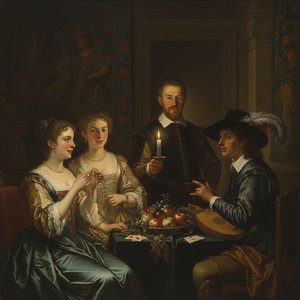
The lute player

 Lire la suite
Giclées et impressions d'art
Impressions giclées ou sur toile de qualité musée, avec une production rapide et des finitions au choix. ( Commander la reproduction peinte à la main Passer au format numérique)




P118B €10

P118H €10

P118W €10

P438Z €10

P508JH €12

P508YH €12

P805H €10

P805Z €10

P919BZ €10

P919G €10

P919XJ €10

P959ZH €10

P968JZ €12

W106C €8

W218G €10

W218JH €8

W218Y €10

W307PJ €10

W316G €10

W316PJ €8

W316Y €10

W398PJ €8

W4111J €10

W500HY €15

W500JH €15

W692G €12

W849H €8

W940BG €15

W953PJ €8




Choisissez parmi nos formats prédéfinis qui respectent les proportions originales de l’œuvre.

Saisissez la largeur et la hauteur souhaitées pour qu'elles s'adaptent à votre cadre ou à votre mur. Une impression peut être recadrée, mais jamais agrandie au-delà de l'image originale ; ainsi, un format de forme différente entraînera la perte d'une partie de l'image. Nous vous envoyons une maquette numérique pour approbation avant toute impression. L'image présentée sur cette page ne montre pas le recadrage réel — seule la maquette le permet.
Livraison dans le monde entier () en 2 semaines au lieu des 4/5 semaines habituelles. (2 novembre)

Livraison express gratuite dans le monde entier

Toile de lin de qualité supérieure

Assurance transport complète

Garantie de remboursement des droits de douane

Garantie de fidélité des couleurs

Politique de retour de 100 jours (uniquement en cas de défaut)

Garantie de remboursement à 100%

Offre de tarifs dégressifs
 L'option verre n'est disponible que pour les dimensions inférieures à 110 cm.

The lute player
Giclées et impressions d'art
Format de la reproduction
-


Prix total
€ 55
A Symphony of Light and Shadow: Gerard van Honthorst's "Lute Player"
Gerard van Honthorst’s “Lute Player,” painted circa 1624, is more than a simple portrait; it’s a carefully constructed tableau brimming with Baroque drama. This captivating scene depicts a young woman, elegantly dressed and poised, lost in the melody of her lute. The painting immediately draws the eye to the central figure – a study in relaxed grace and quiet contemplation – while the surrounding details contribute to an atmosphere of refined leisure and subtle social commentary. Honthorst’s masterful use of light and shadow, a hallmark of the Baroque period, elevates this work beyond mere representation, imbuing it with a palpable sense of movement and emotion.
The Influence of Caravaggio
Honthorst's artistic journey was profoundly shaped by his encounter with the revolutionary techniques of Caravaggio. Like Caravaggio’s celebrated “Lute Player,” this piece employs *tenebrism* – a dramatic contrast between intensely bright highlights and deep, almost impenetrable shadows. This technique isn’t simply about visual effect; it serves to heighten the emotional impact of the scene. The strong light focuses attention on the woman's face and hands, drawing us into her world while the surrounding darkness creates an air of mystery and intrigue. Notice how the folds of her dress are sculpted by the light, adding a tactile quality to the image and reinforcing the sense of realism that was so revolutionary for its time.
A Portrait of Social Grace
Beyond its technical brilliance, “Lute Player” offers a glimpse into the social customs of 17th-century Netherlands. The lute itself was a symbol of refinement and musical education, typically associated with the upper classes. The woman’s attire – rich fabrics and delicate jewelry – further emphasizes her status. The inclusion of the card she holds suggests an invitation to join her in music or conversation, subtly highlighting the importance of social interaction and patronage within this era. The carefully arranged background—the chair, the couch, the clock—adds to the sense of a comfortable, well-appointed domestic space, reflecting the values of wealth and status.
Symbolism and Emotional Resonance
The painting’s enduring appeal lies not only in its technical skill but also in its ability to evoke a range of emotions. The woman's serene expression and focused gaze invite us to share her moment of quiet contemplation. The lute, a symbol of harmony and beauty, suggests a desire for peace and tranquility. Honthorst skillfully captures the essence of human experience – the pursuit of pleasure, the appreciation of art, and the importance of social connection. This reproduction allows you to bring this timeless piece into your own space, experiencing its captivating beauty and profound emotional resonance firsthand.
Questions et réponses
Quelle pièce s'accorde avec les couleurs de «The lute player» de Gérard van Honthorst ?
Avec sa palette Dark, «The lute player» de Gérard van Honthorst est recommandé pour une Living Room. Ses couleurs justifient d'ailleurs cette suggestion.
Quelle atmosphère et quelle émotion se dégagent de « The lute player » ?
«The lute player» de Gérard van Honthorst dégage un sentiment Dramatic au sein d'une atmosphère globalement Dramatic.
« The lute player » est-il représentatif de l'œuvre habituelle de Gérard van Honthorst ?
«The lute player» dépeint gerard van honthorst, baroque, portrait, baroque, lute, music, drama, light & shadow, tandis que les thèmes récurrents de Gérard van Honthorst sont gerard van honthorst, caravaggio influence, baroque drama, courtly entertainment, social scene, religious themes, festive gatherings, honthorst’s signature light & shadow. La comparaison des deux montre comment l'œuvre s'inscrit dans la lignée des sujets habituels de l'artiste.
Œuvres similaires


Biographie de l'artiste
Première jeunesse et formation
Gérard van Honthorst, peintre néerlandais important de l'âge d'or néerlandais, est né le 4 novembre 1590 à Utrecht. Il était le fils d’un peintre décorateur et a initialement été formé sous la direction de son père. Plus tard, il a poursuivi sa formation artistique sous Abraham Bloemaert.Carrière et influences
La carrière précoce de van Honthorst a impliqué une visite à Rome, où il a été fortement influencé par le style de Caravage. Cette influence se manifeste dans ses œuvres ultérieures, en particulier dans son utilisation de scènes éclairées artificiellement, ce qui lui a valu le surnom de « Gherardo delle Notti » ou « Gérard des nuits ». À son retour aux Pays-Bas, van Honthorst est devenu un peintre portraitiste de premier plan.Commandes notables et mécénat
Le travail de van Honthorst était très demandé, avec des mécènes notables tels que Vincenzo Giustiniani, qui l’a chargé de peindre « Christ devant le grand prêtre », exposé à la National Gallery de Londres. Il a également travaillé pour Cosme II de Médicis, grand-duc de Toscane, et était un favori auprès de la République néerlandaise et à l’étranger.Héritage et vie ultérieure
En 1620, van Honthorst est retourné à Utrecht, où il a bâti une réputation considérable. En 1623, année de son mariage, il était devenu président de la guilde Saint-Luc d’Utrecht. Son succès a conduit à des recommandations par Sir Dudley Carleton pour l'Earl of Arundel et Lord Dorchester.Œuvres clés et collaborations
- La prise du Christ, une œuvre collaborative initialement attribuée à van Honthorst, aujourd'hui reconnue comme l’œuvre d’un autre artiste.
- Christ devant le grand prêtre, commandée par Vincenzo Giustiniani, met en valeur la capacité de van Honthorst à capturer des scènes éclairées artificiellement.
- Des collaborations avec d’autres artistes, tels que Peter Paul Rubens, démontrent son influence sur le style baroque flamand.
Mouvement artistique et style
Van Honthorst faisait partie du mouvement des Utrecht Caravaggistes, caractérisé par l’utilisation d’un éclairage dramatique et d’une profondeur émotionnelle intense. Son travail reflète l’influence de la baroque italienne, tout en contribuant au développement de l'âge d'or néerlandais. Principaux liens :
Gérard van Honthorst
1590 - 1656 , Pays-Bas
L'essentiel de l'artiste
- Artistic Movement Or Style: Caravagisme d'Utrecht, Baroque
- Artists Or Movements Influenced By This Artist:
- Rembrandt van Rijn
- Georges de la Tour
- Artists Who Influenced This Artist:
- Caravage
- Abraham Bloemaert
- Date Of Birth: 4 novembre 1590
- Date Of Death: 27 avril 1656
- Full Name: Gérard van Honthorst
- Nationality: Néerlandais
- Notable Artworks:
- Christ avant le grand prêtre
- La Prise du Christ
- Place Of Birth (City And Country): Utrecht, Pays-Bas
Articles connexes

Les 10 Chefs-d'œuvre Baroques qui ont Révolutionné l'Art |
Plongez au cœur du baroque avec les 10 chefs-d'œuvre de Caravaggio, Rembrandt et Rubens. Découvrez l'histoire fascinante de ces artistes et leurs tableaux célèbres. Reproductions d'art de qualité muséale sur – Explorez la collection !

The Visceral Stage: Exploring Dramatic Narratives & Emotional Intensity in Baroque Art
Explore the dramatic world of Baroque art! Discover iconic masters like Caravaggio & Rembrandt, their techniques, and the movement's lasting impact. Expert insights for collectors & enthusiasts at ArtsDot.

The Dramatic Flourish: Exploring the Baroque Movement's Enduring Legacy in Art History
Explore the dramatic world of Baroque art! Discover iconic artists like Caravaggio & Rubens, defining techniques, and its lasting impact on art history. Expert insights for collectors & enthusiasts at ArtsDot.
Gerard van Honthorst: Illuminating the Dutch Golden Age with Caravaggism & Courtly Grace
Explore the captivating world of Gerard van Honthorst, a Dutch Golden Age master renowned for his dramatic chiaroscuro & courtly portraits. Discover his life, art, and lasting influence on Baroque painting.

Maîtriser l'ombre et la lumière : les 25 chefs-d'œuvre de Rembrandt
Explorez les 25 chefs-d'œuvre de Rembrandt et la magie du clair-obscur. Découvrez toute la collection sur ArtsDot.com.


