


 Aperçu en situation
 Partager
 Partager
 Détails
 Guide imprimable

 Télécharger
 Articles similaires
 Radiographie
 Voir le diaporama
 Statistiques
Annunciation
 Oil On Canvas
- WallArt
- Renaissance
 1497
1497- Renaissance
 176.0 x 170.0 cm
 Duomo
Duomo
 Afficher la suite
Reproduction à l'huile faite à la main
Huile sur toile peinte à la main, avec cadre et dimensions personnalisés, réalisée sur commande par nos artistes. ( Passer au format impression Passer au format image numérique)




P118B €10

P118H €10

P118W €10

P438Z €10

P508JH €12

P508YH €12

P805H €10

P805Z €10

P919BZ €10

P919G €10

P919XJ €10

P959ZH €10

P968JZ €12

W106C €8

W218G €10

W218JH €8

W218Y €10

W307PJ €10

W316G €10

W316PJ €8

W316Y €10

W398PJ €8

W4111J €10

W500HY €15

W500JH €15

W692G €12

W849H €8

W940BG €15

W953PJ €8




Choisissez parmi nos formats prédéfinis qui respectent les proportions originales de l’œuvre.

Saisissez la largeur et la hauteur souhaitées, pour s'adapter à votre cadre ou à votre mur. Cette œuvre est peinte à la main ; ainsi, pour un format de forme différente, l'artiste peut peindre un peu plus autour du tableau ou réduire légèrement les bords — c'est vous qui choisissez. Nous vous envoyons une maquette numérique pour approbation avant que la peinture ne commence. L'image présentée sur cette page ne reflète pas le résultat réel — seule la maquette le fait.
Après la commande, l’équipe ArtsDot.com contactera le client par e-mail pour recueillir ses instructions et lui fournira une maquette d’aperçu
Livraison dans le monde entier () en 3 à 4 semaines au lieu des 5 semaines habituelles. (24 octobre). Aucun compromis sur la qualité.

Livraison express gratuite dans le monde entier

Toile de lin de haute qualité

Assurance transport complète

Garantie de remboursement des droits de douane

Garantie de fidélité des couleurs

Garantie de retour de 100 jours (uniquement en cas de défaut)

Garantie de remboursement à 100%

Tarifs dégressifs sur quantité
 L'option verre n'est disponible que pour les dimensions inférieures à 110 cm.

Annunciation
Technique de reproduction
Format de la reproduction
-


Prix total final
€ 231
The Sacred Moment: An Exploration of Fra Bartolomeo's Annunciation
To gaze upon this depiction of the Annunciation is to step directly into the luminous heart of the Italian Renaissance. The scene, rendered with exquisite grace by Fra Bartolomeo in 1497, captures that breath-held instant when divine will intersects with human life. It is a moment steeped in profound theological weight, yet portrayed with such palpable tenderness that it feels both monumental and deeply intimate. The composition immediately draws the eye to the two central figures: one kneeling in reverent anticipation, the other standing as the messenger of heavenly grace. Fra Bartolomeo masterfully guides the viewer's gaze through their interaction, creating a visual narrative that speaks volumes without uttering a single word.
Symbolism Woven into Blue Drapery
The symbolism within this panel is rich and multilayered, inviting contemplation from every corner of the canvas. Notice the lily held delicately in one woman's hand; it has long been the quintessential emblem of purity and virginity, anchoring the narrative’s sacred core. The pervasive use of blue in their garments is not merely decorative; historically, deep blues often signified heavenly connection and nobility within Renaissance art. Beyond the figures themselves, the background elements contribute to this symbolic tapestry. Through the open doorway, a glimpse of nature—marked by the visible tree—suggests the world awaiting transformation. Furthermore, the inclusion of objects like the book and the handbag are not incidental details; they serve as visual signifiers of knowledge, readiness, and the transition from one state of being to another.
Mastery of Renaissance Technique
Fra Bartolomeo’s technique showcases a sophisticated understanding of High Renaissance ideals while retaining a personal touch. The handling of light across the figures' drapery is breathtaking; it seems to emanate from an unseen, divine source, giving the scene a soft, ethereal glow. His ability to balance detailed naturalism—visible in the careful rendering of the background architecture and foliage—with idealized, spiritual forms is remarkable. This painting exemplifies the period’s pursuit of perfect harmony between earthly representation and sublime spirituality. The composition feels balanced, yet dynamic, suggesting movement even in stillness.
An Echo for the Modern Collector
For those who appreciate art that speaks to enduring themes of faith, beauty, and divine mystery, this Annunciation offers unparalleled depth. Owning a reproduction of this work is not simply acquiring decoration; it is curating a piece of history and spirituality for your home or studio. The scale, 176 x 170 cm, allows the narrative to unfold grandly, making it a breathtaking focal point in any significant space. It invites quiet contemplation, transforming a room into a sanctuary where one can pause and reflect on moments of profound revelation.
Questions et réponses
Quelle couleur domine la composition de «Annunciation» de Fra Bartolomeo ?
Black (#141111) est la couleur dominante de «Annunciation» de Fra Bartolomeo.
Quelle nuance dominante traverse «Annunciation» de Fra Bartolomeo ?
La teinte dominante de «Annunciation» de Fra Bartolomeo est Golden Yellow Range. Cette teinte constitue la tonalité de fond de la palette.
Que représente «Annunciation» de Fra Bartolomeo, et quelle atmosphère s'en dégage ?
«Annunciation» de Fra Bartolomeo allie annunciation, religious scene, madonna and child, lily flower, kneeling figure, renaissance art, christian theme à une atmosphère Ethereal.
Œuvres similaires


Biographie de l'artiste
Première Vie et Formation (1472-1499)
- Naissance : Baccio della Porta, le 28 mars 1472, à Savignano di Prato, en Toscane.
- Surnom : Il a reçu le surnom de "Baccio della Porta" en raison de la proximité de sa maison avec la porte de San Pier Gattolini.
- Apprentissage : En 1483 ou 1484, il a commencé un apprentissage dans l'atelier de Cosimo Rosselli, un peintre florentin renommé pour ses fresques. Cette formation fondamentale lui a exposé aux techniques et styles artistiques de la Renaissance.
- Collaboration avec Mariotto Albertinelli : À partir de 1490 ou 1491, Fra Bartolomeo a collaboré étroitement avec Mariotto Albertinelli, un autre artiste florentin. Leur partenariat a donné lieu à des commandes partagées et à un échange mutuel d'idées artistiques.
Influence de Savonarola et Conversion Religieuse (1498-1503)
- Influence Savaronolienne : À la fin des années 1490, Fra Bartolomeo a été profondément influencé par les sermons et les enseignements de Fra Girolamo Savonarola. La dénonciation de Savonarola de ce qu'il considérait comme un art contemporain vaniteux et corrompu a considérablement affecté la perspective artistique de Bartolomeo.
- Portrait de Savonarola : Une œuvre clé de cette période est son célèbre portrait de Savonarola (1498), qui se trouve maintenant au Museo Nazionale di San Marco, à Florence. Cette peinture reste une représentation visuelle importante du réformateur.
- Frère Dominicain : En 1500, profondément affecté par les enseignements de Savonarola, Bartolomeo a renoncé à la peinture et est devenu un frère dominicain au Convent de San Marco. Il y est resté pendant plusieurs années, se consacrant à la vie religieuse.
Retour à la Peinture et Style de la Haute Renaissance (1504-1517)
- Reprise de la Peinture : En 1504, à la demande de ses supérieurs, Fra Bartolomeo a repris la peinture, devenant le chef de l'atelier du monastère.
- Vision de St Bernard : Une œuvre clé de cette période est la "Vision de St Bernard" (1507), qui exemplifie son style idéalisé de la Haute Renaissance en développement. Cette pièce, bien que maintenant dans un mauvais état, a été très influente et aurait impressionné un jeune Raphael.
- Amitié avec Raphael : Bartolomeo a noué une amitié étroite avec Raphael lors de la visite de l'artiste à Florence. Ils se sont mutuellement influencés ; Bartolomeo a appris la perspective auprès de Raphael, tandis qu'il lui a transmis des compétences en coloration et en drapé.
- Développement du Style : Son style a évolué, incorporant des éléments de lumière et de ses effets sur les formes, probablement inspiré par l'influence de Raphael. Il est noté pour ses petites figures, drapées élégamment, et son habile utilisation de la lumière et de l'ombre.
Œuvres Majeures et Contributions Artistiques
- Retables : Fra Bartolomeo a produit de nombreux retables au cours de sa carrière, notamment des œuvres commandées à Venise (Sainte Marie-Madeleine et Sainte Catherine de Sienne), à Lucques (Madone et Enfant avec Saints) et à Besançon (retable pour la cathédrale).
- Fresques : Il a créé des fresques pour divers endroits, y compris le couvent dominicain du Pian di Mugnone près de Fiesole.
- Premières Esquisses de Paysage : Fra Bartolomeo est reconnu comme un pionnier dans l'art du paysage, produisant certaines des premières esquisses de paysages purs d'Italie. Ces dessins témoignent d'un intérêt précoce pour la capture des paysages naturels.
- Fresco Noli Me Tangere : Sa dernière œuvre était une fresque de "Noli Me Tangere" (Ne me touchez pas) également au Pian di Mugnone.
Héritage et Importance Historique
- Influence sur Raphael : L'influence de Fra Bartolomeo sur Raphael est indéniable, contribuant au développement de l'art de la Haute Renaissance.
- Pionnier de l'Art du Paysage : Ses esquisses de paysage sont considérées comme révolutionnaires pour leur époque, annonçant les développements ultérieurs dans la peinture de paysage.
- Dévotion Religieuse et Expression Artistique : Il a combiné de manière unique une profonde dévotion religieuse avec des compétences artistiques, créant des œuvres qui servaient à la fois des objectifs spirituels et esthétiques.
- Transition de la Renaissance Précoce à la Haute Renaissance : La carrière de Fra Bartolomeo représente une transition du style florentin antérieur vers les formes idéalisées et les compositions équilibrées de la Haute Renaissance.
- Décès : Il est décédé à Florence le 31 octobre 1517.

Fra Bartolomeo
1472 - 1517 , Italie
En bref
- Artistes Influents:
- Cosimo Rosselli
- Raphael
- Date De Décès: 31 octobre 1517
- Date De Naissance: 28 mars 1472
- Influence Sur Les Artistes: ['Raphael']
- Lieu De Naissance: Prato, Italie
- Mouvement Artistique: Haute Renaissance
- Nationalité: Italienne
- Nom Complet: Fra Bartolomeo
- Oeuvres Notables:
- Vision de St Bernard
- Portrait de Savonarola
Articles connexes

Fra Angelico : Les 25 Chefs-d'œuvre Incontournables pour une Décoration Spirituelle
Plongez dans l'univers spirituel de Fra Angelico avec les 25 œuvres incontournables du maître italien. Découvrez l'histoire, la technique et la beauté intemporelle de ses fresques Renaissance. Reproductions d'art exceptionnelles sur ArtsDot.com.

Giclée Prints: Archival Quality & Aesthetic Nuances for the Discerning Collector
Explore the world of giclée prints with ArtsDot. Learn about archival quality, aesthetic nuances & investment potential. Expert guidance for discerning art collectors seeking museum-quality reproductions and lasting value.

The Enduring Legacy of Fine Art Prints: Technique, History & Aesthetic Impact
Explore the rich history & techniques of fine art prints. Discover investment potential, assess authenticity, and learn how to preserve your collection with expert guidance. Trusted insights for discerning collectors.
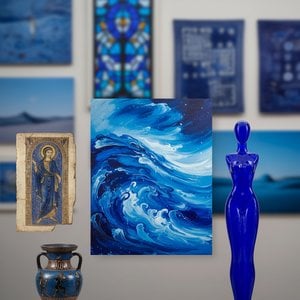
The Allure of Azure: Exploring the Symbolic & Aesthetic Depths of Blue in Art History
Explore the rich history of blue in art! Discover its symbolism, from ancient pigments to modern masterpieces by Kandinsky & Seurat. Uncover the psychological impact and cultural meanings behind this captivating hue.

Les 10 Chefs-d'œuvre Dominés par le Bleu Ardoise : Art, Histoire & Décor
Plongez dans l'univers fascinant des 10 plus beaux tableaux dominés par le bleu ardoise. Découvrez l'histoire, les artistes et les techniques de ces chefs-d'œuvre impressionnistes et contemporains. Inspirez votre décoration intérieure avec !


