


 Aperçu en situation
 Envoyer
 Partager
 Détails de l'œuvre

 Télécharger
 Articles similaires
 Radiographie
 Diaporama
Composition with Two Parrots

 Lire la suite
Giclées et impressions d'art
Impressions giclées ou sur toile de qualité musée, avec une production rapide et des finitions au choix. ( Commander la reproduction peinte à la main Acheter l'image haute résolution)




P118B $10

P118H $10

P118W $10

P438Z $10

P508JH $12

P508YH $12

P805H $10

P805Z $10

P919BZ $10

P919G $10

P919XJ $10

P959ZH $10

P968JZ $12

W106C $8

W218G $10

W218JH $8

W218Y $10

W307PJ $10

W316G $10

W316PJ $8

W316Y $10

W398PJ $8

W4111J $10

W500HY $15

W500JH $15

W692G $12

W849H $8

W940BG $15

W953PJ $8




Choisissez parmi nos formats prédéfinis qui respectent les proportions originales de l’œuvre.

Vous pouvez saisir vos propres dimensions pour vous adapter à un cadre ou à un espace spécifique. Si la taille sélectionnée ne correspond pas aux proportions de l'image originale, nous recadrerons l'œuvre ou étendrons l'image avec une bordure en miroir ou une couleur unie. Une maquette numérique vous sera envoyée pour approbation avant le début de la production.
Veuillez noter que l'aperçu à l'écran ne reflète pas le recadrage ou l'extension réelle. Seule la maquette montrera avec précision la composition finale.
Bien que des tailles personnalisées soient disponibles, nous vous recommandons de choisir une dimension dans la liste prédéfinie afin de préserver les proportions originales.
Livraison dans le monde entier () en 2 semaines au lieu des 4/5 semaines habituelles. (2 septembre)

Livraison express gratuite dans le monde entier

Toile de lin de qualité supérieure

Assurance transport complète

Garantie de remboursement des droits de douane

Garantie de fidélité des couleurs

Politique de retour de 60 jours (uniquement en cas de défaut)

Garantie de remboursement à 100%

Offre de tarifs dégressifs
 L'option verre n'est disponible que pour les dimensions inférieures à 110 cm.

Composition with Two Parrots
Giclées et impressions d'art
Format de la reproduction
-


Prix total
$ 62
A Bold Embrace of Modernity: Exploring Fernand Léger’s “Composition with Two Parrots”
Fernand Léger's "Composition with Two Parrots" isn't merely a depiction of birds; it’s an audacious declaration that abstraction could coexist harmoniously with the tangible realities of industrial progress. Painted sometime between 1916 and 1920, during the turbulent years of World War I and the burgeoning fervor for geometric abstraction, this artwork encapsulates the anxieties and aspirations of its era—a desire to find beauty and meaning amidst the relentless march of machinery. Léger’s artistic trajectory began in Argentan, Normandy, where he absorbed the rhythms of rural life before relocating to Paris and immersing himself in the vibrant intellectual landscape of the avant-garde movement.- Subject Matter: The painting presents a striking juxtaposition of organic forms – parrots perched on shoulders – against geometric shapes—primarily rectangles and triangles—representing the dominant aesthetic principles of the time.
- Style: Léger’s style is undeniably modernist, firmly rooted in Cubism but pushing beyond its fragmentation into a more simplified and expressive idiom. He deliberately eschewed illusionistic representation, prioritizing instead the conveyance of feeling and energy through abstracted forms.
Technique and Material Considerations
Léger employed a distinctive technique characterized by bold color palettes—often utilizing vibrant reds, yellows, and blues—applied with thick impasto strokes. This textural approach wasn’t simply decorative; it served to heighten the visual impact of the artwork and imbue it with a palpable sense of movement. The artist utilized oil paints on canvas, meticulously layering colors to achieve depth and luminosity despite rejecting traditional perspective. His deliberate disregard for conventional artistic conventions reflects his belief that art should communicate directly with the viewer’s emotions rather than merely mirroring reality.Historical Context: War, Progress, and Artistic Rebellion
The painting emerged during a period of profound societal upheaval—the First World War fundamentally reshaping European consciousness. Simultaneously, the rise of industrialization fueled an obsession with geometric forms and rational organization, mirroring the perceived orderliness of the machine age. Léger’s artwork represents a defiant reaction against these prevailing trends, asserting that beauty could be found in embracing the dynamism of modern life without sacrificing artistic integrity. He actively engaged with discussions surrounding Futurism, recognizing its celebration of speed and technology as kindred spirits to his own vision.Symbolic Resonance: Birds as Embodiments of Transformation
Beyond its formal qualities, “Composition with Two Parrots” carries symbolic weight. The parrots themselves—often associated with intelligence and exotic beauty—can be interpreted as emblems of transformation and adaptation. Their presence alongside the horse and human figures underscores Léger’s fascination with the interplay between nature and technology – a recurring motif in his oeuvre. The geometric shapes surrounding these organic forms symbolize stability and control, suggesting that even amidst chaos, there exists an underlying order.Emotional Impact: A Vision of Optimistic Dynamism
Ultimately, Léger’s “Composition with Two Parrots” transcends mere visual representation; it communicates a powerful emotional impulse—a conviction in the possibility of progress and beauty intertwined. The artwork's energetic brushstrokes and bold colors evoke a sense of exhilaration and optimism, inviting viewers to contemplate the transformative potential of embracing new perspectives and rejecting outdated conventions. It remains an enduring testament to Léger’s pioneering spirit and his unwavering belief that art could serve as a catalyst for intellectual and aesthetic renewal.Œuvres similaires


Biographie de l'artiste
jeune vie et formation
fernand léger, peintre, sculpteur et cinéaste français, est né le 4 février 1881 à Argentan, Orne, en Normandie inférieure. Son père élevait du bétail, et léger a initialement été formé à l'architecture de 1897 à 1899. Il s’est ensuite installé à Paris en 1900, se débrouillant comme dessinateur architectural.développement artistique
Le travail précoce de léger a été influencé par l'impressionnisme, comme le montrent le jardin de ma mère (mon jardin) (1905). Après avoir fréquenté l'école des beaux-arts et l’académie Julian, il a commencé à travailler sérieusement comme peintre à 25 ans. Son style s'est développé en une forme personnelle de cubisme, que les critiques ont qualifié de "tubisme" pour son accent sur les formes cylindriques.cubisme et le groupe des Puteaux
En 1910, léger a exposé au Salon d’automne aux côtés de jean metzinger et henri le fauconnier. Il a rejoint le groupe des Puteaux, également connu sous le nom de section d’or (la section dorée), avec d'autres artistes tels que francis picabia et marcel duchamp.guerre et son influence sur le travail de léger
Les expériences de léger à la Première Guerre mondiale ont eu un impact significatif sur son œuvre. Pendant son séjour au front, il a produit des croquis d'artillerie, d'avions et de soldats. Sa peinture soldier avec un tuyau (1916) reflète cette période.œuvre ultérieure et héritage
L'œuvre post-guerre de léger, caractérisée par des formes machine-like élégantes, le lia à la tradition de la peinture figurative française. Ses paysages animés de 1921 ont présenté des figures et des animaux dans des formes harmonieuses et rationalisées.- voir les œuvres de fernand léger sur ArtsDot
- en savoir plus sur fernand léger sur wikipedia
- découvrez le musée national fernand léger (france) avec ArtsDot
- la femme assise (100 x 81 cm, tubisme)
- élément de machine (cubisme)

Fernand Léger
1881 - 1955 , France
L'essentiel de l'artiste
- Artistes Influents:
- Cézanne
- Impressionnisme
- Date De Décès: 1955
- Date De Naissance: 4 février 1881
- Influences Artistiques: ['Pop Art']
- Lieu De Naissance: Argentan, France
- Mouvement Artistique: Cubisme, Tubisme
- Nationalité: Française
- Nom Complet: Fernand Léger
- Oeuvres Notables:
- La Grande Parade
- Machine Élément
- Femme assise
- Paysages animés
Articles connexes

Fernand Léger : Les 25 Œuvres Maîtresses d'un Pionnier du Modernisme | ArtsDot
Plongez dans l'univers vibrant de Fernand Léger ! Découvrez les 25 œuvres majeures du cubisme et du tubisme, explorant formes géométriques et couleurs audacieuses. Retrouvez des reproductions d'art exceptionnelles sur ArtsDot.com.

Abstraction Géométrique : Les 10 Chefs-d'œuvre qui ont Marqué l'Histoire de l'Art
Plongez au cœur de l'abstraction géométrique avec ArtsDot.com ! Découvrez les 10 œuvres majeures de Mondrian, Malevitch et Kandinsky qui ont révolutionné l'art moderne. Inspirez votre décoration intérieure avec des reproductions de tableaux exceptionnelles. Explorez la collection en ligne !

Kandinsky : Les 25 Œuvres Maîtresses d'un Pionnier de l'Art Abstrait | ArtsDot
Plongez dans l'univers vibrant de Kandinsky ! Découvrez les 25 œuvres majeures du pionnier de l'art abstrait. Explorez son expressionnisme, ses couleurs audacieuses et l'histoire fascinante derrière chaque tableau. Reproductions d'exception sur ArtsDot.com.

Beyond Form & Color: Geometric Abstraction's Evolution in 20th/21st Century Art
Explore the evolution of geometric abstraction from Cubism to contemporary art. Discover key artists like Malevich & Mondrian, investment insights, and expert collecting advice at ArtsDot.
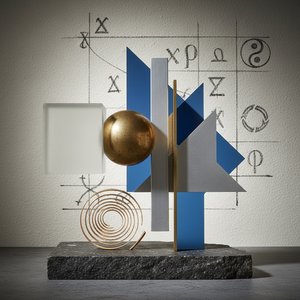
Au-Delà de la Forme : Explorer les Fondements Philosophiques de l'Abstraction Géométrique
Explorez les fondements philosophiques de l'abstraction géométrique avec ArtsDot. Découvrez Malevitch, Mondrian et Lissitzky. Analyse approfondie pour collectionneurs et amateurs d'art.



