


 Aperçu en situation
 Partager
 Partager
 Détails
 Guide
Guide

 Télécharger
 Articles similaires
 Radiographie
 Voir le diaporama
 Statistiques
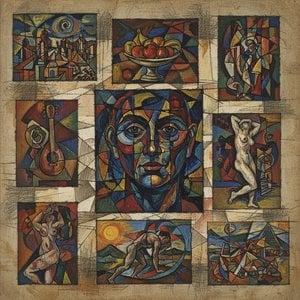
Church Sancellemoz Assy
 Acrylic On Canvas
- WallArt
- Naive Art / Primitivism
 1947
1947- Modern
 45.0 x 122.0 cm
 Afficher la suite
Giclées et impressions d'art
Impressions giclées ou sur toile de qualité musée, avec une production rapide et des finitions au choix. ( Acheter la peinture faite à la main Passer au format image numérique)




P118B $10

P118H $10

P118W $10

P438Z $10

P508JH $12

P508YH $12

P805H $10

P805Z $10

P919BZ $10

P919G $10

P919XJ $10

P959ZH $10

P968JZ $12

W106C $8

W218G $10

W218JH $8

W218Y $10

W307PJ $10

W316G $10

W316PJ $8

W316Y $10

W398PJ $8

W4111J $10

W500HY $15

W500JH $15

W692G $12

W849H $8

W940BG $15

W953PJ $8




Choisissez parmi nos formats prédéfinis qui respectent les proportions originales de l’œuvre.

Vous pouvez saisir vos propres dimensions pour vous adapter à un cadre ou à un espace spécifique. Si la taille sélectionnée ne correspond pas aux proportions de l'image originale, nous recadrerons l'œuvre ou étendrons l'image avec une bordure en miroir ou une couleur unie. Une maquette numérique vous sera envoyée pour approbation avant le début de la production.
Veuillez noter que l'aperçu à l'écran ne reflète pas le recadrage ou l'extension réelle. Seule la maquette montrera avec précision la composition finale.
Bien que des tailles personnalisées soient disponibles, nous vous recommandons de choisir une dimension dans la liste prédéfinie afin de préserver les proportions originales.
Livraison dans le monde entier () en 2 semaines au lieu des 4/5 semaines habituelles. (21 septembre)

Livraison express gratuite dans le monde entier

Toile de lin de haute qualité

Assurance transport complète

Garantie de remboursement des droits de douane

Garantie de fidélité des couleurs

Garantie de retour de 100 jours (uniquement en cas de défaut)

Garantie de remboursement à 100%

Tarifs dégressifs sur quantité
 L'option verre n'est disponible que pour les dimensions inférieures à 110 cm.

Church Sancellemoz Assy
Giclées et impressions d'art
Format de la reproduction
-


Prix total final
$ 62
Fernand Léger’s Vision of Faith and Modernity: Church Sancellemoz Assy
Fernand Léger's "Church Sancellemoz Assy," completed in 1947, stands as a remarkable testament to the artist’s singular approach to sacred art—a fusion of Cubist fragmentation and Naïve Art’s expressive simplicity that defies easy categorization. More than just a depiction of a church interior, it embodies Léger's profound engagement with the burgeoning industrial landscape of post-war France and his unwavering belief in capturing the essence of human experience through geometric forms and bold color palettes. This artwork isn’t merely aesthetically pleasing; it’s a deliberate provocation, urging viewers to reconsider traditional representations of religious spaces and embracing a new visual vocabulary rooted in observation and abstraction.A Synthesis of Influences: Cubism Meets Naïve Art
Léger's artistic journey began amidst the formative years of early 20th-century Paris, where he absorbed the revolutionary ideas circulating within the Cubist movement spearheaded by Picasso and Braque. However, Léger rejected the purely intellectual pursuit of abstraction championed by his peers, opting instead for a stylistic blend that prioritized direct perception and emotional resonance. This decision resulted in “Church Sancellemoz Assy,” which retains the fractured planes characteristic of Cubism—evident in the stylized depiction of architectural elements—yet simultaneously imbues it with the vibrant spontaneity and tactile quality associated with Naïve Art. The artist deliberately eschewed meticulous realism, favoring simplified shapes and bold hues to convey a sense of immediacy and spiritual fervor.The Church Interior: A Geometric Landscape
The painting’s composition is dominated by geometric forms—rectangles, squares, and circles—that create an illusionistic landscape within the confines of the church walls. These shapes aren't merely decorative; they represent Léger’s attempt to distill the complexities of human experience into fundamental visual elements. The central figures are rendered in a stylized manner, their bodies simplified into geometric volumes that echo the architectural structure itself. This technique underscores Léger’s conviction that abstraction could serve as a conduit for conveying spiritual truths—a belief deeply influenced by his fascination with machines and industrial processes. Notice how the clock on the wall is represented as a series of intersecting planes, mirroring the rhythmic patterns found in urban environments.Color and Symbolism: Bold Expressions of Faith
The color scheme employed in “Church Sancellemoz Assy” is deliberately vibrant—primarily yellows, reds, and blues—creating an atmosphere of warmth and luminosity that contrasts sharply with the muted tones often associated with religious iconography. Léger’s use of color isn't arbitrary; it reflects his desire to express emotion directly, bypassing intellectual contemplation. The placement of vases near the center symbolizes abundance and fertility, mirroring biblical themes of creation and renewal. Furthermore, the depiction of animals—likely stylized representations of saints—adds a layer of symbolic richness, hinting at the artist’s engagement with Christian iconography while simultaneously rejecting conventional artistic conventions.Legacy and Influence: A Pioneer of Modern Sacred Art
“Church Sancellemoz Assy” solidified Léger's position as one of the foremost innovators in modern sacred art—a genre that had largely retreated into stylistic conservatism following centuries of tradition. By embracing abstraction alongside Naïve Art’s expressive qualities, Léger challenged established artistic norms and paved the way for subsequent generations of artists to explore new avenues of visual communication. Its enduring appeal lies not only in its striking aesthetic beauty but also in its profound intellectual engagement with questions of faith, modernity, and human perception—a legacy that continues to inspire collectors and interior designers alike.Œuvres similaires


Biographie de l'artiste
jeune vie et formation
fernand léger, peintre, sculpteur et cinéaste français, est né le 4 février 1881 à Argentan, Orne, en Normandie inférieure. Son père élevait du bétail, et léger a initialement été formé à l'architecture de 1897 à 1899. Il s’est ensuite installé à Paris en 1900, se débrouillant comme dessinateur architectural.développement artistique
Le travail précoce de léger a été influencé par l'impressionnisme, comme le montrent le jardin de ma mère (mon jardin) (1905). Après avoir fréquenté l'école des beaux-arts et l’académie Julian, il a commencé à travailler sérieusement comme peintre à 25 ans. Son style s'est développé en une forme personnelle de cubisme, que les critiques ont qualifié de "tubisme" pour son accent sur les formes cylindriques.cubisme et le groupe des Puteaux
En 1910, léger a exposé au Salon d’automne aux côtés de jean metzinger et henri le fauconnier. Il a rejoint le groupe des Puteaux, également connu sous le nom de section d’or (la section dorée), avec d'autres artistes tels que francis picabia et marcel duchamp.guerre et son influence sur le travail de léger
Les expériences de léger à la Première Guerre mondiale ont eu un impact significatif sur son œuvre. Pendant son séjour au front, il a produit des croquis d'artillerie, d'avions et de soldats. Sa peinture soldier avec un tuyau (1916) reflète cette période.œuvre ultérieure et héritage
L'œuvre post-guerre de léger, caractérisée par des formes machine-like élégantes, le lia à la tradition de la peinture figurative française. Ses paysages animés de 1921 ont présenté des figures et des animaux dans des formes harmonieuses et rationalisées.- voir les œuvres de fernand léger sur ArtsDot
- en savoir plus sur fernand léger sur wikipedia
- découvrez le musée national fernand léger (france) avec ArtsDot
- la femme assise (100 x 81 cm, tubisme)
- élément de machine (cubisme)

Fernand Léger
1881 - 1955 , France
En bref
- Artistes Influents:
- Cézanne
- Impressionnisme
- Date De Décès: 1955
- Date De Naissance: 4 février 1881
- Influences Artistiques: ['Pop Art']
- Lieu De Naissance: Argentan, France
- Mouvement Artistique: Cubisme, Tubisme
- Nationalité: Française
- Nom Complet: Fernand Léger
- Oeuvres Notables:
- La Grande Parade
- Machine Élément
- Femme assise
- Paysages animés
Articles similaires
Cubisme Expressionniste : Les 10 Chefs-d'œuvre Révolutionnaires à Redécouvrir
Plongez au cœur du Cubisme Expressionniste ! Découvrez les 10 chefs-d'œuvre de Picasso, Braque et autres artistes majeurs. Histoire, techniques & émotions : trouvez l’inspiration déco sur ArtsDot.com

Redefining Nature: A Collector's Guide to the Geometric Beauty of Cubist Landscapes
Explore the revolutionary world of Cubist landscapes. Discover how masters like Picasso and Braque redefined nature through geometric beauty, and learn expert tips for curating these transformative masterpieces in your modern home collection.

Abstraction Géométrique : Les 10 Chefs-d'œuvre qui ont Marqué l'Histoire de l'Art
Plongez au cœur de l'abstraction géométrique avec ArtsDot.com ! Découvrez les 10 œuvres majeures de Mondrian, Malevitch et Kandinsky qui ont révolutionné l'art moderne. Inspirez votre décoration intérieure avec des reproductions de tableaux exceptionnelles. Explorez la collection en ligne !

L'Âme Industrielle : 10 Chefs-d'œuvre Révélant la Beauté du Monde Moderne | ArtsDot
Plongez dans l'âme industrielle de 10 chefs-d'œuvre emblématiques ! Découvrez les histoires fascinantes de Van Gogh, Monet et d'autres artistes ayant capturé la beauté brute du monde moderne. Reproductions de qualité musée sur ArtsDot.com – Explorez la collection en ligne.

Fernand Léger : Les 25 Œuvres Maîtresses d'un Pionnier du Modernisme | ArtsDot
Plongez dans l'univers vibrant de Fernand Léger ! Découvrez les 25 œuvres majeures du cubisme et du tubisme, explorant formes géométriques et couleurs audacieuses. Retrouvez des reproductions d'art exceptionnelles sur ArtsDot.com.


