


 Aperçu en situation
 Partager
 Partager
 Détails
 Guide
Guide

 Télécharger
 Articles similaires
 Radiographie
 Voir le diaporama
 Statistiques
untitled (3813)


 Afficher la suite
Reproduction à l'huile faite à la main
Huile sur toile peinte à la main, avec cadre et dimensions personnalisés, réalisée sur commande par nos artistes. ( Passer au format impression Passer au format image numérique)




P118B $10

P118H $10

P118W $10

P438Z $10

P508JH $12

P508YH $12

P805H $10

P805Z $10

P919BZ $10

P919G $10

P919XJ $10

P959ZH $10

P968JZ $12

W106C $8

W218G $10

W218JH $8

W218Y $10

W307PJ $10

W316G $10

W316PJ $8

W316Y $10

W398PJ $8

W4111J $10

W500HY $15

W500JH $15

W692G $12

W849H $8

W940BG $15

W953PJ $8




Choisissez parmi nos formats prédéfinis qui respectent les proportions originales de l’œuvre.

Vous pouvez saisir vos propres dimensions pour l'adapter à un cadre ou à un espace spécifique. Si la taille sélectionnée ne correspond pas aux proportions de l'image d'origine, nous recadrerons l'œuvre ou prolongerons la peinture avec des éléments peints à la main supplémentaires. Une maquette numérique vous sera envoyée pour approbation avant le début de la production.
Veuillez noter que l'aperçu à l'écran ne reflète pas le recadrage ou l'extension réels. Seule la maquette montrera fidèlement la composition finale.
Bien que des tailles personnalisées soient disponibles, nous vous recommandons de sélectionner une dimension dans la liste prédéfinie afin de préserver les proportions d'origine.
Après la commande, l’équipe ArtsDot.com contactera le client par e-mail pour recueillir ses instructions et lui fournira une maquette d’aperçu
Livraison dans le monde entier () en 3 à 4 semaines au lieu des 5 semaines habituelles. (24 septembre). Aucun compromis sur la qualité.

Livraison express gratuite dans le monde entier

Toile de lin de haute qualité

Assurance transport complète

Garantie de remboursement des droits de douane

Garantie de fidélité des couleurs

Garantie de retour de 100 jours (uniquement en cas de défaut)

Garantie de remboursement à 100%

Tarifs dégressifs sur quantité
 L'option verre n'est disponible que pour les dimensions inférieures à 110 cm.

untitled (3813)
Technique de reproduction
Format de la reproduction
-


Prix total final
$ 263
The Haunting Echoes of Loss: Egon Schiele’s “Untitled (3813)”
Egon Schiele's "Untitled (3813)" is not merely a depiction of a man in repose; it’s a raw, visceral exploration of vulnerability, isolation, and the ever-present specter of mortality. Painted in 1917, during a period of immense personal turmoil for the artist – marked by illness, loss, and the looming shadow of World War I – this work embodies Schiele's signature style: an intensely psychological portrait rendered with unsettling honesty and a masterful command of line. The painting immediately draws the viewer in with its stark simplicity; a solitary figure seated against an indeterminate background, his posture suggesting both weariness and a profound sadness. The deliberate ambiguity surrounding his identity – the partially concealed nudity beneath the dark jacket – invites speculation about his inner state, fueling a sense of unease and empathy.
Schiele’s technique is characterized by its forceful, almost frantic energy. The lines are not smooth or polished; they vibrate with an urgent intensity, reflecting the emotional turmoil he sought to convey. Notice how the jacket seems to cling tightly to his form, a protective yet suffocating layer that simultaneously conceals and reveals. The use of dark, muted tones – predominantly browns and blacks – contributes to the painting’s somber mood, while subtle shifts in value create a dynamic interplay of light and shadow that emphasizes the figure's contours and adds to the overall sense of drama. The background is deliberately vague, further isolating the subject and directing our attention entirely onto his face—a study in melancholic contemplation.
A Portrait of Inner Anguish
Schiele’s biography is inextricably linked to the themes explored within his art. His childhood was marked by profound loss – the early deaths of his sister Elvira and, crucially, his father, Adolf Schiele, who succumbed to syphilis. This familial tragedy cast a long shadow over Egon's life, instilling in him a deep preoccupation with illness, death, and the fragility of human existence. The painting’s subject, often interpreted as a self-portrait or a representation of someone close to the artist, carries this weight of sorrow within his gaze. The downward tilt of his head and the subtle downturn of his mouth speak volumes about his emotional state – a quiet despair that resonates deeply with viewers.
Adding to the complexity is the presence of two secondary figures in the composition. One man on the left, partially obscured, and another further back on the right, create a sense of an unseen audience or perhaps even a reflection of Schiele’s own internal struggles. These figures are not fully defined; they exist as fragments within the scene, contributing to the overall atmosphere of isolation and uncertainty. They could represent memories, anxieties, or simply the silent witnesses to his suffering.
Symbolism and Expressionist Roots
“Untitled (3813)” is firmly rooted in the Expressionist movement, a European artistic current that prioritized emotional intensity over objective representation. Schiele’s work shares many characteristics with other Expressionists: distorted forms, exaggerated lines, and a focus on subjective experience. The painting's unsettling quality stems from its ability to tap into primal emotions—fear, grief, loneliness—without resorting to overt symbolism or narrative. The figure’s nakedness can be interpreted as a symbol of vulnerability and exposure, while the jacket represents a fragile shield against the harsh realities of life.
Interestingly, Schiele's fascination with trains, evident in earlier works, subtly reappears here through the implied journey—a journey inward, into the depths of his own psyche. The chair, partially visible at the bottom of the image, might represent a place of contemplation or perhaps even a site of mourning. The painting’s power lies not in its literal depiction but in its evocative suggestion – it invites us to project our own emotions and experiences onto the scene.
Collecting a Schiele Reproduction
Egon Schiele's "Untitled (3813)" is more than just a painting; it’s a poignant meditation on the human condition. ArtsDot offers meticulously crafted, hand-painted reproductions that capture the essence of this iconic work. Our artists replicate Schiele’s distinctive style and emotional intensity with remarkable precision, ensuring that you receive a faithful representation of this powerful artwork. Whether for your personal collection or to enhance an interior space, a ArtsDot reproduction allows you to experience the haunting beauty and profound psychological depth of “Untitled (3813)” in stunning detail. Explore our selection today and bring a piece of Schiele’s legacy into your home.
Œuvres similaires


Biographie de l'artiste
Egon Schiele : Vie et Héritage
Jeunesse et Influences
- Né le 12 juin 1890 à Tulln an der Donau, en Basse Autriche, Egon Schiele a connu une enfance marquée à la fois par une inclination artistique et des difficultés personnelles.
- Son père, Adolf Schiele, était maître de gare, instaurant chez le jeune Egon une fascination pour les trains – un motif qui apparaîtra subtilement plus tard dans son œuvre.
- Le décès prématuré de son père à cause de la syphilis lorsqu'il avait 14 ans l'a profondément affecté, entraînant sa tutelle par son oncle maternel, Leopold Czihaczek.
- Czihaczek lui a apporté un soutien mais a également exercé une influence contrôlante, contribuant ainsi au paysage émotionnel complexe reflété dans l’art de Schiele.
Parcours Artistique et Développement
- La formation artistique de Schiele a commencé à la Kunstgewerbeschule (École des Arts et Métiers) de Vienne, mais il est rapidement passé à l’Akademie der bildenden Künste (Académie des Beaux-Arts).
- Il s'est rapidement désillusionné face à l’approche conservatrice de l’Académie, qu’il trouvait étouffante pour sa vision expressive. Il a finalement quitté la formation formelle.
- Ses influences précoces comprenaient Gustav Klimt, figure de proue de la Sécession viennoise, dont le style décoratif et son exploration du symbolisme résonnaient chez Schiele. Cependant, Schiele a rapidement développé un style distinctif.
- Ses premières œuvres présentaient souvent des portraits et autoportraits dérangeants, caractérisés par des figures déformées et une intensité émotionnelle.
Caractéristiques et Thèmes Clés
- L’art de Schiele est réputé pour son honnêteté brute et sa profondeur psychologique. Il a exploré sans crainte les thèmes de la sexualité, de la mort, de l'anxiété et de l'isolement.
- Son style distinctif se caractérise par des figures allongées, des poses contorsionnées et des lignes expressives qui transmettent un sentiment de vulnérabilité et de tourment émotionnel.
- Les autoportraits constituent une part importante de son œuvre, offrant des aperçus intimes dans son monde intérieur.
- Il a également créé de nombreux portraits d'autres personnes, les représentant souvent avec un réalisme sans complaisance et une perspicacité psychologique.
- La peinture de paysages a joué un rôle dans son travail, démontrant sa maîtrise de la forme et de la couleur, bien qu’elle soit moins centrale que ses œuvres figuratives.
Réalisations Majeures et Reconnaissance
- Malgré les censures et les défis juridiques (y compris une brève incarcération pour avoir été accusé de corruption infantile avec son art), Schiele a gagné la reconnaissance dans les cercles avant-gardistes de Vienne.
- Il a cofondé le Neues Wiener Kunstgruppe (Groupe d'Art Viennois Nouveau) en 1909, présentant son œuvre aux côtés d'autres artistes progressistes.
- Œuvres importantes comprennent Autoportrait avec physalis, Couple s’embrassant et Paysage de campagne (Kreuzberg près de Krumau).
- Au moment de sa mort prématurée, Schiele s'était établi comme une figure de proue de l'expressionnisme autrichien.
Signification Historique et Héritage
- Egon Schiele est décédé en 1918 pendant la pandémie d’influenza espagnole à l’âge de 28 ans, mettant fin prématurément à une carrière prometteuse.
- Son œuvre a profondément influencé les générations suivantes d'artistes, en particulier celles intéressées par l'exploration des thèmes psychologiques et le défi des normes artistiques conventionnelles.
- L’approche audacieuse de Schiele en matière de forme et de sujet reste pertinente pour les publics aujourd'hui, faisant de lui l'un des figures les plus importantes et les plus influentes de l'art du début du XXe siècle.
- Ses peintures sont aujourd'hui conservées dans les principales collections muséales du monde entier, et des reproductions de son œuvre sont largement disponibles, assurant ainsi la pérennité de son héritage artistique.

Egon Schiele
1890 - 1918 , Croatie
En bref
- Artistes Influents: ['Gustav Klimt']
- Date De Décès: 1918
- Date De Naissance: 12 juin 1890
- Influences Artistiques: ['Expressionnisme autrichien']
- Lieu De Naissance: Vienne, Croatie
- Mouvement Artistique: Expressionnisme
- Nationalité: Autrichien(ne)
- Nom Complet: Egon Schiele
- Oeuvres Notables:
- Portrait avec physalis
- Couple s'embrassant
- Paysage de champ (Kreuzberg)
Articles similaires

Les 10 Chefs-d'œuvre Noirs : Peintures Célèbres et Décoration d'Intérieur
Plongez dans l'univers fascinant des 10 plus beaux tableaux noirs de l'histoire de l'art. Découvrez les secrets de Goya, Manet, Rothko et autres maîtres. Inspirez votre décoration intérieure avec !

Expressionnisme : 10 Chefs-d'œuvre Révolutionnaires pour une Décoration d'Art
Plongez au cœur de l'expressionnisme avec 10 chefs-d’œuvre emblématiques : Munch, Kirchner, Kandinsky… Découvrez les histoires et émotions derrière ces peintures révolutionnaires. Reproductions d'art de qualité muséale sur ArtsDot.com !

Egon Schiele : Expressionnisme, Angoisse et la Condition Moderne – Une Exploration Approfondie
Explorez l'univers poignant d'Egon Schiele : expressionnisme, angoisse et condition humaine. Analyse approfondie de son œuvre, son contexte viennois et son héritage artistique. Découvrez un artiste majeur avec ArtsDot.

Expressionnisme : Les 10 Chefs-d'œuvre qui ont Marqué l'Histoire de l'Art
Plongez au cœur de l'Expressionnisme avec les 10 œuvres majeures qui ont marqué ce mouvement puissant. Découvrez Munch, Kirchner, Kandinsky et plus encore. Reproductions d'art de qualité muséale sur – Explorez la collection !
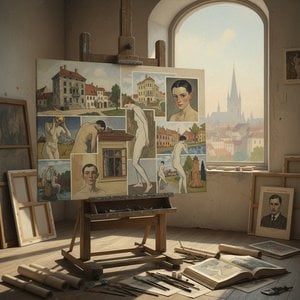
Egon Schiele : Les 25 Œuvres Maîtresses d'un Artiste Expressionniste
Plongez dans l'univers poignant d'Egon Schiele avec les 25 œuvres incontournables de ce maître expressionniste. Découvrez son style unique, ses nus audacieux et la profondeur émotionnelle de ses portraits. Reproductions de qualité muséale sur ArtsDot.com


