


 Aperçu en situation
 Partager
 Partager
 Détails
 Guide
Guide

 Télécharger
 Articles similaires
 Radiographie
 Voir le diaporama
 Statistiques
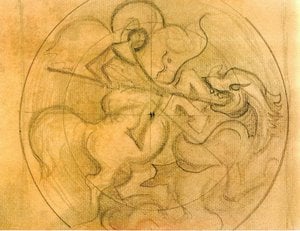
(Paris Scene Bains de Dames)
 1912
1912 12.0 x 8.0 cm
 Afficher la suite
Acquérez une image numérique haute résolution et optimisée, d'une qualité bien supérieure à l'aperçu en ligne.
Chaque fichier est méticuleusement préparé par nos spécialistes internes à l'aide d'outils avancés et d'une retouche manuelle experte. Nous garantissons que chaque image possède une clarté exceptionnelle, une précision des couleurs irréprochable et un niveau de détail fin.
Le fichier final est livré par e-mail sous 72 heures, optimisé pour une utilisation immédiate dans des contextes professionnels, éditoriaux et d'impression. Il offre la même qualité de confiance que celle utilisée par les plus grands studios de création, éditeurs et galeries.
Image numérique
Téléchargez un fichier haute résolution pour votre usage personnel, l'impression et vos projets créatifs. ( Passer au format impression Acheter la peinture faite à la main)
Inclus avec chaque commande d'image numérique
Livraison numérique experte, garantie.
En choisissant ArtsDot.com, vous n'obtenez pas seulement une simple image : vous recevez une œuvre numérique sublimée avec professionnalisme, conçue avec précision et accompagnée d'une garantie de satisfaction. Voici tout ce qui accompagne automatiquement votre commande :

Livraison rapide par e-mail
Votre fichier d'image numérique haute résolution vous sera envoyé par e-mail sous 72 heures après votre commande — prêt à un usage immédiat.

Fichier numérique optimisé par l'IA
Votre œuvre d'art bénéficie d'une optimisation professionnelle grâce à des outils d'IA avancés et une retouche manuelle, garantissant un niveau maximal de détail, de clarté et de fidélité chromatique.

Réexpédition gratuite à vie
Vous avez accidentellement supprimé ou perdu votre fichier ? Pas d'inquiétude — nous vous le renverrons gratuitement, quand vous le souhaitez.

Aucuns frais de douane — À jamais
Profitez de votre œuvre d'art instantanément sans frais de douane ni de livraison — les téléchargements numériques sont toujours exonérés de taxes.

Garantie de fidélité des couleurs
Nous garantissons que votre image numérique reproduit les couleurs de l'original aussi fidèlement que possible grâce à des outils professionnels et une gestion rigoureuse des couleurs.

Garantie de satisfaction de 100 jours
Si vous n'êtes pas satisfait de votre image numérique, nous la retoucherons ou vous rembourserons 100% sous 100 jours — sans poser de questions.

Garantie de remboursement à 100%
Pas satisfait ? Obtenez un remboursement intégral dans les 100 jours suivant la réception de votre fichier numérique — sans aucune question posée.

Remises sur les commandes groupées
Achetez 3 images, économisez 10% - Achetez 5, économisez 15% - Achetez 10+, économisez 20%. Idéal pour les projets créatifs, les galeries et les agences.
Œuvres similaires


Biographie de l'artiste
Edward Townsend Howes: A Parisian Impressionist’s Window
Edward Townsend Howes, a name perhaps less familiar than his contemporaries in the vibrant American art scene of the early 20th century, nevertheless possessed a singular vision—a deep and abiding love for Paris and its captivating atmosphere. Born in Stamford, Connecticut, in 1877, Howes’s artistic journey began with a formal education at the Pratt Institute in New York City, but it was his relocation to France around 1900 that truly ignited his creative spirit. He immersed himself in the Parisian art world, absorbing the techniques and philosophies of Impressionism and Post-Impressionism, ultimately forging a distinctive style characterized by luminous watercolors and an acute sensitivity to light and movement. His work isn’t simply depictions of Paris; it's a carefully constructed evocation of its energy, its rhythms, and its inherent beauty.Early Life and Artistic Foundations
Howes’s early life offered little indication of his future artistic pursuits. He was the son of a prominent businessman, Charles Howes, and his family maintained a relatively private existence in Connecticut. However, a pivotal moment occurred during his adolescence when he spent time with his uncle, the renowned artist John Singer Sargent, who recognized and nurtured his nascent talent. This mentorship proved invaluable, providing him with critical feedback and guidance as he began to develop his artistic voice. The influence of Sargent’s meticulous observation and masterful use of color undoubtedly shaped Howes's approach to capturing fleeting moments and atmospheric effects. Beyond Sargent, Howes was exposed to the broader currents of European art during his time in Paris, encountering the works of Monet, Renoir, and Pissarro – artists who had already revolutionized painting with their emphasis on light, color, and subjective perception.Parisian Scenes: A World in Watercolor
Howes’s most celebrated work revolves around his depictions of Parisian life. He wasn't interested in grand historical narratives or monumental subjects; instead, he focused on the everyday—the bustling streets, the flowing rivers, the interactions between people and their environment. His watercolors are remarkably alive, capturing the immediacy of a moment with astonishing detail. Subjects like riverboats navigating the Seine, fishermen casting their nets along the banks, and the vibrant activity of the *Bains de Dames* (public bathhouses) – scenes that might seem mundane to others—become imbued with a sense of drama and beauty through Howes’s skilled brushwork and masterful use of color. He employed a broken-color technique, layering translucent washes to create an ethereal quality, mimicking the effects of sunlight filtering through mist or reflecting off water. His compositions are often asymmetrical, drawing the eye across the canvas and creating a dynamic sense of movement.Technique and Style: The Language of Light
Howes’s technique is deeply rooted in Impressionist principles, but he developed his own unique approach. He was particularly adept at capturing the effects of light on surfaces—the shimmering reflections on water, the dappled sunlight filtering through trees, the subtle gradations of color in a cityscape. His use of watercolor allowed him to achieve remarkable luminosity and transparency, creating an illusion of depth and atmosphere. He rarely used outlines or hard edges, preferring to rely on subtle shifts in tone and color to define his subjects. This approach resulted in paintings that feel remarkably spontaneous and immediate, as if he were capturing a fleeting impression rather than meticulously rendering a detailed image. His work is characterized by a delicate balance between observation and imagination, reflecting his deep understanding of both the physical world and the emotional experience of seeing.Legacy and Historical Significance
Edward Townsend Howes’s contribution to American art may not be as widely recognized as some of his contemporaries, but his work deserves greater appreciation for its beauty, sensitivity, and technical skill. He represents a vital link between Impressionism in Europe and the development of American watercolor painting. His Parisian scenes offer a unique window into a bygone era, capturing the spirit and energy of a city that has long captivated artists and writers alike. Works like “Paris Scene Boats in River” and “Paris Scene Fishermen in Boats,” showcased at institutions such as the Smithsonian American Art Museum, stand as testaments to his artistic vision and enduring appeal. Howes’s legacy lies not only in his individual paintings but also in his embodiment of a particular aesthetic sensibility—a celebration of light, color, and the beauty of everyday life.
edward townsend howes
1877 - 1964
En bref
- Artistic Movement Or Style: Watercolor painting
- Date Of Birth: 1877
- Date Of Death: 1964
- Full Name: Edward Townsend Howes
- Nationality: American
- Notable Artworks:
- (Paris Scene Boats)
- (Paris Scene Fishermen)
- (Paris Scene Bains de Dames)
- Place Of Birth: WahooArt, USA