


 Aperçu en situation
 Envoyer
 Partager
 Détails de l'œuvre

 Télécharger
 Articles similaires
 Radiographie
 Diaporama
tramp steamer


 Lire la suite
Giclées et impressions d'art
Impressions giclées ou sur toile de qualité musée, avec une production rapide et des finitions au choix. ( Commander la reproduction peinte à la main Télécharger l'image haute résolution)




P118B $10

P118H $10

P118W $10

P438Z $10

P508JH $12

P508YH $12

P805H $10

P805Z $10

P919BZ $10

P919G $10

P919XJ $10

P959ZH $10

P968JZ $12

W106C $8

W218G $10

W218JH $8

W218Y $10

W307PJ $10

W316G $10

W316PJ $8

W316Y $10

W398PJ $8

W4111J $10

W500HY $15

W500JH $15

W692G $12

W849H $8

W940BG $15

W953PJ $8




Choisissez parmi nos formats prédéfinis qui respectent les proportions originales de l’œuvre.

Vous pouvez saisir vos propres dimensions pour vous adapter à un cadre ou à un espace spécifique. Si la taille sélectionnée ne correspond pas aux proportions de l'image originale, nous recadrerons l'œuvre ou étendrons l'image avec une bordure en miroir ou une couleur unie. Une maquette numérique vous sera envoyée pour approbation avant le début de la production.
Veuillez noter que l'aperçu à l'écran ne reflète pas le recadrage ou l'extension réelle. Seule la maquette montrera avec précision la composition finale.
Bien que des tailles personnalisées soient disponibles, nous vous recommandons de choisir une dimension dans la liste prédéfinie afin de préserver les proportions originales.
Livraison dans le monde entier () en 2 semaines au lieu des 4/5 semaines habituelles. (15 août)

Livraison express gratuite dans le monde entier

Toile de lin de qualité supérieure

Assurance transport complète

Garantie de remboursement des droits de douane

Garantie de fidélité des couleurs

Politique de retour de 60 jours (uniquement en cas de défaut)

Garantie de remboursement à 100%

Offre de tarifs dégressifs
 L'option verre n'est disponible que pour les dimensions inférieures à 110 cm.

tramp steamer
Giclées et impressions d'art
Format de la reproduction
-


Prix total
$ 62
Description de la pièce
A Storm-Tossed Soul: Edward Hopper’s “Tramp Steamer”
Edward Hopper's "Tramp Steamer," painted in 1908, isn’t merely a depiction of a ship at sea; it’s a profound meditation on isolation, resilience, and the quiet drama inherent in human existence. The painting immediately draws the eye with its stark simplicity – a dark, almost brooding vessel battling against a turbulent, overcast sky. Hopper masterfully employs horizontal lines—the ship's hull, the horizon, and the undulating waves—to create a sense of both stability and vulnerability. This deliberate composition anchors the viewer’s gaze, forcing a contemplation of the scene’s inherent tension. The muted blues and grays dominate the palette, punctuated by flashes of white foam and highlights on the water, lending an atmosphere of somber beauty rather than outright despair. The brushstrokes themselves are visible, contributing to a textured surface that hints at the impasto technique—a deliberate choice that adds physicality and immediacy to the image. It’s as if we can almost feel the spray of the sea and the groan of the timbers beneath our feet.Echoes of the Tramp Trade: Historical Context
To truly appreciate "Tramp Steamer," it's crucial to understand its historical context. The painting captures a pivotal moment in maritime history – the rise of the “tramp trade.” This system, characterized by ships carrying cargo on an as-needed basis rather than adhering to fixed routes and schedules, revolutionized global commerce at the turn of the 20th century. These tramp steamers, often small but incredibly versatile, became the arteries of international trade, transporting everything from coal and grain to machinery and manufactured goods. Hopper’s choice to depict this particular vessel—a “tramp steamer”—reflects his fascination with the lives of those who navigated these unpredictable waters, men and women caught between distant shores and the constant demands of their profession. The painting speaks volumes about a world increasingly reliant on global trade, yet simultaneously isolating its participants.The Poetics of Isolation: Symbolism and Mood
Beyond its straightforward representation, “Tramp Steamer” is rich in symbolic meaning. The ship itself embodies a sense of loneliness—a solitary figure adrift in a vast, indifferent ocean. The distant landmass, barely discernible through the haze, reinforces this feeling of isolation, suggesting both a destination and an absence of connection. Hopper’s masterful use of light and shadow further amplifies the mood. The diffused light, characteristic of an overcast day, creates a sense of melancholy and introspection. It's not a dramatic, heroic scene; rather, it’s a quiet observation of human vulnerability in the face of nature’s power. The ship’s smoke plume, rising into the gray sky, becomes a poignant symbol of hope—a small beacon against the overwhelming darkness, yet ultimately insignificant in the grand scheme of things.Hopper's Technique and Legacy
Edward Hopper was a master of capturing fleeting moments of urban and rural life with remarkable precision and emotional depth. “Tramp Steamer” exemplifies his signature style – a blend of realism and expressive abstraction. He wasn’t interested in simply replicating what he saw; instead, he sought to convey the underlying mood and atmosphere of a scene. The simplified forms, the carefully considered composition, and the visible brushstrokes all contribute to this effect. Hopper's work has had an enduring influence on American art, particularly his exploration of themes of loneliness, alienation, and the complexities of modern life. "Tramp Steamer" stands as a testament to his ability to distill profound human experiences into deceptively simple images—a timeless reminder of our shared vulnerability and the beauty found in quiet contemplation.Œuvres similaires


Biographie de l'artiste
**jeunesse et influences**
Edward Hopper, peintre et graveur américain réaliste de premier plan, est né le 22 juillet 1882 à Upper Nyack, New York. Sa famille, d'ascendance principalement néerlandaise, lui a offert une éducation confortable qui lui a permis de poursuivre ses inclinations artistiques dès son plus jeune âge. - **inspirations :** L’œuvre de Hopper a été influencée par les écrits de Ralph Waldo Emerson et des maîtres impressionnistes français Édouard Manet et Edgar Degas. - **formation précoce :** Il a commencé à étudier l'art grâce à un cours par correspondance en 1899, puis est passé à l’École d'Art et de Conception de New York.**style artistique et thèmes**
Edward Hopper's rendus sobres et soigneusement calculés reflétaient sa vision personnelle de la vie américaine moderne. Son travail peut être caractérisé par : - **scènes urbaines et rurales :** Les deux ensembles étaient dépeints avec un mélange unique de réalisme et d’émotion profonde. - **lumière :** Maîtrise de la lumière, souvent utilisée pour évoquer des sentiments d'isolement ou de contemplation. - **figures :** Souvent sans visage ou en arrière-plan, mettant l'accent sur l'environnement plutôt que sur les figures.**œuvres notables et leur signification**
- House by the Railroad (Musée d'Art Moderne, New York, États-Unis), un exemple de la capacité de Hopper à évoquer un sentiment de mélancolie grâce à une composition simple mais puissante. - Reclining Nude (50 x 35 cm, Nouveau Réalisme, aquarelle), mettant en valeur sa versatilité pour capturer la forme humaine.**Héritage et influence**
- **Influence sur les artistes futurs :** Le style unique de Hopper a influencé de nombreux artistes, dont Pierre Sanford Ross, connu pour ses scènes urbaines et rurales. - **Popularité durable :** Ses œuvres continuent de captiver le public par leurs thèmes intemporels de solitude et de la condition humaine.**Explorez davantage sur ArtsDot**
- [https://ArtsDot.com/@/edward-hopper](Œuvres d'Edward Hopper) - /fr/art/show/art-8xyffg-fr/Achetez de l'art inspiré par les maîtres]- Plongez dans le monde de l'art grâce à la vaste collection de ArtsDot.
- Découvrez comment l'héritage d' Edward Hopper continue d'inspirer les artistes et les amateurs d'art.
**Références**
- [https://ArtsDot.com/@/edward-hopper](Wikipedia : Edward Hopper) - [https://en.wikipedia.org/wiki/edward_hopper](Biographie d'Edward Hopper sur Wikipédia)
Edward Hopper
1931 - 1967 , États-Unis d'Amérique
L'essentiel de l'artiste
- Artistes Influents:
- Ralph Waldo Emerson
- Édouard Manet
- Edgar Degas
- Date De Décès: 1967
- Date De Naissance: 22 juillet 1882
- Influence Sur Les Artistes: ['Pierre Sanford Ross']
- Lieu De Naissance: Upper Nyack, États-Unis
- Nationalité: Américaine
- Nom Complet: Edward Hopper
- Oeuvres Notables:
- House by the Railroad
- Nighthawks
- Gas
- Chop Suey
- Summertime
- Style Artistique: Réalisme américain
Articles connexes

Edward Hopper : Les 25 Œuvres Maîtresses d'un Artiste Américain Intemporel | ArtsDot
Plongez dans l'univers poignant d'Edward Hopper avec les 25 œuvres incontournables du maître américain. Découvrez la lumière, l'isolation et le réalisme unique de ses tableaux iconiques. Reproductions de qualité muséale sur ArtsDot.com. Explorez la collection en ligne.

The Enduring Legacy of Oil on Canvas: Technique, History & Aesthetic Impact
Explore the rich history & techniques of oil painting – from Renaissance masters to Impressionism. Discover pigments, layering methods, and why this timeless medium endures. Expert insights for artists & art enthusiasts.

Edward Hopper : Réalisme américain, isolement urbain et poétique de la solitude moderne
Explorez l'univers poignant d'Edward Hopper : réalisme américain, isolement urbain et maîtrise de la lumière. Analyse approfondie de ses œuvres emblématiques et héritage artistique.

L'Huile sur Toile : Exploration Historique et Technique d'un Médium Artistique Intemporel
Explorez l'histoire fascinante de la peinture à l'huile, des techniques ancestrales aux maîtres flamands comme Van Eyck. Découvrez les secrets des pigments, liants et glacis pour comprendre cet art intemporel.
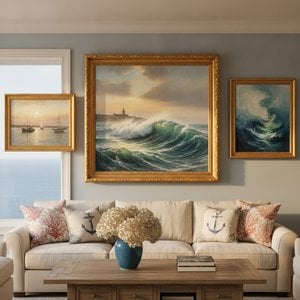
Bring the Ocean Home: Captivating Maritime Paintings to Transform Your Space with Timeless Elegance
Transform your home with breathtaking maritime oil paintings. From serene seascapes to dramatic nautical scenes, discover hand-painted reproductions that bring the ocean's soul to your space. Expertly crafted for collectors seeking timeless elegance and coastal tranquility.



