


 Aperçu en situation
 Partager
 Partager
 Détails
 Guide imprimable

 Télécharger
 Articles similaires
 Radiographie
 Voir le diaporama
 Statistiques
Manhattan Bridge Loop


 Afficher la suite
L’œuvre d'art présentée sur cette page est protégée par le droit d'auteur, ce qui signifie que nous ne pouvons légalement créer ou vendre de reproduction identique. Cette protection est appliquée en vertu d'accords internationaux tels que la Convention de Berne et par les lois nationales, notamment celles énoncées par le Loi américaine sur le droit d'auteur - Titre 17.
En tant qu'alternative respectueuse et légale, nous proposons des œuvres d'art personnalisées, peintes à la main et inspirées de l'original. Nos artistes talentueux et professionnels étudient avec soin le style, l'ambiance et l'essence artistique de l'œuvre originale pour créer une pièce nouvelle et unique qui évoque la même émotion — tout en restant une création originale en soi.
Cette méthode est pleinement conforme aux réglementations sur le droit d'auteur car elle ne repose pas sur la copie ou la duplication de l'œuvre protégée. Il s'agit plutôt d'une réinterprétation créative — une nouvelle peinture qui s'inspire de l'original sans pour autant lui être identique.
Reproduction à l'huile faite à la main
Huile sur toile peinte à la main, avec cadre et dimensions personnalisés, réalisée sur commande par nos artistes. ( Passer au format impression Passer au format image numérique)




P118B €10

P118H €10

P118W €10

P438Z €10

P508JH €12

P508YH €12

P805H €10

P805Z €10

P919BZ €10

P919G €10

P919XJ €10

P959ZH €10

P968JZ €12

W106C €8

W218G €10

W218JH €8

W218Y €10

W307PJ €10

W316G €10

W316PJ €8

W316Y €10

W398PJ €8

W4111J €10

W500HY €15

W500JH €15

W692G €12

W849H €8

W940BG €15

W953PJ €8




Choisissez parmi nos formats prédéfinis qui respectent les proportions originales de l’œuvre.

Vous pouvez saisir vos propres dimensions pour l'adapter à un cadre ou à un espace spécifique. Si la taille sélectionnée ne correspond pas aux proportions de l'image d'origine, nous recadrerons l'œuvre ou prolongerons la peinture avec des éléments peints à la main supplémentaires. Une maquette numérique vous sera envoyée pour approbation avant le début de la production.
Veuillez noter que l'aperçu à l'écran ne reflète pas le recadrage ou l'extension réels. Seule la maquette montrera fidèlement la composition finale.
Bien que des tailles personnalisées soient disponibles, nous vous recommandons de sélectionner une dimension dans la liste prédéfinie afin de préserver les proportions d'origine.
Après la commande, l’équipe ArtsDot.com contactera le client par e-mail pour recueillir ses instructions et lui fournira une maquette d’aperçu
Livraison dans le monde entier () en 3 à 4 semaines au lieu des 5 semaines habituelles. (13 octobre). Aucun compromis sur la qualité.

Livraison express gratuite dans le monde entier

Toile de lin de haute qualité

Assurance transport complète

Garantie de remboursement des droits de douane

Garantie de fidélité des couleurs

Garantie de retour de 100 jours (uniquement en cas de défaut)

Garantie de remboursement à 100%

Tarifs dégressifs sur quantité
 L'option verre n'est disponible que pour les dimensions inférieures à 110 cm.

Manhattan Bridge Loop
Technique de reproduction
Format de la reproduction
-


Prix total final
€ 227
A Symphony of Solitude: The Urban Poetics of Manhattan Bridge Loop
In the quiet, pre-dawn stillness of 1928, Edward Hopper captured more than just a New York City streetscape; he distilled the very essence of modern existence. Manhattan Bridge Loop serves as a profound meditation on the paradox of urban life—the experience of being surrounded by millions yet remaining profoundly alone. As the early morning light filters through the hazy atmosphere of the metropolis, it illuminates a scene that feels both monumental and deeply intimate. The composition, anchored by the sweeping architectural presence of the bridge, invites the viewer to step into a moment frozen in time, where the rhythmic pulse of the city has momentarily slowed to a contemplative heartbeat.
The technical mastery of this piece lies in Hopper’s ability to use chiaroscuro to sculpt emotion. Through the dramatic interplay of light and shadow, the artist breathes life into the cold textures of brick, steel, and pavement. His palette is a sophisticated study in restraint, utilizing muted browns, somber grays, and weathered, rusty hues that evoke the grit and grandeur of the Jazz Age. These colors do not merely represent the physical environment; they set a psychological tone of quiet melancholy. The deliberate, controlled brushstrokes create a sense of stillness so palpable that one can almost hear the distant echo of footsteps against the concrete, making it an ideal centerpiece for those seeking to bring a sense of thoughtful depth and historical gravity to a curated interior.
The Architecture of Isolation and Memory
Beyond its visual allure, the painting functions as a symbolic landscape of the human condition. The two figures positioned within the frame—one walking away into the shadows, the other gazing toward the horizon—act as avatars for the viewer’s own reflections on connection and detachment. They are not protagonists in a grand drama, but rather quiet observers of an indifferent cityscape. This sense of urban isolation is heightened by the towering skyscrapers that loom over the street, creating a scale that emphasizes the vulnerability of the individual against the immensity of the modern machine. For the collector, this work offers a window into the post-World War I era, reflecting the widespread disillusionment and the shifting social landscapes of an America grappling with rapid industrialization.
For interior designers and art enthusiasts alike, Manhattan Bridge Loop offers a timeless aesthetic that transcends fleeting trends. Its monochromatic undertones and structural composition provide a sophisticated anchor for contemporary spaces, blending seamlessly with minimalist or classic decor. To possess a reproduction of this masterpiece is to hold a piece of American history—a fragment of a time when the world was changing irrevocably, captured through the eyes of a master who found beauty in the shadows and poetry in the lonely corners of the city.
Questions et réponses
Puis-je voir «Manhattan Bridge Loop» de Edward Hopper sur mon propre mur avant de l'acheter ?
Vous pouvez prévisualiser «Manhattan Bridge Loop» de Edward Hopper sur votre propre mur grâce à la page Aperçu RA de l'œuvre, en utilisant la réalité augmentée sur un appareil compatible.
Comment puis-je visionner «Manhattan Bridge Loop» de Edward Hopper sous forme de diaporama ?
Vous pouvez visionner «Manhattan Bridge Loop» de Edward Hopper sous forme de diaporama sur la page Diaporama de l'œuvre.
Quelle est la luminance de «Manhattan Bridge Loop» de Edward Hopper ?
«Manhattan Bridge Loop» de Edward Hopper présente une luminance de Gentle Luminance. La luminance décrit la quantité de lumière que les couleurs semblent réfléchir.
Un téléchargement est-il disponible pour « Manhattan Bridge Loop » ?
Un téléchargement est disponible pour « Manhattan Bridge Loop » : la page Télécharger de l'œuvre propose un téléchargement d'image numérique haute résolution.
En quelle année "Manhattan Bridge Loop" a-t-il été réalisé ?
«Manhattan Bridge Loop» de Edward Hopper a été créé en 1928.
Quelle émotion procure "Manhattan Bridge Loop" en cadeau ?
Avec son ton émotionnel Melancholic, «Manhattan Bridge Loop» de Edward Hopper est recommandé comme cadeau pour Corporate Gift.
Comment "Manhattan Bridge Loop" équilibre-t-il l'ombre et la lumière ?
«Manhattan Bridge Loop» de Edward Hopper présente une luminosité de balanced, avec une luminance de Gentle Luminance.
Comment puis-je découvrir des œuvres d'art proches de «Manhattan Bridge Loop» de Edward Hopper ?
Les œuvres similaires à « Manhattan Bridge Loop » sont répertoriées sur la page Œuvres similaires de l'œuvre.
Œuvres similaires


Biographie de l'artiste
**jeunesse et influences**
Edward Hopper, peintre et graveur américain réaliste de premier plan, est né le 22 juillet 1882 à Upper Nyack, New York. Sa famille, d'ascendance principalement néerlandaise, lui a offert une éducation confortable qui lui a permis de poursuivre ses inclinations artistiques dès son plus jeune âge. - **inspirations :** L’œuvre de Hopper a été influencée par les écrits de Ralph Waldo Emerson et des maîtres impressionnistes français Édouard Manet et Edgar Degas. - **formation précoce :** Il a commencé à étudier l'art grâce à un cours par correspondance en 1899, puis est passé à l’École d'Art et de Conception de New York.**style artistique et thèmes**
Edward Hopper's rendus sobres et soigneusement calculés reflétaient sa vision personnelle de la vie américaine moderne. Son travail peut être caractérisé par : - **scènes urbaines et rurales :** Les deux ensembles étaient dépeints avec un mélange unique de réalisme et d’émotion profonde. - **lumière :** Maîtrise de la lumière, souvent utilisée pour évoquer des sentiments d'isolement ou de contemplation. - **figures :** Souvent sans visage ou en arrière-plan, mettant l'accent sur l'environnement plutôt que sur les figures.**œuvres notables et leur signification**
- House by the Railroad (Musée d'Art Moderne, New York, États-Unis), un exemple de la capacité de Hopper à évoquer un sentiment de mélancolie grâce à une composition simple mais puissante. - Reclining Nude (50 x 35 cm, Nouveau Réalisme, aquarelle), mettant en valeur sa versatilité pour capturer la forme humaine.**Héritage et influence**
- **Influence sur les artistes futurs :** Le style unique de Hopper a influencé de nombreux artistes, dont Pierre Sanford Ross, connu pour ses scènes urbaines et rurales. - **Popularité durable :** Ses œuvres continuent de captiver le public par leurs thèmes intemporels de solitude et de la condition humaine.**Explorez davantage sur ArtsDot**
- [https://ArtsDot.com/@/edward-hopper](Œuvres d'Edward Hopper) - /fr/art/show/art-8xyffg-fr/Achetez de l'art inspiré par les maîtres]- Plongez dans le monde de l'art grâce à la vaste collection de ArtsDot.
- Découvrez comment l'héritage d' Edward Hopper continue d'inspirer les artistes et les amateurs d'art.
**Références**
- [https://ArtsDot.com/@/edward-hopper](Wikipedia : Edward Hopper) - [https://en.wikipedia.org/wiki/edward_hopper](Biographie d'Edward Hopper sur Wikipédia)
Edward Hopper
1931 - 1967 , États-Unis d'Amérique
En bref
- Artistes Influents:
- Ralph Waldo Emerson
- Édouard Manet
- Edgar Degas
- Date De Décès: 1967
- Date De Naissance: 22 juillet 1882
- Influence Sur Les Artistes: ['Pierre Sanford Ross']
- Lieu De Naissance: Upper Nyack, États-Unis
- Nationalité: Américaine
- Nom Complet: Edward Hopper
- Oeuvres Notables:
- House by the Railroad
- Nighthawks
- Gas
- Chop Suey
- Summertime
- Style Artistique: Réalisme américain
Articles similaires

Concrete Visions: Exploring Representations of Urban Life in Modern & Contemporary Art
Explore the evolution of cityscape painting from Realism to contemporary art. Discover key artists & invest in timeless urban visions with ArtsDot's expert guidance and museum-quality reproductions.

Stuart Davis: Modernist Abstraction & the Vibrant Spirit of the Jazz Age
Explore the vibrant world of Stuart Davis, a pioneer of American Modernism. Discover his jazz-inspired paintings, signature style & investment potential. Expert insights for art collectors.

Fernand Léger : Les 25 Œuvres Maîtresses d'un Pionnier du Modernisme | ArtsDot
Plongez dans l'univers vibrant de Fernand Léger ! Découvrez les 25 œuvres majeures du cubisme et du tubisme, explorant formes géométriques et couleurs audacieuses. Retrouvez des reproductions d'art exceptionnelles sur ArtsDot.com.
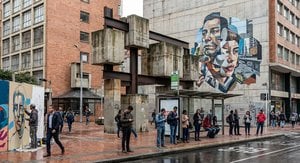
Concrete Narratives: Exploring Urban Life in Modern & Contemporary Art
Explore the evolution of cityscape painting with ArtsDot. Discover key artists from Realism to contemporary movements & invest in timeless urban visions. Expert guidance, museum-quality reproductions.

Edward Hopper : Les 25 Œuvres Maîtresses d'un Artiste Américain Intemporel | ArtsDot
Plongez dans l'univers poignant d'Edward Hopper avec les 25 œuvres incontournables du maître américain. Découvrez la lumière, l'isolation et le réalisme unique de ses tableaux iconiques. Reproductions de qualité muséale sur ArtsDot.com. Explorez la collection en ligne.


