


 Partager
 Partager
 Détails
 Guide
Guide

 Télécharger
 Articles similaires
 Voir le diaporama
 Statistiques
Prophet Habakkuk


 Afficher la suite
Giclées et impressions d'art
Impressions giclées ou sur toile de qualité musée, avec une production rapide et des finitions au choix. ( Acheter la peinture faite à la main Passer au format image numérique)




































Choisissez parmi nos formats prédéfinis qui respectent les proportions originales de l’œuvre.

Vous pouvez saisir vos propres dimensions pour vous adapter à un cadre ou à un espace spécifique. Si la taille sélectionnée ne correspond pas aux proportions de l'image originale, nous recadrerons l'œuvre ou étendrons l'image avec une bordure en miroir ou une couleur unie. Une maquette numérique vous sera envoyée pour approbation avant le début de la production.
Veuillez noter que l'aperçu à l'écran ne reflète pas le recadrage ou l'extension réelle. Seule la maquette montrera avec précision la composition finale.
Bien que des tailles personnalisées soient disponibles, nous vous recommandons de choisir une dimension dans la liste prédéfinie afin de préserver les proportions originales.
Livraison dans le monde entier () en 2 semaines au lieu des 4/5 semaines habituelles. (24 septembre)

Livraison express gratuite dans le monde entier

Toile de lin de haute qualité

Assurance transport complète

Garantie de remboursement des droits de douane

Garantie de fidélité des couleurs

Garantie de retour de 100 jours (uniquement en cas de défaut)

Garantie de remboursement à 100%

Tarifs dégressifs sur quantité
 L'option verre n'est disponible que pour les dimensions inférieures à 110 cm.

Prophet Habakkuk
Giclées et impressions d'art
Format de la reproduction
-


Prix total final
$ 62
The Soul in Stone: Donatello’s Prophet Habakkuk
In the heart of Florence, within the hallowed halls of the Museo dell'Opera del Duomo, stands a figure that seems to breathe with the weight of centuries. Donatello’s Prophet Habakkuk, sculpted between 1423 and 1426, is far more than a mere religious icon; it is a visceral encounter with the human condition. To gaze upon this marble masterpiece is to witness the precise moment when the rigid, stylized conventions of the Gothic era began to dissolve, giving way to the profound psychological realism of the Early Renaissance. The figure, often affectionately known as Lo Zuccone due to his bald head, possesses an intensity that transcends its medium, capturing a sense of spiritual exhaustion and unwavering faith that continues to captivate the modern observer.
The sculpture serves as a monumental bridge between the classical past and the humanist future. Donatello, deeply immersed in the study of antiquity, utilized the subtractive sculpting technique to coax life from a block of Carrara marble. Through meticulous carving, he achieved an anatomical precision that was revolutionary for his time. The prophet’s body is not a static pillar but a dynamic entity; his contrapposto stance—a subtle, naturalistic shift in weight—imbues the stone with an illusion of potential movement. This mastery of form allows the viewer to perceive the underlying musculature and skeletal structure, creating a sense of physical presence that makes the prophet feel as though he might step from his pedestal into our own reality.
A Symphony of Texture and Light
For the discerning collector or interior designer, the true magic of this work lies in its incredible tactile depth. Donatello’s treatment of drapery is nothing short of virtuosic. The heavy folds of the prophet's garments are not merely decorative; they are sculpted with deep undercuts and intricate creases that catch the light and cast dramatic shadows. This interplay of chiaroscuro—the contrast between light and dark—adds a layer of theatricality to the piece, emphasizing the rugged texture of the marble and the weathered, aged quality of the stone. The way the fabric falls naturally around the limbs suggests a heavy, tangible weight, grounding the spiritual subject in a palpable, earthly reality.
Beyond the technical brilliance, the emotional resonance of Habakkuk offers profound inspiration for any space. The prophet’s face, with its furrowed brow and downturned mouth, tells a story of contemplation, doubt, and divine burden. There is a quiet, monumental dignity in his expression that commands respect and invites introspection. Whether presented as a high-quality hand-painted reproduction or a focal point in a curated gallery, this work brings an atmosphere of timelessness and intellectual depth. It is a piece that does not merely decorate a room but transforms it, offering a window into the very spirit of the Florentine Renaissance and the enduring power of human emotion rendered in eternal stone.
Œuvres similaires


Biographie de l'artiste
Premières années et carrière
Œuvres clés et innovations L'œuvre la plus célèbre de Donatello, David, était la première sculpture masculine nue autoportante depuis l'Antiquité. Commandée par la famille Médicis, elle mettait en valeur son style innovant et son expertise technique. Parmi les autres œuvres notables figurent :- , créé pour le campanile de Santa Maria del Fiore à Florence, se caractérisait par de forts détails portraitistiques.
- Un crucifix (1425) pour Santa Croce, qui représentait le Christ dans un moment d’agonie.
Style artistique et héritage
Le style de Donatello peut être divisé en phases générales, commençant par le développement de l'expressivité et du monumentalité classique. Son travail n'a pas été immédiatement accepté par la communauté, mais est finalement devenu le plus populaire, influençant d’autres cours italiennes et des artistes européens. Mouvements artistiques clés :Vie personnelle et style de travail
Donatello était connu pour être aimable et apprécié, mais peu doué sur le plan commercial dans sa carrière. Il avait tendance à accepter plus de commandes qu’il ne pouvait en gérer, achevant souvent les œuvres avec retard ou en les confiant à d'autres sculpteurs. Œuvres d'art notables et artistes :- Leonardo da Vinci: Annonciation (détail)
- Amico Aspertini: Statua di pan/leone che azzanna un cavallo
- Michelangelo Buonarroti: Tondo Pitt
Musées et collections d'art :
- Museo della Collegiata (Empoli, Italie): un joyau caché de la Renaissance, présentant des œuvres de Francesco Botticini et Raffaello Botticini.
- Le mouvement artistique de la première Renaissance italienne

Donatello
1386 - 1466 , Italie
En bref
- Artistic Movement Or Style: Renaissance primitive
- Artists Or Movements Influenced By This Artist: ['Michel-Ange Buonarroti']
- Date Of Birth: c. 1386
- Date Of Death: 1466
- Full Name: Donatello (Donato di Niccolò)
- Nationality: Italienne
- Notable Artworks:
- David
- St. Louis de Toulouse
- Sacrifice d'Isaac
- Crucifix (1425)
- Place Of Birth: Florence, Italie
Articles similaires

The Enduring Form: Sculpture Across History, Technique & Emotional Resonance
Explore the rich history of sculpture with ArtsDot. Discover key techniques, influential artists & investment potential for discerning collectors. Expert insights into valuing and collecting timeless masterpieces.

The Enduring Form: Exploring Themes & Techniques in Sculpture Across Historical Periods
Explore the rich history of sculpture from ancient masterpieces to contemporary innovations. Discover key techniques, influential artists & investment potential for discerning art collectors.
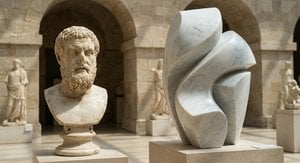
The Enduring Allure of Marble in Art History: From Classical Sculpture to Modern Abstraction
Explore the captivating history of marble sculpture from ancient Greece to modern art. Discover renowned artists like Canova & Michelangelo, carving techniques, and investment insights at ArtsDot.

Les 10 Chefs-d'œuvre en Bronze qui ont Révolutionné l'Art : Collection ArtsDot
Plongez dans l'univers fascinant des 10 chefs-d'œuvre en bronze qui ont marqué l'histoire de l'art. Découvrez Rodin, Degas et les secrets de ces sculptures iconiques. Reproductions d'art exceptionnelles sur ArtsDot.com – Explorez la collection !

Les 10 Chefs-d'œuvre Bronzes Qui Ont Révolutionné la Sculpture | ArtsDot
Plongez dans l'univers fascinant des 10 sculptures en bronze les plus emblématiques de l'histoire de l'art. Rodin, Degas et autres maîtres révélés ! Découvrez leur histoire, leurs techniques et trouvez l'œuvre parfaite pour sublimer votre intérieur sur ArtsDot.com.


