


 Aperçu en situation
 Envoyer
 Partager
 Détails de l'œuvre

 Télécharger
 Articles similaires
 Radiographie
 Diaporama
Cantoria
 Acrylic On Canvas
- WallArt
- Early Renaissance
 1439
1439 348.0 x 570.0 cm
 Musée de l’Œuvre du Duomo
 Lire la suite
Giclées et impressions d'art
Impressions giclées ou sur toile de qualité musée, avec une production rapide et des finitions au choix. ( Commander la reproduction peinte à la main Télécharger l'image haute résolution)




P118B $10

P118H $10

P118W $10

P438Z $10

P508JH $12

P508YH $12

P805H $10

P805Z $10

P919BZ $10

P919G $10

P919XJ $10

P959ZH $10

P968JZ $12

W106C $8

W218G $10

W218JH $8

W218Y $10

W307PJ $10

W316G $10

W316PJ $8

W316Y $10

W398PJ $8

W4111J $10

W500HY $15

W500JH $15

W692G $12

W849H $8

W940BG $15

W953PJ $8




Choisissez parmi nos formats prédéfinis qui respectent les proportions originales de l’œuvre.

Vous pouvez saisir vos propres dimensions pour vous adapter à un cadre ou à un espace spécifique. Si la taille sélectionnée ne correspond pas aux proportions de l'image originale, nous recadrerons l'œuvre ou étendrons l'image avec une bordure en miroir ou une couleur unie. Une maquette numérique vous sera envoyée pour approbation avant le début de la production.
Veuillez noter que l'aperçu à l'écran ne reflète pas le recadrage ou l'extension réelle. Seule la maquette montrera avec précision la composition finale.
Bien que des tailles personnalisées soient disponibles, nous vous recommandons de choisir une dimension dans la liste prédéfinie afin de préserver les proportions originales.
Livraison dans le monde entier () en 2 semaines au lieu des 4/5 semaines habituelles. (13 août)

Livraison express gratuite dans le monde entier

Toile de lin de qualité supérieure

Assurance transport complète

Garantie de remboursement des droits de douane

Garantie de fidélité des couleurs

Politique de retour de 60 jours (uniquement en cas de défaut)

Garantie de remboursement à 100%

Offre de tarifs dégressifs
 L'option verre n'est disponible que pour les dimensions inférieures à 110 cm.

Cantoria
Giclées et impressions d'art
Format de la reproduction
-


Prix total
$ 62
Description de la pièce
Cantoria by DONATELLO
Donatello’s “Cantoria,” completed in Florence around 1439 during the height of the Early Renaissance, stands as a testament to artistic innovation and humanist ideals. Commissioned for the Cathedral of Santa Maria del Fiore – specifically above the south Sacristy – it represents more than just decorative embellishment; it embodies a profound engagement with classical sculpture and a masterful exploration of expressive realism.
The monumental marble relief sculpture, measuring 348 x 570 cm, is situated in the Cathedral’s transept, marking a pivotal moment in Florentine art history. Alongside Luca della Robbia's counterpart, it exemplifies the collaborative spirit that characterized the era and solidified Florence’s reputation as a center of artistic excellence.
Donatello’s approach to this ambitious project distinguishes him from many of his contemporaries. Rather than adhering strictly to traditional Byzantine conventions—which dominated sculpture at the time—he embraced the principles championed by Filippo Brunelleschi, drawing inspiration from ancient Greek and Roman models. This conscious decision resulted in a strikingly original style characterized by dynamic movement and profound psychological depth.
The composition itself is remarkably intricate. Five consoles support five pairs of columns, creating a harmonious vertical rhythm that draws the eye upwards towards the pediment adorned with acanthus leaves and other ornamental motifs. Behind the column is a frieze depicting dancing angels—putti—engaged in an exuberant celebration of divine glory. These figures are not merely static representations; they convey palpable energy and emotion through their gestures and postures.
The shimmering surface of the mosaic background contributes to the sculpture’s overall impact, illuminating the angelic dancers with a radiant glow that underscores their spiritual fervor. This masterful use of light—a technique borrowed from classical art—further enhances the sculpture's expressive power and elevates it beyond mere ornamentation. The Cantoria is not simply a beautiful object; it’s a powerful symbol of faith and artistic aspiration.
Furthermore, Donatello’s innovative technique involved carving the marble with exceptional precision using chisels and hammers – a laborious process that demanded considerable skill and patience. He skillfully employed subtle gradations of shading to create an illusion of three-dimensionality, capturing the textures and contours of the stone with remarkable accuracy.
The sculpture's enduring legacy stems from its ability to communicate complex ideas about human emotion and spiritual contemplation. It remains a cornerstone of Renaissance art, inspiring artists and scholars alike with its masterful execution and profound artistic vision.
Œuvres similaires


Biographie de l'artiste
Premières années et carrière
Œuvres clés et innovations L'œuvre la plus célèbre de Donatello, David, était la première sculpture masculine nue autoportante depuis l'Antiquité. Commandée par la famille Médicis, elle mettait en valeur son style innovant et son expertise technique. Parmi les autres œuvres notables figurent :- , créé pour le campanile de Santa Maria del Fiore à Florence, se caractérisait par de forts détails portraitistiques.
- Un crucifix (1425) pour Santa Croce, qui représentait le Christ dans un moment d’agonie.
Style artistique et héritage
Le style de Donatello peut être divisé en phases générales, commençant par le développement de l'expressivité et du monumentalité classique. Son travail n'a pas été immédiatement accepté par la communauté, mais est finalement devenu le plus populaire, influençant d’autres cours italiennes et des artistes européens. Mouvements artistiques clés :Vie personnelle et style de travail
Donatello était connu pour être aimable et apprécié, mais peu doué sur le plan commercial dans sa carrière. Il avait tendance à accepter plus de commandes qu’il ne pouvait en gérer, achevant souvent les œuvres avec retard ou en les confiant à d'autres sculpteurs. Œuvres d'art notables et artistes :- Leonardo da Vinci: Annonciation (détail)
- Amico Aspertini: Statua di pan/leone che azzanna un cavallo
- Michelangelo Buonarroti: Tondo Pitt
Musées et collections d'art :
- Museo della Collegiata (Empoli, Italie): un joyau caché de la Renaissance, présentant des œuvres de Francesco Botticini et Raffaello Botticini.
- Le mouvement artistique de la première Renaissance italienne

Donatello
1386 - 1466 , Italie
L'essentiel de l'artiste
- Artistic Movement Or Style: Renaissance primitive
- Artists Or Movements Influenced By This Artist: ['Michel-Ange Buonarroti']
- Date Of Birth: c. 1386
- Date Of Death: 1466
- Full Name: Donatello (Donato di Niccolò)
- Nationality: Italienne
- Notable Artworks:
- David
- St. Louis de Toulouse
- Sacrifice d'Isaac
- Crucifix (1425)
- Place Of Birth: Florence, Italie
Articles connexes
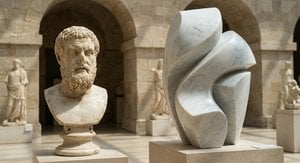
The Enduring Allure of Marble in Art History: From Classical Sculpture to Modern Abstraction
Explore the captivating history of marble sculpture from ancient Greece to modern art. Discover renowned artists like Canova & Michelangelo, carving techniques, and investment insights at ArtsDot.

Les 10 Chefs-d'œuvre Bronzes Qui Ont Révolutionné la Sculpture | ArtsDot
Plongez dans l'univers fascinant des 10 sculptures en bronze les plus emblématiques de l'histoire de l'art. Rodin, Degas et autres maîtres révélés ! Découvrez leur histoire, leurs techniques et trouvez l'œuvre parfaite pour sublimer votre intérieur sur ArtsDot.com.

The Enduring Form: Exploring Themes & Techniques in Sculpture Across Historical Periods
Explore the rich history of sculpture from ancient masterpieces to contemporary innovations. Discover key techniques, influential artists & investment potential for discerning art collectors.

Les 10 Chefs-d'œuvre en Bronze qui ont Révolutionné l'Art : Collection ArtsDot
Plongez dans l'univers fascinant des 10 chefs-d'œuvre en bronze qui ont marqué l'histoire de l'art. Découvrez Rodin, Degas et les secrets de ces sculptures iconiques. Reproductions d'art exceptionnelles sur ArtsDot.com – Explorez la collection !

The Enduring Form: Sculpture Across History, Technique & Emotional Resonance
Explore the rich history of sculpture with ArtsDot. Discover key techniques, influential artists & investment potential for discerning collectors. Expert insights into valuing and collecting timeless masterpieces.



