


 Aperçu en situation
 Partager
 Partager
 Détails
 Guide imprimable

 Télécharger
 Articles similaires
 Radiographie
 Voir le diaporama
 Statistiques
Black


 Afficher la suite
Reproduction à l'huile faite à la main
Huile sur toile peinte à la main, avec cadre et dimensions personnalisés, réalisée sur commande par nos artistes. ( Passer au format impression Passer au format image numérique)




P118B €10

P118H €10

P118W €10

P438Z €10

P508JH €12

P508YH €12

P805H €10

P805Z €10

P919BZ €10

P919G €10

P919XJ €10

P959ZH €10

P968JZ €12

W106C €8

W218G €10

W218JH €8

W218Y €10

W307PJ €10

W316G €10

W316PJ €8

W316Y €10

W398PJ €8

W4111J €10

W500HY €15

W500JH €15

W692G €12

W849H €8

W940BG €15

W953PJ €8




Choisissez parmi nos formats prédéfinis qui respectent les proportions originales de l’œuvre.

Saisissez la largeur et la hauteur souhaitées, pour s'adapter à votre cadre ou à votre mur. Cette œuvre est peinte à la main ; ainsi, pour un format de forme différente, l'artiste peut peindre un peu plus autour du tableau ou réduire légèrement les bords — c'est vous qui choisissez. Nous vous envoyons une maquette numérique pour approbation avant que la peinture ne commence. L'image présentée sur cette page ne reflète pas le résultat réel — seule la maquette le fait.
Après la commande, l’équipe ArtsDot.com contactera le client par e-mail pour recueillir ses instructions et lui fournira une maquette d’aperçu
Livraison dans le monde entier () en 3 à 4 semaines au lieu des 5 semaines habituelles. (25 octobre). Aucun compromis sur la qualité.

Livraison express gratuite dans le monde entier

Toile de lin de haute qualité

Assurance transport complète

Garantie de remboursement des droits de douane

Garantie de fidélité des couleurs

Garantie de retour de 100 jours (uniquement en cas de défaut)

Garantie de remboursement à 100%

Tarifs dégressifs sur quantité
 L'option verre n'est disponible que pour les dimensions inférieures à 110 cm.

Black
Technique de reproduction
Format de la reproduction
-


Prix total final
€ 231
A Quietude Captured in Monochrome
In the delicate interplay of light and shadow, David Brown Milne’s "Black" emerges as a profound meditation on stillness and the beauty found within solitude. Created in 1914, this evocative work transports the viewer into a private, intimate moment where time seems to suspend its forward march. The composition centers on a woman seated at a table, her figure anchored by the vibrant, singular presence of a red tablecloth that breaks through the monochromatic depth of the scene. As she engages with a book, lost in the silent dialogue between reader and text, the surrounding room breathes with a soft, natural luminescence. This light, filtering through a nearby window, does more than merely illuminate; it sculpts the atmosphere, casting gentle gradients that lend a tactile, cozy warmth to the space.
The painting is a masterclass in the art of absence—a hallmark of Milne’s burgeoning modernist sensibility. While other figures linger in the periphery, blurred and secondary to the central subject, their presence serves only to emphasize the profound isolation and peace of the protagonist. This technique creates a layered depth, where the viewer feels less like an intruder and more like a quiet observer of a sacred, everyday ritual. For the collector or interior designer, this piece offers a sophisticated balance of weight and airiness, making it an ideal focal point for spaces that demand a sense of calm, intellectual reflection, and understated elegance.
The Modernist Eye and the Mastery of Form
Technically, "Black" showcases Milne’s ability to distill complex environments into their most essential elements. Influenced by the radical innovations of European masters like Cézanne and the Fauves, which he encountered during his transformative years in New York, Milne employs a restrained palette that emphasizes structure over ornamentation. The use of black and white creates a rhythmic tension, allowing the eye to dance between the sharp edges of the furniture and the soft, ethereal glow of the window light. The way the artist handles the contrast suggests a deep understanding of how light defines volume, turning a simple domestic scene into a study of geometric harmony.
Beyond its visual mechanics, the work carries a heavy symbolic resonance. The title itself, "Black," invites us to contemplate the void, the unknown, and the profound depth of the introspective mind. In an era of rapid industrial change, Milne’s focus on this quiet, domestic sanctuary serves as a poignant reminder of the enduring human need for connection—both with literature and with the self. To possess a reproduction of this piece is to invite a sense of historical gravity and poetic grace into one's home, providing a window into a moment of perfect, unadulterated peace that remains as relevant today as it was in 1914.
Questions et réponses
À quel courant artistique «Black» de David Brown Milne appartient-il ?
Le mouvement associé à «Black» de David Brown Milne est Modernism. Cette classification situe l'œuvre parmi des artistes et des œuvres d'art apparentés.
Quelle saturation et quelle intensité «Black» de David Brown Milne présente-t-il ?
«Black» de David Brown Milne est représenté avec une saturation de Subtle Color et une intensité de Monochromatic.
Que représente « Black » ?
Les thèmes présents dans «Black» de David Brown Milne incluent woman, book, table, red tablecloth, chair, window, people. Ensemble, ils résument le sujet de l'œuvre.
Œuvres similaires


Biographie de l'artiste
David Brown Milne : Une Vie Artistique
- Né: Burgoyne Village, Canada (1882)
- Décédé: 1953
David Brown Milne était un peintre, graveur et écrivain canadien dont la vision artistique unique le distinguait de ses contemporains. Né dans le sud-ouest de l'Ontario, il a passé ses premières années immergé dans la beauté naturelle du Canada rural, une influence qui allait profondément façonner sa carrière artistique. Son parcours l'a mené à travers la scène artistique vibrante de New York avant qu’il ne retourne au Canada où il développa un style moderniste distinctif.
Première Vie et Formation
- Origines Familiales: Milne était le plus jeune de dix enfants nés de parents immigrés écossais, William et Mary Milne. L'appréciation de sa famille pour la nature, en particulier les créations artistiques de sa mère à partir de matériaux naturels, a favorisé son intérêt précoce pour l'art.
- Formation: Il a reçu son éducation initiale à Paisley, Ontario, suivie du secondaire à Walkerton. Après un bref passage comme enseignant rural, il a poursuivi une formation artistique formelle par le biais de cours par correspondance et plus tard à la Art Students League de New York City (1903-1905).
- Début de Carrière: À New York, Milne et son associé Amos Engle ont tenu un studio d'art commercial. Tout en exécutant des commandes commerciales, il a également participé activement à la scène artistique moderniste naissante, exposant ses œuvres auprès d'importantes sociétés et galeries artistiques, notamment la N.E. Montross Gallery, et participant à l'Armory Show (1913) et à l'Exposition Internationale du Pacifique de San Francisco (1915).
Développement Artistique et Style
- Influences: Milne a été influencé par les modernistes européens et américains exposés dans la galerie 291 d'Alfred Stieglitz, notamment des artistes comme Cézanne et Matisse. Il a absorbé des éléments de l'impressionnisme, du post-impressionnisme et du fauvisme.
- Style Distinctif: Milne a développé un style moderniste unique caractérisé par une simplicité austère, un réalisme expressif et une réduction délibérée des formes. Contrairement à l'approche plus impressionniste du Groupe de Sept, le travail de Milne mettait l'accent sur la stillness et la contemplation tranquille.
- Utilisation du Noir et Blanc: Une caractéristique déterminante de l'art de Milne était son utilisation fréquente du noir en conjonction avec le blanc. Il employait ces couleurs non pas simplement comme pigments, mais comme éléments expressifs pour créer une tension et souligner la stillness au sein d'un paysage.
- Sujets: Bien qu’il se concentrât principalement sur les paysages, Milne a également peint des natures mortes et des scènes de la vie quotidienne, imprégnant des sujets ordinaires de dignité et de signification.
Réalisations Majeures et Reconnaissance
- Service pendant la Première Guerre Mondiale: Pendant la Première Guerre mondiale, Milne a servi comme artiste de guerre canadien, documentant les expériences des soldats et les paysages de France et de Belgique.
- Retour au Canada: Après la guerre, Milne est retourné au Canada, se concentrant sur la peinture dans des régions telles que Temagami, Weston et Palgrave. Il s'est ensuite installé à Uxbridge, Ontario.
- Acclamation Critique: Bien qu’initialement éclipsé par le Groupe de Sept, le travail de Milne a gagné une reconnaissance croissante au fil du temps. Le critique d'art américain Clement Greenberg l'a considéré comme l'un des trois plus grands artistes nord-américains de sa génération.
- Rétrospectives et Expositions: De grandes rétrospectives de son œuvre ont été organisées par la Galerie nationale du Canada (1955-56) et à Hart House à Toronto (1962). En 2005, une exposition de ses aquarelles a voyagé du British Museum au Metropolitan Museum of Art et à l'Art Gallery of Ontario.
- Timbres Postaux: Sa peinture "Red Nasturtiums" était présentée sur un timbre postal canadien en 1992 dans le cadre de la série Maîtres de l'art canadien.
Signification Historique
L’héritage de David Brown Milne réside dans sa contribution unique à l’art canadien. Il a ouvert une voie distincte, s’écartant des tendances artistiques dominantes tout en embrassant les principes modernistes. Sa capacité à capturer l'essence du paysage canadien avec une telle beauté austère et une simplicité expressive lui a assuré une place parmi les plus grands artistes canadiens. Son travail continue d’être célébré pour sa puissance tranquille, ses techniques innovantes et sa profonde réflexion sur le monde naturel.

David Brown Milne
1882 - 1953 , Canada
En bref
- Artistic Movement Or Style: Modernisme
- Artists Who Influenced This Artist:
- Alfred Stieglitz
- Cézanne
- Matisse
- Date Of Birth: 8 janvier 1882
- Date Of Death: 26 décembre 1953
- Full Name: David Brown Milne
- Nationality: Canadien
- Notable Artworks:
- Taconic Hills
- Main Street
- Place Of Birth: Burgoyne Village, Canada
Articles connexes

Timeless Elegance: A Designer's Guide to Decorating with Striking Black and White Art
Discover how to elevate your home with the timeless allure of black and white art. From minimalist abstracts to hand-painted oil reproductions, learn expert designer tips for creating sophisticated, high-contrast interiors that radiate elegance and modern luxury.

10 chefs-d'œuvre de la photographie noir et blanc qui ont révolutionné l'art
Plongez dans l'âme de la photographie noir et blanc. De Warhol à Dalí, explorez 10 chefs-d'œuvre iconiques qui ont marqué l'histoire de l'art. Trouvez l'inspiration pour votre décoration avec nos reproductions d'exception. Découvrez tous les chefs-d'œuvre sur ArtsDot.com.
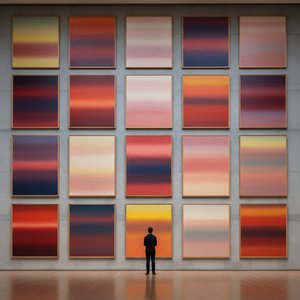
Mark Rothko : Les 25 Œuvres Maîtresses de l'Abstraction Coloriste | ArtsDot
Plongez dans l'univers émotionnel de Mark Rothko avec les 25 œuvres clés du maître de l'abstraction. Découvrez l'histoire, la technique et le pouvoir des couleurs de ces tableaux iconiques. Reproductions d'art de qualité musée sur ArtsDot.com

Les 10 Chefs-d'œuvre Noirs : Peintures Célèbres et Décoration d'Intérieur
Plongez dans l'univers fascinant des 10 plus beaux tableaux noirs de l'histoire de l'art. Découvrez les secrets de Goya, Manet, Rothko et autres maîtres. Inspirez votre décoration intérieure avec !

Blancs Sublimes : Les 10 Chefs-d'œuvre de la Peinture Révélés par
Plongez dans l'univers fascinant des 10 plus beaux tableaux blancs de l'histoire de l'art ! Découvrez Monet, Whistler, Kandinsky et d'autres maîtres. Inspirez votre décoration intérieure avec : reproductions de qualité muséale en ligne.
