


 Aperçu en situation
 Envoyer
 Partager
 Détails de l'œuvre

 Télécharger
 Articles similaires
 Radiographie
 Diaporama
Saint andrew


 Lire la suite
Reproduction à l'huile faite à la main
Huile sur toile peinte à la main, avec cadre et dimensions personnalisés, réalisée sur commande par nos artistes. ( Commander l'impression Télécharger l'image haute résolution)




P118B $10

P118H $10

P118W $10

P438Z $10

P508JH $12

P508YH $12

P805H $10

P805Z $10

P919BZ $10

P919G $10

P919XJ $10

P959ZH $10

P968JZ $12

W106C $8

W218G $10

W218JH $8

W218Y $10

W307PJ $10

W316G $10

W316PJ $8

W316Y $10

W398PJ $8

W4111J $10

W500HY $15

W500JH $15

W692G $12

W849H $8

W940BG $15

W953PJ $8




Choisissez parmi nos formats prédéfinis qui respectent les proportions originales de l’œuvre.

Vous pouvez saisir vos propres dimensions pour l'adapter à un cadre ou à un espace spécifique. Si la taille sélectionnée ne correspond pas aux proportions de l'image d'origine, nous recadrerons l'œuvre ou prolongerons la peinture avec des éléments peints à la main supplémentaires. Une maquette numérique vous sera envoyée pour approbation avant le début de la production.
Veuillez noter que l'aperçu à l'écran ne reflète pas le recadrage ou l'extension réels. Seule la maquette montrera fidèlement la composition finale.
Bien que des tailles personnalisées soient disponibles, nous vous recommandons de sélectionner une dimension dans la liste prédéfinie afin de préserver les proportions d'origine.
Après la commande, l’équipe ArtsDot.com contactera le client par e-mail pour recueillir ses instructions et lui fournira une maquette d’aperçu
Livraison dans le monde entier () en 3 à 4 semaines au lieu des 5 semaines habituelles. (21 août). Aucun compromis sur la qualité.

Livraison express gratuite dans le monde entier

Toile de lin de qualité supérieure

Assurance transport complète

Garantie de remboursement des droits de douane

Garantie de fidélité des couleurs

Politique de retour de 60 jours (uniquement en cas de défaut)

Garantie de remboursement à 100%

Offre de tarifs dégressifs
 L'option verre n'est disponible que pour les dimensions inférieures à 110 cm.

Saint andrew
Technique de reproduction
Format de la reproduction
-


Prix total
$ 263
Description de l'œuvre
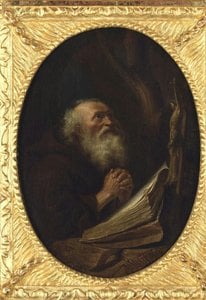
A Vision of Devotion: The Sacred Presence of Saint Andrew
In the luminous realm of the Italian Renaissance, few artists captured the intersection of the divine and the tangible as masterfully as Carlo Crivelli. His portrayal of Saint Andrew serves as a breathtaking window into the fifteenth century, inviting the viewer to step away from the mundane and into a space of profound spiritual contemplation. The painting presents an elderly, venerable figure, his face etched with the wisdom of ages and framed by a flowing white beard that speaks of a life dedicated to the Word. Clad in a rich, verdant green robe, the Saint is captured in a moment of quiet intensity, his gaze anchored by the weight of sacred scripture. As he holds a cross—the very instrument of his martyrdom—and engages with an open book, Crivelli creates a narrative of intellectual and spiritual devotion that transcends the centuries.
The brilliance of this work lies in Crivelli’s signature ability to blend the decorative elegance of the Late Gothic tradition with the burgeoning realism of the Renaissance. His technique is nothing short of hypnotic; he employs a meticulous attention to detail that borders on the miraculous. Every fold of the Saint's garment, every weathered line upon his skin, and the shimmering presence of the halo are rendered with a precision that suggests a divine light illuminating the scene. This trompe l'oeil mastery—a technique designed to trick the eye into perceiving three-dimensional reality—is further enhanced by the strategic placement of books scattered throughout the composition. These elements do not merely occupy space; they create a layered, complex environment that adds a sense of architectural depth and scholarly gravity to the Saint's solitary vigil.
Symbolism and the Art of the Renaissance Soul
Beyond its visual splendor, the painting is a rich tapestry of religious symbolism designed to stir the soul of the faithful. The cross held by Saint Andrew is not merely an attribute of his identity but a powerful emblem of sacrifice and enduring faith. The presence of scattered books serves as a profound metaphor for the pursuit of divine knowledge, suggesting that true wisdom is found through the rigorous study of the sacred texts. Crivulated's use of vivid colors and intricate ornamentation—often incorporating elements reminiscent of gold leaf—elevates the subject matter from a simple portrait to a celestial vision. For the collector or the art enthusiast, this piece offers more than just aesthetic beauty; it provides a meditative focal point that embodies the very essence of Renaissance humanism and religious fervor.
For those looking to bring a sense of historical grandeur and intellectual depth into a curated space, a high-quality reproduction of this masterpiece is an unparalleled choice. Whether gracing the walls of a private library, a sophisticated study, or a grand living area, the Saint Andrew by Carlo Crivelli commands attention. It acts as a bridge between the past and the present, offering an atmosphere of timelessness and grace. To possess such a work is to invite the quiet strength of the Saint into one's home, surrounding oneself with the enduring legacy of Italian mastery and the profound beauty of a life lived in pursuit of the eternal.
Œuvres similaires




Biographie de l'artiste
Premières années et formation
Carlo Crivelli, peintre de la Renaissance italienne, est né à Venise vers 1430-35. Issu d'une famille de peintres, il a reçu sa formation artistique à Venise et Padoue. La formation précoce de Crivelli aurait été dispensée par Jacobello del Fiore, encore actif en 1436. Il a également étudié à l'école de Vivarini à Venise.Carrière et style
Crivelli a passé ses premières années dans le Vénétien, s'imprégnant des influences de Vivarini, Squarcione et Mantegna. En 1458, il quitta le Vénétien et passa la majeure partie de sa carrière dans les Marches d’Ancône, développant un style personnel distinctif qui contraste avec celui de son contemporain vénitien Giovanni Bellini. Le travail de Crivelli se caractérise par une sensibilité décorative gothique tardive et conservatrice, marquée par une qualité linéaire, une attention aux détails et l'utilisation de techniques de "trompe-l'oeil".Œuvres notables et collaborations
- La peinture "Madone et l’Enfant Trônés" (106 x 55 cm, Musée des Beaux-Arts de Budapest, Hongrie) de Carlo Crivelli est un exemple parfait de son style.
- Il a collaboré avec son jeune frère Vittorio Crivelli sur plusieurs projets.
- Pietro Alemanno, un peintre immigré dans les Marches d’Ancône en provenance de l'Allemagne/Autriche, fut son élève et collaborateur.
Musées et collections
- La Pinacothèque de Brera à Milan, en Italie, présente plusieurs œuvres de Crivelli, dont la "Piéta" (128 x 241 cm).
- Le Musée San Giovanni in Bragora à Venise, en Italie, possède une collection d'œuvres d'art de différentes périodes et styles, dont certaines sont attribuées à Crivelli.

Carlo Crivelli
1435 - 1495 , Italie
L'essentiel de l'artiste
- Artistic Movement Or Style: Gothique tardif/Renaissance
- Artists Who Influenced This Artist:
- Vivarini
- Squarcione
- Mantegna
- Date Of Birth: vers 1430-35
- Date Of Death: 1495
- Full Name: Carlo Crivelli
- Nationality: Italienne
- Notable Artworks:
- Madone et Enfant Enthronés
- Pieta
- Place Of Birth (City And Country): Venise, Italie
Articles connexes

Carlo Crivelli: Mysticism & Materiality in Renaissance Venice
Explore the captivating world of Carlo Crivelli, a Renaissance master blending Gothic detail with profound symbolism. Discover his unique style & lasting influence on Venetian art history.

Carlo Carrà: Futurist Visions & Metaphysical Transformations in Early 20th-Century Italian Painting
Explore the artistic journey of Carlo Carrà, a pivotal figure in Italian Futurism & Metaphysical painting. Discover his dynamic compositions, collaborations with de Chirico, and lasting influence on modern art history.

Benny Andrews: A Life Painted in Layers – Narrative, Identity & the American Experience
Explore the powerful life & art of Benny Andrews – a pivotal figure in African American expressionism. Discover his unique collage style, activism, and poignant depictions of identity & social justice. A must-read for collectors.

Mario Sironi: A Poetic of Modern Italian Identity Through Symbolism & Social Commentary
Explore the profound works of Mario Sironi, a key figure in Italian Modernism. Discover his evolution from Futurism to Metaphysical painting and his powerful social commentary. Learn about his legacy at ArtsDot.

Giovanni Fattori: Realism, Identity & the Tuscan Landscape – A Macchiaioli Master
Explore the life & art of Giovanni Fattori, a leading figure of the Macchiaioli movement. Discover his revolutionary realism, captivating Tuscan landscapes, and lasting impact on Italian painting. Learn more at ArtsDot.



