


 Aperçu en situation
 Partager
 Partager
 Détails
 Guide imprimable

 Télécharger
 Articles similaires
 Radiographie
 Voir le diaporama
 Statistiques
Gamba Player
 Oil On Canvas
- WallArt
- Baroque
 1635
1635- Early Modern
 126.0 x 99.0 cm
 Gemäldegalerie Alte Meister
 Afficher la suite
Giclées et impressions d'art
Impressions giclées ou sur toile de qualité musée, avec une production rapide et des finitions au choix. ( Acheter la peinture faite à la main Passer au format image numérique)




P118B €10

P118H €10

P118W €10

P438Z €10

P508JH €12

P508YH €12

P805H €10

P805Z €10

P919BZ €10

P919G €10

P919XJ €10

P959ZH €10

P968JZ €12

W106C €8

W218G €10

W218JH €8

W218Y €10

W307PJ €10

W316G €10

W316PJ €8

W316Y €10

W398PJ €8

W4111J €10

W500HY €15

W500JH €15

W692G €12

W849H €8

W940BG €15

W953PJ €8




Choisissez parmi nos formats prédéfinis qui respectent les proportions originales de l’œuvre.

Vous pouvez saisir vos propres dimensions pour vous adapter à un cadre ou à un espace spécifique. Si la taille sélectionnée ne correspond pas aux proportions de l'image originale, nous recadrerons l'œuvre ou étendrons l'image avec une bordure en miroir ou une couleur unie. Une maquette numérique vous sera envoyée pour approbation avant le début de la production.
Veuillez noter que l'aperçu à l'écran ne reflète pas le recadrage ou l'extension réelle. Seule la maquette montrera avec précision la composition finale.
Bien que des tailles personnalisées soient disponibles, nous vous recommandons de choisir une dimension dans la liste prédéfinie afin de préserver les proportions originales.
Livraison dans le monde entier () en 2 semaines au lieu des 4/5 semaines habituelles. (3 octobre)

Livraison express gratuite dans le monde entier

Toile de lin de haute qualité

Assurance transport complète

Garantie de remboursement des droits de douane

Garantie de fidélité des couleurs

Garantie de retour de 100 jours (uniquement en cas de défaut)

Garantie de remboursement à 100%

Tarifs dégressifs sur quantité
 L'option verre n'est disponible que pour les dimensions inférieures à 110 cm.

Gamba Player
Giclées et impressions d'art
Format de la reproduction
-


Prix total final
€ 53
The Allure of Performance: A Glimpse into Baroque Life
Bernardo Strozzi’s captivating portrait, *Gamba Player*, transports us directly into the vibrant, emotionally charged atmosphere of 17th-century Italian life. At its heart stands a woman, poised with an instrument—a violin—that seems less like an object and more like an extension of her very soul. Clad in what appears to be a rich red gown, she embodies the dramatic flair characteristic of the Baroque period. The way she holds the bow, the focused intensity in her gaze directed toward some unseen point beyond the canvas, suggests a moment suspended between performance and profound contemplation. It is a study not merely of a musician, but of the act of creation itself.
Mastery of Light and Shadow: Technical Brilliance
Strozzi, known for his powerful artistic voice, demonstrates remarkable technical skill in this piece. The handling of light across the woman’s figure, particularly catching the subtle gleam of her pearl necklace, speaks to a sophisticated understanding of chiaroscuro—the dramatic interplay between illumination and deep shadow that defined so much of Baroque painting. While the central figure commands our attention with her poise, the inclusion of two smaller figures—one subtly placed in the upper left and another near the bottom right—adds depth and narrative complexity. These secondary portraits ground the main subject within a bustling social scene, suggesting a larger gathering or celebration that frames her singular moment of artistic focus.
Historical Echoes and Emotional Resonance
Painted around 1635, this work emerges from a time when art served as both high culture and potent emotional narrative. The genre scenes popular during Strozzi’s time often blended portraiture with moments of everyday drama or elevated performance. To gaze upon *Gamba Player* is to feel the weight of that era's theatricality—the passion, the social ritual, and the deep personal investment required for public artistry. The emotional impact is palpable; one senses the dedication poured into every note played, a silent narrative unfolding before the viewer.
Bringing Baroque Grandeur Home
For those who wish to capture this exquisite confluence of portraiture, music, and dramatic flair within their own space, a high-quality reproduction of *Gamba Player* offers an unparalleled connection to Renaissance mastery. The rich jewel tones, especially the striking red of the dress against the deeper shadows, provide instant depth and sophistication to any room. It serves not just as decoration, but as a conversation piece—a window into the passionate artistic spirit of Genoa in the early 17th century.
The Legacy of Strozzi's Vision
Bernardo Strozzi’s career saw him navigate various influential circles, from his training under Cesare Corte to his later work in Venice. This piece encapsulates that journey: a blend of meticulous portraiture with the dynamic energy of Baroque composition. Owning this reproduction allows one to connect intimately with an artist whose powerful vision continues to resonate centuries later, reminding us that art, at its finest, is always about the human experience.
Questions et réponses
Quelle est la recommandation d'impression pour « Gamba Player » : quel format et quelle orientation ?
Format Medium, orientation Portrait : voilà la configuration d'impression suggérée pour «Gamba Player» de Bernardo Strozzi.
D'où viennent les visiteurs de «Gamba Player» de Bernardo Strozzi ?
Une page Statistiques est disponible pour « Gamba Player ». Elle présente l'évolution mensuelle des visites de l'œuvre ainsi que des autres créations de l'artiste, avec une répartition par pays et par langue.
Quelle est la forme de «Gamba Player» de Bernardo Strozzi et quelles sont ses dimensions ?
«Gamba Player» de Bernardo Strozzi est une œuvre au format Portrait de 126 x 99 cm.
Quel âge avait Bernardo Strozzi lors de la création de « Gamba Player » en 1635 ?
Lorsque « Gamba Player » a été créé en 1635, Bernardo Strozzi — né(e) en 1581 — était âgé(e) de 54 ans.
Qui a créé "Gamba Player" ?
« Gamba Player » a été créé par Bernardo Strozzi. Les informations présentes sur cette page décrivent l'œuvre originale de Bernardo Strozzi.
En quelle année «Gamba Player» de Bernardo Strozzi a-t-il été créé ?
L'œuvre «Gamba Player» de Bernardo Strozzi date de 1635.
Comment les couleurs de «Gamba Player» de Bernardo Strozzi se rapportent-elles à l'émotion qui s'en dégage ?
«Gamba Player» de Bernardo Strozzi associe une palette Earthy à un ton Passionate.
Œuvres similaires


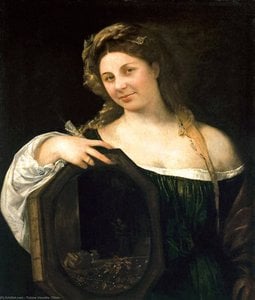


Biographie de l'artiste
Early Life and Training
Bernardo Strozzi, known as *il Cappuccino* et *le Prete Genovese*, was born in Genoa in 1581, a pivotal figure in the transition between Mannerism and the burgeoning Baroque style. His formative years were spent within the workshop of Cesare Corte, a lesser Genoese painter, where he honed his foundational skills until 1596. This early apprenticeship instilled in him a solid technical base, preparing him for further artistic exploration. A significant turning point arrived with his enrollment in the studio of Pietro Sorri, an innovative painter hailing from Siena. Sorri’s approach, characterized by a heightened naturalism and a move away from rigid academic conventions, profoundly shaped Strozzi's artistic sensibilities, steering him towards a more expressive and dynamic style. This period marked a crucial shift – a departure from the purely formal concerns of earlier training and an embrace of a more emotionally resonant visual language.Artistic Career: Genoa and Venice
Strozzi’s career unfolded across two distinct yet interconnected phases, primarily centered in Genoa and then flourishing in Venice. In Genoa, he undertook numerous commissions, notably contributing to the frescoes adorning the choir of the San Domenico Church, a project commissioned by members of the esteemed Doria family. These early works demonstrate his growing mastery of color and composition, reflecting the influence of both Corte and Sorri. A particularly noteworthy preparatory oil sketch for the vault of the same church, *La Visione di San Domenico nel Paradiso*, now housed at the Museo dell’Accademia Ligustica, offers a valuable glimpse into his creative process. His arrival in Venice around 1631 marked a new chapter, and he quickly established himself as a sought-after artist. His Venetian period was particularly productive, characterized by a vibrant palette and dramatic brushwork—a style that would become synonymous with the Venetian Baroque. Key works from this era include a portrait of Doge Francesco Erizzo, painted shortly after his arrival in Venice, and *San Lorenzo che distribuisce le ostie*, showcasing his ability to convey both religious fervor and human emotion.Influence and Legacy
Strozzi’s artistic vision exerted a considerable impact on the development of art in both Genoa and Venice. He is widely considered one of the principal founders of the Venetian Baroque style, bridging the gap between the Mannerist traditions of the preceding century and the dramatic intensity of Caravaggio. His work demonstrated a masterful command of color, light, and shadow—elements that would become hallmarks of Venetian painting. His influence extended beyond his own creations; he mentored several promising artists, including Giovanni Andrea de Ferrari, Giovanni Bernardo Carbone, and Valerio Castello, shaping the artistic landscape of Genoa and Venice alike. The works of these students bear testament to Strozzi’s profound impact on their development.Notable Patrons and Later Life
Throughout his career, Strozzi benefited from the patronage of influential figures, including Doge Francesco Erizzo, a prominent Catholic cardinal and patriarch of Venice, and Federico Baldissera, a significant Venetian nobleman. His artistic connections extended to other notable artists of the time, such as Claudio Monteverdi (a composer for whom he created portraits) and Barbara Strozzi, his own sister-in-law. Beyond his artistic pursuits, Strozzi also engaged in engineering work, serving as an engineer for the port of Genoa between 1615 and 1621. Despite a brief period of imprisonment following accusations related to his religious life, he ultimately reconciled with the Catholic Church, receiving the title of *monsignore*. Bernardo Strozzi died in Venice in 1644, leaving behind a rich legacy as a versatile and prolific artist whose work continues to captivate viewers today.
Bernardo Strozzi
1581 - 1644 , Italie
En bref
- Artistic Movement Or Style: Baroque
- Artists Or Movements Influenced By This Artist: ['Venice Baroque']
- Artists Who Influenced This Artist:
- Corte
- Sorri
- Date Of Birth: 1581
- Date Of Death: 1644
- Full Name: Bernardo Strozzi
- Nationality: Italien
- Notable Artworks:
- Vision St. Dominique
- Portrait Doge Erizzo
- Place Of Birth: Gênes, Italie
Articles similaires

The Visceral Stage: Exploring Dramatic Narratives & Emotional Intensity in Baroque Art
Explore the dramatic world of Baroque art! Discover iconic masters like Caravaggio & Rembrandt, their techniques, and the movement's lasting impact. Expert insights for collectors & enthusiasts at ArtsDot.

Le Drame Baroque : L'Art qui Apporte la Splendeur dans Votre Intérieur
Plongez dans l'univers somptueux du baroque ! Découvrez son histoire, comment l'intégrer à votre intérieur et les œuvres incontournables. : reproductions d'art de qualité supérieure.
Crimson Threads of Narrative: Exploring Symbolism & Representation in Artworks Featuring the Red Dress
Explore the rich symbolism of the red dress in art history! From ancient power displays to iconic portraits like Cézanne’s 'Madame Cezanne', discover the cultural and artistic significance behind this captivating color. Expert analysis & insights.

Les 10 Chefs-d'œuvre Baroques qui ont Révolutionné l'Art |
Plongez au cœur du baroque avec les 10 chefs-d'œuvre de Caravaggio, Rembrandt et Rubens. Découvrez l'histoire fascinante de ces artistes et leurs tableaux célèbres. Reproductions d'art de qualité muséale sur – Explorez la collection !

Simon Vouet: A Baroque Master's Journey from Italian Influence to French Classicism
Explore the life & art of Simon Vouet, a pivotal French Baroque painter who introduced Italian styles to France. Discover his masterpieces and lasting influence on 17th-century art.


