


 Aperçu en situation
 Envoyer
 Partager
 Détails de l'œuvre

 Télécharger
 Articles similaires
 Radiographie
 Diaporama
Self-Portrait
 Acrylic On Canvas
- WallArt
- Dutch Golden Age
 1655
1655 990.0 x 965.0 cm
 Toledo Museum of Art
 Lire la suite
Reproduction à l'huile faite à la main
Huile sur toile peinte à la main, avec cadre et dimensions personnalisés, réalisée sur commande par nos artistes. ( Commander l'impression Télécharger l'image haute résolution)




P118B $10

P118H $10

P118W $10

P438Z $10

P508JH $12

P508YH $12

P805H $10

P805Z $10

P919BZ $10

P919G $10

P919XJ $10

P959ZH $10

P968JZ $12

W106C $8

W218G $10

W218JH $8

W218Y $10

W307PJ $10

W316G $10

W316PJ $8

W316Y $10

W398PJ $8

W4111J $10

W500HY $15

W500JH $15

W692G $12

W849H $8

W940BG $15

W953PJ $8




Choisissez parmi nos formats prédéfinis qui respectent les proportions originales de l’œuvre.

Vous pouvez saisir vos propres dimensions pour l'adapter à un cadre ou à un espace spécifique. Si la taille sélectionnée ne correspond pas aux proportions de l'image d'origine, nous recadrerons l'œuvre ou prolongerons la peinture avec des éléments peints à la main supplémentaires. Une maquette numérique vous sera envoyée pour approbation avant le début de la production.
Veuillez noter que l'aperçu à l'écran ne reflète pas le recadrage ou l'extension réels. Seule la maquette montrera fidèlement la composition finale.
Bien que des tailles personnalisées soient disponibles, nous vous recommandons de sélectionner une dimension dans la liste prédéfinie afin de préserver les proportions d'origine.
Après la commande, l’équipe ArtsDot.com contactera le client par e-mail pour recueillir ses instructions et lui fournira une maquette d’aperçu
Livraison dans le monde entier () en 3 à 4 semaines au lieu des 5 semaines habituelles. (17 août). Aucun compromis sur la qualité.

Livraison express gratuite dans le monde entier

Toile de lin de qualité supérieure

Assurance transport complète

Garantie de remboursement des droits de douane

Garantie de fidélité des couleurs

Politique de retour de 60 jours (uniquement en cas de défaut)

Garantie de remboursement à 100%

Offre de tarifs dégressifs
 L'option verre n'est disponible que pour les dimensions inférieures à 110 cm.

Self-Portrait
Technique de reproduction
Format de la reproduction
-


Prix total
$ 263
Description de l'œuvre
A Window into the Soul: Bartholomeus van der Helst’s “Self-Portrait”
Bartholomeus van der Helst's "Self-Portrait," painted in 1655, isn’t merely a likeness; it’s a meticulously crafted window into the psyche of a man navigating the vibrant and complex world of 17th-century Amsterdam. This arresting image, rendered in oil on canvas, transcends the traditional portrait genre, offering a glimpse not just of the artist himself, but also of his ambition, confidence, and perhaps even a touch of melancholy. Van der Helst, a master of the Dutch Golden Age, was renowned for his dramatic group portraits – scenes teeming with civic pride and social standing – yet this intimate self-representation reveals a different facet of his artistic personality.
The painting immediately draws the eye to the artist’s commanding presence. Dressed in a richly detailed black suit, adorned with crisp white ruffles at the cuffs and collar, he embodies the wealth and status afforded by his profession. The meticulous rendering of the fabric—the subtle folds, the sheen of the velvet, the precise stitching—demonstrates Van der Helst's exceptional technical skill. He sits on a simple wooden bench, positioned beside a loyal dog, a common motif in Dutch portraits signifying loyalty and companionship. However, it’s not just the outward appearance that captivates; the artist’s gaze is direct, almost challenging, holding the viewer in a silent conversation.
The Art of the Group Portrait – A Reflection of Status
Van der Helst's rise to prominence was inextricably linked to the burgeoning merchant class of Amsterdam. He quickly established himself as the premier portraitist for this elite group, capturing their power and influence through grand, theatrical compositions. The “Self-Portrait” can be seen as a microcosm of these larger works – a demonstration of his ability to convey status, wealth, and civic responsibility. The inclusion of the dog is particularly significant within this context; it’s a symbol of loyalty and trustworthiness, qualities highly valued in Amsterdam's business world.
Interestingly, Van der Helst’s style evolved significantly over time. His early works, like the “Regents of the Walloon Orphanage,” exhibited a more restrained, Pickenoy-influenced approach. However, by 1655, his technique had matured into a bolder, more dynamic style—a hallmark of his most celebrated commissions. The use of dramatic lighting, sharp contrasts between light and shadow (chiaroscuro), and a carefully orchestrated composition all contribute to the painting’s powerful impact.
Symbolism and Emotional Depth
Beyond the surface details, “Self-Portrait” is rich in symbolic meaning. The dog, as mentioned earlier, represents loyalty and trustworthiness – virtues essential for success in Amsterdam's commercial society. The clock on the wall subtly reminds us of the passage of time, a common theme in Dutch art reflecting the importance of diligence and productivity. But perhaps the most compelling element is the artist’s expression. There’s a hint of seriousness in his eyes, a subtle suggestion of introspection beneath the carefully constructed facade of confidence.
Some scholars have interpreted the painting as a reflection of Van der Helst's own ambitions and anxieties. He was a man striving for recognition and success within a competitive artistic environment. The self-portrait can be viewed as an attempt to assert his identity, to define himself against the backdrop of Amsterdam’s vibrant cultural landscape. It is a testament to the artist’s skill and a poignant reminder that even in the most carefully crafted portraits, there lies a profound human story waiting to be discovered.
A Legacy of Dutch Portraiture
Bartholomeus van der Helst's “Self-Portrait” stands as a pivotal work within the history of Dutch portraiture. It exemplifies the artistic achievements of the Dutch Golden Age, showcasing technical mastery, dramatic composition, and a keen understanding of social dynamics. His influence extended far beyond his own lifetime, shaping the style of subsequent generations of artists. Reproductions of this iconic image continue to captivate audiences today, offering a timeless glimpse into the soul of a remarkable artist and a fascinating era in European history.
Œuvres similaires


Biographie de l'artiste
Première Vie et Carrière
- Bartholomeus van der Helst est né à Amsterdam, aux Pays-Bas, en 1613.
- Il a commencé sa carrière de peintre à un jeune âge.
- On pense qu'il a été influencé par les œuvres d'autres peintres néerlandais importants, dont Ferdinand Bol.
- Ses premiers travaux ont montré un fort accent sur le détail et le réalisme, ce qui est devenu une caractéristique de son style.
Peinture de Portraits et Style
- Les portraits de Van der Helst se caractérisent par leur élégance et leur raffinement.
- Il était connu pour sa capacité à capturer l'essence de ses sujets, les représentant souvent dans des vêtements et des décors élaborés.
- Ses portraits étaient très recherchés par l'élite fortunée d'Amsterdam.
- Il représentait fréquemment des portraits de groupe, présentant plusieurs personnages au sein d'une seule composition.
Œuvres Majeures et Réalisations
- Portraits de l'Élite Amstellodamoise : Ceux-ci sont conservés au Rijksmuseum à Amsterdam.
- Le Banquet à la Guilde des Arbalétriers en Célébration du Traité de Münster (1648) : Il s'agit de l'une de ses œuvres les plus célébrées, présentant un grand portrait de groupe avec un détail et un dynamisme remarquables. Elle illustre sa capacité à capturer un sentiment d'occasion et de hiérarchie sociale.
- Il est devenu l'un des peintres de portraits leaders d'Amsterdam au milieu des années 1640, dépassant Rembrandt en popularité pendant un certain temps.
Influences et Héritage
- L’influence de Van der Helst peut être observée dans le travail d'autres peintres néerlandais, dont Ludolf Bakhuizen, qui l'a assisté à plusieurs reprises.
- Son héritage est évident dans les nombreux portraits qu'il a peints, conservés aujourd'hui dans des musées comme le Rijksmuseum et ArtsDot.com.
- Il a contribué de manière significative au développement du portrait pendant l'âge d'or néerlandais, établissant un style caractérisé par l'élégance, le détail et un accent sur la capture du caractère individuel dans les contextes de groupe.
Vie Tardive et Décès
- Van der Helst a épousé Anna du Pire en 1636. Ils ont eu six enfants, dont deux ont survécu à l'âge adulte.
- Il a loué une maison sur le Walenpleintje à Amsterdam vers 1647 en raison de la nécessité d'un atelier plus grand.
- Son fils, Lodewijk (1642-après 1683), a suivi les traces de son père en tant que peintre.
- Bartholomeus van der Helst est décédé à Amsterdam le 16 décembre 1670.

Bartholomeus van der Helst
1613 - 1670 , Pays-Bas
L'essentiel de l'artiste
- Artistes Influents: ['Ferdinand Bol']
- Date De Décès: 1670
- Date De Naissance: 1613
- Influence Sur Les Artistes: ['Ludolf Bakhuizen']
- Lieu De Naissance: Haarlem, Pays-Bas
- Mouvement Artistique: Âge d'or néerlandais
- Nationalité: Néerlandais
- Nom Complet: Bartholomeus van der Helst
- Œuvres Notables:
- Portraits de l’élite
- Banquet à la guilde
Articles connexes
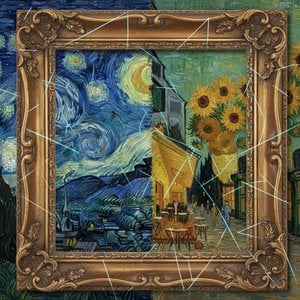
Van Gogh : 25 Chefs-d'Œuvres Iconiques - L'Âme et l'Émotion d'un Génie
Plongez au cœur de l'univers créatif de Van Gogh ! Découvrez 25 tableaux emblématiques, explorez ses couleurs vibrantes et son style unique. Reproductions d’art de qualité musée sur ArtsDot.com. Explorez la collection !

Rembrandt van Rijn : Les 25 Œuvres Maîtresses à Redécouvrir | ArtsDot
Plongez dans l'univers de Rembrandt van Rijn avec les 25 œuvres incontournables du maître baroque. Découvrez l'histoire, la technique et l'émotion derrière ses portraits célèbres et 'La Ronde de Nuit'. Reproductions tableaux haute qualité sur ArtsDot.com

L'Âge d'Or Néerlandais : 10 Chefs-d'œuvre Incontournables pour Décorer avec Art et Histoire
Plongez au cœur de l'Âge d'Or néerlandais ! Découvrez 10 chefs-d'œuvre intemporels de Rembrandt, Vermeer et autres maîtres hollandais. Explorez leur histoire, technique & trouvez l'inspiration déco sur

L'Âge d'Or Néerlandais : Splendeur Baroque et Révolution Artistique
Explorez l'Âge d'Or néerlandais : découvrez les maîtres baroques (Rembrandt, Fabritius) et leur révolution artistique. Analyse approfondie, contexte historique et héritage durable. Un voyage au cœur de la peinture du XVIIe siècle.

Willem van de Velde the Elder: Master of Maritime Painting & Chronicler of the Dutch Golden Age
Discover the captivating maritime paintings of Willem van de Velde the Elder, a master chronicler of the Dutch Golden Age. Explore his unparalleled realism and lasting influence on naval art history.


