
 Oil On Copper
- Italianate Landscape
 1629
1629 21.0 x 21.0 cm
 Fitzwilliam College

The picture follows your choices: , .
Description de la pièce
Bartholomeus Breenbergh (before 13 November 1598 – after 3 October 1657) was a Dutch Golden Age painter of Italian and Italianate landscapes, in Rome (1619-1630) and Amsterdam (1630-1657). He bridged styles between Bril and Lastman, inspiring artists like Claude Lorrain. His painting 'Classical Landscape with Rocks' showcases a tranquil mountain scene with figures gathered around a fire.
 Lire la suite
Biographie de l'artiste
Bartholomeus Breenbergh (1598-1657) : peintre néerlandais du Siècle d'Or, maître des paysages italiens & scènes bibliques dans des ruines classiques. Inspiré par Bril et Poelenburgh.
Reproduction à l'huile faite à la main
Huile sur toile peinte à la main, avec cadre et dimensions personnalisés, réalisée sur commande par nos artistes. ( Passer au format impression Passer au format numérique)
More about this painting
 Aperçu en situation
 Envoyer
 Partager
 Détails de l'œuvre
 Guide
Guide

 Télécharger l'image
 Articles similaires
 Radiographie
 Diaporama
 Q&A
Q&A Statistiques
Order your painting in four simple steps
Take your time. You can change any answer; the price in your order card follows each choice.
1 Step one of four
Which size would you like?
These sizes keep the proportions of the original painting. The drawing shows your choice on a wall, above a two-metre sofa.
Or give your own measurements
Choisissez parmi nos formats prédéfinis qui respectent les proportions originales de l’œuvre.

Saisissez la largeur et la hauteur souhaitées, pour s'adapter à votre cadre ou à votre mur. Cette œuvre est peinte à la main ; ainsi, pour un format de forme différente, l'artiste peut peindre un peu plus autour du tableau ou réduire légèrement les bords — c'est vous qui choisissez. Nous vous envoyons une maquette numérique pour approbation avant que la peinture ne commence. L'image présentée sur cette page ne reflète pas le résultat réel — seule la maquette le fait.
2 Step two of four
How should it be prepared: rolled, stretched or framed?
The prices below are for the size you chose in step one.
Choose the edges of the stretched canvas
Choose your frame

White €1

Blurside €1

Extended €1

P118B €10

P118H €10

P118W €10

P438Z €10

P508JH €12

P508YH €12

P805H €10

P805Z €10

P919BZ €10

P919G €10

P919XJ €10

P959ZH €10

P968JZ €12

W106C €8

W218G €10

W218JH €8

W218Y €10

W307PJ €10

W316G €10

W316PJ €8

W316Y €10

W398PJ €8

W4111J €10

W500HY €15

W500JH €15

W692G €12

W849H €8

W940BG €15

W953PJ €8

H24-GOLD €30

H24-SILVER €30

H36-GOLD €45

H36-SILVER €45
Sous cadre
Moulding: . Overall size with the frame: .
3 Step three of four
Would you like anything changed in the painting?
Most people answer no. Because each painting is made by hand, our artist can also adapt it for you.
After order, ArtsDot.com team will email client for instructions and provide a mockup preview
4 Step four of four
A few finishing options
All of them are optional. The answers already selected cost nothing extra.
Who paints it?
Livraison dans le monde entier () en 3 à 4 semaines au lieu des 5 semaines habituelles. (29 octobre). Aucun compromis sur la qualité.
A nameplate, as in a museum?
Détails de la plaque en bronze gravée
This elegant plaque features the artist's name and the title of the artwork, finely engraved for a timeless presentation.
It is made from bronze with a refined, elegant finish. The text is precisely laser-engraved for a sharp and permanent result. Measuring 9x2 cm, the plaque is compact yet easy to read. It's built to be durable and scratch-resistant, offering a professional, museum-quality look. Mounting is simple thanks to the included adhesive backing.
Détails de la plaque en acrylique transparent
The plaque includes essential engraved details such as the artist's name, the title of the artwork, the date it was created, the type of media used-like oil on canvas or watercolor-a brief description of the piece, and a QR code that links to the complete artwork information.
It is crafted from clear acrylic, offering a sleek, modern appearance. The text is UV-engraved in black to ensure strong visual contrast. With a size of 10x15 cm, it ensures optimal readability. It comes equipped with two metal hooks for secure wall mounting. The plaque is designed to be weather-resistant, making it suitable for various environments, and it includes interactive features that work seamlessly with smartphone scanning.
Détails de la plaque en acrylique noir
This elegant plaque includes engraved information such as the artist's name, the title of the artwork, the date it was created, the type of media used (like oil on canvas or watercolor), a short description of the artwork, and a QR code for quick access to more information.
The plaque itself is made from refined black acrylic with a premium finish. The text is laser-engraved in white for high contrast and readability. Its size is 10x15 cm, designed to be easy to read. It comes with two metal hooks for professional mounting. The design is sleek and fits any interior style. It is also weather-resistant and durable, with built-in digital integration for mobile compatibility.
A protective varnish?
When do you need it?
✓ Check and order
Your painting, as you ordered it

Classical Landscape with Rocks
Technique de reproduction
Format de la reproduction
-

Artiste de prestige
Plus de détails, de finesse et un temps de production accru
-

Cadre de reproduction
-
-
Pour les œuvres ou reproductions dont un côté mesure plus de 105 cm (environ 41 pouces), le cadre sera expédié sous forme de kit démonté. Cette méthode garantit une livraison sécurisée et prévient tout dommage pendant le transport.
Assemblage professionnel requis - ce produit n'est pas destiné au bricolage (DIY).
Le kit doit être assemblé et la toile tendue par un encadreur professionnel expérimenté, en utilisant de la colle à bois (non fournie), une pince à tendre la toile et des serre-joints pour maintenir les traverses d'équerre pendant le séchage de la colle. Un assemblage incorrect ou une tension inégale de la toile peut endommager l'œuvre de manière irréversible et n'est pas couvert par notre garantie.
 Pour les œuvres ou reproductions dont un côté mesure plus de 105 cm (environ 41 pouces), le cadre sera expédié sous forme de kit démonté. Cette méthode garantit une livraison sécurisée et prévient tout dommage pendant le transport.
Toutes les baguettes en bois massif sont incluses, découpées avec précision à la taille requise.
À assembler avec les vis fournies, ainsi qu'avec de la colle à bois pour les assemblages d'angles (non fournie), à prévoir par votre encadreur.
L'utilisation d'outils professionnels est requise et non incluse : une pince à tendre la toile (tendeur) et des serre-joints pour maintenir les baguettes bien d'équerre pendant le séchage de la colle.
Important :
L'assemblage des angles nécessite de la colle à bois, les barres doivent être maintenues avec des serre-joints jusqu'au séchage complet de la colle, et le tendage de la toile sur le châssis assemblé nécessite une pince à tendre la toile. Aucun de ces éléments n'est inclus dans le kit. Veuillez consulter un encadreur professionnel expérimenté avant de commander ce format.

Cartel
-
-

Vernis de protection
Vernis brillant (intensifie les couleurs, protège de la lumière et de l'humidité)
-

Personnaliser mon œuvre
Exemples de personnalisation : remplacer le visage par une photo du client ; ajouter un animal de compagnie (par exemple, remplacer un chat par un chien) ; inclure un message caché en arrière-plan ; modifier le paysage ou les éléments d'arrière-plan.
-

Livraison urgente
Livraison dans le monde entier () en 3 à 4 semaines au lieu des 5 semaines habituelles. (29 octobre). Aucune concession sur la qualité.
-
Livraison express
Livraison dans le monde entier () sous 5 semaines. (5 novembre).
Inclus
Prix total
€ 232
L'option verre n'est disponible que pour les dimensions inférieures à 110 cm.
Included with every order
- Livraison express gratuite dans le monde entier
- Toile de lin de qualité supérieure
- Assurance transport complète
- Garantie de remboursement des droits de douane
- Garantie de fidélité des couleurs
- Politique de retour de 100 jours (uniquement en cas de défaut)
- Garantie de remboursement à 100%
- Offre de tarifs dégressifs


Classical Landscape with Rocks by Bartholomeus Breenbergh
Bartholomeus Breenbergh (1598–1657), a Dutch Golden Age painter, stands as an emblem of artistic innovation during his era. Born before November 13, 1598, likely in Deventer, Netherlands, his early life remains shrouded in relative obscurity—a fact that fueled the fervent curiosity of scholars like Arnold Houbraken who tirelessly sought to illuminate Breenbergh’s biography.
His artistic journey commenced with formative training under Pieter Lastman and Jacob Symonsz Pynas in Amsterdam, absorbing influences from the burgeoning landscape movement. Notably, Lastman's dramatic narrative style subtly permeated Breenbergh’s oeuvre, shaping his approach to portraying scenes of human activity interwoven with the grandeur of nature.
Roman Sojourn and the Italianate Style
A pivotal moment arrived in 1619 when Breenbergh embarked on a transformative voyage to Rome—a city renowned for its artistic patronage and stylistic experimentation. This immersion within the Roman landscape profoundly impacted his artistic sensibilities, propelling him toward an Italianate style characterized by idealized forms and luminous color palettes. He diligently studied the works of Claude Lorrain and Andrea Pozzo, absorbing their mastery of atmospheric perspective and compositional grandeur.
Technique and Composition
Breenbergh’s technique was meticulous—primarily employing oil paint on copper—a medium favored for its durability and ability to capture subtle tonal variations. The painting's composition is deliberately balanced, featuring a prominent mountain dominating the horizon line against which figures are positioned in the foreground. Careful attention was paid to detail, particularly in rendering rocks and foliage, reflecting the prevailing artistic conventions of his time.
Symbolism and Emotional Impact
“Classical Landscape with Rocks” transcends mere visual representation; it embodies a deeper symbolic resonance. The depiction of people gathered around a fire speaks to themes of human resilience and communal spirit—a poignant reminder of humanity’s connection to the natural world. Furthermore, the cloudy sky contributes to an atmosphere of contemplative solemnity, inviting viewers to contemplate the sublime beauty and enduring power of nature.
Fitzwilliam Museum Reproduction
Currently housed in the Fitzwilliam Museum in Cambridge, England (Accession number 431), this artwork exemplifies the artistic achievements of the Dutch Golden Age. Its reproduction offers a captivating glimpse into Breenbergh’s vision—a testament to his skill as a painter and his contribution to the legacy of European art history.
Questions et réponses
Quel artiste et quel style se cachent derrière « Classical Landscape with Rocks » ?
Bartholomeus Breenbergh a créé « Classical Landscape with Rocks » au sein du mouvement Italianate Landscape.
Quelle taille et quel format sont recommandés pour un tirage de «Classical Landscape with Rocks» de Bartholomeus Breenbergh ?
Pour une impression de «Classical Landscape with Rocks» de Bartholomeus Breenbergh, un format Medium avec une orientation Square est recommandé.
L'œuvre «Classical Landscape with Rocks» de Bartholomeus Breenbergh est-elle plutôt claire ou sombre ?
En termes de luminosité perçue, «Classical Landscape with Rocks» de Bartholomeus Breenbergh est brilliant.
Œuvres similaires


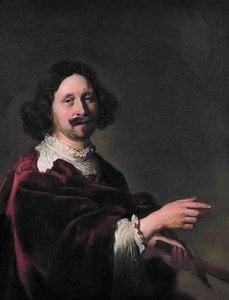
Bartholomeus Breenbergh
1598 - 1657, Pays-Bas
Biographie de l'artiste
Jeunesse et Formation
- Nom: Bartholomeus Breenbergh
- Né: Avant le 13 novembre 1598, à Deventer, aux Pays-Bas
- Décédé: Après le 3 octobre 1657, à Amsterdam, aux Pays-Bas
- Les détails de sa vie précoce sont rares. La famille a déménagé à Hoorn après la mort de son père en 1607.
- Il était contemporain de Jacques Waben et a probablement reçu une formation initiale là-bas.
- Ses professeurs enregistrés incluent Pieter Lastman et Jacob Symonsz Pynas.
Carrière : Rome et le Style Italianisant
- Enregistré pour la première fois comme peintre à Amsterdam en 1619.
- En 1619, il a voyagé à Rome, où il est resté jusqu'à environ 1630.
- Il a travaillé avec le peintre flamand Frans van de Kasteele et a été fortement influencé par Paul Bril.
- Il a développé un style distinctif de paysage italianisant, caractérisé par des représentations idéalisées de la Campagne romaine (la campagne).
- Influencé par les paysages de Cornelis van Poelenburgh ; leurs styles sont devenus difficiles à distinguer à certains moments.
- Il est devenu l'un des fondateurs des Bentvueghels ("Guilde des peintres") à Rome, obtenant le surnom de "het fret" (le furet).
Retour à Amsterdam et Développement Artistique
- Est retourné à Amsterdam vers 1630.
- S'est marié en 1633 et a reçu un salaire annuel du roi Charles Ier de Grande-Bretagne.
- Son travail a commencé à incorporer des figures mythologiques et bibliques dans les paysages italiens, influencé par des artistes comme Pieter Lastman.
- Il a développé un style plus monumental avec des types de personnages expressifs.
- Seul élève enregistré était Jan de Bisschop, qui a étudié avec lui dans les années 1640.
Influences et Héritage
- Influences: Pieter Lastman, Nicolaes Moeyaert, Paul Bril, Cornelis van Poelenburgh, Claude Lorrain.
- Influence sur d'autres: Jan Linsen, Scipione Compagno, Laurens Barata, Charles Cornelisz. de Hooch, Pieter Anthonisz. van Groenewegen, Francois van Knibbergen et Catharina van Knibbergen.
- Breenbergh était une figure clé dans le développement du style de paysage italianisant aux Pays-Bas.
- Son travail a contribué à populariser les représentations de ruines classiques et de paysages idéalisés parmi les artistes européens du nord.
- Il a comblé le fossé entre les maîtres néerlandais précédents et les peintres de paysage ultérieurs, plus raffinés.
Signification Historique
- La contribution de Breenbergh réside dans son rôle pionnier dans l'établissement du style italianisant au sein de l'art néerlandais.
- Sa capacité à synthétiser les influences de divers artistes - Lastman, Moeyaert, Bril, Poelenburgh - a créé une voix artistique unique et reconnaissable.
- Il a joué un rôle important dans la formation des préférences esthétiques de l'âge d'or néerlandais, inspirant les générations futures de peintres paysagistes.


Articles connexes

L'Âge d'Or Néerlandais : Splendeur Baroque et Révolution Artistique
Explorez l'Âge d'Or néerlandais : découvrez les maîtres baroques (Rembrandt, Fabritius) et leur révolution artistique. Analyse approfondie, contexte historique et héritage durable. Un voyage au cœur de la peinture du XVIIe siècle.

Golden Light & Dutch Skies: Bringing the Magic of Dutch Golden Age Landscapes into Your Home
Transform your home with the breathtaking light of Dutch Golden Age landscapes. Discover how hand-painted oil reproductions of masterworks like Ruisdael and Vermeer bring timeless elegance, atmosphere, and soulful texture to modern interiors. Elevate your space with museum-quality art.

L'Âge d'Or Néerlandais : 10 Chefs-d'œuvre Incontournables pour Décorer avec Art et Histoire
Plongez au cœur de l'Âge d'Or néerlandais ! Découvrez 10 chefs-d'œuvre intemporels de Rembrandt, Vermeer et autres maîtres hollandais. Explorez leur histoire, technique & trouvez l'inspiration déco sur