


 Partager
 Partager
 Détails
 Guide imprimable

 Télécharger
 Articles similaires
 Voir le diaporama
 Statistiques
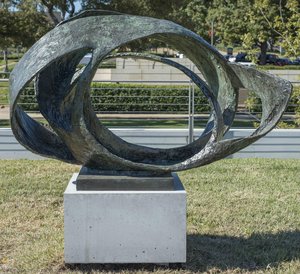
Rhythmic Form


 Afficher la suite
L’œuvre d'art présentée sur cette page est protégée par le droit d'auteur, ce qui signifie que nous ne pouvons légalement créer ou vendre de reproduction identique. Cette protection est appliquée en vertu d'accords internationaux tels que la Convention de Berne et par les lois nationales, notamment celles énoncées par le Loi américaine sur le droit d'auteur - Titre 17.
Cette méthode est pleinement conforme aux réglementations sur le droit d'auteur car elle ne repose pas sur la copie ou la duplication de l'œuvre protégée. Il s'agit plutôt d'une réinterprétation créative — une nouvelle peinture qui s'inspire de l'original sans pour autant lui être identique.
Giclées et impressions d'art
Impressions giclées ou sur toile de qualité musée, avec une production rapide et des finitions au choix. ( Acheter la peinture faite à la main Passer au format image numérique)




































Choisissez parmi nos formats prédéfinis qui respectent les proportions originales de l’œuvre.

Saisissez la largeur et la hauteur souhaitées pour qu'elles s'adaptent à votre cadre ou à votre mur. Une impression ne peut être que découpée, elle ne peut jamais être agrandie au-delà de l'image originale ; ainsi, un format de forme différente entraînera la perte d'une partie de l'image. Nous vous envoyons une maquette numérique pour approbation avant toute impression. L'image présentée sur cette page ne montre pas le recadrage réel — seule la maquette le permet.
Livraison dans le monde entier () en 2 semaines au lieu des 4/5 semaines habituelles. (24 octobre)

Livraison express gratuite dans le monde entier

Toile de lin de haute qualité

Assurance transport complète

Garantie de remboursement des droits de douane

Garantie de fidélité des couleurs

Garantie de retour de 100 jours (uniquement en cas de défaut)

Garantie de remboursement à 100%

Tarifs dégressifs sur quantité
 L'option verre n'est disponible que pour les dimensions inférieures à 110 cm.

Rhythmic Form
Giclées et impressions d'art
Format de la reproduction
-


Prix total final
€ 54
Rhythmic Form: A Dialogue Between Space and Spirit
Barbara Hepworth’s “Rhythmic Form,” created in 1949, stands as a testament to the profound influence of Surrealist ideas on British sculpture during World War II. More than just an aesthetically pleasing object, it embodies Hepworth's unwavering belief that sculpture could translate thought into tangible form—a conviction deeply rooted in her engagement with artists like Arp and Brancusi who championed direct carving and explored the relationship between art and nature. The piece itself is a striking example of Hepworth’s signature style: monumental forms sculpted from wood, meticulously shaped to evoke movement and resonance. Its central hole isn't merely an incision; it’s a deliberate gesture that seeks to unify opposing forces—a visual metaphor for Hepworth’s exploration of duality and balance within the creative process.- Material & Technique: Crafted from Rosewood, “Rhythmic Form” utilizes a technique honed during Hepworth's formative years in Paris – a method characterized by careful consideration of material properties and an intuitive understanding of how form interacts with space. The sculptor’s hand meticulously removes wood shavings to reveal the underlying structure, resulting in a surface that is both smooth and subtly textured.
- Historical Context: Hepworth's work emerged from a period marked by significant artistic experimentation and intellectual ferment. The Unit One group—which included Nicholson, Gabo, and Nash—challenged conventional sculptural approaches, prioritizing abstraction and responding to the anxieties of wartime Britain with an embrace of geometric forms and organic shapes.
- Symbolism & Inspiration: Hepworth drew inspiration from Neolithic Menhirs – monolithic stones erected as memorials to ancient rituals – recognizing their ability to convey timelessness and spiritual significance. She likened her sculptures to these stones, emphasizing the desire for them to “furnish a means of egress for the soul,” reflecting her belief in sculpture’s capacity to transcend mere visual representation.
- Hepworth's Philosophy: Hepworth famously described sculpture as "the plastic projection of thought," highlighting its role in capturing intangible ideas and emotions. She insisted that the work should “put no pressure on anything,” signifying a rejection of didacticism and an affirmation of art’s autonomy—a stance that aligns with her broader philosophical commitment to embracing spontaneity and responding authentically to the material at hand.
- Legacy & Influence: Hepworth's pioneering approach to sculpture continues to inspire artists today, particularly those interested in exploring spatial relationships and investigating the interplay between form and gesture. Her enduring impact is evident in the work of subsequent sculptors who adopted similar techniques and pursued similar conceptual concerns—a legacy cemented by her inclusion in Tate’s collection and celebrated as a cornerstone of British Modernism.
Questions et réponses
Quelle intensité lumineuse les couleurs de "Rhythmic Form" semblent-elles refléter ?
Les couleurs de « Rhythmic Form » présentent une luminance Luminous.
En quelle année «Rhythmic Form» de Barbara Hepworth a-t-il été créé ?
L'œuvre «Rhythmic Form» de Barbara Hepworth date de 1949.
Quel format choisir pour l'impression de "Rhythmic Form" afin qu'il s'adapte à ma pièce ?
Dans une Living Room, nous suggérons un format d'impression de Large pour « Rhythmic Form ».
Œuvres similaires



Biographie de l'artiste
Premières années et formation
Dame Barbara Hepworth, une artiste et sculptrice anglaise de renom, est née le 10 janvier 1903 à Wakefield, dans le Yorkshire. Elle a fréquenté la Leeds School of Art à partir de 1920 puis a remporté une bourse du comté pour étudier à la Royal College of Art (RCA) à Londres de 1921 jusqu'à ce qu'elle obtienne le diplôme en 1924.Carrière artistique
- L’œuvre de Dame Barbara Hepworth exemplifie le modernisme, en particulier la sculpture moderne. Elle était l'une des rares artistes féminines à atteindre une reconnaissance internationale.
- En 1933, elle a cofondé le mouvement artistique Unit One avec Ben Nicholson, Paul Nash et d'autres, cherchant à unir le surréalisme et l'abstraction dans l'art britannique.
- Le travail précoce de Hepworth était caractérisé par l'abstraction et son implication avec le mouvement artistique parisien, Abstraction-Création.
Œuvres notables et expositions
- Oval Form (Trezion), une sculpture en bronze, fait partie de la collection du Kimball Art Museum à Fort Worth, aux États-Unis. (voir sur ArtsDot)
- Two Forms, une sculpture, est exposée au Hepworth Wakefield à Wakefield, dans le Yorkshire. (voir sur ArtsDot)
- Totem, une sculpture en marbre, fait également partie de la collection du Hepworth Wakefield. (voir sur ArtsDot)
Évolution artistique et influences
L'œuvre de Hepworth a évolué au fil des ans, passant d'abstractions influencées par le cubisme et le surréalisme à des formes plus organiques et abstraites. Son séjour en France dans les années 1930, où elle a rencontré des artistes comme Brancusi et Arp, a été déterminant pour son développement artistique. Elle s’est intéressée aux formes naturelles, notamment celles trouvées dans la mer et le paysage de Cornouailles, où elle a vécu pendant une grande partie de sa carrière.
Héritage et collections muséales
L'œuvre de Barbara Hepworth est largement reconnue, ses sculptures et peintures faisant partie de diverses collections de musées dans le monde. Le Hepworth Wakefield, du nom de l'artiste, abrite de nombreux chefs-d'œuvre d'artistes renommés, dont les propres œuvres de Hepworth. (découvrez davantage sur le Hepworth Wakefield sur ArtsDot)Conclusion
Dame Barbara Hepworth’s pioneering work in modern British sculpture has left an indelible mark on the art world. Her legacy continues to inspire artists and art enthusiasts alike, with her works remaining a testament to her innovative spirit and artistic genius. more about barbara hepworth on wikipedia
Barbara Hepworth
1903 - 1975 , Royaume-Uni
En bref
- Artistes Influents:
- Brancusi
- Henry Moore
- Ben Nicholson
- Date De Naissance: 10 janvier 1903
- Lieu De Naissance: Wakefield, Royaume-Uni
- Mouvement Artistique: Modernisme, Sculpture abstraite
- Nationalité: Britannique
- Nom Complet: Barbara Hepworth
- Oeuvres Notables:
- Oval Form (Trezion)
- Two Forms
- Totem
Articles connexes

Kandinsky : Les 25 Œuvres Maîtresses d'un Pionnier de l'Art Abstrait | ArtsDot
Plongez dans l'univers vibrant de Kandinsky ! Découvrez les 25 œuvres majeures du pionnier de l'art abstrait. Explorez son expressionnisme, ses couleurs audacieuses et l'histoire fascinante derrière chaque tableau. Reproductions d'exception sur ArtsDot.com.

The Enduring Form: Exploring Themes & Techniques in Sculpture Across Historical Periods
Explore the rich history of sculpture from ancient masterpieces to contemporary innovations. Discover key techniques, influential artists & investment potential for discerning art collectors.

Abstraction Géométrique : Les 10 Chefs-d'œuvre qui ont Marqué l'Histoire de l'Art
Plongez au cœur de l'abstraction géométrique avec ArtsDot.com ! Découvrez les 10 œuvres majeures de Mondrian, Malevitch et Kandinsky qui ont révolutionné l'art moderne. Inspirez votre décoration intérieure avec des reproductions de tableaux exceptionnelles. Explorez la collection en ligne !

Les 10 Chefs-d'œuvre Bronzes Qui Ont Révolutionné la Sculpture | ArtsDot
Plongez dans l'univers fascinant des 10 sculptures en bronze les plus emblématiques de l'histoire de l'art. Rodin, Degas et autres maîtres révélés ! Découvrez leur histoire, leurs techniques et trouvez l'œuvre parfaite pour sublimer votre intérieur sur ArtsDot.com.

Barbara Hepworth: A Sculptural Dialogue with Form, Space & the Human Condition
Explore the profound world of Barbara Hepworth's sculpture. Discover her artistic evolution, iconic forms, and lasting influence on modern art. A guide for collectors & enthusiasts.


