

 Aperçu en situation
 Partager
 Partager
 Détails
 Guide
Guide

 Télécharger
 Articles similaires
 Radiographie
 Voir le diaporama
 Statistiques
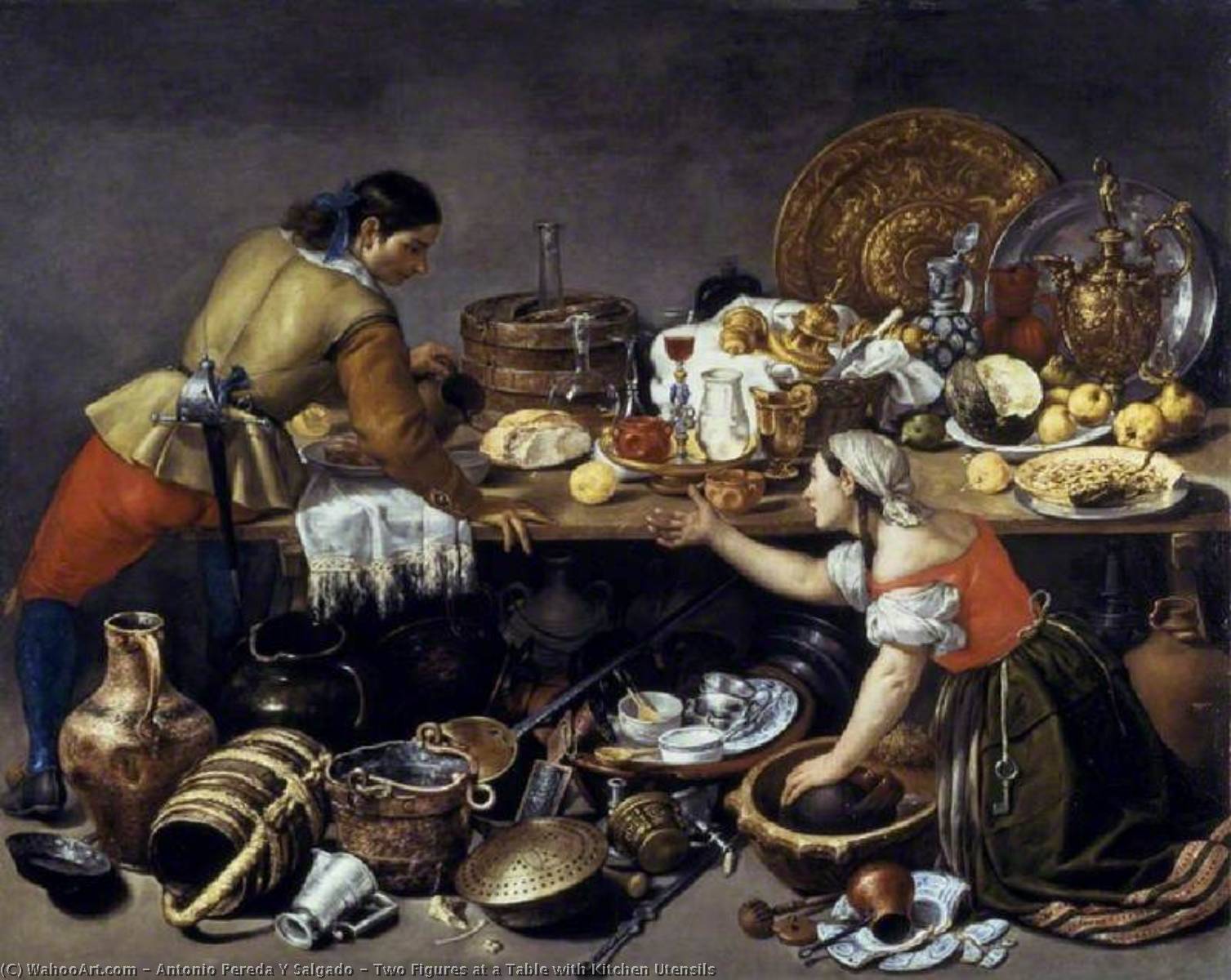
Two Figures at a Table with Kitchen Utensils
 192.0 x 238.0 cm
 National Trust
 Afficher la suite
Reproduction à l'huile faite à la main
Huile sur toile peinte à la main, avec cadre et dimensions personnalisés, réalisée sur commande par nos artistes. ( Passer au format impression Passer au format image numérique)




































Choisissez parmi nos formats prédéfinis qui respectent les proportions originales de l’œuvre.

Vous pouvez saisir vos propres dimensions pour l'adapter à un cadre ou à un espace spécifique. Si la taille sélectionnée ne correspond pas aux proportions de l'image d'origine, nous recadrerons l'œuvre ou prolongerons la peinture avec des éléments peints à la main supplémentaires. Une maquette numérique vous sera envoyée pour approbation avant le début de la production.
Veuillez noter que l'aperçu à l'écran ne reflète pas le recadrage ou l'extension réels. Seule la maquette montrera fidèlement la composition finale.
Bien que des tailles personnalisées soient disponibles, nous vous recommandons de sélectionner une dimension dans la liste prédéfinie afin de préserver les proportions d'origine.
Après la commande, l’équipe ArtsDot.com contactera le client par e-mail pour recueillir ses instructions et lui fournira une maquette d’aperçu
Livraison dans le monde entier () en 3 à 4 semaines au lieu des 5 semaines habituelles. (23 septembre). Aucun compromis sur la qualité.

Livraison express gratuite dans le monde entier

Toile de lin de haute qualité

Assurance transport complète

Garantie de remboursement des droits de douane

Garantie de fidélité des couleurs

Garantie de retour de 100 jours (uniquement en cas de défaut)

Garantie de remboursement à 100%

Tarifs dégressifs sur quantité
 L'option verre n'est disponible que pour les dimensions inférieures à 110 cm.

Two Figures at a Table with Kitchen Utensils
Technique de reproduction
Format de la reproduction
-


Prix total final
$ 263
Œuvres similaires


Biographie de l'artiste
Antonio de Pereda y Saldago: A Master of Still Life and Dramatic Baroque
Antonio de Pereda y Saldago (1611-1678) occupies a prominent place in the annals of Spanish Baroque painting, celebrated principally for his exquisitely rendered still lifes that distill the essence of everyday life alongside profound religious contemplation. Born in Valladolid, he descended from a family steeped in artistic tradition – his father, mother, and two brothers were all painters themselves—a lineage that undoubtedly instilled within him an early appreciation for visual artistry. His formative years unfolded in Madrid under the tutelage of Pedro de las Cuevas, a respected maestro who imparted foundational skills in painting technique, shaping his initial understanding of artistic principles. However, Pereda’s artistic trajectory took a decisive turn when Giovanni Battista Crescenzi, a celebrated Venetian painter and influential mentor, tragically perished in 1635, prompting him to seek new inspiration and commissions from ecclesiastical institutions—a pivotal moment that irrevocably altered the course of his career. This period witnessed a significant distancing from the royal court and an embrace of sacred subjects – a conscious decision that would solidify Pereda’s reputation as a devout artist deeply attuned to spiritual concerns. Recognizing Crescenzi's profound impact on his artistic development, he sought guidance from Giuseppe Cesari, Giovanni Battista Crescenzi’s former student, who further honed his skills and broadened his stylistic horizons, introducing him to innovative approaches and expanding his artistic repertoire. The generous patronage of the Buen Retiro Palace in Madrid furnished him with invaluable commissions for monumental frescoes—most notably ‘Relief of Genoa,’ alongside Velázquez’s masterpiece – a collaborative endeavor that epitomized the artistic fervor of the era and showcased the brilliance of two masters working in tandem. Pereda's artistic output transcended mere religious iconography; he achieved considerable acclaim as a historical painter, producing evocative depictions of pivotal moments in Spanish history. His ambitious undertaking to recreate the siege of Genoa (1635) for the salón de reinos of the Buen Retiro Palace stands as a testament to his ambition and technical prowess—a project that mirrored Velázquez’s own monumental endeavor and cemented Pereda's position among Spain’s foremost artists, demonstrating his ability to capture dramatic narratives with meticulous detail. Furthermore, he mastered the technique of tenebrism – characterized by stark contrasts between light and dark – skillfully employing this dramatic device to heighten emotional impact and imbue his canvases with palpable atmosphere. His enduring legacy resides in his masterful handling of chiaroscuro and his capacity to infuse his paintings with psychological depth; Pereda’s works exemplify the Baroque aesthetic's preoccupation with conveying human experience—from serene domestic scenes reflecting familial harmony to solemn religious narratives imbued with spiritual contemplation—making him an indelible symbol of Spanish artistic excellence during a transformative period in European history. He remains a cornerstone of Baroque art, admired for his unwavering devotion to faith and his unparalleled skill in capturing the beauty and drama of the visual world.
antonio pereda y salgado
1611 - 1678 , Espagne
En bref
- Artistic Movement Or Style: Baroque
- Artists Or Movements Influenced By This Artist: ['Baroque espagnol']
- Artists Who Influenced This Artist: ['Giovanni Battista Crescenzi']
- Date Of Birth: 1611
- Date Of Death: 1678
- Full Name: Antonio de Pereda y Saldago
- Nationality: Espagnol
- Notable Artworks:
- Deux personnages à une table avec des ustensiles de cuisine
- Tobias Restaurant Sa Vue
- La famille de Darius avant Alexandre le Grand
- Place Of Birth: Valladolid, Espagne