


 Aperçu en situation
 Partager
 Partager
 Détails
 Guide
Guide

 Télécharger
 Articles similaires
 Radiographie
 Voir le diaporama
 Statistiques
Tucia

 Afficher la suite
Giclées et impressions d'art
Impressions giclées ou sur toile de qualité musée, avec une production rapide et des finitions au choix. ( Acheter la peinture faite à la main Passer au format image numérique)




P118B $10

P118H $10

P118W $10

P438Z $10

P508JH $12

P508YH $12

P805H $10

P805Z $10

P919BZ $10

P919G $10

P919XJ $10

P959ZH $10

P968JZ $12

W106C $8

W218G $10

W218JH $8

W218Y $10

W307PJ $10

W316G $10

W316PJ $8

W316Y $10

W398PJ $8

W4111J $10

W500HY $15

W500JH $15

W692G $12

W849H $8

W940BG $15

W953PJ $8




Choisissez parmi nos formats prédéfinis qui respectent les proportions originales de l’œuvre.

Vous pouvez saisir vos propres dimensions pour vous adapter à un cadre ou à un espace spécifique. Si la taille sélectionnée ne correspond pas aux proportions de l'image originale, nous recadrerons l'œuvre ou étendrons l'image avec une bordure en miroir ou une couleur unie. Une maquette numérique vous sera envoyée pour approbation avant le début de la production.
Veuillez noter que l'aperçu à l'écran ne reflète pas le recadrage ou l'extension réelle. Seule la maquette montrera avec précision la composition finale.
Bien que des tailles personnalisées soient disponibles, nous vous recommandons de choisir une dimension dans la liste prédéfinie afin de préserver les proportions originales.
Livraison dans le monde entier () en 2 semaines au lieu des 4/5 semaines habituelles. (23 septembre)

Livraison express gratuite dans le monde entier

Toile de lin de haute qualité

Assurance transport complète

Garantie de remboursement des droits de douane

Garantie de fidélité des couleurs

Garantie de retour de 100 jours (uniquement en cas de défaut)

Garantie de remboursement à 100%

Tarifs dégressifs sur quantité
 L'option verre n'est disponible que pour les dimensions inférieures à 110 cm.

Tucia
Giclées et impressions d'art
Format de la reproduction
-


Prix total final
$ 62
The Enigmatic Figure of Tucia
Andrea Mantegna’s “Tucia,” a captivating portrait painted around 1495-1506, is more than just a depiction of a woman; it's an invitation into the heart of Renaissance ideals – a potent blend of classical reverence, meticulous observation, and subtle psychological depth. The painting immediately draws the eye with its strikingly formal composition, reminiscent of ancient Roman sculpture. The subject, identified as Tucia, a Vestal Virgin celebrated for her legendary act of self-sacrifice to avoid capture by a Roman general, is presented in a pose that echoes the statues of Greek goddesses and heroines – a deliberate choice reflecting Mantegna’s profound admiration for antiquity. She stands with an almost unnerving stillness, holding a simple plate in her hand, yet radiating an aura of quiet dignity and contained power.
A Study in Monochrome and Sculptural Form
Mantegna’s masterful technique is immediately apparent. The painting exists almost entirely within a limited palette of grays, blacks, and whites – a “grisaille” style that was highly favored during this period. This deliberate restriction forces the viewer to focus on the play of light and shadow, emphasizing the sculpted quality of the figure. The surfaces are remarkably smooth, achieved through meticulous layering of egg tempera, a medium known for its luminosity and ability to mimic the appearance of polished stone or metal. Notice how Mantegna renders the folds of Tucia’s dress, not with loose brushstrokes but with carefully delineated planes that create an illusion of three-dimensionality – a hallmark of his sculptural approach. The background is equally sophisticated, featuring a simple wall adorned with a vase and two birds, elements subtly integrated to enhance the overall composition without distracting from the central figure.
Echoes of Antiquity: Symbolism and Context
The choice of Tucia as the subject is laden with symbolic meaning. Her story – a dramatic act of defiance and self-preservation rooted in Roman mythology – speaks to themes of honor, sacrifice, and female agency. Mantegna’s decision to portray her in this manner, reminiscent of classical sculpture, was not merely an aesthetic one; it was a deliberate assertion of the Renaissance's commitment to reviving the values and ideals of antiquity. The plate she holds is deliberately simple, devoid of ornamentation, further emphasizing her inherent dignity and rejecting any suggestion of material wealth or vanity. The inclusion of the vase and birds adds layers of interpretation – perhaps alluding to fertility, abundance, or even a subtle commentary on the fleeting nature of life.
A Window into Renaissance Ideals
“Tucia” offers a profound glimpse into the artistic and intellectual currents of the High Renaissance. Mantegna’s fascination with Roman antiquity was not simply an imitation; it was a deeply considered engagement with the past, seeking to understand its principles and apply them to contemporary art. This painting exemplifies his innovative use of perspective, his meticulous attention to detail, and his ability to imbue even a seemingly simple portrait with profound psychological depth. Reproductions of “Tucia” allow us to appreciate these qualities fully, bringing this remarkable work of Renaissance art into our homes and inspiring contemplation on its enduring beauty and significance.
Œuvres similaires


Biographie de l'artiste
jeune vie et carrière
Andrea Mantegna, peintre italien innovant et érudit d'archéologie romaine, est né en Italie en 1431. Sa vie est marquée par une rupture significative avec les formes douces de son époque, favorisant un traitement audacieux et volumétrique de l'espace et de la forme.contribution à la perspective
L’œuvre de Mantegna a été essentielle pour explorer la perspective, utilisant des techniques telles que le réglage de la ligne d'horizon afin d'impartir une échelle plus grande et une gravité à ses œuvres. Cette approche a marqué un tournant significatif par rapport aux formes douces de son époque, mettant en valeur son style unique.œuvres notables et associations
* Les peintures de Mantegna sont reconnues pour leur qualité robuste et sculpturale, présentant des paysages et des figures durs et réfléchis qui témoignent de sa sensibilité sculpteur à la forme et à la texture. * Son association avec la famille Bellini par le biais du mariage est notable, reflétant l'interconnexion des familles artistiques pendant la Renaissance.héritage dans l’histoire de l’art
L’influence de Mantegna sur le développement de l’art en Italie et au-delà est indéniable. Son approche audacieuse de la perspective et de la forme a inspiré des générations d'artistes. Comme on peut le voir dans sa collection sur ArtsDot, ses œuvres continuent de captiver les publics par leur grandeur et leur style innovant.- principaux mouvements artistiques : Renaissance, perspective précoce.
- œuvres notables : comprennent "Le Lamentation sur le Christ mort" et "Saint Georges".
- musées présentant son œuvre : la National Gallery de Londres et la Pinacoteca Brera de Milan, entre autres.
lecture supplémentaire et exploration
* Pour en savoir plus sur la vie et les œuvres de Mantegna, consultez la collection Palumbo-Fossati (Venise, Italie), qui présente un aperçu succinct de la collection et de ses pièces notables. * Explorez l'histoire de l’art en Italie avec la culture de l’Italie sur Wikipédia.
Andrea Mantegna
1431 - 1506 , Italie
En bref
- Artistes Influents:
- Donatello
- Jacopo Bellini
- Date De Décès: 1506
- Date De Naissance: 1431
- Influence Sur Les Artistes:
- Raphaël
- Michel-Ange
- Lieu De Naissance: Carturu, Italie
- Mouvement Artistique: Renaissance, Perspective précoce
- Nationalité: Italienne
- Nom Complet: Andrea Mantegna
- Oeuvres Notables:
- Le Lamentation sur le Christ
- Saint Georges
- Fresques de la Camera degli Sposi
- Triomphes de César
Articles similaires

Robert Havell Sr.: Botanical Precision & the Rise of Colour Plate Publishing
Explore the life & work of Robert Havell Sr., a pioneer of botanical illustration and key collaborator with Audubon. Discover his stunning aquatint engravings, artistic techniques, and lasting impact on 19th-century art.

Edward Hopper : Les 25 Œuvres Maîtresses d'un Artiste Américain Intemporel | ArtsDot
Plongez dans l'univers poignant d'Edward Hopper avec les 25 œuvres incontournables du maître américain. Découvrez la lumière, l'isolation et le réalisme unique de ses tableaux iconiques. Reproductions de qualité muséale sur ArtsDot.com. Explorez la collection en ligne.

Andrea del Sarto: Florentine Grace, Technical Mastery & Artistic Ambition
Explore the life & art of Andrea del Sarto, a Florentine Renaissance master renowned for harmonious compositions & technical brilliance. Discover his frescoes, portraits, and lasting influence on art history.
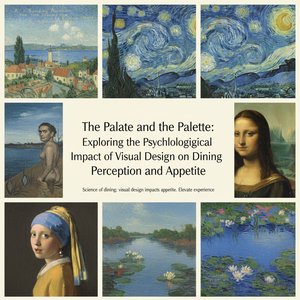
La Palette et le Palais : Explorer l'Impact Psychologique du Design Visuel sur la Perception de la Restauration et l'Appétit
Explorez l'impact psychologique du design visuel sur la restauration. Conseils d'experts pour stimuler l'appétit, créer une ambiance unique et sublimer l'expérience client. Découvrez comment l'art influence le goût !

Uffizi : Les 25 Chefs-d'Œuvre Incontournables pour Embellir Votre Intérieur
Plongez au cœur de la Galerie des Offices à Florence ! Découvrez les 25 chefs-d'œuvre incontournables de Botticelli, Léonard de Vinci et autres maîtres italiens. Inspirez votre décoration avec l'art Renaissance : reproductions de qualité muséale sur ArtsDot.com


