


 Aperçu en situation
 Partager
 Partager
 Détails
 Guide imprimable

 Télécharger
 Articles similaires
 Radiographie
 Voir le diaporama
 Statistiques
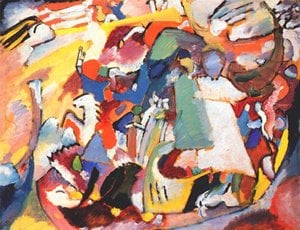
Landscape with Figures

 Afficher la suite
Giclées et impressions d'art
Impressions giclées ou sur toile de qualité musée, avec une production rapide et des finitions au choix. ( Acheter la peinture faite à la main Passer au format image numérique)




































Choisissez parmi nos formats prédéfinis qui respectent les proportions originales de l’œuvre.

Saisissez la largeur et la hauteur souhaitées pour qu'elles s'adaptent à votre cadre ou à votre mur. Une impression ne peut être que découpée, elle ne peut jamais être agrandie au-delà de l'image originale ; ainsi, un format de forme différente entraînera la perte d'une partie de l'image. Nous vous envoyons une maquette numérique pour approbation avant toute impression. L'image présentée sur cette page ne montre pas le recadrage réel — seule la maquette le permet.
Livraison dans le monde entier () en 2 semaines au lieu des 4/5 semaines habituelles. (24 octobre)

Livraison express gratuite dans le monde entier

Toile de lin de haute qualité

Assurance transport complète

Garantie de remboursement des droits de douane

Garantie de fidélité des couleurs

Garantie de retour de 100 jours (uniquement en cas de défaut)

Garantie de remboursement à 100%

Tarifs dégressifs sur quantité
 L'option verre n'est disponible que pour les dimensions inférieures à 110 cm.

Landscape with Figures
Giclées et impressions d'art
Format de la reproduction
-


Prix total final
€ 54
Œuvres similaires




Biographie de l'artiste
The Architect of Color: The Life and Legacy of Adolf Hölzel
In the grand tapestry of modern art, few threads are as vital yet subtly woven as those left by Adolf Richard Hölzel. Born in 1853 in the historic city of Olmütz, Hölzel’s journey was one of profound transformation, moving from the structured precision of a typesetter to the ethereal realms of abstraction. His early years were steeped in the world of print and publishing, thanks to his father, Eduard Hölzel. This foundational exposure to the mechanics of ink, paper, and layout would later manifest in a unique artistic sensibility—one that viewed the canvas not merely as a window to reality, but as a carefully balanced composition of form and weight.
Hölzel’s formal education began in Vienna, but it was his move to Munich in 1876 that truly ignited his creative spirit. Studying under the esteemed Wilhelm von Diez, he initially embraced the tenets of Realism. However, the late nineteenth century was a period of immense artistic upheaval, and Hölzel possessed the rare foresight to ride the waves of change. Through his acquaintance with Fritz von Uhde, he was introduced to the shimmering light of Impressionism, an encounter that began to dissolve the rigid outlines of his early work and replaced them with a fascination for the fleeting qualities of atmosphere and color.
The Dachau Colony and the Dawn of Abstraction
One of the most enchanting chapters of Hölzel’s career unfolded in the picturesque village of Dachau. Alongside visionaries like Fritz von Uhde, Ludwig Dill, and Arthur Langhammer, he co-founded the Dachauer Malschule. This was more than just a school; it was a vibrant crucible of experimentation that became the heart of the Dachau Art Colony. Here, Hölulent’s pedagogical approach was as revolutionary as his brushwork. He moved away from traditional mimicry of nature, instead encouraging his students to explore the intrinsic power of color and shape.
During this prolific period between 1888 and 1905, Hölzel’s work underwent a metamorphosis. While he continued to receive commissions for religious subjects from the Deutscher Werkbund, his internal compass was pointing toward the avant-garde. He began to integrate scientific and philosophical inquiries into his art, drawing heavily from Goethe’s Theory of Colors and the color studies of Wilhelm von Bezold. His fascination with the "golden section" and the mathematical distribution of mass led him to develop a sophisticated color theory based on musical principles—utilizing terms like "diatonic" and "chromatic" to describe the relationships between hues. This intellectual rigor allowed him to bridge the gap between the visible world and the abstract essence of light.
A Lasting Impression on Modernism
The true historical significance of Adolf Hölzel lies in his role as a progenitor of the movements that would define the twentieth century. As a professor at the State Academy of Fine Arts in Stuttgart, he became a mentor to a generation of artists who would go on to shape the Bauhaus and German Expressionism. His influence can be traced through the works of his students, including:
- Johannes Itten, whose color theories became foundational to modern design education;
- Oskar Schlemmer, a master of form and movement;
- Willi Baumeister, who carried the torch of abstraction into the mid-century.
Though his name may not always command the immediate recognition of names like Picasso or Kandinsky, Hölzel’s fingerprints are everywhere in the DNA of modernism. His seminal essay, "Über Formen und Massenvertheilung" (On Shapes and Mass Distribution), published in Ver Sacrum, provided a theoretical framework for an art that prioritized structural harmony over narrative content. He taught the world that color could sing and that shape could possess its own spiritual weight. When he passed away in 1934, he left behind a legacy of innovation—a testament to a man who looked at the chaos of the modern world and found within it a beautiful, balanced, and abstract order.

Adolf Hölzel
1853 - 1934
En bref
- Full Name: Adolf Richard Hölzel
- Nationality: German
- Date Of Birth: 1853
- Date Of Death: 1934
- Place Of Birth: Olomouc, Bohemia
- Notable Artworks: ['Landscape with Figures']
- Artistic Movement Or Style: Expressionism
- Artists Who Influenced This Artist: ['Wilhelm von Diez']
- Artists Or Movements Influenced By This Artist: ['Vienna Secession']