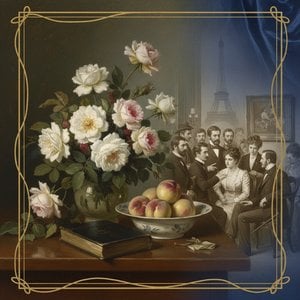
A Life of Art and Nature
Eugène Burnand was a Swiss painter and illustrator born in Chateau Billens, Switzerland. After initially training as an architect, he pursued the study of art in Geneva and Paris. His travels took him to various locations, including Florence, Montpellier, Seppey, Neuchâtel, and Versailles. Throughout his career, he lived in several regions such as Provence and the Camargue.
Burnand was a realist painter of nature, frequently depicting rural scenes and animals. As his career progressed, he also painted human figures and became a portraitist. A deeply religious man, his Protestant beliefs led him to create many religious works, most notably his illustrations for The Parables. His final project involved a series of 104 pastel portraits of Allied WWI participants.
Artistic Achievements and Legacy
Burnand's work is held in numerous international collections, including the Musée d'Orsay in Paris and the Eugène Burnand Museum in Moudon. His notable works include:
- The Disciples Peter and John Running to the Sepulchre on the Morning of the Resurrection
- The Return of the Prodigal Son
- La Prière Sacerdotale
- Illustrations for Mireille by Frédéric Mistral
He received several honors, such as being a Chevalier and later an Officer of the Legion of Honour. He also served as the President of the Swiss Fine Arts Commission at the 1889 International Exhibition of Fine Arts in Paris.
Kysymykset ja vastaukset
Voinko tutkia Eugène Burnand teoksia aiheen mukaan?
Eugène Burnand-taiteilijan Aiheatlas on sivu, joka ryhmittelee taiteilijan teokset niiden aiheiden mukaan.
Onko Eugène Burnand teoksista saatavilla täydellinen lista?
Voit selata kaikkia tämä sivusto-sivuston Eugène Burnand teoksia artistin Kaikki teokset -sivulta.
Onko Eugène Burnand teoksista saatavilla 3D-virtuaalikierrosta?
Eugène Burnand'n teoksia voi ihailla 3D-galleriassa artistin 3D-galleria -sivulla.