


 Esikatselu
 Jaa
Jaa Jaa
Jaa
 Tarkemmat tiedot

 Lataa
Lataa
 Samanlaisia
 Röntgenkuva
 Diaesitys
Bishop Thompson
 Näytä lisää
Giclée-printit ja taideprintit
Museolaatuisia giclée- tai kankaitaulun tulosteita nopealla tuotannolla ja joustavilla viimeistelyvaihtoehdoilla. ( Osta käsintehty maalaus Osta kuva)




































Valitse valmiista mitoistamme sellaiset, jotka vastaavat teoksen alkuperäisiä mittasuhteita.

Voit syöttää omat mitat sopiaksesi tiettyyn kehykseen tai tilaan. Jos valittu koko ei vastaa alkuperäisen kuvan mittasuhteita, rajaamme teosta tai laajennamme kuvaa peilatulla tai yhtenäisellä reunalla. Digitaalinen mallikuva lähetetään hyväksyttäväksi ennen tuotannon aloittamista.
Huomaathan, että näytöllä näkyvä esikatselu ei vastaa lopullista rajausta tai laajennusta. Vain mallikuva näyttää lopullisen sommittelun tarkasti.
Vaikka räätälöityjä kokoja on saatavilla, suosittelemme valitsemaan mitat valmiista listasta alkuperäisten mittasuhteiden säilyttämiseksi.
Toimitus maailmanlaajuisesti () kahdessa viikossa tavallisen 4–5 viikon sijaan. (23 elokuu)

Ilmainen pikatoimitus ympäri maailman

Korkealaatuinen pellavakangas

Kattava kuljetusvakuutus

Tulliveron palautustakuu

Täydellinen värien vastaavuustakuu

60 päivän palautusoikeus (vain valmistusvirheet)

100% rahat takaisin -takuu

Määräalennus tarjous
 Lasivaihtoehto on saatavilla vain alle 110 cm kokoisina teoksina

Bishop Thompson
Giclée-printit ja taideprintit
Replikaatin koko
-


Kokonaishinta
$ 62
Samankaltaisia teoksia


Taiteilijan elämäkerta
William Smith Jewett: A Pioneer of California Landscape Painting
William Smith Jewett (1812 – 1873) stands as a remarkable figure in the annals of American art, particularly celebrated for his evocative depictions of California’s burgeoning frontier landscape during the mid-nineteenth century. Born in Dover, Massachusetts, Jewett possessed an unwavering passion for observation and meticulous detail—qualities that would define his artistic approach and solidify his legacy as one of the era's foremost watercolorists. While biographical information remains somewhat sparse compared to contemporaries like Asher B. Durand or Frederic Church, his contribution to capturing the spirit of California’s transformation is undeniable.- Early Life & Education: Jewett received a solid grounding in classical art principles at Yale University, where he studied under Thomas Beale and Samuel Huntington Pickering. This academic foundation instilled in him a disciplined eye for form and composition—elements that would permeate his subsequent artistic endeavors.
- Move to California: Driven by an adventurous spirit and captivated by the allure of the West Coast’s unexplored wilderness, Jewett relocated to Sacramento County, California, in 1853. He quickly established himself as a respected artist and teacher, fostering a burgeoning watercolor school that attracted students eager to embrace the Californian landscape aesthetic.
- Artistic Style & Technique: Jewett's distinctive style leaned heavily toward Romanticism, characterized by luminous color palettes and expressive brushwork—techniques honed through extensive study of European masters like Claude Lorrain and Nicolas Poussin. He meticulously rendered geological formations, vegetation, and atmospheric conditions with astonishing accuracy, striving to convey not merely visual representation but also the emotional resonance of the Californian wilderness.
Notable Works & Landscapes of California
Jewett’s artistic output focused primarily on capturing the grandeur of California's landscapes—a subject that resonated deeply with his generation and reflected the optimistic vision of westward expansion. Among his most celebrated paintings are “A View of Sutter’s Mill and Culloma Valley,” a breathtaking watercolor commemorating the pivotal moment when James Marshall discovered gold in Sutter’s Creek, initiating the Gold Rush frenzy. This artwork exemplifies Jewett's masterful blending of scientific observation with artistic sensitivity—a hallmark of his oeuvre. Similarly impressive is "The Yosemite Valley," showcasing the majestic beauty of Yosemite National Park and demonstrating Jewett’s ability to convey both topographical precision and profound emotional impact. His depictions of Sutters Mill are considered among the most accurate representations of this historic site.- “A View of Sutter’s Mill and Culloma Valley”: This monumental watercolor captures the essence of California's Gold Rush era, portraying the valley with remarkable detail—highlighting geological formations and capturing the misty atmosphere characteristic of the region.
- “The Yosemite Valley”: Jewett’s portrayal of Yosemite embodies Romantic idealism, conveying the sublime grandeur of the park while subtly hinting at its spiritual significance.
Influence & Legacy
Jewett's artistic endeavors profoundly impacted the development of Californian landscape painting and contributed to establishing Yosemite National Park as a symbol of American wilderness preservation. His meticulous renderings served as inspiration for subsequent artists—including Frederic Church—who sought to emulate his stylistic prowess and convey similar emotional depth. Furthermore, Jewett’s dedication to watercolor technique—particularly his masterful use of glazing—became influential within the broader artistic community. Though he died prematurely in 1873, William Smith Jewett's enduring contribution to American art ensures that his landscapes continue to inspire awe and admiration generations later. His work remains a testament to the power of observation, artistry, and the transformative beauty of the natural world.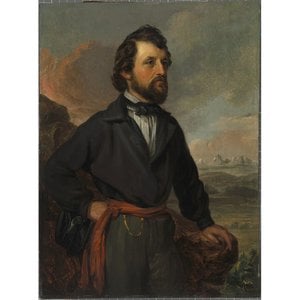
william smith jewett
1812 - 1873 , United States of America
Pikatiedot
- Artistic Movement Or Style: Romantic Landscape Painting
- Artists Or Movements Influenced By This Artist: ['Romanticism']
- Artists Who Influenced This Artist: ['Hudson River School']
- Date Of Birth: 1812
- Full Name: William Smith Jewett
- Nationality: American
- Notable Artworks:
- A view of Sutter’s Mill and Culloma Valley
- John Trumbull
- Portrait of a Man
- Place Of Birth: South Dover, United States

