


 Esikatselu
 Jaa
Jaa Jaa
Jaa
 Tarkemmat tiedot

 Lataa
Lataa
 Samanlaisia
 Röntgenkuva
 Diaesitys
Mary Isabella Grant


 Näytä lisää
Käsinmaalattu öljykopio
Käsinmaalattu öljyväri kankaalle haluamassasi koossa ja kehyksissä, taiteilijoidemme valmistamana tilauksesta. ( Osta printti Osta kuva)




P118B $10

P118H $10

P118W $10

P438Z $10

P508JH $12

P508YH $12

P805H $10

P805Z $10

P919BZ $10

P919G $10

P919XJ $10

P959ZH $10

P968JZ $12

W106C $8

W218G $10

W218JH $8

W218Y $10

W307PJ $10

W316G $10

W316PJ $8

W316Y $10

W398PJ $8

W4111J $10

W500HY $15

W500JH $15

W692G $12

W849H $8

W940BG $15

W953PJ $8




Valitse valmiista mitoistamme sellaiset, jotka vastaavat teoksen alkuperäisiä mittasuhteita.

Voit syöttää omat mitat sopimaan tiettyyn kehykseen tai tilaan. Jos valitsemasi koko ei vastaa alkuperäisen kuvan mittasuhteita, rajaamme taideteoksen tai jatkamme maalausta käsin maalatuilla elementeillä. Digitaalinen esikatselu lähetetään hyväksyttäväksi ennen tuotannon aloittamista.
Huomioithan, että näytöllä oleva esikatselu ei vastaa todellista rajausta tai jatkamista. Vain digitaalinen mallikuva näyttää lopullisen sommittelun tarkasti.
Vaikka mittatilaustyöt ovat mahdollisia, suosittelemme valitsemaan mitan ennalta määritetystä listasta alkuperäisten mittasuhteiden säilyttämiseksi.
Tilauksen jälkeen ArtsDot.com -tiimi lähettää asiakkaalle ohjeet ja esikatselukuvan.
Maailmanlaajuinen toimitus () 3–4 viikossa tavallisen 5 viikon sijaan. (14 elokuu). Laadusta ei tingitä.

Ilmainen pikatoimitus ympäri maailman

Korkealaatuinen pellavakangas

Kattava kuljetusvakuutus

Tulliveron palautustakuu

Täydellinen värien vastaavuustakuu

60 päivän palautusoikeus (vain valmistusvirheet)

100% rahat takaisin -takuu

Määräalennus tarjous
 Lasivaihtoehto on saatavilla vain alle 110 cm kokoisina teoksina

Mary Isabella Grant
Reproduktiotekniikka
Replikaatin koko
-


Kokonaishinta
$ 263
Teoksen kuvaus
Mary Isabella Grant – Een Portret van Stilte en Elegantie
Sir Francis Grant, een naam die synoniem staat voor verfijnde portrettkunst en toegewijd dienst aan de Britse kunstinstituut, groeide uit tot één van de meest gevraagde kunstenaars van zijn tijd. Geboren in 1803 in een landende familie in Perthshire, Schotland, leek het jonge Francis aanvankelijk bestemd voor een carrière in rechtspraak. Maar de aantrekkingskracht van artistieke expressie bleef te sterk om te weerstaan. Hoewel grotendeels zelfstandig leerde hij kort bij Alexander Nasmyth in Edinburgh, waardoor hij een vroeg fundament legde voordat hij zijn eigen onderscheidende weg vond. Deze weg was niet meteen duidelijk; Grant’s eerste successen kwamen met sportscènes, waarbij hij de energie en levenslust van het platteland vastleg. Een belangrijke gebeurtenis kwam voorbij door zijn huwelijk, waardoor hij toegang kreeg tot de exclusieve wereld van Melton Mowbray’s jachtgezelschap. Daar perfectioneerde hij zijn vaardigheden onder John Ferneley, een meester in paardenkunst, en begon hij zich te specialiseren in afbeeldingen van paarden en hounds – onderwerpen die aanvankelijk minder aandacht zouden krijgen. Een prachtige reproductie van deze kunstwerk biedt een unieke kans om de schoonheid en subtiele boodschap van het origineel terug te vinden.Beschrijving van het Kunstwerk
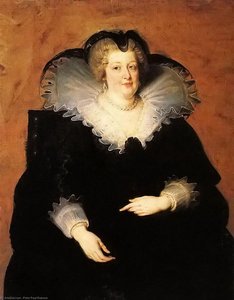
Het kunstwerk is een portret van een jonge vrouw, Mary Isabella Grant, afgebeeld in profiel tegen een gedempte landschap achtergrond. Het straalt een gevoel van rustige contemplatie en Victoriaanse elegantie uit. De compositie is verticaal georiënteerd, waarbij het onderwerp lichtjes verschoven staat naar links. Haar blik wordt gericht naar beneden, waarbij ze gefixeerd kijkt op haar breiwerk. Een grote, donkere boomstam neemt veel ruimte in aan de linkerzijde van het beeldframe en creëert een visuele ankerpunt en voegt diepte toe aan het kunstwerk. De achtergrondlandschappen zijn zachtjes vervaagd, wat wijst op afstandelijkheid. Deze zorgvuldige compositie is typisch voor de stijl van Victoriaanse portrettkunstenaars, waarbij aandacht wordt besteed aan zowel technische precisie als emotionele expressie.Techniek en Materiaal
Het kunstwerk is uitgevoerd in olie op doek, een techniek die gekenmerkt wordt door het laagje voor laagje aanbrengen van kleuren om vloeiende overgangen en realistische texturen te creëren. De penseelstreken zijn zichtbaar maar meestal subtiel verborgen, wat bijdraagt aan de natuurlijke schoonheid van het kunstwerk. Een combinatie van verschillende materialen – hoogwaardige olieverf, een stevig doekcanvas en gespecialiseerde penselen – zorgt ervoor dat het kunstwerk een prachtige reproductie biedt die trouw blijft aan het origineel. De kunstenaar heeft gebruikgemaakt van atmosferische perspectief om diepte te creëren in de achtergrondlandschappen, waarbij verder gelegen elementen zachter en minder gedetailleerd worden weergegeven. Een kunstige keuze die bijdraagt aan de historische context en emotionele impact van het kunstwerk.Symboliek en Emotionele Impact
Het kunstwerk spreekt tot een gevoel van innerlijke rust en contemplatie aan, zoals blijkt uit Mary Isabella Grant’s neerwaartse blik. Het breiwerk zelf kan symbool staan voor huishoudelijke zorgzaamheid, geduld en het creëren van iets mooi uit eenvoudige materialen – thema's die belangrijk waren voor de Victoriaanse samenleving en nog steeds resoneren bij kunstliefhebbers vandaag de dag. Een prachtige reproductie biedt een kans om deze schoonheid en emotionele kracht terug te vinden in huis, waardoor het een ideale keuze wordt voor iedereen die op zoek is naar inspiratie of een hoogwaardige kunstwerk wil aanschaffen.Samankaltaisia teoksia



Taiteilijan elämäkerta
Sir Francis Grant (1803 - 1878): Celebrated Scottish Portrait & Sporting Painter and Royal Academy President, famed for capturing British aristocracy like Queen Victoria
Sir Francis Grant, a name synonymous with refined portraiture and dedicated service to the British art establishment, emerged as one of the most sought-after artists of his era. Born in 1803 into a landed family in Perthshire, Scotland, young Francis initially seemed destined for a career in law. However, the pull of artistic expression proved too strong to resist. Though largely self-taught, he briefly studied under Alexander Nasmyth in Edinburgh, laying an early foundation before forging his own distinctive path. This path wasn’t immediately clear; Grant's initial successes came with sporting scenes, capturing the energy and vibrancy of rural life – subjects that would initially define his reputation. A pivotal moment arrived through his marriage, granting him access to the exclusive world of Melton Mowbray’s hunting set. There, he honed his skills under John Ferneley, a master of equestrian art, and began to specialize in depictions of horses and hounds – endeavors that showcased an exceptional eye for detail and composition.Early Artistic Beginnings & Sporting Achievements
Grant's artistic journey commenced with a fascination for sketching landscapes and animals, fueled by a lifelong passion for hunting. His early canvases captured the dynamism of rural pursuits with remarkable accuracy and sensitivity. The celebrated *Melton Breakfast* (1834), exhibited at the Royal Academy, stands as an exemplar of this period – a vibrant portrayal of a morning hunt that immediately garnered acclaim. It demonstrated Grant’s ability to convey movement and atmosphere, establishing him as a prominent figure in the burgeoning field of sporting painting. His meticulous attention to detail—the textures of fur, feathers, and foliage—reflected Ferneley's influence and solidified his reputation for capturing the essence of equestrian art. This formative experience instilled in him a profound understanding of observation and representation that would inform his subsequent artistic endeavors.The Rise of Portraiture & Royal Patronage
However, Grant’s true breakthrough occurred in the realm of portraiture. Recognizing his talent for conveying not merely physical likeness but also inner character and social standing, he swiftly transitioned to capturing the dignity and nuance of aristocratic subjects. His marriage brought him into contact with influential circles within Melton Mowbray's hunting society, providing invaluable opportunities for artistic development and fostering connections with prominent patrons. This patronage proved crucial in securing commissions from the British elite – including the momentous portrait of Queen Victoria herself (1842). This monumental undertaking showcased Grant’s mastery of technique and his ability to portray majesty and grace—a testament to his skill as a portraitist and cementing his position among the foremost artists of his time. The resulting image, lauded for its elegance and psychological depth, became an iconic representation of Victorian royalty.A Style Defined by Neoclassical Elegance & Romantic Sensibility
Grant’s artistic style blended Neoclassical elegance with a touch of Romantic sensibility – a harmonious fusion that distinguished him from many contemporaries. He skillfully employed chiaroscuro—the dramatic interplay of light and shadow—to sculpt form and convey emotion, mirroring the stylistic conventions favored by artists like Lawrence but tempering them with Victorian restraint. His portraits possessed an understated grandeur, reflecting his profound understanding of human psychology and capturing the subtle nuances of personality. The meticulous rendering of fabrics, textures, and facial expressions underscored Grant’s dedication to realism while simultaneously imbuing his canvases with a sense of poetic beauty. This distinctive approach solidified his reputation as one of Scotland's most accomplished painters.Legacy & Recognition: Presidency of the Royal Academy
Grant’s artistic achievements culminated in 1866 with his election as President of the Royal Academy—a prestigious honor recognizing not only his prolific output but also his respected standing within the British art world. During his tenure, he championed innovation and fostered dialogue between artists and scholars, furthering the Academy's mission to promote excellence in visual arts. He instituted a groundbreaking practice: the holding of major loan exhibitions – expanding the Academy’s reach and influence and attracting wider public engagement. Grant’s unwavering commitment to artistic integrity ensured that the Royal Academy remained a cornerstone of British cultural heritage. His enduring legacy resides not only in his celebrated paintings but also in his transformative role as leader—a testament to his profound contribution to Victorian art history. He remains a pivotal figure – a skilled portraitist, a respected visionary, and a chronicler of his time. His work offers not just aesthetic pleasure but also a fascinating glimpse into a bygone era.
Sir Francis Grant
1803 - 1878 , Iso-Britannia
Pikatiedot
- Artistic Movement Or Style: Neoclassical, Romanticism
- Artists Or Movements Influenced By This Artist:
- Martin Archer Shee
- Solomon Hart
- Artists Who Influenced This Artist:
- Alexander Nasmyth
- John Ferneley
- Date Of Birth: 18 Jan. 1803
- Date Of Death: 5 Oct. 1878
- Full Name: Sir Francis Grant
- Nationality: Scottish
- Notable Artworks:
- Melton Breakfast
- Lady Glenlyon
- Queen Victoria Riding
- Place Of Birth: Edinburgh, United Kingdom
Liittyvät artikkelit

Sir Joshua Reynoldsin mestariteokset: Taidetta ja eleganssia kotiisi – ArtsDot.com
Tutustu Sir Joshua Reynoldsin 25 upeimpaan mestariteokseen! Uppoudu brittiläisen taiteen klassismiin ja rokokoon – muotokuvista historiallisiin maalauksiin. Löydä inspiraatiota sisustukseesi ArtsDot.com:sta, jossa on korkealaatuisia taideteosten toistoja. Tutki kokoelma verkossa!

Francis Baconin 25 mestariteosta: Taidetta, tunnetta ja sisustusta ArtsDot.comissa
Tutustu Francis Baconin 25 mestariteokseen – synkkää tunnetta, modernia taidetta ja ihmiskuvauksen syvyyttä. Löydä tarinat maalauksien takaa ja inspiroi sisustusta ArtsDot.comissa! Tutki koko kokoelma verkossa.

Sir Francis Grant: Portraiture, Patronage & Victorian Society
Explore the life & work of Sir Francis Grant, a leading Victorian portraitist. Discover his aristocratic clientele, role at the Royal Academy, and enduring artistic legacy. Learn about art patronage in 19th-century Britain.

Sir Alfred James Munningsin 25 mestariteosta: Hevosmaalausten lumo ja brittiläinen maalaisidylli
Tutustu Sir Alfred James Munningsin 25 lumoavinta mestariteosta! Uppoudu brittiläisen maalaisidyllin ja hevosmaalausten maailmaan. Löydä inspiraatiota kotiisi ArtsDot.com:ista – taideprintit museolaadulla.

Sir John Watson Gordon: A Study in Scottish Landscape Painting & Tonal Impressionism
Explore the captivating portraits of Sir John Watson Gordon, a leading Scottish master. Discover his evolution from neoclassical style to atmospheric Tonalism and influence on 19th-century British art. Learn about his iconic sitters & legacy.



