
- Etusivu

- Öljymaalausjäljennös
- Philips Wouwermans
- Rocky Landscape with resting Travellers

 Tilaa painos
 Jaa
Jaa Jaa
Jaa
 Details

 Lataa
Lataa
 Samanlaisia
 X-Ray
X-Ray Diaesitys
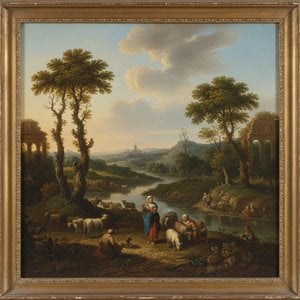
Rocky Landscape with resting Travellers
 Oil On Canvas
- WallArt
- Romanticism
 45.0 x 61.0 cm
 Szépművészeti Múzeum
Käsinmaalattu öljykopio
Käsinmaalattu öljyväri kankaalle haluamassasi koossa ja kehyksissä, taiteilijoidemme valmistamana tilauksesta.




P118B $10

P118H $10

P118W $10

P438Z $10

P508JH $12

P508YH $12

P805H $10

P805Z $10

P919BZ $10

P919G $10

P919XJ $10

P959ZH $10

P968JZ $12

W106C $8

W218G $10

W218JH $8

W218Y $10

W307PJ $10

W316G $10

W316PJ $8

W316Y $10

W398PJ $8

W4111J $10

W500HY $15

W500JH $15

W692G $12

W849H $8

W940BG $15

W953PJ $8




 Lue lisää
Valitse valmiista mitoistamme sellaiset, jotka vastaavat teoksen alkuperäisiä mittasuhteita.

Voit syöttää omat mitat sopimaan tiettyyn kehykseen tai tilaan. Jos valitsemasi koko ei vastaa alkuperäisen kuvan mittasuhteita, rajaamme taideteoksen tai jatkamme maalausta käsin maalatuilla elementeillä. Digitaalinen esikatselu lähetetään hyväksyttäväksi ennen tuotannon aloittamista.
Huomioithan, että näytöllä oleva esikatselu ei vastaa todellista rajausta tai jatkamista. Vain digitaalinen mallikuva näyttää lopullisen sommittelun tarkasti.
Vaikka mittatilaustyöt ovat mahdollisia, suosittelemme valitsemaan mitan ennalta määritetystä listasta alkuperäisten mittasuhteiden säilyttämiseksi.
Tilauksen jälkeen ArtsDot.com -tiimi lähettää asiakkaalle ohjeet ja esikatselukuvan.
Maailmanlaajuinen toimitus () 3–4 viikossa tavallisen 5 viikon sijaan. (1 heinäkuu). Laadusta ei tingitä.

Ilmainen pikatoimitus ympäri maailman

Korkealaatuinen pellavakangas

Kattava kuljetusvakuutus

Tulliveron palautustakuu

Täydellinen värien vastaavuustakuu

60 päivän palautusoikeus (vain valmistusvirheet)

100% rahat takaisin -takuu

Määräalennus tarjous
 Lasivaihtoehto on saatavilla vain alle 110 cm kokoisina teoksina

Rocky Landscape with resting Travellers
Reproduktiotekniikka
Replikaatin koko
-


Kokonaishinta
-
Teoksen kuvaus
A Dramatic Vista: Philips Wouwerman’s “Rocky Landscape with Resting Travellers”
Philips Wouwerman's "Rocky Landscape with Resting Travellers" is more than just a depiction of a rugged vista; it’s a carefully constructed tableau brimming with narrative potential and imbued with the spirit of the Dutch Golden Age. Painted circa 1650-1660, during the artist’s most prolific period, this oil on canvas work transports us to a remote corner of Europe – perhaps the foothills of the Alps or the rolling hills of Italy – where a small group of travelers pauses for respite amidst a dramatic and somewhat melancholic scene. The painting immediately commands attention with its masterful use of atmospheric perspective, creating an illusion of immense depth and drawing the eye into the heart of the composition: a crumbling castle perched precariously atop a distant hill, partially obscured by swirling clouds. The foreground is dominated by a group of figures – a small party of travelers, their horses, and a scattering of luggage – suggesting a journey’s end or perhaps simply a moment of temporary rest. Their postures are subtly expressive; some appear weary, others contemplative, hinting at the hardships endured during their travels. The arrangement of these figures within the pyramidal structure of the composition—with the castle as its apex—creates a powerful sense of scale and draws the viewer upwards, emphasizing the grandeur of the landscape and the ambition of human endeavor. Wouwerman’s skill lies not just in rendering the details of the scene – the rough texture of the rocks, the worn saddles on the horses, the folds of the travelers' clothing – but also in conveying a palpable sense of atmosphere: a cool, slightly somber mood that speaks to both the beauty and the inherent dangers of the natural world.The Romantic Spirit and Baroque Techniques
Wouwerman’s work firmly resides within the broader context of 17th-century Dutch painting, yet it transcends simple categorization. While influenced by the prevailing trends of the time – particularly the burgeoning interest in landscape as a subject matter – he developed a distinctly individual style that leans heavily into the Romantic sensibility. This is evident in his dramatic use of light and shadow, his emphasis on emotional expression, and his willingness to depict scenes of hardship and vulnerability alongside moments of beauty. The painting’s palette is restrained, dominated by earthy tones—ochres, browns, and grays—that contribute to the overall sense of realism and ruggedness. However, these muted colors are punctuated by flashes of brighter hues – the red of a cloak, the blue of the sky – which serve to heighten the drama and draw attention to key elements within the composition. Technically, Wouwerman demonstrates a mastery of oil painting techniques. The brushstrokes are visible and textured, particularly in the depiction of the rock formations and the cloudy sky, creating a sense of immediacy and physicality. He skillfully employs *sfumato*, a technique borrowed from Renaissance masters, to soften edges and create a hazy atmosphere, further enhancing the illusion of distance. The artist’s attention to detail is remarkable; one can almost feel the rough texture of the stone beneath their fingertips and hear the wind whistling through the trees.Symbolism and Narrative Potential
Beyond its purely visual appeal, “Rocky Landscape with Resting Travellers” is rich in symbolic meaning. The crumbling castle, a frequent motif in Wouwerman’s work, can be interpreted as a representation of human ambition, mortality, or perhaps even the fleeting nature of power. The travelers themselves may symbolize humanity's constant quest for knowledge, wealth, and spiritual fulfillment – a journey fraught with challenges and uncertainties. The bridge spanning the chasm below adds another layer of complexity to the scene, suggesting both connection and separation, hope and despair. Interestingly, the painting’s narrative potential is open to interpretation. While it could be viewed as a straightforward depiction of travelers seeking shelter after a long journey, it also evokes a sense of foreboding and loss. The somber atmosphere, combined with the ruined castle and the weary expressions of the figures, suggests that this respite may be temporary or even illusory. The painting invites viewers to project their own interpretations onto the scene, transforming it into a mirror reflecting their own experiences and emotions.A Legacy of Dramatic Landscapes
Philips Wouwerman’s “Rocky Landscape with Resting Travellers” stands as a testament to his artistic skill and his ability to capture the essence of the Dutch Golden Age. It is a painting that rewards careful observation, inviting viewers to lose themselves in its dramatic landscape and contemplate its rich symbolism. Reproductions of this captivating work offer a window into a bygone era, transporting us to a world of rugged beauty, human resilience, and enduring mystery. Its timeless appeal continues to resonate with art lovers today, solidifying Wouwerman’s place as one of the most important painters of his time.Samankaltaisia teoksia


Taiteilijan elämäkerta
Philips Wouwerman: Hollantilaisen Kultaisen Aikakauden Taiteilijan Dynamiikka
Philips Wouwerman (syntynyt 24. toukokuuta 1619, kuollut 19. toukokuuta 1668) oli merkittävä hollantilainen taidemaalari, joka tunnetaan erityisesti metsästyskohtauksien, maisemien ja taistelukohtausten maalaamisesta. Hän edusti huomattavaa asemaa Hollannin Kultaisen Aikakauden taiteellisessa maisemassa. Hänen työnsä ovat edelleen suosittuja ja arvostettuja ympäri maailmaa.Varhainen Elämä ja Taidetta Opettaminen
Wouwerman syntyi Haarlemissa, Alankomaissa, ja oli Pouwels Joosten Wouwermanin poika, joka itsekin oli maalari, mutta vähemmän tunnettu poikansa taidosta. Hänen varhaisesta taiteellisesta koulutuksestaan on vähän tietoa, mutta uskotaan, että hän opiskeli Frans Halsin (1581/85–1666) johdolla, merkittävällä Haarlemin muotokuvaajalla. Halsin tyylillä ei ollut suurta vaikutusta Wouwermanin myöhempään taiteeseen, mutta perusopetus todennäköisesti osoittautui arvokkaaksi. Varhaisessa urassaan Wouwerman oli vaikuttunut *bamboccianti*-perinteestä, erityisesti Pieter van Laerin (1592/99–jälkeen 1642) teosten kautta, ottaen mukaansa heidän keskittyvänsä arkielämään ja genrekohtauksiin.Tyylikehitys ja Tyyli
Wouwermanin taiteellinen kehitys oli monivaiheinen ja sisälsi useita tyylimuutoksia. Aluksi hän jäljitti *bamboccianti*-maalareita, mutta myöhemmin hänen maalauksissaan alkoi esiintyä tunnusomaista kompositiota – yleensä kulmakuvioitu maasto, usein puu repoussoirana (laite syvyyden luomiseen). Kuvissa, joissa on usein hevosia, oli ihmisiä. Noen vuosikymmenten aikana hän kehitti oman tyylinsä laajentaen aihejansa huomattavasti. Hän maalasi genrekohtauksia, maisemia matkailijoineen, ratsuväkitaisteluja, sotilastukikohtia ja viljelijöiden juhlia. Hänen erityinen taitonsa hevosien maalaamisessa on erittäin arvostettu: taidehistorioitsija Frederik J. Duparc kutsui häntä "epelmässäisesti taitavimmaksi ja menestyneimmäksi 17-vuosisadan hollantilaisena hevosten maalareena." Wouwermanin tyylikehityksen keskeinen vaihe oli keskiaikainen kausi (noin 1650–1660), jolloin hän kehitti oman tyylinsä laajentaen aihejansa huomattavasti. Hän maalasi genrekohtauksia, maisemia matkailijoineen, ratsuväkitaisteluja, sotilastukikohtia ja viljelijöiden juhlia. Hänen erityinen taitonsa hevosien maalaamisessa on erittäin arvostettu: taidehistorioitsija Frederik J. Duparc kutsui häntä "epelmässäisesti taitavimmaksi ja menestyneimmäksi 17-vuosisadan hollantilaisena hevosten maalareena."Merkittävät Saavutukset ja Perintö
Wouwermanin teokset olivat kysyttyjä hänen eläessään ja pysyivät suosituissa myös 18-luvulla. Hänen maalauksensa löysivät tiensä merkittäviin kokoelmiin Euroopassa, mukaan lukien prinssien kokoelmissa Dresdenissä ja St. Petersburgissa, mikä osoitti laajaa ihailua hänen taiteeseensa. * **Tuotteliaisuus:** Wouwerman oli erittäin tuottelias; varhaiset katalogit listasivat noin 800 teosta, joita sille on atribuitoitu, myöhemmin yli 1200. Uusin luettelokokoelma (Schumacher, 2006) tunnistaa noin 570 aitoutta, ottaen huomioon lukuiset seuraajat ja jäljittelijät, jotka tuottivat hänen tyylinsä mukaisia teoksia. * **Perhe taiteilijoita:** Hänen veljiään Jania (1629–1666) ja Pieteria (1623–1682) olivat myös maalareita, joista Pieterin työ heijasti selvästi Philipsin vaikutusta. Jan oli tunnettu itsenäisemmästä maisemamaalaristaan. * **Vaikutus myöhempiin taiteilijoihin:** Wouwermanin tyyli vaikutti moniin taiteilijoihin, mukaan lukien Jan van Huchtenburgh (1647–1733), veljekset Jan Frans ja Joseph van Bredael (1688–1739) ja Carel van Falens (1683–1733). * **Kaupungin elämä:** Hän oli Haarlemin taiteilijoiden yhdistyksen jäsen, jonne hänestä tuli useita virallisia tehtäviä. Hänen uransa ulottui kaupunkielämään, kun monet hänen teoksistaan löydettiin Haarlemissa.Historiallinen Merkitys
Philips Wouwermanin merkitys Hollannin Kultaisen Aikakauden taiteessa on hänen kyvyssään vangitsemaan laajan valikoiman kohtauksia – vilkkaita markkinoita ja metsästysretkiä dramaattisiin taistelukenttiin ja rauhallisiin maisemiin - huolellisella yksityiskohdalla ja dynaamisella liikkeellä. Hänen taitonsa hevosien maalaamisessa, yhdistettynä hänen tarkkaan havaintoihinsa anekdoottisten tarinoiden luomisesta, vahvistivat hänen paikkansa aikansa kuuluisimpana ja vaikutusvaltaisimpana taiteilijana. Retrospektiivinen näyttely Kasselissa ja Haagissa (2009/2010) korosti edelleen hänen kestävää perintöään.
Philips Wouwermans
1619 - 1668 , Alankomaat
Pikatiedot
- Artistic Movement Or Style: Hollantilainen kultainen aika
- Artists Or Movements Influenced By This Artist: ['Pieter van Laer']
- Artists Who Influenced This Artist:
- Frans Hals
- Pieter Verbeeck
- Date Of Birth: 24.5.1619
- Date Of Death: 19.5.1668
- Full Name: Philips Wouwerman
- Nationality: Alankomainen
- Notable Artworks:
- Kaksi hevosta
- Kaksi ratsastajaa
- Hiekkadyynerä
- Place Of Birth: Haarlem, Alankomaat
Liittyvät artikkelit
Nicolaes Berchem: Dutch Golden Age Pastoralism & the Evolution of Landscape Painting
Explore the captivating world of Nicolaes Berchem, a leading Dutch Golden Age painter. Discover his idyllic landscapes, masterful technique & lasting influence on art history. Learn more at ArtsDot.


Hollantilaisen kultakauden 10 mestariteosta – Taidetta kotiisi ArtsDot.com
Uppoudu hollantilaisen kultakauden taiteen maailmaan! Tutustu Rembrandtin, Vermeerin ja muiden mestareiden ikonisiin maalauksiin. Löydä inspiraatiota kotiisi ArtsDot.com:ista – laadukkaat taidevedokset ja sisustustaulut jokaiseen tilaan. Explore the full collection online!

Teknologian ja perinteiden liitto: Mukautetun taiteen moderni prosessi – Digitaalinen visualisointi ja klassiset öljymaalaustekniikat nykyajan taiteessa
Tutustu öljymaalaustaidon perinteisiin ja digitaalisen visualisoinnin mahdollisuuksiin. Tilaa uniikki, korkealaatuinen taideteos ammattitaitoisilta taiteilijoiltamme. Taidekonsultointi ja henkilökohtainen palvelu.

1600-luvun mestariteoksia: Taidetta ja historiaa kotiisi – ArtsDot.com
Uppoudu 1600-luvun taiteen maailmaan! Tutustu Rembrandtin, Vermeerin ja Caravaggion mestariteoksiin. Barokki, renessanssi & klassiset maalaukset kotiisi – ArtsDot.com:sta löydät korkealaatuiset toistot ja inspiraatiota sisustukseen. Explore the full collection online!

Golden Age Reflections: Dutch Baroque Painting & Cultural Innovation
Explore the Dutch Golden Age of painting! Discover key artists like Vermeer & ter Borch, their innovative techniques, and the rich cultural context behind these Baroque masterpieces. Learn about collecting & appreciating this iconic art period.


