

 Esikatselu
 Jaa teos
 Jaa
Jaa
 Tiedot
 Opas
Opas

 Lataa kuva
 Samanlaisia kohteita
 Röntgenkuvaus
 Diaesitys
 Kysymykset ja vastaukset
 Tilastot
Kahvipotti


 Lue lisää
Tällä sivulla esitettyä taideteosta suojaa tekijänoikeuslaki, mikä tarkoittaa, ettemme voi laillisesti luoda tai myydä täsmälleen samanlaista jäljennöstä. Tämä suoja toteutetaan kansainvälisten sopimusten, kuten esimerkiksi Berne-konventio ja kansallisilla laeilla, mukaan lukien niillä määritellyt Yhdysvaltain tekijänoikeuslaki – Luku 17. Kaikki oikeudet pidätetään. Luvaton kopiointi tai jäljittely on kielletty.
Tämä menetelmä noudattaa täysin tekijänoikeussäännöksiä, sillä se ei sisällä suojatun taideteoksen kopioimista tai jäljentämistä. Sen sijaan kyseessä on luova uudelleentulkinta – uusi maalaus, joka ammentaa vaikutteita alkuperäisestä, mutta ei ole sen identtinen kopio.
Giclée- ja taideprintit
Museolaatuisia giclée- tai kankaitaulun tulosteita nopealla tuotannolla ja joustavilla viimeistelyvaihtoehdoilla. ( Osta käsinmaalattu taideteos Siirry digitaaliseen kuvaan)




P118B €10

P118H €10

P118W €10

P438Z €10

P508JH €12

P508YH €12

P805H €10

P805Z €10

P919BZ €10

P919G €10

P919XJ €10

P959ZH €10

P968JZ €12

W106C €8

W218G €10

W218JH €8

W218Y €10

W307PJ €10

W316G €10

W316PJ €8

W316Y €10

W398PJ €8

W4111J €10

W500HY €15

W500JH €15

W692G €12

W849H €8

W940BG €15

W953PJ €8




Valitse valmiista mitoistamme sellaiset, jotka vastaavat teoksen alkuperäisiä mittasuhteita.

Syötä tarvitsemasi leveys ja korkeus, jotta tuloste sopii kehyksiisi tai seinällesi. Tulostetta voidaan vain leikata, sitä ei voida koskaan suurentaa alkuperäistä kuvaa suuremmaksi, joten eri muotoinen koko aiheuttaa osan kuvasta katoamisen. Lähetämme sinulle digitaalisen mallikuvan hyväksyttäväksi ennen kuin aloitamme tulostuksen. Tällä sivulla näkyvä kuva ei näytä lopullista rajausta — vain mallikuva näyttää sen.
Maailmanlaajuinen toimitus () 2 viikossa tavallisen 4–5 viikon sijaan. (3 marraskuu)

Ilmainen pikatoimitus ympäri maailman

Korkealaatuinen pellavakangas

Kattava kuljetusvakuutus

Tulliveron palautustakuu

Takuu täydellisestä värien vastaavuudesta

100 päivän palautusoikeus (vain valmistusvirheet)

100% rahat takaisin -takuu

Määräalennus tarjolla
 Lasivaihtoehto on saatavilla vain alle 110 cm kokoisille teoksille

Kahvipotti
Giclée- ja taideprintit
Replikaatin koko
-


Kokonaishinta
€ 56
Michael Gravesin Kahvipotti – Historiaa ja Ilmettä Keski-Euroopan Art Deco:sta
Kahvipotti Michael Gravesin suunnittelijana on enemmän kuin pelkkä toimiva esine; se on mestariteos keski-eurooppalaisen Art Deco -taidehistoriassa. Gravesin työskentelyssä oli jatkuvaa kysymystä siitä, mitä rakennuksella tulisi olla tarkoitus – toimia vain vai myös illyttää ja herättää ihmisissä tunteita. Tämä kysymys sai hänet pohtimaan modernismin dogmaattista näkemystä ja etsimään inspiraatiotaan historiaan sekä symboleihin, jotka olivat täysin vieraita modernille arkkitehtuurille. Gravesin kahvipotti on huolellisesti harkittu esimerkki Art Deco -tyylistä, joka oli vallitseva vaikutus Keski-Euroopassa 1930-luvulla. Sen geometriset linjat ja symmetria ovat täydellisiä kuvastamaan aikansa eleganssia ja teknistä kehitystä. Kahvipotti käyttää yksinkertaisia mutta vaikuttavia materiaaleja – pääosin hopeaa tai hopeanväristä metallia, sekä lämpimän beige värin kahvipainan koristeluun. Kahvipotin kolme sinistä palloa ovat tarkoituksellisesti valittuja symboleiksi rauhaa ja harmonian tunnetta lisäämään. Kahvipotti on valmistettu kestävällä mustalla pohjalla, joka tuo siihen maanläheisen sävyn. Kahvipotin suunnittelijana Graves oli erityisen kiinnostunut siitä, miten historia voisi vaikuttaa nykypäivän arkkitehtuuriin ja sisustukseen. Hän näki modernismin jäykkyyden ja historiallinen etäisyys sekä mahdollisuuden luoda rakennuksia, jotka olivat yhteydessä ihmisiin syvempiin tunteisiin. Tämä näkemys sai hänet kehittämään oman ainutlaatuisen tyylinsä, joka oli täysin erilainen kuin aikansa yleinen arkkitehtuurinen ilmaisema. Hän pyrki luomaan rakennuksia, jotka olivat sekä toimivia että kauniita – esineitä, jotka herättävät ihmisissä positiivisia tunteita ja inspiroivat heitä näkemään maailmaa uudella tavalla. Kahvipotti ei ole vain koristeellinen yksityiskohta; se on myös henkilökohtainen ilmaisema Gravesin henkilökohtaisesta visiosta siitä, mitä rakennuksella tulisi olla tarkoitus. Hän halusi luoda rakennuksia, jotka olivat yhteydessä ihmisiin syvempiin tunteisiin ja jotka kertovat tarinaa – tarinaa menneestä mutta myös tulevaisuudesta. Tämä pyrkimys näkyy kahvipotin yksinkertaisessa mutta vaikuttavassa muodossa sekä sen huolellisesti harkitussa materiaalivalinnassa. Kahvipotti on todiste siitä, että arkkitehtuuri voi olla paljon enemmän kuin pelkkä toimiva esine; se voi olla myös taidetta – ilmaisu ihmisen mielestä ja tunteista.- Materiaalit: Hopea tai hopeanvärinen metalli, beige kahvipainan kahvapainan koristeluun sekä musta pohja.
- Tyyli: Art Deco -tyyli keskimmäisessä Euroopassa 1930-luvulla. Geometriset linjat ja symmetria ovat keskeisiä elementtejä.
- Tekniikka: Studiofotografia, jonka tarkoituksena on luoda mahdollisimman tarkka ja yksityiskohtainen kuva kahvipotista.
Kysymykset ja vastaukset
Mitä tunnetta Michael Graves:n "Kahvipotti" välittää?
Michael Graves:n "Kahvipotti" välittää Tyyni tunteen yleisessä Elegantti tunnelmassa.
Kuka on teoksen "Kahvipotti" tekijä ja mihin taidesuuntaukseen se kuuluu?
"Kahvipotti" on Michael Gravesn luoma Art Deco Style-tyylinen teos. Taiteilija ja tyylisuunta määrittelevät teoksen perinteet.
Onko teoksesta "Kahvipotti" saatavilla latausversiota?
Teos "Kahvipotti" on ladattavissa: teoksen Lataa digitaalinen kuva -sivulta löytyy korkearesoluutioinen digitaalinen kuvalataus.
Samankaltaisia teoksia


Taiteilijan elämäkerta
A Playful Rebellion: The Life and Vision of Michael Graves
Michael Graves, born in Indianapolis in 1934, emerged as a pivotal figure in late 20th and early 21st-century design—an architect who dared to challenge the austere dogma of modernism with a vibrant, often whimsical aesthetic. His journey wasn’t one of immediate rebellion, but rather a gradual evolution fueled by a growing dissatisfaction with the perceived rigidity and historical detachment of the prevailing architectural style. Initially steeped in modernist principles during his education at the University of Cincinnati and Harvard, Graves found himself increasingly drawn to the power of history, symbolism, and ornamentation—elements largely banished from the modernist lexicon. This shift wasn’t simply an aesthetic preference; it was a fundamental questioning of architecture's purpose: should buildings merely function, or should they also delight, communicate, and connect with people on a more emotional level? The seeds of this inquiry were sown during his time at the American Academy in Rome as a recipient of the prestigious Rome Prize, where he immersed himself in the rich tapestry of classical architecture. It was an experience that profoundly shaped his understanding of form, proportion, and the enduring power of architectural language.From The New York Five to Postmodern Iconoclasm
Graves’s ascent coincided with a period of significant experimentation within the architectural world. He became a key member of *The New York Five*, a group of architects—alongside Peter Eisenman, Charles Gwathmey, Richard Meier, and Robert A.M. Stern—who actively challenged modernist orthodoxy in the late 1960s and early 70s. Their work, characterized by formal complexity and a rejection of simplistic functionalism, laid the groundwork for the burgeoning postmodern movement. However, Graves’s vision extended beyond architectural boundaries. His involvement with *The Memphis Group* in the 1980s—an Italian design collective known for its boldly colored, playfully shaped furniture and objects—brought his designs to an even wider audience. This collaboration was a watershed moment, demonstrating that good design wasn't limited to buildings; it could permeate everyday life through accessible, aesthetically engaging products. It was a deliberate democratization of design, bringing artistry into the home. The influence of Robert Venturi and Denise Scott Brown’s seminal work, *Complexity and Contradiction in Architecture*, cannot be overstated. Their critique of modernist simplicity resonated deeply with Graves, encouraging him to embrace ambiguity, irony, and historical references—qualities that would become hallmarks of his style.Landmark Buildings and the Democratization of Design
Graves’s architectural portfolio is remarkably diverse, reflecting his willingness to adapt his distinctive aesthetic to a wide range of contexts. The Portland Building (1982) in Oregon remains perhaps his most iconic—and controversial—creation. Its colorful facade, adorned with oversized classical ornamentation, sparked intense debate, challenging conventional notions of what a civic building should look like. Similarly, the Humana Building in Louisville, Kentucky, is a playful and whimsical structure that incorporates exaggerated decorative elements, creating a sense of theatricality. Beyond these landmark projects, Graves demonstrated his versatility with works such as the Ministry of Culture in The Hague, Netherlands, and the Denver Public Library expansion—each showcasing his commitment to public spaces and thoughtful design solutions. But perhaps his most significant contribution was his ability to bridge the gap between high art and mass production. His collaborations with companies like Alessi resulted in iconic designs such as the 9093 Kettle, transforming a mundane kitchen object into a work of art. Further extending this philosophy, Graves partnered with Target and J.C. Penney to create affordable product lines, making stylish and well-designed items accessible to a broader audience—a truly revolutionary act that challenged the elitism often associated with design.A Legacy of Accessibility and Humanistic Design
In 2003, a life-altering event profoundly impacted Graves’s work: he suffered a partial paralysis that confined him to a wheelchair. This personal experience ignited a passionate advocacy for universal design—the principle of creating products and environments usable by all people, regardless of age, ability, or status. He recognized firsthand the challenges faced by individuals with disabilities and dedicated himself to improving healthcare environments, ensuring they were not only functional but also dignified and supportive. His later work reflected this commitment, prioritizing accessibility, comfort, and a humanistic approach to design. Throughout his illustrious career, Michael Graves received numerous accolades, including fellowships from the American Institute of Architects, the AIA Gold Medal, the National Medal of Arts, and the Driehaus Architecture Prize—testaments to his enduring influence and significant contributions to the field. He left behind a legacy that extends far beyond bricks and mortar or product designs; he challenged conventions, embraced playfulness, and championed a more inclusive and human-centered approach to design—a vision that continues to inspire generations of architects and designers today.
Michael Graves
1934 - 2015 , United States of America
Pähkinänkuoressa
- Full Name: Michael Graves
- Nationality: American
- Date Of Birth: 1934
- Date Of Death: 2015
- Place Of Birth: Indianapolis, United States of America
- Notable Artworks:
- 9093 Kettle
- Coffee pot
- Portland Building
- Humana Building
- Artistic Movement Or Style: Postmodernism
- Artists Who Influenced This Artist:
- Robert Venturi
- Denise Scott Brown
- Artists Or Movements Influenced By This Artist:
- Postmodern architecture
- New Urbanism
Aiheeseen liittyvät artikkelit

The Gleaming Geometry of Desire: Exploring Art Deco's Enduring Influence on Visual Culture
Explore the captivating world of Art Deco! Discover its history, key characteristics, enduring influence on design & collecting with expert insights from ArtsDot.com.

Geometrisen abstraktion mestariteokset: Taidetta kotiin ArtsDotilta
Tutustu geometrisen abstraktion 10 mestariteokseen! Piet Mondrian, Kandinsky ja muut taiteilijat muovasivat modernin taiteen historiaa. Löydä inspiraatiota kotiisi ArtsDotilta – laadukkaat taideprintit ja sisustusehdotukset odottavat. Tutki kokoelma verkossa!

Beyond Form & Color: Geometric Abstraction's Evolution in 20th/21st Century Art
Explore the evolution of geometric abstraction from Cubism to contemporary art. Discover key artists like Malevich & Mondrian, investment insights, and expert collecting advice at ArtsDot.
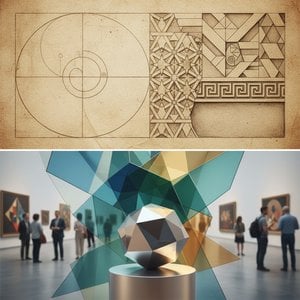
Geometric Design in Art: A Historical Survey & Contemporary Appeal for Collectors
Explore the enduring legacy of geometric abstraction! Discover key artists, historical movements & investment insights for discerning art collectors. Expert guidance from ArtsDot.

The Gilded Age Reimagined: Exploring the Aesthetic Principles & Enduring Legacy of Art Deco
Explore the captivating world of Art Deco! Discover its origins, defining features, cultural impact & enduring legacy. Expert insights for collectors and design enthusiasts. Shop handmade reproductions at ArtsDot.
