


 Katso seinällä
 Lähetä
 Jaa
Jaa
 Tarkemmat tiedot
 Opas
Opas

 Lataa kuva
 Samanlaisia kohteita
 Röntgenkuvaus
 Diaesitys
 Tilastot
The Old Actress
 Oil On Canvas
- WallArt
- German Expressionism
 1926
1926- Modern
 101.0 x 71.0 cm
 Metropolitanin museo
 Lue lisää
Käsinmaalattu öljyvärinen jäljennös
Käsinmaalattu öljyväri kankaalle haluamassasi koossa ja kehyksissä, taiteilijoidemme valmistamana tilauksesta. ( Vaihda tulosteeseen Siirry digitaaliseen kuvaan)




P118B €10

P118H €10

P118W €10

P438Z €10

P508JH €12

P508YH €12

P805H €10

P805Z €10

P919BZ €10

P919G €10

P919XJ €10

P959ZH €10

P968JZ €12

W106C €8

W218G €10

W218JH €8

W218Y €10

W307PJ €10

W316G €10

W316PJ €8

W316Y €10

W398PJ €8

W4111J €10

W500HY €15

W500JH €15

W692G €12

W849H €8

W940BG €15

W953PJ €8




Valitse valmiista mitoistamme sellaiset, jotka vastaavat teoksen alkuperäisiä mittasuhteita.

Kirjoita tarvitsemasi leveys ja korkeus, jotta teos sopii kehyskehyksiisi tai seinällesi. Koska kyseessä on käsinmaalattu teos, taiteilija voi maalata hieman enemmän kuvan ympärille tai rajata sitä hieman, jos haluat eri muotoisen koon — valinta on sinun. Lähetämme sinulle digitaalisen mallikuvan hyväksyttäväksi ennen kuin maalaus alkaa. Tällä sivulla näkyvä kuva ei vastaa lopullista tulosta — vain mallikuva näyttää sen.
Tilauksen jälkeen ArtsDot.com -tiimi lähettää asiakkaalle sähköpostitse ohjeet ja esikatselukuvan.
Maailmanlaajuinen toimitus () 3–4 viikossa tavallisen 5 viikon sijaan. (21 lokakuu). Laadusta ei tingitä.

Ilmainen pikatoimitus ympäri maailman

Korkealaatuinen pellavakangas

Kattava kuljetusvakuutus

Tulliveron palautustakuu

Takuu täydellisestä värien vastaavuudesta

100 päivän palautusoikeus valmistusvirhetapauksissa

100% rahat takaisin -takuu

Määräalennus saatavilla
 Lasivaihtoehto on saatavilla vain alle 110 cm kokoisille teoksille

The Old Actress
Reproduktiotapa
Replikaatin koko
-


Kokonaishinta
€ 230
A Gaze Through Time: The Soul of Max Beckmann’s The Old Actress
In the quiet, heavy atmosphere of 1926, Max Beckmann captured a moment that transcends mere portraiture to become a profound meditation on the human condition. The Old Actress is not simply a depiction of a woman in repose; it is a hauntingly beautiful window into the psyche of an era caught between the trauma of the past and the uncertainty of the future. As the viewer approaches this masterpiece, they are immediately met by the piercing, yet distant gaze of the subject, whose eyes seem to wander far beyond the confines of the canvas, searching for memories or perhaps contemplating the inevitable passage of time. This sense of introspection is palpable, inviting anyone who hangs a reproduction of this work in their home to participate in a silent dialogue with history.
The composition is anchored by the striking presence of the woman, seated with a dignified yet weary posture. Her attire—a severe black dress accented with delicate white lace—carries a weight of solemnity, subtly evoking the austerity of clerical garments and hinting at a life lived with deep moral or spiritual consideration. Nestled in her lap, a ginger cat provides the only warmth in an otherwise somber palette, acting as a tender symbol of companionship that simultaneously highlights the profound solitude of the sitter. Beckmann’s mastery of New Objectivity is on full display here; through his use of distorted spatial perspectives and thick, textured brushstrokes, he creates an environment that feels both physically present and psychologically unsettling.
The Texture of Melancholy and Modernity
Technically, the painting is a triumph of expressionistic depth. Beckmann utilizes oil on canvas to build a surface that is as much about tactile emotion as it is about visual representation. The heavy application of paint creates a palpable atmosphere of melancholy, where every stroke contributes to the sense of unease and gravity. This technique serves to ground the subject in a reality that feels weighted by experience. For the discerning collector or interior designer, this piece offers a sophisticated focal point that brings a layer of intellectual and emotional complexity to any space, whether it be a curated gallery wall or a contemplative study.
To understand The Old Actress is to understand the spirit of post-World War I Europe. The painting breathes the disillusionment of a generation that had witnessed the collapse of old certainties. Beckmann, having served as a medical orderly during the Great War, infused his work with an altered vision of humanity—one where figures are often compressed or slightly skewed to reflect internal tension. In this portrait, the stillness is deceptive; beneath the surface lies the restless energy of a world in transition. It is this duality—the outward calm of the actress and the inward turbulence of her era—that makes this work an enduring icon of modern art, offering timeless inspiration for those who appreciate art that speaks to the resilience of the human spirit.
Kysymykset ja vastaukset
Miten Max Beckmann:n "The Old Actress" yhdistää German Expressionism-suuntauksen taiteilijan kotimaahan?
"The Old Actress" yhdistää German Expressionism-suuntauksen Saksa-maahan teoksen luojan syntymämaan kautta.
Miten kontrasti ja harmonia yhdistyvät teoksessa "The Old Actress"?
Max Beckmann:n "The Old Actress" teoksen väriyhdistelmä yhdistää Statement kontrastin ja Strong Color Unity harmonian.
Kuinka voimakkaita värit teoksessa Max Beckmann:n "The Old Actress" ovat?
Max Beckmann:n "The Old Actress" -teoksessa on Vivid väri-intensiteetti.
Samankaltaisia teoksia


Taiteilijan elämäkerta
early life and artistic development
Max Carl Friedrich Beckmann, a german painter, draftsman, printmaker, sculptor, and writer, was born on february 12, 1884, in leipzig, saxony. His artistic journey began with academically correct depictions—a reflection of the prevailing artistic sensibilities of his time—which later transformed into distorted figures and spaces. This dramatic shift wasn’t merely stylistic; it mirrored Beckmann's profound psychological reckoning following his service as a medical orderly during world war i, an experience that indelibly scarred him and fundamentally altered his perception of humanity. The trauma of the conflict fueled a desire to express the darker aspects of human existence—a preoccupation that would characterize much of his oeuvre.artistic style and influences
Beckmann’s distinctive artistic style emerged from a deep engagement with medieval stained glass imagery, absorbing its symbolic richness and expressive power. However, he wasn't solely bound by tradition; he actively sought inspiration from prominent artists who had shaped the visual landscape of his era. Georges Seurat’s meticulous observation of light and color served as a counterpoint to Vincent van Gogh’s emotionally charged brushstrokes—a dialogue between precision and passion that informed Beckmann’s artistic vision. Furthermore, he drew heavily from the works of Rembrandt, Bosch, Bruegel, and Rubens, artists who excelled in portraying human suffering and spiritual contemplation. These influences instilled in him a commitment to conveying complex emotions through visual language.notable works and exhibitions
Beckmann's artistic output is marked by several seminal pieces that exemplify his stylistic innovations and thematic concerns. “The Bark,” acquired by the national gallery in berlin, stands as a testament to his ability to capture the desolate beauty of nature—a motif recurring throughout his paintings. Equally compelling is “Self-Portrait in Tuxedo,” purchased in 1928, which offers an intimate glimpse into Beckmann’s inner life and artistic introspection. His retrospectives at the städtische kunsthalle mannheim (1928) and in basle and zurich (1930) cemented his reputation as a leading figure of German Expressionism and showcased the breadth of his artistic exploration.later life and exile
Beckmann’s personal trajectory took an abrupt turn with the ascendancy of Adolf Hitler, resulting in his dismissal from the art school in frankfurt—a devastating blow to his ambitions—and the confiscation of over 500 of his artworks by the nazis. Forced into self-imposed exile in amsterdam for ten years, Beckmann wrestled tirelessly for a visa to emigrate to the united states, a pursuit that ultimately proved unsuccessful. Despite these hardships, he continued to produce significant works during his exile period, demonstrating unwavering artistic dedication.legacy
Beckmann’s influence extends beyond his own lifetime, shaping subsequent generations of artists and contributing to the ongoing dialogue about art's role in confronting existential anxieties. He taught at the art schools of washington university in st. louis and the brooklyn museum—passing on his knowledge and fostering a new cohort of talent. His first retrospective in the united states took place in 1948 at the city art museum, saint louis—a pivotal moment recognizing his enduring artistic legacy. Max-slevogt galerie, germany continues to champion Beckmann’s oeuvre, ensuring that his powerful imagery remains accessible to audiences worldwide.
Max Beckmann
1884 - 1950 , Saksa
Tietoa taiteilijasta
- Artistic Movement Or Style: Expressionismi
- Artists Or Movements Influenced By This Artist: ['Rembrandt']
- Artists Who Influenced This Artist:
- Georges Seurat
- Vincent van Gogh
- Date Of Birth: Helmikuu 12, 1884
- Date Of Death: Joulukuu 27, 1950
- Full Name: Max Carl Friedrich Beckmann
- Nationality: Saksa
- Notable Artworks:
- The Bark
- Itselättö
- Place Of Birth: Leipzig, Saksa
Aiheeseen liittyvät artikkelit
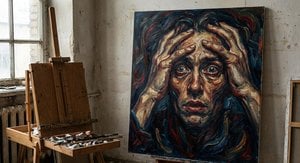
Figurative Expressionism: Emotional Intensity & Subjective Reality in 20th-Century Art
Explore the powerful world of Figurative Expressionism with ArtsDot. Discover key artists like Kirchner & Beckmann, understand its emotional depth, and learn how to collect this influential 20th-century art movement.

Saksan ekspressionismin 10 mestariteosta: Taidetta ja tunnetta kotiisi
Uppoudu Saksan ekspressionismin maailmaan! Tutustu 10 mestariteokseen – Kirchnerin voimakkaista väreistä Munchin tunteisiin. Löydä taidemaalauksien tarinat ja inspiroi sisustusta ArtsDot.com:ssa. Explore the full collection online!

Max Beckmann: Navigating Trauma & Modernity Through a Distorted Lens
Explore the powerful world of Max Beckmann's art – a journey through trauma, modernity & distortion. Discover his key works, influences, and lasting legacy with expert analysis.

The Visceral Cry of a Nation: Exploring Emotion & Distortion in German Expressionism
Explore the powerful world of German Expressionism with ArtsDot. Discover Kirchner, Nolde & Die Brücke's emotive masterpieces. Learn about this pivotal art movement and its lasting impact on modern art.
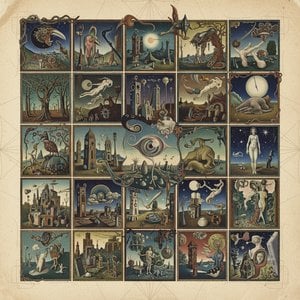
Max Ernstin 25 mestariteosta: Surrealismin syvyydet ja taidekodin inspiraatio
Tutustu Max Ernstin 25 vaikuttavimpaan mestariteokseen! Uppoudu surrealismin maailmaan, dadaismin juuriin ja taiteilijan psykologisiin visioihin. Löydä inspiraatiota kotiisi ArtsDot.com:sta – laadukkaat taideprintit ja julisteet.


