


 Katso seinällä
 Lähetä
 Jaa
Jaa
 Tarkemmat tiedot
 Opas
Opas

 Lataa kuva
 Samanlaisia kohteita
 Röntgenkuvaus
 Diaesitys
 Tilastot
Selected Details after Ingres II
 Acrylic On Canvas
- WallArt
- Dada
 1968
1968 34.0 x 23.0 cm
 Lue lisää
Giclée- ja taideprintit
Museolaatuisia giclée- tai kankaitaulun tulosteita nopealla tuotannolla ja joustavilla viimeistelyvaihtoehdoilla. ( Tilaa käsinmaalattu jäljennös Siirry digitaaliseen kuvaan)




P118B $10

P118H $10

P118W $10

P438Z $10

P508JH $12

P508YH $12

P805H $10

P805Z $10

P919BZ $10

P919G $10

P919XJ $10

P959ZH $10

P968JZ $12

W106C $8

W218G $10

W218JH $8

W218Y $10

W307PJ $10

W316G $10

W316PJ $8

W316Y $10

W398PJ $8

W4111J $10

W500HY $15

W500JH $15

W692G $12

W849H $8

W940BG $15

W953PJ $8




Valitse valmiista mitoistamme sellaiset, jotka vastaavat teoksen alkuperäisiä mittasuhteita.

Voit syöttää omat mitat sopiaksesi tiettyyn kehykseen tai tilaan. Jos valittu koko ei vastaa alkuperäisen kuvan mittasuhteita, rajaamme teosta tai laajennamme kuvaa peilatulla tai yhtenäisellä reunalla. Digitaalinen mallikuva lähetetään hyväksyttäväksi ennen tuotannon aloittamista.
Huomaathan, että näytöllä näkyvä esikatselu ei vastaa lopullista rajausta tai laajennusta. Vain mallikuva näyttää lopullisen sommittelun tarkasti.
Vaikka räätälöityjä kokoja on saatavilla, suosittelemme valitsemaan mitat valmiista listasta alkuperäisten mittasuhteiden säilyttämiseksi.
Maailmanlaajuinen toimitus () 2 viikossa tavallisen 4–5 viikon sijaan. (26 syyskuu)

Ilmainen pikatoimitus ympäri maailman

Korkealaatuinen pellavakangas

Kattava kuljetusvakuutus

Tulliveron palautustakuu

Takuu täydellisestä värien vastaavuudesta

100 päivän palautusoikeus valmistusvirhetapauksissa

100% rahat takaisin -takuu

Määräalennus saatavilla
 Lasivaihtoehto on saatavilla vain alle 110 cm kokoisille teoksille

Selected Details after Ingres II
Giclée- ja taideprintit
Replikaatin koko
-


Kokonaishinta
$ 62
A Delicate Exploration of Intimacy: Marcel Duchamp’s ‘Selected Details after Ingres II’
Created in 1968, during the final year of his prolific life, ‘Selected Details after Ingres II’ is a deceptively simple yet profoundly resonant work by the groundbreaking artist Marcel Duchamp. This black and white line drawing offers a quiet contemplation on the human form and the complexities of connection.
Subject & Composition
The artwork depicts two nude figures locked in an intimate embrace. The composition is tightly focused, centering entirely on their intertwined bodies against a stark, undefined background. Duchamp deliberately avoids any suggestion of setting or narrative context, directing the viewer’s attention solely to the physical and emotional interaction between the pair. Their forms are not idealized but rendered with a sensitive realism that emphasizes vulnerability and closeness.
Style & Technique
Executed with delicate precision using what appears to be pen or pencil, ‘Selected Details after Ingres II’ showcases Duchamp's mastery of line. The absence of shading or dramatic contrast creates a flat, almost graphic quality. This stylistic choice echoes early 20th-century figurative drawing and hints at influences from Expressionism in its simplification of form and focus on emotional impact. The work is characterized by its economy of means – Duchamp achieves remarkable expressiveness with minimal visual elements.
Historical Context & Artistic Lineage
The title itself provides a crucial key to understanding the artwork. It references Jean-Auguste-Dominique Ingres, a 19th-century master of Neoclassical painting renowned for his precise and idealized depictions of the nude. Duchamp’s work is not a direct copy or homage but rather a playful *deconstruction* of Ingres' aesthetic. He strips away the academic polish and sensual idealization, presenting instead a more raw and psychologically complex portrayal of intimacy. This act aligns with Duchamp’s broader artistic project – challenging conventional notions of art and beauty.
Symbolism & Emotional Resonance
While Duchamp often resisted definitive interpretations of his work, ‘Selected Details after Ingres II’ evokes a sense of longing and quiet sadness. The figures' embrace feels both protective and melancholic. The lack of facial detail encourages viewers to project their own emotions onto the scene. It is a study in human connection stripped bare, revealing its inherent tenderness and fragility. The deliberate ambiguity invites contemplation on themes of love, loss, and the ephemeral nature of physical intimacy.
Collecting & Interior Design
For collectors: This work represents a fascinating late-period exploration by one of the 20th century’s most influential artists. Its relatively small size (34 x 23 cm) makes it an accessible entry point into Duchamp's oeuvre.
- Its monochromatic palette and minimalist aesthetic make it incredibly versatile for a variety of interior styles.
- It pairs well with modern or contemporary furnishings, adding a touch of intellectual sophistication to any space.
- Consider framing the artwork simply, allowing the delicate lines and emotional weight of the image to take center stage.
‘Selected Details after Ingres II’ is more than just a drawing; it's an invitation to reflect on the enduring mysteries of human connection. It’s a piece that rewards close viewing and offers new insights with each encounter.
Samankaltaisia teoksia


Taiteilijan elämäkerta
Marcel Duchamp: A Revolutionary Spirit
Marcel Duchamp, born Henri-Robert-Marcel Duchamp in 1887 in Blainville-Crevon, Normandy, was more than an artist; he was a philosophical provocateur who fundamentally altered the course of modern art. His early life, though seemingly conventional – nurtured within a family that appreciated artistic expression with both brothers pursuing successful careers as artists – hinted at the iconoclasm to come. Duchamp initially pursued formal training, mastering traditional techniques and experimenting with post-impressionist styles. However, this academic foundation served not as an end in itself, but as a springboard for questioning the very nature of art, its purpose, and its definition. He wasn’t content merely to depict the world; he sought to challenge how we perceive it, and what constitutes artistic value. This restless intellectual curiosity would become the defining characteristic of his prolific career.Early Artistic Explorations: Cubism and Impressionism
Duchamp's initial foray into art began with a fascination for Impressionism, absorbing influences from artists like Monet and Sisley. He diligently honed his painting skills, capturing fleeting moments of light and color with meticulous detail – a technique that would later inform his approach to more conceptual endeavors. Yet, he quickly recognized the limitations of representational art, perceiving it as an attempt to impose order onto a chaotic reality. This realization propelled him toward Cubism, spearheaded by Picasso and Braque, where he embraced fragmented forms and multiple perspectives. *Portrait of Chess Players* (1911) exemplifies this stylistic shift, demonstrating Duchamp’s willingness to experiment with innovative visual strategies. The influence of Cézanne's geometric simplification further solidified his commitment to exploring new artistic possibilities.The Dadaist Rebellion: Challenging Artistic Conventions
The horrors of World War I profoundly impacted Duchamp’s worldview, fueling a deep disillusionment with societal values and artistic traditions. He abandoned academic pursuits altogether, joining the ranks of Dadaists – artists who vehemently rejected logic, reason, and bourgeois morality. This movement sought to dismantle established norms and expose the absurdity of cultural pretensions. Within Dadaism, Duchamp unleashed his subversive genius, rejecting beauty as an aesthetic criterion and prioritizing conceptual provocation. His aim wasn’t to create aesthetically pleasing objects; it was to disrupt viewers' perceptions and incite critical reflection. The infamous *Fountain* (1917), a porcelain urinal signed “R. Mutt,” epitomized this radical stance—a deliberate affront to artistic conventions that sparked considerable controversy and cemented Duchamp’s place in art history.The Birth of Conceptual Art: Beyond Representation
Duchamp's groundbreaking contribution to the art world was arguably his pioneering role in establishing Conceptual Art. He dismantled the traditional distinction between artwork and object, arguing that the artist’s idea—the concept behind the work—was paramount. This perspective fundamentally shifted artistic priorities away from visual appearance toward intellectual inquiry and philosophical exploration. Works like *The Large Glass* (1915–1923), a monumental assemblage incorporating glass panels, mirrors, and enamel paint, exemplify this preoccupation with complex symbolism and intricate craftsmanship. The meticulous construction of the Glass underscored Duchamp’s belief in the transformative power of artistic process—a deliberate rejection of spontaneous creativity in favor of carefully considered conceptual frameworks.Legacy and Enduring Influence
Marcel Duchamp's impact on subsequent generations of artists is undeniable. He irrevocably altered our understanding of art, advocating for a shift from visual representation to intellectual contemplation. His unwavering conviction that art should reside in the mind—not merely in the eye—continues to inspire artists today.- Cubism: Early exploration of fractured forms and spatial representation.
- Dadaism: Rejection of logic, reason, and traditional artistic values in response to World War I.
- Conceptual Art: Emphasis on the idea behind the artwork rather than its aesthetic qualities.

Marcel Duchamp
1887 - 1968 , Ranska
Tietoa taiteilijasta
- Artistic Movement Or Style:
- Kubismi
- Dadaismi
- Artists Or Movements Influenced By This Artist: ['Kubismi']
- Date Of Birth: 28 heinäkuuta 1887
- Date Of Death: 2 oktoberia 1968
- Full Name: Marcel Duchamp
- Nationality: Ranskalainen-Amerikkalainen
- Notable Artworks:
- Fontana
- L.H.O.O.Q.
- Suuri lasi
- Place Of Birth: Blainville, Ranska
Aiheeseen liittyvät artikkelit
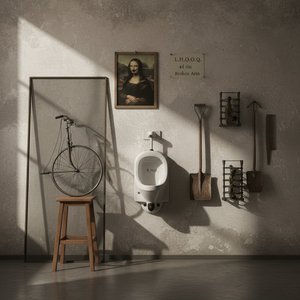
Marcel Duchamp: Challenging Conventions & Redefining Art in the 20th Century
Explore the revolutionary art of Marcel Duchamp! Discover how his Dadaist readymades challenged artistic conventions & redefined modern art. A deep dive into 'Fountain', conceptual shifts, and his lasting impact.
Timeless & Chic: Elevating Your New Home with the Sophistication of Black and White Photography
Transform your new home with the timeless allure of black and white photography. ArtsDot.com specializes in elegant monochrome decor and custom hand-painted wedding portraits that turn cherished milestones into lasting, soulful masterpieces. Elevate your space with ease.

Monochrome Visions: Exploring the Aesthetic & Historical Significance of Black & White Photography
Explore the rich history & artistic power of black and white photography. From early techniques to iconic masters like Ansel Adams, discover why monochrome continues to captivate art lovers today. Expert insights for collectors.

Valkean mestariteoksia: Top 10 kuuluisinta maalausta ja niiden tarinat – ArtsDot.com
Tutustu 10 kuuluisimpaan valkoiseen maalauteen – Monet'sta Rothkoon. Inspiroivat tarinat, taidehistoriaa ja tekniikoita. Löydä täydellinen sisustustaulu ArtsDot.com:ista! Tutki kokoelma verkossa.

Mustan sävyt taiteessa: 10 kuuluisinta mestariteosta ja niiden tarinat
Tutustu 10 kuuluisimpaan mustasävyiseen mestariteokseen! Rembrandtista Manetiin, syvenny taiteen historiaan ja synkkiin tunnetiloihin. Laadukkaat taidevedokset sisustukseesi ArtsDot.com:ssa. Tutustu kokoelmaamme verkossa!


