


 Katso seinällä
 Lähetä
 Jaa
Jaa
 Tarkemmat tiedot
 Opas
Opas

 Lataa kuva
 Samanlaisia kohteita
 Röntgenkuvaus
 Diaesitys
 Tilastot
Laundry Barge
 Oil On Canvas
- WallArt
- Fauvism
 1910
1910- Modern
 65.0 x 74.0 cm
 Lue lisää
Tällä sivulla esitettyä taideteosta suojaa tekijänoikeuslaki, mikä tarkoittaa, ettemme voi laillisesti luoda tai myydä täsmälleen samanlaista jäljennöstä. Tämä suoja toteutetaan kansainvälisten sopimusten, kuten esimerkiksi Berne-konventio ja kansallisilla laeilla, mukaan lukien niillä määritellyt Yhdysvaltain tekijänoikeuslaki – Luku 17. Kaikki oikeudet pidätetään. Luvaton kopiointi tai jäljittely on kielletty.
Tämä menetelmä noudattaa täysin tekijänoikeussäännöksiä, sillä se ei sisällä suojatun taideteoksen kopioimista tai jäljentämistä. Sen sijaan kyseessä on luova uudelleentulkinta – uusi maalaus, joka ammentaa vaikutteita alkuperäisestä, mutta ei ole sen identtinen kopio.
Giclée- ja taideprintit
Museolaatuisia giclée- tai kankaitaulun tulosteita nopealla tuotannolla ja joustavilla viimeistelyvaihtoehdoilla. ( Tilaa käsinmaalattu jäljennös Siirry digitaaliseen kuvaan)




P118B €10

P118H €10

P118W €10

P438Z €10

P508JH €12

P508YH €12

P805H €10

P805Z €10

P919BZ €10

P919G €10

P919XJ €10

P959ZH €10

P968JZ €12

W106C €8

W218G €10

W218JH €8

W218Y €10

W307PJ €10

W316G €10

W316PJ €8

W316Y €10

W398PJ €8

W4111J €10

W500HY €15

W500JH €15

W692G €12

W849H €8

W940BG €15

W953PJ €8




Valitse valmiista mitoistamme sellaiset, jotka vastaavat teoksen alkuperäisiä mittasuhteita.

Kirjoita tarvitsemasi leveys ja korkeus, jotta tuloste sopii kehyskokoon tai seinällesi. Tulostetta voidaan vain leikata, sitä ei voi koskaan tehdä suuremmaksi kuin alkuperäinen kuva, joten eri muotoinen koko aiheuttaa osan kuvasta katoamisen. Lähetämme sinulle digitaalisen mallikuvan hyväksyttäväksi ennen kuin aloitamme tulostuksen. Tällä sivulla näkyvä kuva ei näytä lopullista leikkausta — vain mallikuva näyttää sen.
Maailmanlaajuinen toimitus () 2 viikossa tavallisen 4–5 viikon sijaan. (25 lokakuu)

Ilmainen pikatoimitus ympäri maailman

Korkealaatuinen pellavakangas

Kattava kuljetusvakuutus

Tulliveron palautustakuu

Takuu täydellisestä värien vastaavuudesta

100 päivän palautusoikeus valmistusvirhetapauksissa

100% rahat takaisin -takuu

Määräalennus saatavilla
 Lasivaihtoehto on saatavilla vain alle 110 cm kokoisille teoksille

Laundry Barge
Giclée- ja taideprintit
Replikaatin koko
-


Kokonaishinta
€ 54
A Glimpse into Modernity: Decoding Duchamp’s *Laundry Barge*
Marcel Duchamp's *Laundry Barge*, painted in 1910, is far more than a simple depiction of domestic life on the water. It represents a pivotal moment in the artist’s development and a fascinating intersection of artistic movements at the dawn of modernism. This captivating scene – a barge transformed into a floating home amidst a verdant landscape – offers a compelling blend of Fauvist vibrancy and nascent Cubist sensibilities, signaling Duchamp's departure from traditional representation. The painting invites us to consider the beauty found in everyday scenes and the potential for artistic innovation within seemingly mundane subjects.Fauvism’s Embrace & Proto-Cubist Hints
The most immediately striking aspect of *Laundry Barge* is its bold use of color, a hallmark of Fauvism. The intensely saturated red roof of the house on the barge leaps out against the lush greens and blues of the surrounding foliage and water. This isn’t naturalistic color; it's emotive color, used to convey feeling and create visual energy. However, Duchamp doesn’t fully commit to the unrestrained emotionalism of pure Fauvism. Look closely, and you’ll detect a subtle fracturing of form – particularly in the depiction of the trees and the barge itself. These geometric simplifications hint at the Proto-Cubist explorations that would soon dominate his work. The painting exists beautifully *between* styles, showcasing Duchamp's experimental spirit as he absorbed and reinterpreted contemporary artistic trends. It’s a transitional piece, brimming with potential.Symbolism & Emotional Resonance
The subject matter itself is intriguing. A laundry barge – a vessel dedicated to the practical task of washing clothes – becomes an idyllic home. This juxtaposition suggests themes of transience, adaptation, and finding beauty in unexpected places. Is Duchamp commenting on the changing nature of modern life? Perhaps he’s highlighting the resourcefulness and resilience of those living on the margins. The painting evokes a sense of peacefulness and quiet contemplation, despite its bold colors. There's an intimacy to the scene; we feel like observers peering into a private world. The barge isn't grand or imposing; it's humble and human-scaled, fostering a connection with the viewer.A Lasting Legacy
*Laundry Barge* is not merely a beautiful painting; it’s a crucial stepping stone in Duchamp’s extraordinary artistic journey. It demonstrates his willingness to challenge conventions, experiment with form and color, and ultimately redefine what art could be. While he would later become renowned for his conceptual works and “readymades,” this early canvas reveals the foundations of his innovative thinking. For collectors and interior designers, a reproduction of *Laundry Barge* offers a touch of sophisticated modernity – a vibrant splash of color and a subtle nod to the revolutionary spirit of 20th-century art.- Size: 65 x 74 cm
- Date: 1910
- Style: Fauvism, Proto-Cubism
Kysymykset ja vastaukset
Kuinka vaalea "Laundry Barge" on kokonaisuudessaan?
Kokonaisuudessaan teoksen "Laundry Barge" kirkkaus on kirjattu arvoon brilliant. Koettu kirkkaus kuvaa sitä, kuinka vaaleana tai tummana teos vaikuttaa.
Onko teoksessa Marcel Duchamp:n "Laundry Barge" värit kylläisiä vai hillittyjä?
Teoksen Marcel Duchamp:n "Laundry Barge" väreissä on Balanced Soft kylläisyys. Kylläisyys kuvaa värien voimakkuutta tai himmeyttä.
Minä vuonna teos Marcel Duchamp:n "Laundry Barge" on luotu?
"Laundry Barge" on peräisin vuodelta 1910. Teos sijoittuu Marcel Duchamp uran ja aikakauden kontekstiin.
Samankaltaisia teoksia


Taiteilijan elämäkerta
Marcel Duchamp: A Revolutionary Spirit
Marcel Duchamp, born Henri-Robert-Marcel Duchamp in 1887 in Blainville-Crevon, Normandy, was more than an artist; he was a philosophical provocateur who fundamentally altered the course of modern art. His early life, though seemingly conventional – nurtured within a family that appreciated artistic expression with both brothers pursuing successful careers as artists – hinted at the iconoclasm to come. Duchamp initially pursued formal training, mastering traditional techniques and experimenting with post-impressionist styles. However, this academic foundation served not as an end in itself, but as a springboard for questioning the very nature of art, its purpose, and its definition. He wasn’t content merely to depict the world; he sought to challenge how we perceive it, and what constitutes artistic value. This restless intellectual curiosity would become the defining characteristic of his prolific career.Early Artistic Explorations: Cubism and Impressionism
Duchamp's initial foray into art began with a fascination for Impressionism, absorbing influences from artists like Monet and Sisley. He diligently honed his painting skills, capturing fleeting moments of light and color with meticulous detail – a technique that would later inform his approach to more conceptual endeavors. Yet, he quickly recognized the limitations of representational art, perceiving it as an attempt to impose order onto a chaotic reality. This realization propelled him toward Cubism, spearheaded by Picasso and Braque, where he embraced fragmented forms and multiple perspectives. *Portrait of Chess Players* (1911) exemplifies this stylistic shift, demonstrating Duchamp’s willingness to experiment with innovative visual strategies. The influence of Cézanne's geometric simplification further solidified his commitment to exploring new artistic possibilities.The Dadaist Rebellion: Challenging Artistic Conventions
The horrors of World War I profoundly impacted Duchamp’s worldview, fueling a deep disillusionment with societal values and artistic traditions. He abandoned academic pursuits altogether, joining the ranks of Dadaists – artists who vehemently rejected logic, reason, and bourgeois morality. This movement sought to dismantle established norms and expose the absurdity of cultural pretensions. Within Dadaism, Duchamp unleashed his subversive genius, rejecting beauty as an aesthetic criterion and prioritizing conceptual provocation. His aim wasn’t to create aesthetically pleasing objects; it was to disrupt viewers' perceptions and incite critical reflection. The infamous *Fountain* (1917), a porcelain urinal signed “R. Mutt,” epitomized this radical stance—a deliberate affront to artistic conventions that sparked considerable controversy and cemented Duchamp’s place in art history.The Birth of Conceptual Art: Beyond Representation
Duchamp's groundbreaking contribution to the art world was arguably his pioneering role in establishing Conceptual Art. He dismantled the traditional distinction between artwork and object, arguing that the artist’s idea—the concept behind the work—was paramount. This perspective fundamentally shifted artistic priorities away from visual appearance toward intellectual inquiry and philosophical exploration. Works like *The Large Glass* (1915–1923), a monumental assemblage incorporating glass panels, mirrors, and enamel paint, exemplify this preoccupation with complex symbolism and intricate craftsmanship. The meticulous construction of the Glass underscored Duchamp’s belief in the transformative power of artistic process—a deliberate rejection of spontaneous creativity in favor of carefully considered conceptual frameworks.Legacy and Enduring Influence
Marcel Duchamp's impact on subsequent generations of artists is undeniable. He irrevocably altered our understanding of art, advocating for a shift from visual representation to intellectual contemplation. His unwavering conviction that art should reside in the mind—not merely in the eye—continues to inspire artists today.- Cubism: Early exploration of fractured forms and spatial representation.
- Dadaism: Rejection of logic, reason, and traditional artistic values in response to World War I.
- Conceptual Art: Emphasis on the idea behind the artwork rather than its aesthetic qualities.

Marcel Duchamp
1887 - 1968 , Ranska
Tietoa taiteilijasta
- Artistic Movement Or Style:
- Kubismi
- Dadaismi
- Artists Or Movements Influenced By This Artist: ['Kubismi']
- Date Of Birth: 28 heinäkuuta 1887
- Date Of Death: 2 oktoberia 1968
- Full Name: Marcel Duchamp
- Nationality: Ranskalainen-Amerikkalainen
- Notable Artworks:
- Fontana
- L.H.O.O.Q.
- Suuri lasi
- Place Of Birth: Blainville, Ranska
Aiheeseen liittyvät artikkelit

Wassily Kandinskin 25 mestariteosta: Värien ja muodon syvä maailma | ArtsDot
Tutustu Wassily Kandinskin 25 vaikuttavinta teosta! Uppoudu abstraktin taiteen maailmaan, värien symboliikkaan ja modernin ekspressionismin historiaan. Löydä inspiraatiota kodin sisustukseen ArtsDot.com:ista – laadukkaat taideprintit ja reproduktiot.

Abstraktin ekspressionismin mestariteokset: Taidetta ja inspiraatiota kotiisi
Tutustu abstraktin ekspressionismin 10 mestariteokseen! Jackson Pollock, Mark Rothko ja muut taiteilijat inspiroivat tunteellisuudellaan. Löydä upeita taidemaalauksia kotiisi ArtsDot.comista – museolaatuista laatua ja sisustusehdotuksia.

Geometrisen abstraktion mestariteokset: Taidetta kotiin ArtsDotilta
Tutustu geometrisen abstraktion 10 mestariteokseen! Piet Mondrian, Kandinsky ja muut taiteilijat muovasivat modernin taiteen historiaa. Löydä inspiraatiota kotiisi ArtsDotilta – laadukkaat taideprintit ja sisustusehdotukset odottavat. Tutki kokoelma verkossa!

Beyond Form & Color: Geometric Abstraction's Evolution in 20th/21st Century Art
Explore the evolution of geometric abstraction from Cubism to contemporary art. Discover key artists like Malevich & Mondrian, investment insights, and expert collecting advice at ArtsDot.
Marcel Duchamp: Challenging Conventions & Redefining Art in the 20th Century
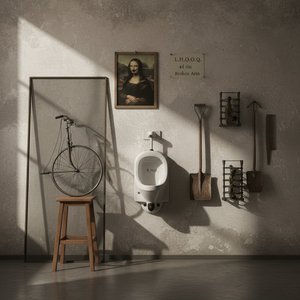
Explore the revolutionary art of Marcel Duchamp! Discover how his Dadaist readymades challenged artistic conventions & redefined modern art. A deep dive into 'Fountain', conceptual shifts, and his lasting impact.


