

 Esikatselu
 Jaa teos
 Jaa
Jaa
 Tiedot
 Opas
Opas

 Lataa kuva
 Samanlaisia kohteita
 Röntgenkuvaus
 Diaesitys
 Kysymykset ja vastaukset
 Tilastot
Rock Warbler

 Lue lisää
Giclée- ja taideprintit
Museolaatuisia giclée- tai kankaitaulun tulosteita nopealla tuotannolla ja joustavilla viimeistelyvaihtoehdoilla. ( Osta käsinmaalattu taideteos Siirry digitaaliseen kuvaan)




































Valitse valmiista mitoistamme sellaiset, jotka vastaavat teoksen alkuperäisiä mittasuhteita.

Syötä tarvitsemasi leveys ja korkeus, jotta tuloste sopii kehyksiisi tai seinällesi. Tulostetta voidaan vain leikata, sitä ei voida koskaan suurentaa alkuperäistä kuvaa suuremmaksi, joten eri muotoinen koko aiheuttaa osan kuvasta katoamisen. Lähetämme sinulle digitaalisen mallikuvan hyväksyttäväksi ennen kuin aloitamme tulostuksen. Tällä sivulla näkyvä kuva ei näytä lopullista rajausta — vain mallikuva näyttää sen.
Maailmanlaajuinen toimitus () 2 viikossa tavallisen 4–5 viikon sijaan. (7 marraskuu)

Ilmainen pikatoimitus ympäri maailman

Korkealaatuinen pellavakangas

Kattava kuljetusvakuutus

Tulliveron palautustakuu

Takuu täydellisestä värien vastaavuudesta

100 päivän palautusoikeus (vain valmistusvirheet)

100% rahat takaisin -takuu

Määräalennus tarjolla
 Lasivaihtoehto on saatavilla vain alle 110 cm kokoisille teoksille

Rock Warbler
Giclée- ja taideprintit
Replikaatin koko
-


Kokonaishinta
€ 56
Samankaltaisia teoksia


Taiteilijan elämäkerta
A Pioneer of the Australian Wild
Born into a lineage of scientific artistry in the United Kingdom, John William Lewin arrived on the shores of New South Wales in 1800, forever altering the visual record of a burgeoning colony. As the son of the renowned naturalist and illustrator William Lewin, his very foundation was built upon the meticulous observation of the natural world. While he originally intended to travel to Australia to document entomological life for a British patron, his arrival marked the beginning of a profound transformation in his art. He transitioned from the conventional natural history illustrations practiced in England to creating deeply authentic images that captured the unique essence of the Australian landscape.
Lewin’s journey was one of both scientific rigor and artistic evolution. Settling initially near Parramatta, he utilized every opportunity to venture into the untamed wilderness, accompanying expeditions to the Bass Strait, the Hunter River, and even the rugged terrain beyond the Blue Mountains. His work was not merely a collection of specimens but an attempt to grasp the very atmosphere of the bush. He possessed a rare ability to observe the translucent foliage of the eucalyptus and the delicate, feathery grasses of the interior, rendering them with a sense of light and life that avoided the stifling conventions of European art.
The Art of Observation and Legacy
The breadth of Lewin's repertoire extended far beyond the wings of birds and the carapaces of insects. He was a versatile observer who captured the diversity of Australian fauna, from the enigmatic duck-billed platypus to the vibrant species of the sea. His skill in documenting the bounty of the colony is perhaps most strikingly realized in his oil painting, Fish catch and Dawes Point, Sydney Harbour, which stands as the earliest known oil painting on canvas in Australia. In this work, he masterfully arranged various species like the snapper and hammerhead shark, suggesting an abundance that mirrored the hopes of the new settlement.
Beyond his scientific contributions, Lewin held significant roles within the colonial structure, serving as the city coroner and working under the patronage of Governors Philip Gidley King, William Bligh, and Lachlan Macquarie. His published works, such as Prodromus Entomology and Birds of New Holland with their Natural History, remain vital historical documents. Through his delicate watercolors and precise engravings, he provided a window into a world that was, to the European eye, entirely new. Today, his legacy lives on not only in museum collections but in the very names of the species that continue to inhabit the lands he so lovingly documented.
- Notable Species Named After Him: Lewin's rail, Lewin's honeyeater, and Lewin's euploea.
- Key Artistic Contributions: The first professional artist of the New South Wales colony and creator of the first illustrated book engraved and printed in Australia.

John William Lewin
1770 - 1819 , United Kingdom
Pähkinänkuoressa
- Artistic Movement Or Style: Natural History Illustration
- Full Name: John William Lewin
- Nationality: English-born
- Notable Artworks:
- Yellow Ear Honeysucker
- Rock Warbler
- Duck-billed platypus
- Spotted grossbeak
- Fish catch and Dawes Point, Sydney Harbour
- Place Of Birth: United Kingdom
- Date Of Birth: 1770
- Date Of Death: 1819
Aiheeseen liittyvät artikkelit

Ephemeral Visions: Exploring the History & Emotional Resonance of Watercolor Painting
Explore the captivating history of watercolor painting, from ancient techniques to modern masters like Kandinsky & Blake. Discover essential artists, collecting tips & the emotional power of this luminous medium. Expert insights for art enthusiasts.
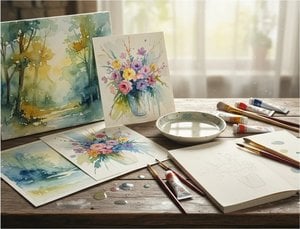
Ephemeral Visions: Exploring the Artistic Legacy & Nuances of Watercolor Painting
Explore the captivating world of watercolor painting! Discover its rich history, essential techniques, influential artists & collecting tips from art experts. A comprehensive guide for enthusiasts.

John Singer Sargent's 25 Masterpieces: Portraits & Beyond | ArtsDot
Explore 25 iconic John Singer Sargent paintings – from dazzling portraits to Impressionist landscapes. Discover the stories behind Madame X, El Jaleo & more! Find museum-quality art reproductions and elevate your home decor with ArtsDot.com.

10 Vesivärimaalausta, Jotka Muuttivat Taiteen – Inspiroi Sisustuksesi ArtsDotilla
Tutustu 10 legendaariseen vesivärimaalaukseen, jotka muuttivat taiteen historiaa! Inspiroiva tarina Turnerista Monetiin. Löydä upeita akvarelleja ja sisustusideoita ArtsDotilla. Tutki kokoelma verkossa!

Ephemeral Visions: Exploring the Artistic Legacy & Contemporary Practice of Watercolor Painting
Explore the captivating world of watercolor painting! Discover its rich history, essential techniques, influential artists & collecting tips. A comprehensive guide for art enthusiasts from ArtsDot.