
 Oil On Canvas
- WallArt
- Dutch Golden Age
 24.0 x 38.0 cm
 Pushkinin Valtion Taidemuseo

The picture follows your choices: , .
Keräilykohteen kuvaus
Experience Hendrick Avercamp's 'Skaters' – a vibrant Dutch Golden Age painting capturing a lively winter scene with ice skating, bustling town life, and a touch of festive charm.
 Lue lisää
Taiteilijan elämäkerta
"FinnishMetaDescription": "Hendrik Avercamp (1585-1634) oli merkittävä hollantilainen maalaaja, joka tunnetaan erityisesti eloisista talvisista maisemamaalauksistaan ja 1700-luvun Hollannin elämän kuvaamisesta jäätiköllä. Hänen tyylinsä yhdistää flaamilaisten perinteiden ja hollantilaisen realismia."
Käsinmaalattu öljyvärinen jäljennös
Käsinmaalattu öljyväri kankaalle haluamassasi koossa ja kehyksissä, taiteilijoidemme valmistamana tilauksesta. ( Vaihda tulosteeseen Siirry digitaaliseen kuvaan)
More about this painting
 Esikatselu
 Jaa teos
 Jaa
Jaa
 Tiedot
 Opas
Opas

 Lataa kuva
 Samanlaisia kohteita
 Röntgenkuvaus
 Diaesitys
 Q&A
Q&A Tilastot
Order your painting in four simple steps
Take your time. You can change any answer; the price in your order card follows each choice.
1 Step one of four
Which size would you like?
These sizes keep the proportions of the original painting. The drawing shows your choice on a wall, above a two-metre sofa.
Or give your own measurements
Valitse valmiista mitoistamme sellaiset, jotka vastaavat teoksen alkuperäisiä mittasuhteita.

Kirjoita tarvitsemasi leveys ja korkeus, jotta teos sopii kehyksiisi tai seinällesi. Koska kyseessä on käsinmaalattu teos, taiteilija voi maalata hieman enemmän kuvan ympärille tai rajata sitä hieman, jos haluat eri muotoisen koon — valinta on sinun. Lähetämme sinulle digitaalisen mallikuvan hyväksyttäväksi ennen kuin maalaus alkaa. Tällä sivulla näkyvä kuva ei vastaa lopullista tulosta — vain mallikuva näyttää sen.
2 Step two of four
How should it be prepared: rolled, stretched or framed?
The prices below are for the size you chose in step one.
Choose the edges of the stretched canvas
Choose your frame

White €1

Blurside €1

Extended €1

P118B €10

P118H €10

P118W €10

P438Z €10

P508JH €12

P508YH €12

P805H €10

P805Z €10

P919BZ €10

P919G €10

P919XJ €10

P959ZH €10

P968JZ €12

W106C €8

W218G €10

W218JH €8

W218Y €10

W307PJ €10

W316G €10

W316PJ €8

W316Y €10

W398PJ €8

W4111J €10

W500HY €15

W500JH €15

W692G €12

W849H €8

W940BG €15

W953PJ €8

H24-GOLD €30

H24-SILVER €30

H36-GOLD €45

H36-SILVER €45
Kehystetty
Moulding: . Overall size with the frame: .
3 Step three of four
Would you like anything changed in the painting?
Most people answer no. Because each painting is made by hand, our artist can also adapt it for you.
After order, ArtsDot.com team will email client for instructions and provide a mockup preview
4 Step four of four
A few finishing options
All of them are optional. The answers already selected cost nothing extra.
Who paints it?
Maailmanlaajuinen toimitus () 3–4 viikossa tavallisen 5 viikon sijaan. (29 lokakuu). Laadusta ei tingitä.
A nameplate, as in a museum?
Kaiverretun pronssilaatan tiedot
This elegant plaque features the artist's name and the title of the artwork, finely engraved for a timeless presentation.
It is made from bronze with a refined, elegant finish. The text is precisely laser-engraved for a sharp and permanent result. Measuring 9x2 cm, the plaque is compact yet easy to read. It's built to be durable and scratch-resistant, offering a professional, museum-quality look. Mounting is simple thanks to the included adhesive backing.
Läpinäkyvän akryylilaatan tiedot
The plaque includes essential engraved details such as the artist's name, the title of the artwork, the date it was created, the type of media used-like oil on canvas or watercolor-a brief description of the piece, and a QR code that links to the complete artwork information.
It is crafted from clear acrylic, offering a sleek, modern appearance. The text is UV-engraved in black to ensure strong visual contrast. With a size of 10x15 cm, it ensures optimal readability. It comes equipped with two metal hooks for secure wall mounting. The plaque is designed to be weather-resistant, making it suitable for various environments, and it includes interactive features that work seamlessly with smartphone scanning.
Mustan akryylilaatan tiedot
This elegant plaque includes engraved information such as the artist's name, the title of the artwork, the date it was created, the type of media used (like oil on canvas or watercolor), a short description of the artwork, and a QR code for quick access to more information.
The plaque itself is made from refined black acrylic with a premium finish. The text is laser-engraved in white for high contrast and readability. Its size is 10x15 cm, designed to be easy to read. It comes with two metal hooks for professional mounting. The design is sleek and fits any interior style. It is also weather-resistant and durable, with built-in digital integration for mobile compatibility.
A protective varnish?
When do you need it?
✓ Check and order
Your painting, as you ordered it

Skaters
Reproduktiotekniikka
Replikaatin koko
-

Kokenut huipputaiteilija
Lisää yksityiskohtia, hienostuneisuutta ja enemmän aikaa tuotantoon
-

Reproduktion kehystysvaihtoehdot
-
-
Teoksille tai reproduktioille, joiden mikä tahansa sivu on suurempi kuin 105 cm (noin 41 tuumaa), kehys toimitetaan osina purettuna sarjana. Tämä menetelmä varmistaa turvallisen toimituksen ja ehkäisee vaurioita kuljetuksen aikana.
Vaatii ammattimaista kokoamista – kyseessä ei ole tee-se-itse-tuote.
Sarja on koottava ja kangas kiristettävä kokeneen kehystysammattilaisen toimesta käyttäen puuliimaa (ei sisälly pakkaukseen), kangaspinnetteitä ja puristimia, jotta kehyksen kulmat pysyvät suorina liiman kuivuessa. Virheellinen kokoaminen tai epätasainen kankaan kiristys voi vaurioittaa teosta pysyvästi, eikä tällaiset vauriot ala takuun piiriin.
 Teoksille tai reproduktioille, joiden mikä tahansa sivu on suurempi kuin 105 cm (noin 41 tuumaa), kehys toimitetaan osina purettuna sarjana. Tämä menetelmä varmistaa turvallisen toimituksen ja ehkäisee vaurioita kuljetuksen aikana.
Kaikki massiivipuupalat sisältyvät, tarkasti mittojen mukaan leikattuina.
Kootaan mukana tulevilla ruuveilla sekä kulmaliitoksia varten tarvittavalla puuliimalla, jota ei toimiteta, joten se on hankittava kehystäjältä.
Vaatii ammattilaisvälineitä, jotka eivät sisälly pakkaukseen: kankaan venytyspihdit (kiristin) ja puristimet, joilla pidetään kehyksen puut suorassa liiman kuivuessa.
Tärkeää:
Kulmaliitoksissa tarvitaan puuliimaa, kehyksien osat on pidettävä puristimilla, kunnes liima on täysin kuivunut, ja koottuun kehykseen jännitettävän kankaan kiristämiseen tarvitaan kangaspenssipihti. Mikään näistä ei sisälly pakkaukseen. Suosittelemme varmistamaan kokeneen kehystäjän saatavuuden ennen tämän kokoisen kehyksen tilaamista.

Nimilaatta
-
-

Suojalakkaus
Kiiltävä lakka (syventää värejä, suojaa valolta ja kosteudelta)
-

Mukauta taideteokseni
Esimerkkejä muokattavista asioista: Vaihda kasvot asiakkaan omaan valokuvaan; Lisää lemmikki (esim. vaihda kissa koiraan); Lisää taustalle piilotettu viesti; Muuta taustan maisemaa tai elementtejä.
-

Pikatoimitus
Maailmanlaajuinen toimitus () 3–4 viikossa tavallisen 5 viikon sijaan. (29 lokakuu). Laadusta ei tingitä.
-
Pikatoimitus
Maailmanlaajuinen toimitus () 5 viikon kuluessa. (5 marraskuu).
Sisältyy hintaan
Kokonaishinta
€ 232
Lasivaihtoehto on saatavilla vain alle 110 cm kokoisille teoksille
Included with every order
- Ilmainen pikatoimitus ympäri maailman
- Korkealaatuinen pellavakangas
- Kattava kuljetusvakuutus
- Tulliveron palautustakuu
- Takuu täydellisestä värien vastaavuudesta
- 100 päivän palautusoikeus (vain valmistusvirheet)
- 100% rahat takaisin -takuu
- Määräalennus tarjolla


A Frozen Moment in Time: Hendrick Avercamp’s “Skaters”
Hendrick Avercamp's "Skaters," painted around 1608-9, isn’t merely a winter landscape; it’s a vibrant snapshot of Dutch life frozen in time. More than just depicting a group enjoying an ice day, the painting offers a profound glimpse into the social fabric and cultural attitudes of the early 17th century, a period defined by both artistic flourishing and the harsh realities of the Little Ice Age. Avercamp, a mute figure from Kampen, possessed an extraordinary ability to translate the nuances of his environment onto canvas – a skill honed perhaps through keen observation and a unique perspective on the world.
The scene unfolds upon a seemingly endless expanse of ice, a frozen river or lake reflecting the overcast sky above. The composition is remarkably dynamic, drawing the eye across a bustling tableau populated by an astonishing number of figures. These aren’t idealized portraits; they are everyday people – farmers, merchants, children, and women – engaged in a multitude of activities: skating with varying degrees of skill, walking alongside the ice, tending to animals, and even engaging in what appears to be a lively courtship scene tucked away amongst the activity. Avercamp masterfully captures the energy and spontaneity of this communal event, imbuing it with a palpable sense of joy and camaraderie.
The Art of Observation: Technique and Style
Avercamp’s style is deeply rooted in the traditions of Flemish painting, particularly evident in his meticulous attention to detail and use of aerial perspective. The artist employs a technique reminiscent of Pieter Bruegel the Elder, known for his detailed depictions of peasant life. However, Avercamp elevates this approach with an unparalleled sense of realism and immediacy. Notice the subtle variations in clothing, the individual expressions on faces, and the way light plays across the ice – all rendered with remarkable precision.
The painting’s color palette is dominated by earthy tones—ochres, browns, and grays—reflecting the muted hues of a winter landscape. Yet, these somber colors are punctuated by flashes of brighter shades: the crimson of a castle in the distance, the vibrant blue of clothing, and the rosy cheeks of children. This skillful use of color creates a captivating visual rhythm, guiding the viewer’s eye through the crowded scene. Avercamp's brushstrokes are visible, adding texture and depth to the painting – a testament to his direct approach and commitment to capturing the essence of the moment.
A Window into 17th-Century Dutch Life
“Skaters” offers invaluable insights into the social customs and daily routines of 17th-century Holland. The presence of a castle, likely an imaginary one, suggests a desire to elevate the scene beyond mere practicality, hinting at aspirations for grandeur and prosperity. The inclusion of animals – dogs, horses, and even a dead carcass – speaks to the importance of agriculture and livestock in the region’s economy. The painting also subtly reveals aspects of social interaction—a glimpse into courtship rituals, family gatherings, and community celebrations.
Furthermore, the painting provides a poignant reminder of the challenges posed by the Little Ice Age. The frigid temperatures and extended periods of frost undoubtedly shaped the lives of ordinary people, influencing their activities and shaping their worldview. Avercamp’s depiction of these conditions serves as a powerful visual testament to the resilience and adaptability of the Dutch population.
Symbolism and Emotional Resonance
Beyond its documentary value, “Skaters” is rich in symbolism. The act of skating itself represents freedom, recreation, and a connection with nature—a vital escape from the demands of daily life. The bustling activity suggests a sense of community and shared experience. The inclusion of the dead animal, often interpreted as a symbol of mortality, adds a layer of complexity to the scene, reminding us of the fragility of life amidst the joys of winter.
Ultimately, “Skaters” evokes a powerful emotional response—a sense of nostalgia for a bygone era, a fascination with human behavior, and an appreciation for the beauty of the natural world. It’s a painting that invites viewers to step back in time and immerse themselves in the vibrant heart of 17th-century Dutch society. Reproductions capture this essence beautifully, offering a timeless reminder of a frozen moment in history.
Kysymykset ja vastaukset
Mitä väripalettia teoksessa Hendrik Avercamp:n "Skaters" käytetään?
Teoksen Hendrik Avercamp:n "Skaters" väripalettia kuvataan sanoin Neutrals. Se on tiivis kuvaus teoksen väreistä.
Sallitaanko Hendrik Avercamp:n "Skaters" -teoksen tekijänoikeuksien perusteella sen jäljentäminen?
Hendrik Avercamp:n "Skaters", joka on Pushkinin Valtion Taidemuseo kokoelmissa, on vapaasti käytettävissä – tekijänoikeussuoja on päättynyt. Tämä tila määrittää, voidaanko kuvasta tehdä jäljennöksiä.
Kuinka tunnettu on Hendrik Avercampn teos "Skaters"?
Teoksella Hendrik Avercamp:n "Skaters" on Recognized suosioaste. Tämä luokitus heijastaa teoksen tunnettuutta.
Samankaltaisia teoksia


Hendrik Avercamp
1585 - 1634, Alankomaat
Taiteilijan elämäkerta
A Pioneer of Dutch Winter: The Life and Art of Hendrick Avercamp
Hendrik Avercamp, a name inextricably linked to the shimmering, frozen landscapes of the Dutch Golden Age, was born in Amsterdam on January 27, 1585. His life story is as captivating as his art—a tale woven with threads of artistic innovation, personal resilience, and a unique connection to the rhythms of nature. From an early age, it became evident that Avercamp existed within a world perceived differently than most; he was mute, and likely deaf, earning him the affectionate yet defining moniker “de Stomme van Kampen” – the Mute of Kampen. This perceived limitation, however, did not stifle his artistic voice but perhaps sharpened his observational skills, allowing him to translate the nuances of the Dutch winter onto canvas with an unparalleled clarity and charm. Initially studying under Pieter Isaacsz, a portrait painter in Amsterdam, Avercamp’s early influences likely extended to David Vinckboons, whose style—characterized by a focus on atmospheric perspective and dynamic compositions—can be discerned in some of his earlier works. In 1608, he made the momentous decision to relocate to Kampen, a small town in Overijssel province, where he would spend the majority of his life and establish himself as a truly singular and celebrated artist.Capturing a Frozen World: Artistic Style and Innovation
Avercamp stands apart as one of the first dedicated landscape painters of the 17th-century Dutch school—a period traditionally dominated by portraiture, history painting, and still life. He carved his niche by specializing in winter scenes—a subject rarely explored with such consistent focus before him. His paintings aren’t merely depictions of cold weather; they are vibrant, almost theatrical snapshots of Dutch life unfolding on the ice. Figures skate with joyous abandon, sleds carve through snowdrifts, *kolf* (a form of golf played on ice) is enjoyed by gentlemen in elaborate attire, and families simply revel in the beauty of a winter wonderland—creating a lively tapestry of human activity against the stark, breathtaking backdrop of the frozen landscape. Avercamp’s skill lies not only in his technical mastery but also in his ability to convey both the biting chill of the season and the warmth of communal enjoyment. He masterfully employed aerial perspective, subtly shifting colors and details to create a convincing sense of depth—drawing the viewer into these icy worlds as if they were standing right there on the frozen riverbank. His technique often involved applying watercolor washes over meticulously drawn pen-and-ink outlines, creating delicate, luminous effects that captured the ethereal quality of winter light. These smaller works, frequently sold as finished pieces intended for inclusion in collectors’ albums, were particularly prized for their intimate scale and captivating charm.Influences and Development: From Bruegel to Dutch Realism
While Avercamp forged his own distinctive style, he wasn't working entirely in isolation. The influence of Flemish masters like Pieter Bruegel the Elder is undeniably present in his early compositions—the bustling scenes filled with numerous figures engaged in everyday activities, reminiscent of Bruegel’s depictions of peasant life. However, Avercamp moved beyond mere imitation, developing a uniquely Dutch sensibility characterized by meticulous detail and a keen observation of light and atmosphere. He embraced the growing trend towards realism within Dutch painting, accurately portraying the clothing, tools, and customs of his time—reflecting the practical realities of life in Kampen. His work also subtly reflects the climatic conditions of the Little Ice Age, a period of unusually cold winters in Europe during which Avercamp was born, undoubtedly fueling his fascination with frozen landscapes and the human capacity to endure hardship with resilience and humor. Unlike some contemporaries who might idealize their subjects, Avercamp presented a realistic—and often delightfully humorous—view of life, including playful details that hint at human foibles and everyday occurrences.A Life Shaped by Silence: The Significance of “De Stomme”
Hendrick’s inability to speak profoundly shaped his artistic vision. While some might have viewed this as a limitation, it arguably sharpened his observational skills, forcing him to rely on visual cues and an acute awareness of the world around him. His nickname, "de Stomme van Kampen" (the Mute of Kampen), reflects both his physical condition and his somewhat isolated existence in the small town. It’s believed that Avercamp's silence fostered a deep connection with nature—a silent observer of the changing seasons and the rhythms of rural life. This intimate relationship is powerfully conveyed in his paintings, where he captures not just the visual appearance of winter but also its emotional resonance—the sense of quiet contemplation, the warmth of human companionship, and the enduring beauty of the natural world. The fact that he continued to produce such vibrant and detailed works despite this significant personal challenge speaks volumes about his artistic dedication and inner strength.Legacy and Historical Significance
Hendrick Avercamp’s impact on Dutch painting is considerable. He not only popularized the winter landscape as a legitimate subject for artistic exploration but also helped to define a distinctly Dutch approach to landscape painting—one that emphasized realism, atmospheric effects, and the depiction of everyday life. His work provided inspiration for later generations of artists, influencing painters like Jacob van Ruisdael and even Rembrandt van derlyn. Avercamp’s legacy extends beyond his artistic achievements; he represents a triumph over adversity, demonstrating that creative expression can flourish even in the face of personal challenges. He died in Kampen on May 15, 1634, leaving behind a remarkable body of work—a testament to his unique vision and enduring appeal. His paintings are now housed in major museums around the world, including the Rijksmuseum in Amsterdam and the Mauritshuis in The Hague, ensuring that his vibrant winter landscapes continue to captivate audiences for generations to come.Notable Works
- Winter Landscape with Skaters: Perhaps his most iconic work, this painting exemplifies Avercamp’s mastery of capturing the energy and atmosphere of a Dutch winter scene.
- Street in Delfi: A rare example of Avercamp venturing beyond landscapes, showcasing his skill in depicting town life.
- Enjoying the Ice near a Town: Demonstrates his ability to create dynamic compositions filled with numerous figures engaged in various activities.

Aiheeseen liittyvät artikkelit

Golden Light & Dutch Skies: Bringing the Magic of Dutch Golden Age Landscapes into Your Home
Transform your home with the breathtaking light of Dutch Golden Age landscapes. Discover how hand-painted oil reproductions of masterworks like Ruisdael and Vermeer bring timeless elegance, atmosphere, and soulful texture to modern interiors. Elevate your space with museum-quality art.

Golden Age Reflections: Dutch Baroque Painting & Cultural Innovation
Explore the Dutch Golden Age of painting! Discover key artists like Vermeer & ter Borch, their innovative techniques, and the rich cultural context behind these Baroque masterpieces. Learn about collecting & appreciating this iconic art period.
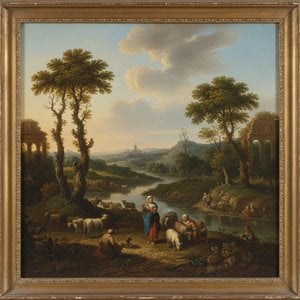
Nicolaes Berchem: Dutch Golden Age Pastoralism & the Evolution of Landscape Painting
Explore the captivating world of Nicolaes Berchem, a leading Dutch Golden Age painter. Discover his idyllic landscapes, masterful technique & lasting influence on art history. Learn more at ArtsDot.